
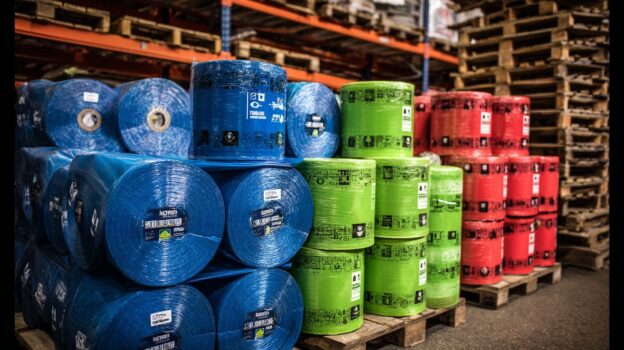
In the high-stakes world of supply chain management, off-the-shelf stretch film can compromise efficiency and protection. Custom stretch film and wrap, however, transform packaging into a strategic asset-optimizing security, branding, and sustainability for diverse industries. This guide unveils top options: material choices like LLDPE and recycled alternatives; precise sizing, thickness, and perforation; color enhancements with custom printing; functional additives such as UV protection; and eco-friendly innovations backed by industry standards from ASTM and ISO.
Material Composition Options
Choosing the appropriate material composition for custom stretch film is essential to achieving optimal performance, enhanced durability, and greater sustainability in packaging applications.
Linear Low-Density Polyethylene (LLDPE)
Linear Low-Density Polyethylene (LLDPE) serves as the predominant base material for stretch film production, providing an optimal balance of flexibility and strength. It exhibits elongation rates ranging from 300% to 600% and tensile strength between 4,000 and 5,500 psi, as measured according to ASTM D882 standards.
A study conducted by the Plastics Industry Association indicates that LLDPE commands approximately 70% of the market share in stretch films, attributable to its cost-effectiveness-priced at $1.50 to $2.50 per pound-and its recyclability.
Notable variants of LLDPE include butene copolymers, which are suitable for general applications, and hexene copolymers, which enhance puncture resistance by 25% to 30% as determined by the dart drop method (MD).
The advantages of LLDPE encompass superior load retention, achieving up to 80% after 24 hours, and straightforward extrusion capabilities on blown film production lines. However, it demonstrates reduced resistance to ultraviolet (UV) exposure unless supplemented with stabilizers such as hindered amines.
In warehousing operations, it is advisable to select stretch films with a thickness of 2 to 3 mils from reputable suppliers, such as Intertape Polymer Group, to effectively secure pallets weighing 1,000 to 2,000 pounds. This approach optimizes efficiency while reducing overall film consumption by 20% to 30%.
Recycled and Bio-Based Alternatives
Recycled and bio-based stretch films offer a significant reduction in environmental impact. Options incorporating post-consumer recycled (PCR) content can include up to 50% recycled material, while preserving approximately 90% of the performance characteristics of virgin linear low-density polyethylene (LLDPE).
To determine the most suitable alternative, it is advisable to compare the following options:
| Material | Composition % | Strength Metrics | Cost Premium | Best For |
|---|---|---|---|---|
| PCR LLDPE | Up to 50% recycled | 90% virgin strength, 400% elongation | 10-15% higher | General packaging |
| Bio-PE (sugarcane) | 100% bio-based | Matches LLDPE, 450% elongation | 20-25% higher | Food-grade (FDA standards) |
| PLA Blends | 70% plant-based | 350% elongation, lower tear resistance | 25-30% higher | Compostable applications |
Key advantages include:
- PCR LLDPE effectively reduces waste.
- Bio-PE is derived from renewable sources.
- PLA is biodegradable.
Potential drawbacks are:
- PCR requires meticulous sorting processes.
- Bio-PE incurs higher costs.
- PLA exhibits greater brittleness.
According to a 2022 life cycle assessment (LCA) study by the Ellen MacArthur Foundation, Berry Global’s PCR line achieves a 25% reduction in CO2 emissions.
For procurement, it is recommended to source certified supplies from reputable wholesalers such as Amcor, beginning with small trial orders to evaluate performance.
Size and Dimension Customizations
The customization of stretch film’s size and dimensions enables a precise fit for a variety of pallet configurations, ranging from standard 48×40-inch pallets to oversized loads up to 72 inches in width.
Width and Length Variations
Stretch film is available in widths ranging from 12 to 30 inches and lengths from 500 to 7,500 feet per roll, allowing for tailored solutions suitable for applications from small boxes to large pallets.
To select the appropriate stretch film, adhere to the following structured guidelines:
- Measure the girth of the pallet and incorporate an additional 10-20% to accommodate secure overlap.
- Select the width according to pallet dimensions-for instance, 20 inches is recommended for standard 48-inch pallets to achieve full coverage in a single layer.
- Calculate the required length based on anticipated usage, such as 1,500 feet for approximately 50 wraps.
Common specifications and their respective applications are outlined in the table below:
| Width (inches) | Length (ft) | Application | Benefit |
|---|---|---|---|
| 18 | 1,000 | E-commerce boxes | Reduces material usage by 10% compared to wider films |
| 20 | 1,500 | Standard pallets | Provides optimal tension for 48×40-inch loads |
| 30 | 5,000 | Industrial pallets | Decreases the number of wraps by 30%, in accordance with ASTM D4649 standards |
It is advisable to avoid prevalent errors, such as selecting undersized film, which necessitates multiple layers and increases operational time. For bulk purchases, Uline provides a minimum order quantity of 100 rolls at prices ranging from $50 to $80 per roll, making it an efficient option for warehouse operations (Uline catalog, 2023).
Core Diameter and Roll Specifications
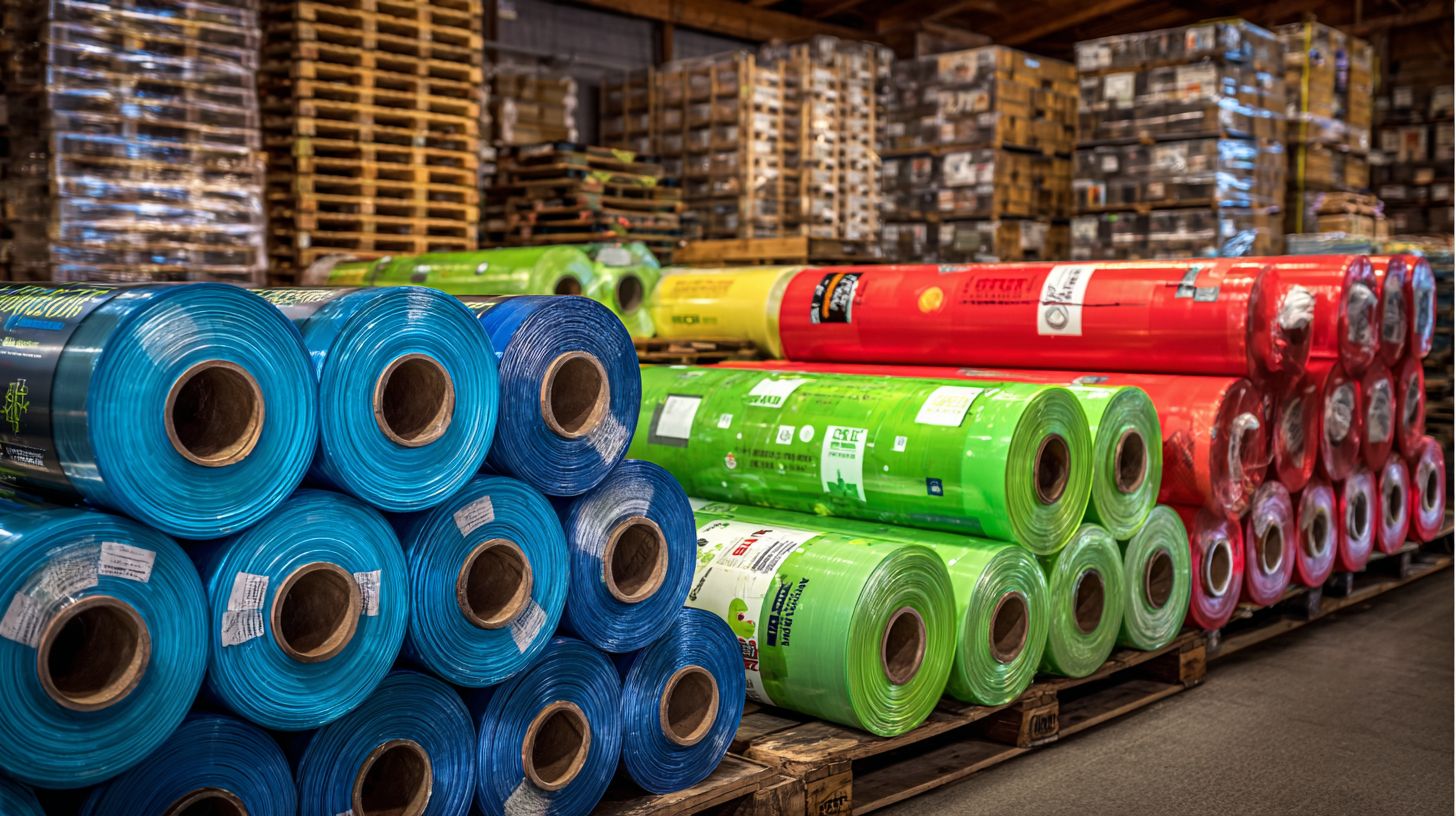
Core diameters for stretch film rolls typically range from 1 to 3 inches, while extended cores, which can reach up to 10 inches, enhance machine dispensing efficiency and reduce changeover time by up to 40%.
| Core Type | Diameter | Best For | Pros/Cons |
|---|---|---|---|
| Coreless | 0 inches | Manual wrapping | Lightweight (20 lbs/roll) and portable; higher cost ($0.08/ft) and incompatible with machines. |
| 1-inch | 1 inch | Handheld dispensers | Compact design and easy storage; limited capacity (up to 30 lbs) requiring frequent reloads. |
| 3-inch | 3 inches | Orbital wrappers/machines | Versatile with capacity for 40-50 lbs; heavier weight necessitates a sturdy setup. |
| Extended | Up to 10 inches | High-volume automation | Reduces changeovers by 40%; requires specialized dispensers and involves a high initial investment. |
For optimal dispenser setup, 3-inch cores should be loaded into orbital wrappers using tension arms, with film speed adjusted to 50-100 ft/min to achieve the desired stretch performance.
In a case study conducted by Pregis Corp., the implementation of extended cores resulted in a 25% reduction in labor costs (Pregis Internal Report, 2022).
For bulk orders, a minimum order quantity (MOQ) of 500 rolls is generally required, with pricing ranging from $0.05 to $0.10 per foot. Negotiations with suppliers such as Berry Global can facilitate custom diameter specifications.
Thickness and Gauge Choices
The thickness of stretch film, measured in gauge (where 1 gauge equals 0.0001 inch) or microns (with a standard range of 25-30 m), plays a pivotal role in determining the degree of load protection provided. Options are available from 50 gauge, suitable for light-duty applications, to 120 gauge for heavy industrial requirements.
| Gauge | Micron | Tensile Strength (psi) | Best For | Cost per Roll ($20-60) |
|---|---|---|---|---|
| 50 | 13 | 3500 | Light pallets <500 lbs | $20 |
| 60 | 15 | 4000 | Standard loads 500-1000 lbs | $25 |
| 80 | 20 | 4500 | Medium duty 1000-2000 lbs | $35 |
| 100 | 25 | 5000 | Heavy loads 2000-3000 lbs | $45 |
| 120 | 30 | 5500 | Industrial >3000 lbs | $55 |
Film selection should be guided by load weight; for example, 60 gauge is recommended for loads under 1000 pounds. Key advantages include the 250% pre-stretch capability of 80 gauge film, which reduces material usage by 30% per pallet.
It is essential to avoid common errors, such as opting for excessive thickness, which can elevate costs by 20%. According to ASTM D3814 standards, adherence testing of the film is required.
A logistics firm realized annual savings of $5,000 by transitioning from 90 gauge to 70 gauge film (Supply Chain Management Review, 2022).
Color and Visual Enhancements
The integration of color into stretch film offers multiple advantages, including improved visibility and branding, as well as enhanced safety protocols. Options span from transparent films, which facilitate inventory inspections, to opaque variants designed to safeguard light-sensitive materials.
Standard Color Options
Standard color options for stretch film include clear (95% transparency), black (90% UV blockage), blue (suitable for cold chain applications), and red (for alert identification). These options are available from suppliers such as Berry Global without incurring any additional premium.
To broaden the selection, the following six colors are recommended for customized logistics solutions. The table below provides a comparative overview of their attributes, facilitating informed decisions based on specific requirements, such as visibility or protection.
| Color | Opacity % | Key Benefit | Applications | Pricing Impact |
|---|---|---|---|---|
| Clear | 5 | Easy inspection | General warehousing | 0% |
| Black | 95 | UV/moisture barrier | Agriculture, outdoor storage | 0-2% |
| Blue | 20 | Cold chain identification | Produce, perishables | 1-3% |
| Red | 15 | High-alert visibility | Hazardous goods | 0-2% |
| White | 10 | Light diffusion | Electronics packaging | 2-4% |
| Green | 25 | Organic labeling | Fresh foods, eco-shipping | 1-5% |
The clear variant offers the advantage of rapid visual inspections but lacks light-blocking properties. Walmart utilizes blue film for produce packaging, which has demonstrated a 15% reduction in spoilage, as evidenced by a 2019 USDA study.
Logistics requirements should guide the selection process: black film is optimal for UV protection needs, while clear or red variants are prioritized for superior visibility, thereby enhancing safety and operational efficiency.
Custom Printing and Branding
Custom printing on stretch film enables businesses to incorporate logos or messages through digital or flexographic printing techniques, achieving resolutions of up to 300 DPI and accommodating run lengths ranging from 100 to 10,000 rolls.
To execute this process effectively, adhere to the following structured steps:
- Arrange a design consultation utilizing Adobe Illustrator to develop vector files that guarantee scalability.
- Opt for digital printing for small production runs of fewer than 500 rolls, priced at $0.02 per foot-suitable for emerging enterprises-or select flexographic printing for larger orders exceeding 500 rolls at $0.01 per foot, which provides substantial cost efficiencies.
- Develop a prototype within 1 to 2 weeks to evaluate adhesion properties. The minimum order quantity is 250 rolls.
For instance, Coca-Cola’s implementation of branded pallet wraps resulted in a 20% increase in brand recognition, albeit with an associated cost escalation of 15% to 25%.
Inline Packaging attained 98% ink adhesion in accordance with ASTM D3359 standards, thereby improving the overall durability of the product.
Functional Additives and Features
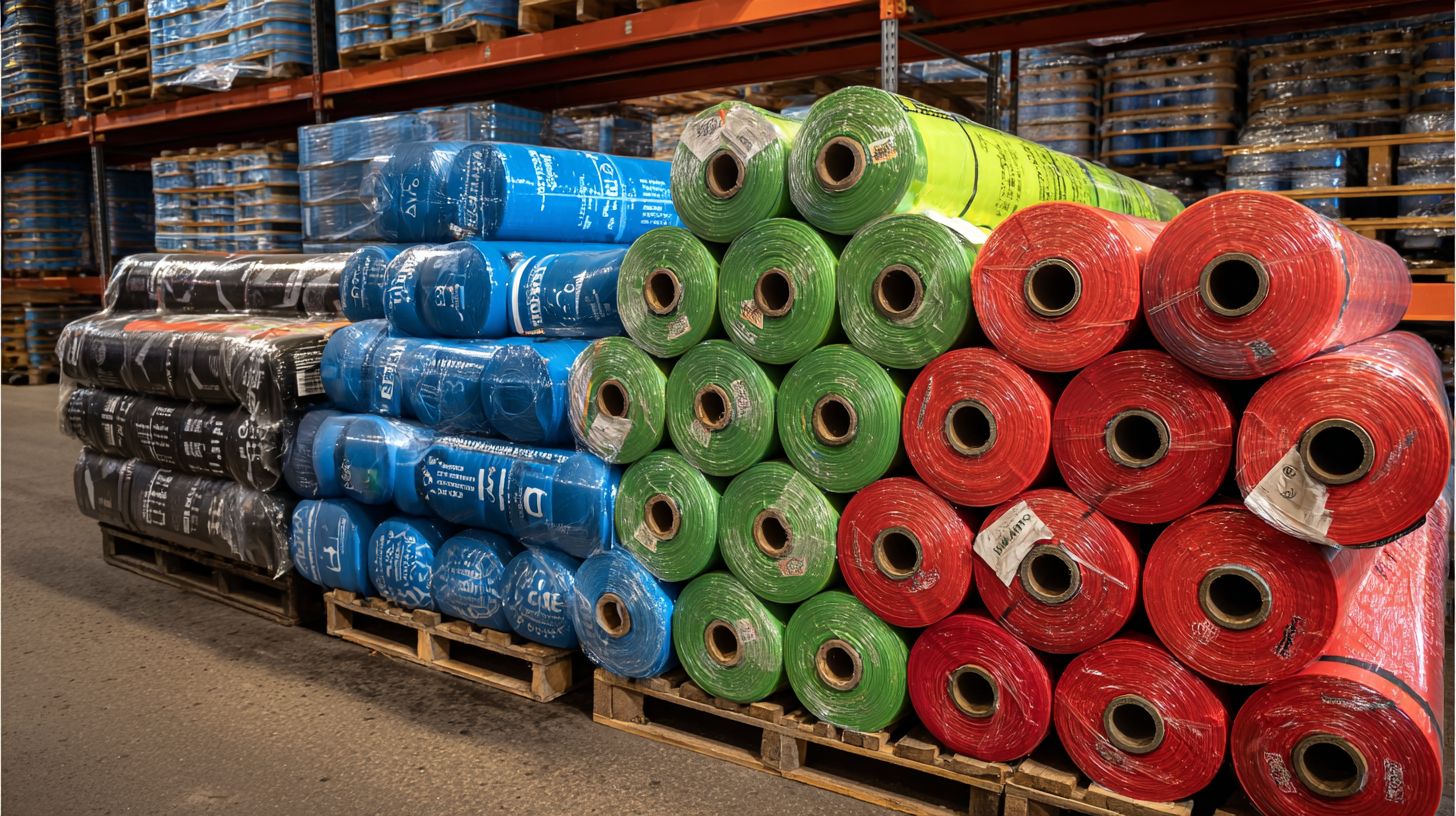
Functional additives are incorporated into stretch films to optimize their performance in targeted applications. For instance, UV inhibitors can prolong outdoor exposure by up to 12 months, while anti-static formulations effectively mitigate dust accumulation in electronics packaging.
UV Protection and Anti-Static Properties
UV protection additives incorporated into stretch films, such as hindered amine light stabilizers (HALS), effectively block 98% of ultraviolet (UV) rays, making them particularly suitable for outdoor shipping applications. Similarly, anti-static agents reduce surface resistivity to below 10^11 ohms, as measured by ASTM D257 standards.
To optimize the performance of stretch films, it is advisable to incorporate the following four essential additives:
| Type | Function | Metrics | Best Applications | Cost Add-On |
|---|---|---|---|---|
| HALS (UV Stabilizer) | Blocks UV degradation | 6-24 months protection | Outdoor/agricultural use | 5-8% |
| Anti-Static Agent | Prevents static buildup | <10^11 ohms (ASTM D257) | Medical/electronics packaging | 6-10% |
| Antioxidant | Neutralizes oxidation | Reduces degradation by 50% | High-heat storage | 4-7% |
| Slip Agent | Improves film slip | COF 0.2-0.4 | High-speed wrapping | 5-9% |
Regarding anti-static agents, their primary advantages include the prevention of electrostatic shocks in medical packaging; however, a notable drawback is the potential to attract dust. These agents should be implemented at a concentration of 1-2% during the extrusion process.
DuPont’s Irganox antioxidants, commonly utilized in construction films, have been shown to reduce degradation by 50%, according to a study published in the Journal of Applied Polymer Science (2018). It is recommended to test all formulations for compatibility to ensure optimal results.
Perforation and Handling Customizations
Perforation and handling customizations, such as easy-tear lines or embossed textures, enhance user efficiency. Perforated films enable precise cuts every 12 to 18 inches, facilitating manual wrapping processes.
Key customizations include the following:
- Perforation patterns with 1-inch spacing, which reduce cutting time by 40 percent;
- Embossing for improved grip, increasing friction by 20 percent;
- Pre-stretching at a 200-300 percent ratio to simplify application;
- Vented holes to promote breathability;
- Micro-perforations for accurate tearing.
| Feature | Benefit | Applications |
|---|---|---|
| Perforation patterns | Reduces time by 40% | Packaging |
| Embossing | Increases grip by 20% | Slippery handling |
| Vented perforation | Improves airflow | Agricultural wrapping |
To mitigate tearing issues, employ a 50-gauge base film.
Sicpa’s perforated wrap enhances warehousing efficiency, as indicated by industry reports. It is fully compatible with 3M dispensers, enabling seamless integration.
Sustainability and Eco-Friendly Options
Eco-friendly stretch film solutions, such as 100% recyclable linear low-density polyethylene (LLDPE) and biodegradable variants that degrade within 2-3 years, ensure compliance with stringent regulations, including EU Directive 94/62/EC, which restricts heavy metal content to 100 parts per million (ppm).
Sustainable stretch films can reduce plastic waste by up to 30%, according to data from the U.S. Environmental Protection Agency (EPA). Prominent options include:
- Recyclable LLDPE, featuring a 95% recovery rate and suitable for high-volume shipping through standard recycling bins.
- Oxo-biodegradable films, compliant with ASTM D6954 standards, which fragment under sunlight exposure to accelerate landfill decomposition.
- Compostable films, certified under ISO 17088, that fully break down in industrial composting facilities within 180 days.
- Plant-based variants, formulated with bio-resins, appropriate for food packaging applications.
A return on investment (ROI) illustration demonstrates that Company X achieved a 25% reduction in emissions by adopting Novolex’s sustainable product line, resulting in annual disposal cost savings of $10,000.
Although initial costs may be approximately 20% higher, these can be mitigated through bulk wholesale procurement agreements.
In a notable corporate initiative, Unilever transitioned to compostable films, thereby reducing the use of virgin plastic by 50% throughout its global supply chains.
Frequently Asked Questions
Q: What Are the Best Customization Options for Custom Stretch Film And Wrap?
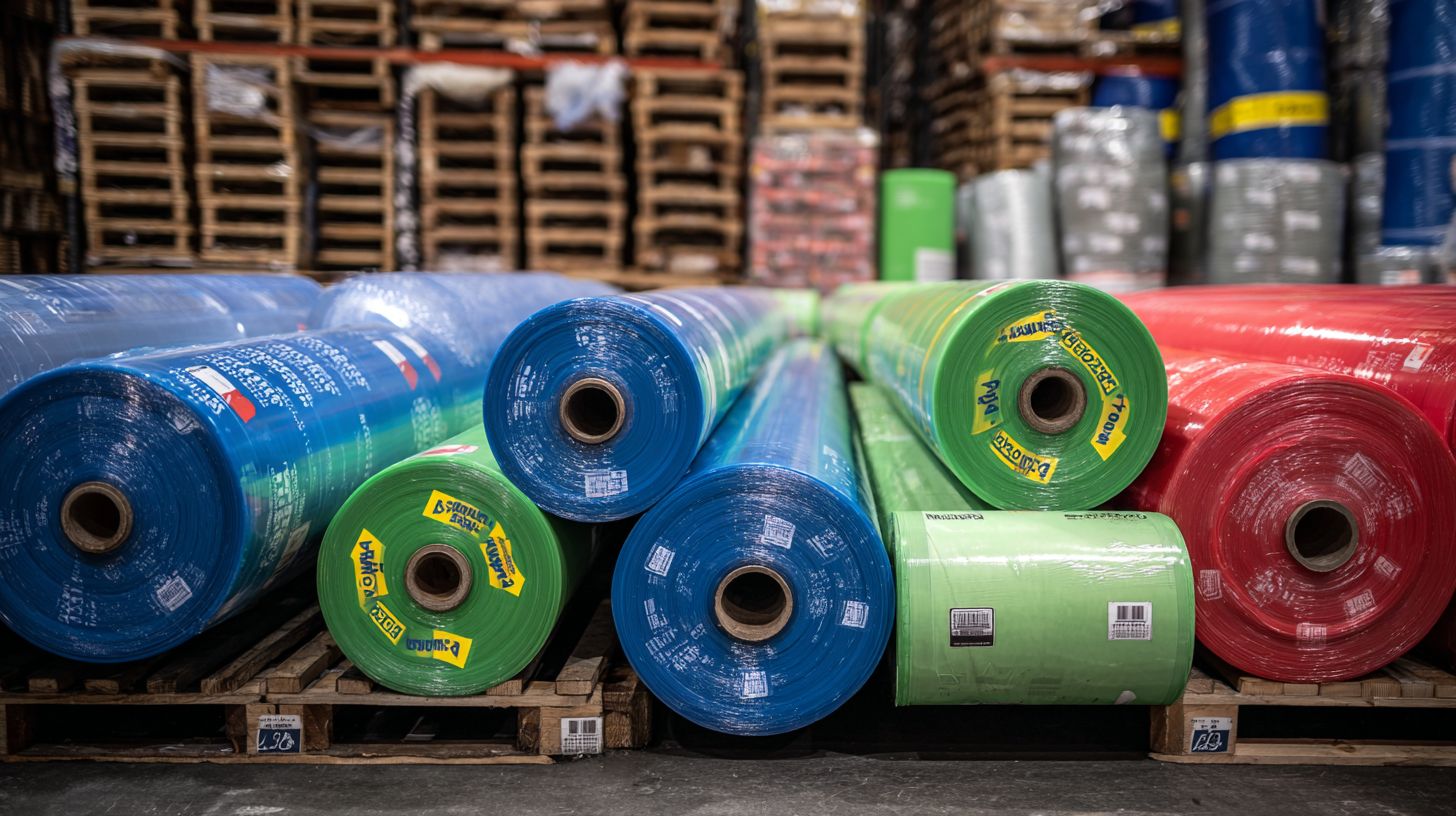
The best customization options for Custom Stretch Film And Wrap include thickness adjustments for varying load protection needs, width and length tailoring to fit specific pallet sizes, color selections for branding or inventory identification, custom printing for logos and warnings, and enhanced cling properties for secure wrapping. These options ensure optimal performance and personalization for industrial, shipping, or storage applications.
Q: What thickness options are available for customizing Custom Stretch Film And Wrap?
For Custom Stretch Film And Wrap, thickness can be customized from 50 gauge for light-duty wrapping to 120 gauge or higher for heavy-duty industrial use. Thinner films offer cost savings and easier application, while thicker ones provide superior puncture resistance and load stability, allowing you to match the film’s strength to your specific packaging requirements.
Q: How can I customize the width and length of Custom Stretch Film And Wrap?
Custom Stretch Film And Wrap can be tailored in widths from 3 inches for small bundles to 30 inches for standard pallets, with lengths up to 20,000 feet per roll. This customization ensures efficient coverage without excess waste, accommodating everything from hand-wrapping small items to machine-wrapping large shipments.
Q: What color and printing customizations are best for Custom Stretch Film And Wrap?
Color options for Custom Stretch Film And Wrap range from clear and black to vibrant hues like blue, red, or green for visibility and organization. Printing customizations allow adding company logos, barcodes, safety messages, or instructions directly on the film, enhancing branding and compliance while maintaining the film’s stretch and durability.
Q: Are there cling and material type customizations for Custom Stretch Film And Wrap?
Yes, Custom Stretch Film And Wrap can be customized for cling levels-low for easy removal or high for maximum hold-and material types like standard polyethylene or UV-resistant variants for outdoor use. These options improve wrapping security and longevity, preventing load shifts during transport or storage.
Q: What eco-friendly customization options exist for Custom Stretch Film And Wrap?
Eco-friendly customizations for Custom Stretch Film And Wrap include biodegradable or recyclable polyethylene blends, reduced-thickness designs to minimize material use, and post-consumer recycled content. These sustainable choices maintain performance while supporting environmental goals, such as lower carbon footprints in packaging operations.
Ready to Upgrade Your Packaging Game? 🚀
Don’t settle for ordinary make your packaging work harder for your brand with fully customized stretch film and wrap solutions from Aplasticbag.com. Whether you need branded prints, superior durability, or tailored sizing, we’ve got you covered.
Why Choose Aplasticbag.com?
✔ Premium-quality materials built for performance
✔ Custom printing to boost brand visibility
✔ Flexible sizing & thickness options for every industry
✔ Competitive wholesale pricing across the USA
✔ Fast production & reliable nationwide delivery
Turn every shipment into a branding opportunity while ensuring maximum protection.
👉 Order Now and customize your stretch film with Aplasticbag.com—designed for strength, built for your brand!

 Custom Printed Stretch Wrap vs. Standard Stretch Film: A Complete Buyer’s Guide for Modern Packaging Brands
Comments