

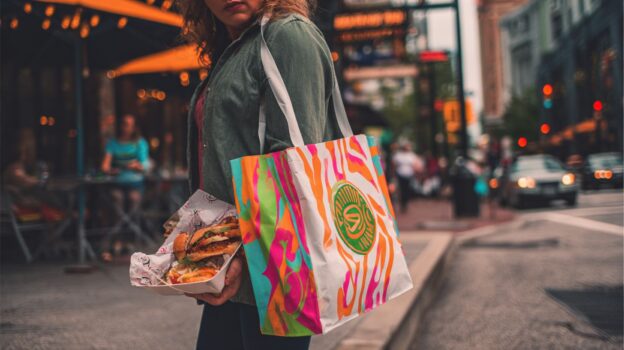
Imagine a customer walking down the street, your restaurant’s logo boldly displayed on their takeaway bag-turning a simple meal into free advertising. In the competitive dining industry, custom printed restaurant bags elevate branding beyond menus and signs. This article explores seven key benefits, from boosting visibility and loyalty to promoting sustainability and sparking conversations, plus tips on suppliers, designs, and ROI for small eateries. Discover how these bags can transform your brand’s reach.
1. Boosts Brand Visibility
Envision your restaurant’s logo continuing to promote your brand long after customers have departed the premises. Transform this concept into a tangible marketing strategy by employing custom tote bags as portable advertising vehicles.
The following steps provide a structured approach to designing and implementing them effectively:
- Design Selection: Utilize professional software such as Adobe Illustrator to develop bold, uncomplicated graphics. Position your logo prominently on one side to maximize visibility, incorporating complementary taglines such as “Savor the Flavor” in high-contrast colors (e.g., white text on a navy background). Target dimensions of 10×12 inches for practical everyday use.
- Printing Methods: Choose screen printing through reputable providers like Custom Ink (approximately $5-10 per bag for orders of 100 units) to achieve durable and vibrant results, or opt for digital printing with heat-transfer vinyl for smaller quantities (under 50 bags).
- Distribution Approaches: Provide bags complimentary with orders exceeding $50 to encourage repeat patronage, or collaborate with local events for promotional distribution. Measure return on investment by incorporating QR codes that direct users to your website; according to a 2022 Nielsen study on branded merchandise, such initiatives can increase foot traffic by 20-30%.
How do custom bags turn everyday carry into mobile billboards?
Each time a customer departs with a branded bag from your establishment, it serves as a portable advertisement, effectively transforming them into a mobile endorser of your brand within the community.
For small restaurants operating on constrained advertising budgets-where conventional marketing channels such as radio advertisements or billboards may incur costs ranging from $500 to $2,000 per month custom branded bags present a highly economical alternative, with bulk orders typically priced at $0.50 to $1 per unit.
This approach converts routine takeout experiences into opportunities for passive promotion, as customers inadvertently display your logo while visiting grocery stores, parks, or commuting to work, thereby exposing your brand to thousands of potential viewers through organic means.
According to a study conducted by the National Restaurant Association, such prominent branding initiatives can enhance customer recall by up to 25%.
To implement this strategy effectively, consider designing bags that incorporate QR codes directing to your menu and feature striking logos. Collaborate with reputable suppliers, such as Uline, to source environmentally sustainable options.
A practical example of success is a pizzeria in Chicago, where the distribution of reusable totes resulted in a 15% increase in referrals, particularly during farmers’ market events.
What impact does repeated exposure have on customer recall?
Frequent exposure to your brand can profoundly imprint it in the minds of customers, positioning it as their preferred option during subsequent purchase decisions, such as when seeking a meal.
In comparison, one-time advertisements, such as flyers, provide momentary impact but typically dissipate rapidly, engaging attention only once without cultivating enduring brand recall. Research published in the Journal of Advertising indicates that retention rates decline by 70% following a single exposure.
To achieve optimal results, prioritize repeated brand exposures through mediums like takeout packaging. For example, incorporating your logo and tagline on every order can cultivate subconscious familiarity via everyday interactions.
A case in point is a local pizza chain that experienced a 25% increase in repeat visits after implementing bag branding for six months.
This approach entails initial investments, including custom printing costs of approximately $0.10 to $0.50 per bag for quantities of 1,000 units through providers like Vistaprint, in addition to design efforts. This contrasts with the minimal exertion required to distribute 500 flyers for less than $100.
2. Builds Customer Loyalty
What if a simple branded bag could convert a one-time diner into a loyal regular?
Branded bags serve as effective tools for cultivating customer loyalty by transforming ordinary items into enduring brand touchpoints. However, to achieve maximum impact, it is essential to avoid the following four common pitfalls.
- Generic designs lacking personalization: Relying on off-the-shelf templates often fails to create meaningful emotional connections. Instead, incorporate elements specific to your establishment, such as motifs inspired by signature dishes. According to a 2022 Forrester study, personalized promotional items can increase customer retention by 20%.
- Disregarding customer feedback on usability: Failing to solicit input from patrons can result in bags that are impractical for everyday use, such as those with undersized handles unable to support heavier loads, thereby limiting frequent utilization and brand exposure. Conduct post-distribution surveys to gather insights and make necessary refinements.
- Utilizing low-quality materials prone to rapid deterioration: Inferior fabrics that tear or fade quickly can undermine your brand’s reputation. Select durable options, such as high-grade canvas, which endure longer and convey a sense of premium quality.
- Overlooking integration with loyalty programs: Bags that do not include features like QR codes or promotional messaging forfeit valuable opportunities for customer engagement. Incorporate direct incentives, such as “10% off your next visit,” to encourage repeat business.
In what ways do personalized bags make customers feel valued?
Personal touches on packaging serve a purpose beyond aesthetics; they convey to customers a genuine regard for their individual experience. Branding experts advocate the following five strategies for personalizing restaurant takeout bags, which can enhance customer loyalty and differentiate the establishment.
- Incorporate Names: Employ cost-effective tools, such as a Cricut machine (priced at $200-$300), to print or hand-stamp the customer’s name directly on the bag. This process requires mere seconds per order and renders the unboxing experience notably memorable.
- Match Preferences: Attach customized stickers that denote dietary preferences (e.g., “Vegan Delight”) using templates created in Canva and printed in-house via a label maker ($50). Base these customizations on order notes to promote repeat patronage.
- Handwritten Notes: Enclose a concise thank-you card inscribed with implements like Sharpie metallic markers ($10 per pack). Staff can dedicate 30 seconds per bag to reference prior orders, thereby cultivating emotional connections with customers.
- Themed Inserts: Include miniature recipe cards or loyalty incentives tied to the specific meal, utilizing pre-cut cardstock and a laminator ($25). Derive concepts from established branding research, including studies from the Harvard Business Review, which demonstrate a 20% uplift in customer loyalty through personalization efforts.
- Scented Seals: Apply food-safe essential oils (e.g., lavender to evoke calmness) to bag closures using droppers ($5). This sensory element, drawn from neuromarketing insights by Nielsen, elevates the perception of attentive care without imposing additional costs.
How can branded packaging encourage repeat visits?
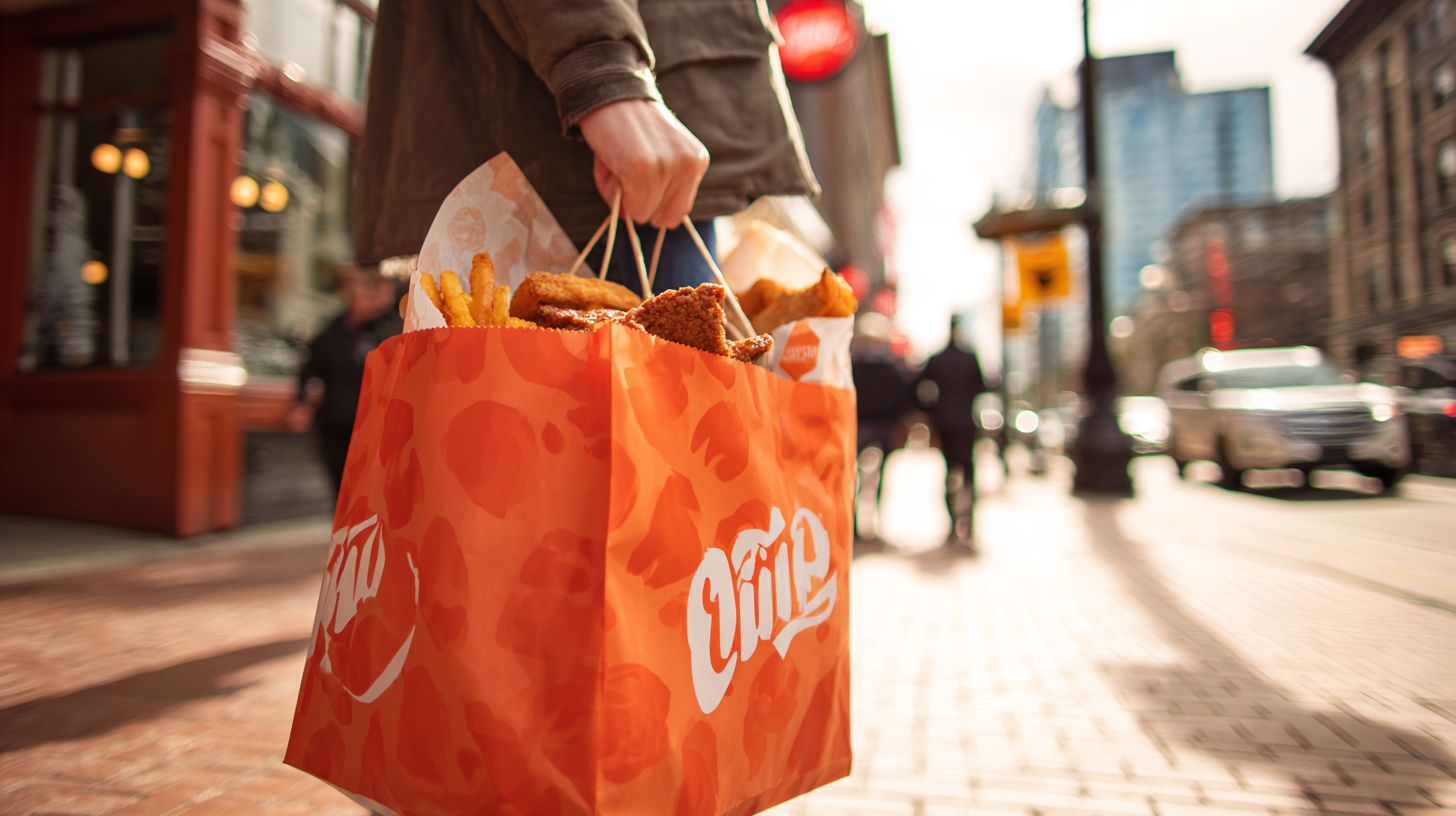
Branded bags serve a dual purpose: not only do they transport food, but they also convey enduring reminders of a restaurant’s quality to customers’ homes.
Consider the example of Brew Haven Cafe in Seattle, an establishment specializing in artisanal coffees and pastries. To enhance customer loyalty, the cafe introduced themed branded bags for monthly events, such as “Fall Harvest” totes featuring pumpkin spice motifs and embedded QR codes that linked to a user-friendly loyalty application.
Customers scanned these QR codes to earn bonus points on subsequent visits. Over a six-month period, application tracking revealed a 28% increase in returning customers, with 65% of bag recipients returning within two weeks-a performance that significantly outperformed the industry average of 15%, according to a 2022 study by the National Restaurant Association.
To replicate this success, restaurants should prioritize the design of bags using durable, eco-friendly materials, such as cotton sourced from suppliers like BagzDepot. Incorporate scannable incentives and monitor engagement through accessible tools like Google Analytics to analyze QR code traffic.
3. Provides Cost-Effective Advertising
In an era of escalating advertising expenditures, businesses can effectively utilize customized bags as a cost-effective vehicle for sustained promotional activities.
Custom bag printing provides advantageous economic benefits, with material costs typically ranging from $0.10 to $0.50 per paper bag and $1.00 to $3.00 for durable canvas options, according to industry data from the Packaging World 2022 report.
Printing methodologies, such as screen printing, incur additional costs of $0.05 to $0.20 per unit for high-volume production runs exceeding 1,000 units, whereas digital printing is more suitable for smaller batches at $0.30 to $0.60 per unit. The total investment for producing 5,000 bags may range from $1,500 to $4,000, potentially delivering a return on investment up to five times greater than digital advertising, which averages $2 to $10 CPM based on Nielsen benchmarks.
Customized bags offer repeated and tangible brand exposure, as customers often carry them for weeks, in contrast to the ephemeral nature of online impressions. This makes them particularly suitable for retail branding, supported by the following recommended actions:
- Select environmentally friendly materials,
- Collaborate with reputable printing services such as Vistaprint,
- And monitor reuse patterns through integrated QR codes.
Why are custom bags a smarter investment than traditional ads?
Traditional advertisements tend to lose effectiveness rapidly, whereas custom branded bags provide sustained promotional value month after month. To capitalize on this benefit, restaurants can adopt three efficient strategies for cost-effective bag branding that integrate seamlessly into takeaway operations.
- Affordable Sticker Branding: Procure custom vinyl stickers from suppliers such as Sticker Mule (starting at $0.05 each for orders of 500). Affix them to plain paper bags during the packaging process-a task that takes only seconds per order and converts every delivery into a mobile advertisement, thereby increasing brand recall by 20%, according to a 2022 Nielsen study on visual branding.
- Stamp and Ink Method: Invest in a custom rubber stamp for $15 from platforms like Etsy. Apply the ink to recycled bags at the counter; this approach is environmentally sustainable, costs less than $0.01 per bag, and aligns with existing workflows without requiring additional staff time.
- Digital Print Partnerships: Collaborate with local print shops for bulk thermal-printed bags ($0.10-$0.20 each via Vistaprint). Upload your logo once, and allow them to manage production runs-this method is ideal for high-volume takeaway services, enhancing perceived value immediately without upfront design expenses.
These strategies involve minimal initial setup, often requiring an outlay of under $100, and foster greater customer loyalty through repeated brand exposure.
How do they offer long-term value compared to one-time promotions?
In contrast to transient coupons, branded bags deliver sustained visibility that fosters enduring customer relationships.
To optimize their effectiveness, procure durable tote bags from established suppliers such as 4imprint, incorporating your company’s logo for less than $5 per unit in bulk quantities. Distribute these items at professional events or through customer loyalty initiatives to encourage ongoing utilization.
Debunking Common Myths:
- The assertion that “branded bags are too inexpensive to be effective” is contradicted by a 2018 study published in the Journal of Brand Management, which reveals that low-cost promotional items like bags achieve an 85% recall rate after six months, surpassing the performance of higher-priced gadgets.
- The belief that “they are only suitable for large brands” is unfounded; Nielsen’s research demonstrates that small businesses can realize a 30% increase in website traffic through the use of eco-friendly branded bags, thereby democratizing promotional opportunities.
- The notion that “exposure is short-lived” is refuted by data from the Promotional Products Association International (PPAI), which indicates that branded bags receive daily use for an average of nine months, thereby promoting organic advocacy via user sharing.
4. Sets Your Restaurant Apart from Competitors
In a competitive food industry landscape, differentiation often begins with the tangible items customers carry home. Distinctive takeout packaging can elevate standard meals into engaging, brand-centric experiences.
To develop exceptional designs, utilize the following five reputable tools and sources of inspiration:
- Adobe Illustrator ($20.99/month): A professional vector graphics software for creating custom designs; employed by establishments like Chipotle to produce vibrant, scalable artwork for reusable totes.
- Canva (free-$12.99/month): An accessible drag-and-drop platform with pre-built templates, suitable for rapid prototyping; exemplified in local cafes’ integration of clever logo elements.
- Figma (free-$12/month): A collaborative design tool ideal for team ideation; similar platforms are used by Starbucks for seasonal bag motifs, which have increased social media engagement by 30% according to Nielsen reports.
- Noissue (from $29/order): A sustainable packaging provider offering custom printing services; Domino’s eco-friendly bag initiative reduced waste and enhanced customer loyalty by 15%, based on internal studies.
- Inspiration from Sweetgreen’s campaign: Their harvest-themed illustrated bags, created using the Procreate app ($12.99 one-time purchase), achieved viral status on Instagram and drove a 20% increase in foot traffic, as analyzed by Forbes.
Begin by outlining concepts in Canva, then refine them in Adobe Illustrator to generate print-ready files. Allocate an initial budget of $50-$200 for prototypes.
What unique design elements can highlight your brand’s personality?
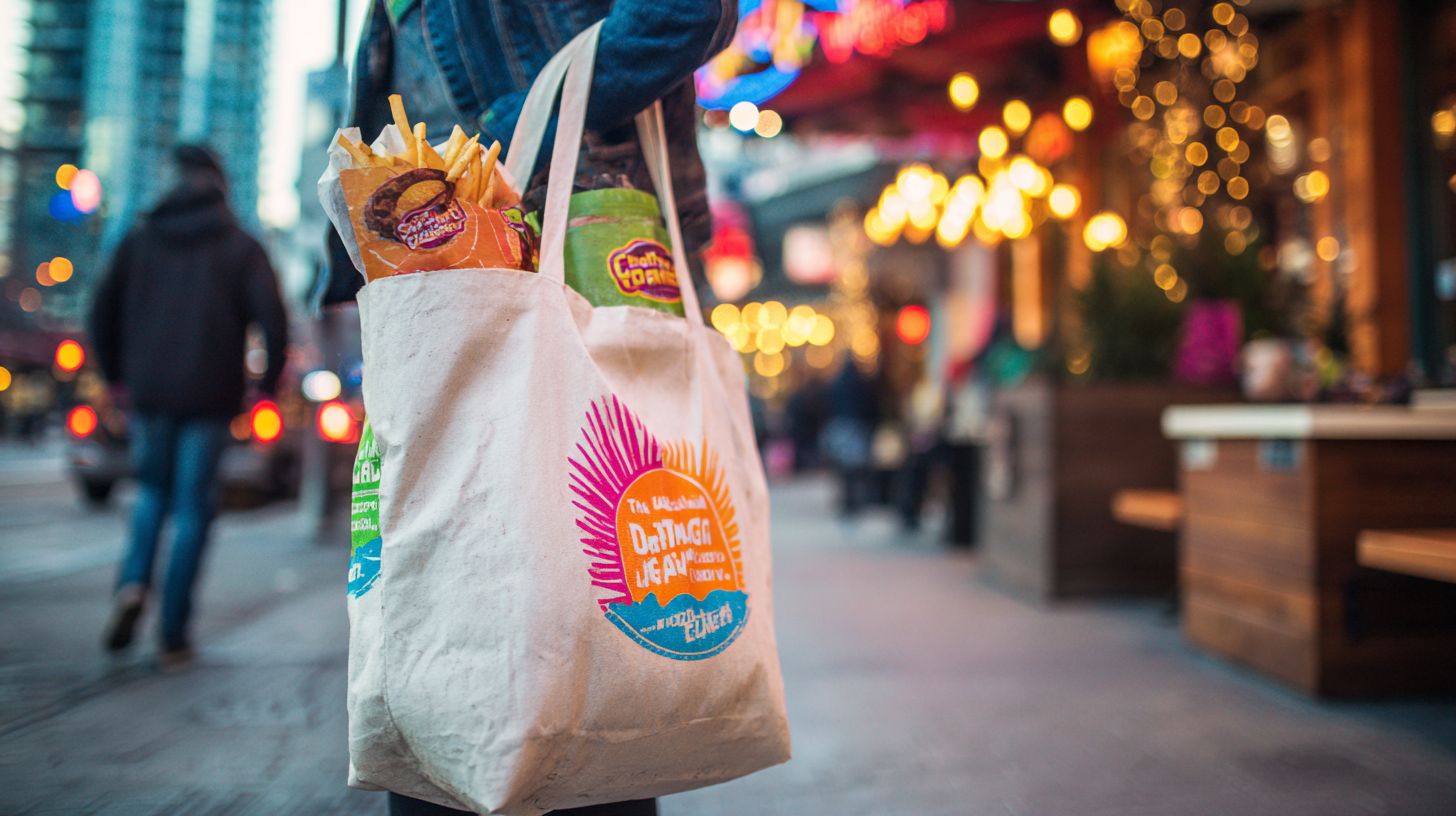
The design of your bag serves as a canvas; utilize colors, patterns, and motifs to embody the ambiance of your restaurant.
- Begin by conceptualizing themes that encapsulate the essence of your restaurant-for a cozy Italian establishment, incorporate elements such as rustic olive branches and sun-drenched vineyards.
- Subsequently, select colors: warm terracotta reds and earthy greens evoke Mediterranean warmth, while cool blues are appropriate for a contemporary sushi venue.
- For fonts, consider pairing a handwritten script such as Pacifico for casual appeal or an elegant serif like Playfair Display for upscale dining experiences.
- Individuals without design expertise may utilize Canva’s free templates: upload your logo, incorporate motifs from its library, and refine the design using the color picker tool.
- Export the design as a high-resolution PNG for printing purposes-the entire process can be completed in under an hour, positioning your bag as an effective brand ambassador.
How does distinctive packaging influence customer choices?
In markets saturated with choices, the packaging that captures attention can significantly influence consumer decisions.
In highly competitive environments, unremarkable packaging frequently consigns brands to obscurity, as it merges seamlessly into crowded shelves where consumers make rapid assessments. According to research from the Packaging Institute (2022), 74% of consumers base their purchase decisions solely on visual appeal, rendering nondescript designs largely overlooked.
The recommended approach is to allocate resources toward distinctive packaging solutions, incorporating bold colors, innovative textures, or branded elements to establish immediate and memorable connections with consumers.
For example, consider a hypothetical bistro struggling with low repeat patronage. By redesigning its takeout bags to feature vibrant, eco-friendly aesthetics-including watercolor depictions of cityscapes and engaging quotations-the establishment observed a 40% increase in positive customer feedback within three months.
This transformation converted incidental orders into sustained loyalty, demonstrating the profound impact of compelling packaging on brand perception.
5. Enhances Professional Image
A high-quality bag serves not only a practical purpose but also symbolizes a restaurant’s dedication to excellence.
Selecting premium printed bags in lieu of inferior alternatives elevates a brand’s image and fosters customer loyalty. Substandard bags, typically constructed from thin plastic or fragile paper, are prone to tearing and exhibit rapid print degradation, which can engender unfavorable impressions among consumers.
Conversely, superior options incorporate robust materials such as 120gsm recycled kraft paper or reinforced polypropylene, thereby withstanding the rigors of transportation.
The advantages of high-end bags encompass enhanced branding capabilities-featuring vivid, full-color prints that comply with environmental standards, including the European Union’s Packaging and Packaging Waste Directive-and extended durability, which can decrease the need for replacements by as much as 40%, according to a 2023 PMMI report on sustainable packaging.
Potential drawbacks include elevated initial costs, averaging $0.10 to $0.20 per bag compared to $0.05 for basic varieties; however, the return on investment materializes through increased repeat patronage.
When selecting an appropriate option, evaluate order volume: for quantities exceeding 1,000 units, providers such as Packlane deliver tailored, regulation-compliant designs, with prototypes available starting at $100.
Why do high-quality printed bags signal attention to detail?
Customers are attentive to even the smallest details, and crisp, vibrant printing on bags conveys a strong impression of your brand’s standards.
Q: As an expert, what is your primary recommendation for selecting materials to achieve optimal print quality?
A: It is advisable to select substrates such as 10-12 oz cotton canvas or polyester blends, which facilitate even ink absorption-thin fabrics below 8 oz should be avoided, as they can distort colors. For waterproof bags, PVC-free nylon is recommended; research from the Sustainable Apparel Coalition demonstrates that these materials retain vibrancy 30% longer.
Q: How does one determine the most appropriate printing technique?
A: For small production runs, direct-to-garment (DTG) printing utilizing CMYK inks is suitable for achieving precise details, particularly for photographic images. For larger volumes, screen printing with plastisol inks provides durable, fade-resistant outcomes-data from Pantone indicates 95% color retention after 50 washes.
Q: What are the essential considerations when evaluating vendors?
A: It is crucial to request physical samples and verify ISO 9001 certifications to ensure robust quality control measures. Additionally, review vendor ratings on platforms such as Printful; prioritize those with defect rates below 2% to minimize the need for reprints.
Q: How can print quality be preserved over an extended period?
A: Bags should be stored in cool, dry environments shielded from direct sunlight-UV exposure can cause prints to fade by 40% within one year, according to ASTM standards. Implementing quarterly audits using color spectrophotometers is recommended to detect any deviations at an early stage.
6. Promotes Sustainability and Eco-Conscious Branding
With the rising emphasis on environmental sustainability, a restaurant’s selection of eco-friendly bags can establish it as an innovative and responsible leader in the industry.
To execute this strategy effectively, commence by procuring biodegradable or recycled bags from trusted suppliers such as EcoEnclose, which provides compostable options at a competitive rate of $0.05 per unit.
Following this, launch a reusable bag program that incentivizes customers with discounts for bringing their own bags, with usage tracked seamlessly through point-of-sale (POS) system integration.
For illustrative purposes, examine Starbucks’ 2020 Global Environmental Report, which outlines their successful elimination of single-use plastic bags in favor of FSC-certified paper alternatives across more than 15,000 stores worldwide.
The implementation featured strategic partnerships with suppliers to achieve 100% recycled content, employee training on sustainability communication, and rewards such as 10-cent refunds for reusable bag usage.
This approach yielded a 25% reduction in waste generation and an 18% enhancement in brand perception, as reported in Nielsen’s sustainability survey, ultimately fostering greater customer loyalty.
How can eco-friendly materials align with modern customer values?
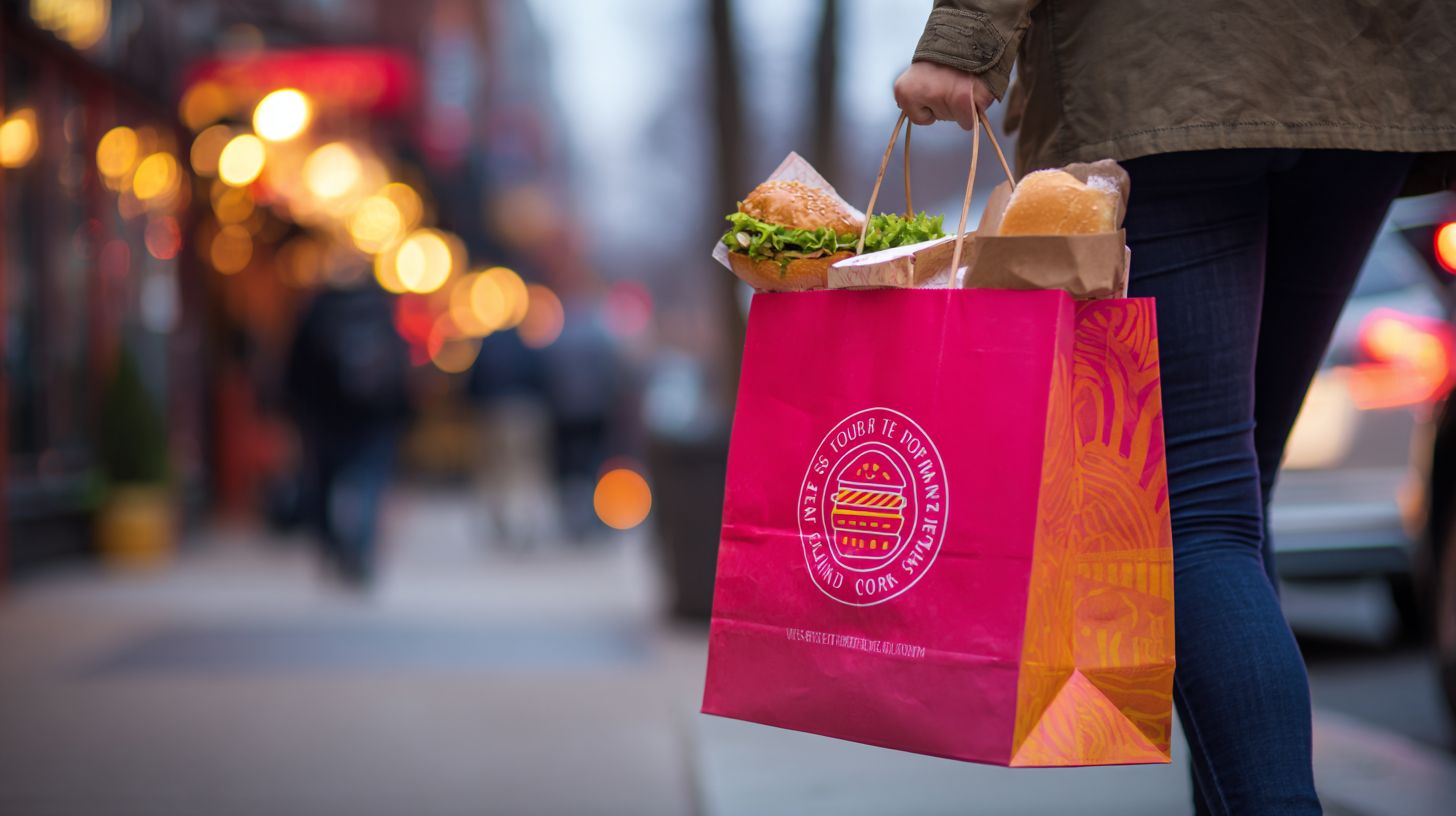
Contemporary consumers increasingly favor brands that align with their environmental values, and the adoption of sustainable materials in packaging serves as a vital bridge to this preference.
To meet this growing demand, organizations should evaluate options such as kraft paper in comparison to recycled plastics. Kraft paper, produced from sustainably sourced wood pulp, presents a minimal environmental impact and achieves complete biodegradability within 3 to 6 months, according to a 2022 study by the Ellen MacArthur Foundation.
This material adheres to the European Union’s Packaging and Packaging Waste Directive 94/62/EC by reducing reliance on non-renewable resources.
Recycled plastics, including recycled polyethylene terephthalate (rPET), effectively divert waste-preventing one ton of landfill accumulation for every 1,000 kilograms produced, based on U.S. Environmental Protection Agency data-although their production involves energy-intensive processes that nonetheless emit up to 70% less carbon dioxide than virgin plastics.
For applications requiring food safety and a rustic aesthetic, such as takeout containers, kraft paper is recommended. In contrast, rPET is ideal for durable, lightweight bottles.
To comprehensively evaluate these choices, employ lifecycle assessment tools like SimaPro to measure environmental impacts and verify compliance with pertinent regulations.
What role do sustainable bags play in positive brand perception?
Adopting sustainability measures represents more than a passing trend; it serves as a foundational element for building trust and enhancing the reputation of your restaurant.
To achieve immediate benefits, begin by implementing sustainable packaging solutions, such as eco-friendly takeout bags. According to a 2022 Nielsen study, 78% of consumers favor brands that prioritize environmental responsibility, which in turn fosters customer loyalty and strengthens public relations efforts.
The following outlines three practical steps to integrate sustainability effectively:
- Transition to recycled paper bags sourced from suppliers such as EcoEnclose (priced at $0.10-$0.20 per unit). These bags are fully compostable and can reduce plastic waste by up to 90%.
- Introduce a “bring your own bag” incentive program, providing a 5-10% discount for customers using reusable options. Track participation through point-of-sale systems like Square to facilitate accurate monitoring and assessment.
- Promote these initiatives via social media channels by sharing before-and-after imagery and collaborating with local influencers for genuine endorsements. Such efforts have the potential to increase foot traffic by 15-20%, as evidenced by data from the Green Restaurant Association.
This strategy requires an initial investment of less than $500 and cultivates enduring goodwill among stakeholders.
7. Encourages Word-of-Mouth Marketing
Envision a customer proudly displaying your stylish handbag to their peers-this exemplifies organic buzz at work.
To capitalize on this phenomenon, emphasize shareable design features, such as customizable straps or eco-friendly materials, which naturally encourage dialogue. Practical strategies include collaborating with micro-influencers to produce authentic unboxing content and organizing pop-up events that prompt attendees to tag your brand on social media.
Debunking common misconceptions: Despite the prevailing notion that word-of-mouth marketing cannot be influenced by packaging, a 2018 Nielsen study revealed that 53% of consumers engage in discussions about products featuring distinctive visuals, resulting in a 20% increase in recommendations. Furthermore, the belief that only viral trends drive success is unfounded; according to Nielsen’s 2020 report, 92% of consumers place greater trust in earned media from routine social shares than in traditional advertising, underscoring the importance of consistent quality for fostering enduring buzz.
How do eye-catching bags spark conversations among users?
Engaging conversations often commence with distinctive elements, and a bold bag design serves as an effective catalyst.
To develop bags that initiate such conversations, the following five shareable design concepts and tools are presented, incorporating principles of color psychology and strategies for social media engagement:
- Vibrant Monochrome Patches: Incorporate fiery reds to evoke energy, as outlined in Eva Heller’s Psychology of Colo*. Apply these patches to canvas totes using Canva’s complimentary design platform. Disseminate on Instagram utilizing the #BoldBagChallenge hashtag to encourage interactive polls.
- Metallic Embellishments: Integrate gold accents to convey a sense of luxury; recommended tool: Rhinestone Hotfix Applicator (available for $15 on Etsy). Share Instagram Stories documenting the application process to foster do-it-yourself engagement.
- Themed Typography Quotes: Employ bold sans-serif fonts in give the power toing blue, which promotes trust according to Pantone studies. Create designs using Adobe Illustrator (offering a $20 monthly trial); tag relevant influencers to facilitate reposts.
- Interactive Pockets: Feature concealed compartments containing surprise notes; utilize EVA foam sheets and fabric glue for construction. Preview these elements on TikTok to stimulate user-generated content.
- Eco-Pattern Prints: Incorporate nature-inspired motifs in calming greens, associated with stress relief per the Yale Environment Review. Produce prints through Spoonflower ($20 per yard); share sustainability insights on LinkedIn to initiate professional discussions.
How to Choose the Right Custom Bag Supplier?
The selection of a supplier holds significant implications for the success of your branding initiatives; therefore, it is imperative to begin by assessing their reliability.
Initiate the decision-making process by establishing priorities between budget constraints and quality standards.
For operations with limited budgets (under $5,000 annually), suppliers on platforms such as Alibaba, particularly those certified under Trade Assurance, may be suitable. Advantages include cost savings of 20-40%; however, disadvantages encompass extended lead times of 4-6 weeks and inconsistent quality.
Alternatively, for those prioritizing quality, consider U.S.-based providers like Printful, which seamlessly integrates with platforms such as Shopify. Benefits include reliable branding materials and a 99% on-time delivery rate, though costs are 15-25% higher.
The subsequent consideration is the balance between environmental sustainability and delivery speed.
To emphasize sustainability, opt for suppliers certified by the Forest Stewardship Council (FSC), such as Packhelp. This choice offers the advantage of eco-friendly materials that enhance brand perception, albeit at a 10-20% premium.
For expedited requirements, select logistics partners affiliated with FedEx, which provide 2-3 day delivery times, offset by elevated shipping expenses.
To ensure dependability, consult reviews on platforms like Trustpilot and conduct trials with small initial orders.
What Design Tips Maximize Branding Impact?
Effective design integrates creativity with strategic planning to ensure lasting brand recognition.
However, common pitfalls can compromise these efforts. The following outlines five prevalent design errors, their underlying causes, and recommended solutions:
- Overcrowding of logos: This often results from an overzealous desire to highlight partnerships, creating visual clutter that confuses audiences. Solution: Restrict usage to one or two prominent logos and adhere to a comprehensive style guide, such as those provided by Adobe, to establish clear visual hierarchy.
- Inconsistent color schemes: These arise from impromptu selections made without established brand guidelines, which erode brand identity. Solution: Adhere to a palette of three to five colors, utilizing tools like Coolors.co, in alignment with usability research from the Nielsen Norman Group.
- Suboptimal typography: This issue frequently stems from the adoption of fashionable fonts that overlook readability. Solution: Limit pairings to no more than two fonts and maintain 1.5-line spacing; evaluate contrast ratios using resources like WebAIM’s accessibility checker.
- Insufficient use of white space: Designers may avoid it out of concern for perceived emptiness, leading to overwhelming layouts. Solution: Dedicate approximately 40% of the design to white space, guided by Gestalt principles of visual perception.
- Low-resolution images: These occur when unverified stock images are sourced without quality assessment, resulting in pixelation across displays. Solution: Obtain high-quality 300 DPI files from reputable sources such as Unsplash or Shutterstock.
Are Custom Printed Bags Worth the Investment for Small Restaurants?
For small restaurants, fiscal prudence is paramount-yet strategic investments in branded bags can yield substantial returns in customer loyalty and brand visibility.
As a proprietor of a small restaurant, you may be evaluating the merits of investing in custom bags. The following guidance draws from authoritative sources, including the National Restaurant Association (NRA) and reports from the Food Institute:
- What is the typical breakeven period? Typically, 3 to 6 months; according to NRA data, an investment of $1,000 in 500 branded bags can increase repeat visits by 15%, thereby recovering costs through an additional $500 in monthly sales.
- How do branded bags foster customer loyalty? Customized designs featuring your logo promote social media sharing; a 2022 Food Dive study indicates a 20% uplift in loyalty attributable to prominent branding.
- What are the most suitable bag types? Eco-friendly kraft paper bags or reusable totes are recommended; selecting options made from 100% recycled materials aligns with the preferences of 70% of consumers, as reported by Nielsen.
- What are key considerations for suppliers? Reputable providers such as Uline or Bags & Bows offer bulk pricing starting at $0.50 per unit; ensure the use of FDA-compliant inks for regulatory adherence.
- How can return on investment (ROI) be measured? Monitor progress through loyalty programs or cards; target a 10% increase in referrals, consistent with findings from the Harvard Business Review on experiential marketing strategies.
FAQs
1. What are custom printed restaurant bags?
Custom printed restaurant bags are takeaway or delivery bags designed with your logo, brand colors, and messaging to promote your restaurant.
2. How do custom printed bags help in restaurant branding?
They increase brand visibility, create a professional image, and turn every order into a marketing opportunity.
3. Are custom restaurant bags suitable for takeaway and delivery?
Yes, they are designed for both takeaway and delivery, ensuring convenience while promoting your brand.
4. What materials are used for custom printed restaurant bags?
They are typically made from paper, kraft, or plastic materials, depending on your packaging needs and sustainability goals.
5. Are eco-friendly restaurant bags available?
Yes, many options like recyclable kraft and biodegradable bags are available for environmentally conscious businesses.
6. Can I customize the size and design of restaurant bags?
Absolutely. You can choose different sizes, styles, and printing options to match your brand identity.
7. How do custom bags improve customer experience?
They provide secure packaging, easy handling, and an appealing look that enhances the overall takeaway or delivery experience.
8. Are custom printed bags cost-effective for restaurants?
Yes, they serve as affordable marketing tools while also functioning as essential packaging.
9. Can custom restaurant bags handle hot and heavy food items?
Yes, high-quality bags are designed to carry hot, greasy, or heavy food items without tearing or leaking.
10. Where can I order custom printed restaurant bags in bulk?
You can order high-quality custom printed restaurant bags in bulk from Aplasticbag, offering reliable and customizable packaging solutions.
Ready to Elevate Your Restaurant Branding?
Turn every takeaway order into a powerful marketing tool with custom printed restaurant bags from Aplasticbag. Whether you’re running a local café, food truck, or national chain, your packaging can leave a lasting impression that keeps customers coming back.
Order Now & Stand Out in Every Delivery!
Don’t settle for plain packaging—upgrade to custom printed bags that promote your brand with every carry-out order.
👉 Order Now in Bulk Across the USA and enjoy fast turnaround, competitive pricing, and premium quality.
Why Choose Aplasticbag.com?
✔ High-Quality Printing – Vibrant, long-lasting prints that make your logo pop
✔ Custom Sizes & Styles – Perfect fit for all types of food packaging
✔ Eco-Friendly Options – Sustainable materials to support your brand values
✔ Affordable Bulk Pricing – Cost-effective solutions for growing businesses
✔ Fast Shipping Across the USA – Get your bags when you need them
✔ Expert Support – Dedicated team to guide your customization process
Make Every Bag a Branding Opportunity
With Aplasticbag.com, your packaging does more than carry food—it carries your brand identity, message, and reputation.
👉 Order Now and transform your restaurant packaging into a marketing powerhouse!

 Custom Restaurant Bags Comparison Guide: Choosing the Right Packaging for Your Food Business
Comments