


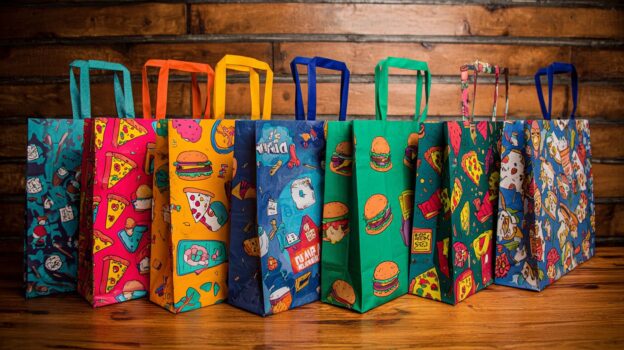
In a competitive dining scene, your restaurant’s takeout bags are silent brand ambassadors, turning every order into a marketing opportunity. Custom designs not only reinforce your identity but also foster customer loyalty, with studies from the Packaging Institute showing branded packaging boosts recall by 30%. Discover eight innovative ideas-from bold logos and eco-friendly materials to interactive QR codes and seasonal themes-that elevate your bags, spark engagement, and drive repeat business.
1. Incorporate Bold Logo Branding
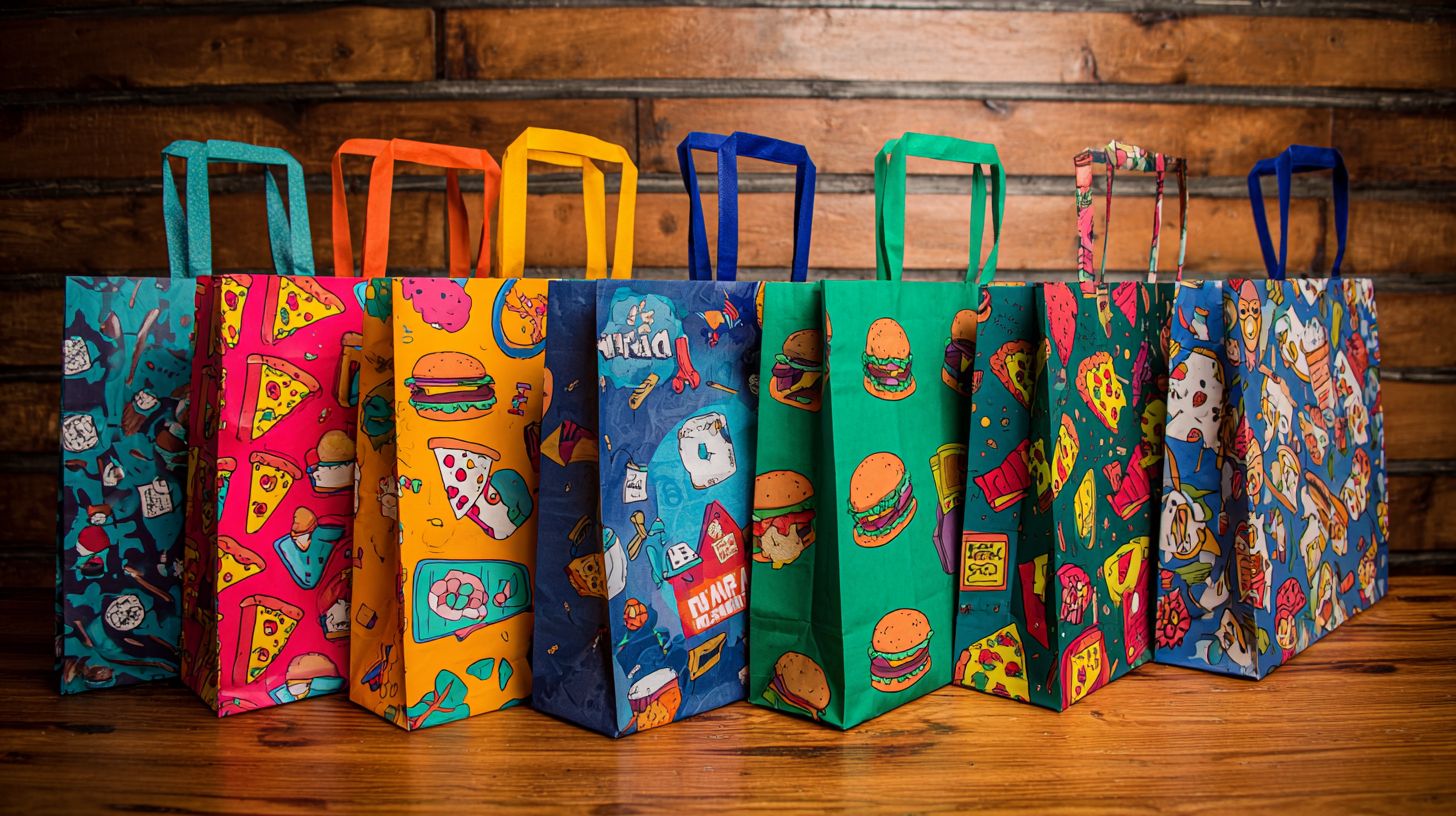
Envision your restaurant’s logo elevating a standard takeout bag into an effective mobile advertisement that patrons transport throughout their daily routines.
To develop compelling logo branding, adhere to the following structured approach:
- Selecting Logo Elements: Opt for uncomplicated, scalable icons such as a stylized fork or chef’s hat, rendered in high-contrast colors (e.g., vibrant red against white for a pizzeria). Ensure adaptability across diverse sizes by utilizing Adobe Illustrator to produce vector files that retain sharpness at any scale.
- Placement Strategies: Position the logo centrally on the bag’s front panel to maximize visibility, with a height of approximately 4-6 inches, and incorporate a smaller iteration in the bottom corner for reinforcement. For handles, configure text-based logos to align with the curvature.
- Printing Techniques: Select screen printing on kraft bags for enhanced durability and cost efficiency on runs of up to 1,000 units ($0.50-$1 per bag through providers such as UPrinting). Employ digital printing for customized colors in smaller quantities. Utilize mockup functionalities in Adobe Illustrator or platforms like Placeit.net to simulate real-world implementation, verifying that the design remains prominent against the bag’s textural surface.
2. Use Eco-Friendly and Sustainable Materials
Many restaurants encounter challenges in reconciling environmental stewardship with operational practicality until they adopt sustainable alternatives.
Consider a mid-sized caf in Seattle that faced significant criticism from environmentally aware customers regarding its plastic waste. Following a local environmental audit, complaints intensified, revealing that the caf’s use of single-use cups and straws contributed to approximately 500 tons of annual landfill waste, according to EPA data.
To address this issue, the caf conducted a thorough supplier audit and transitioned to biodegradable options, including compostable cups sourced from World Centric at $0.15 per unit and bamboo straws from EcoStraw at $0.05 each. The implementation process encompassed staff training through two one-hour workshops and a gradual rollout over four weeks to ensure minimal operational disruption.
The outcomes were noteworthy: a 30% reduction in waste generation, positive feedback in Yelp reviews commending the eco-friendly initiative, and a 15% increase in customer loyalty. These results demonstrate that sustainable practices can benefit both the environment and business profitability.
3. Experiment with Unique Shapes and Sizes
Standard rectangular bags are commonplace and unremarkable, whereas selecting custom shapes can render your packaging distinctive and memorable.
Consider the following three custom options, each designed for specific applications. Hexagonal bags are well-suited to cafes, featuring a stackable design that facilitates grab-and-go pairings with coffee; elongated shapes accommodate sandwiches, offering a slim profile for straightforward handling; gusseted designs manage bulk items such as produce, expanding to handle increased volume without risk of tearing.
| Shape | Functionality Pros/Cons | Cost Pros/Cons | Branding Impact Pros/Cons |
|---|---|---|---|
| Hexagonal (Cafes) | Pros: Stable stacking, ergonomic grip. Cons: Limited capacity for larger items. | Pros: Moderate tooling ($0.10-0.20/unit). Cons: Higher setup fees for die-cutting. | Pros: Modern, eye-catching aesthetic. Cons: Niche appeal may confuse traditional shoppers. |
| Elongated (Sandwiches) | Pros: Fits long items neatly, reduces waste. Cons: Less versatile for non-linear products. | Pros: Low material use ($0.05-0.15/unit). Cons: Custom sizing increases prototyping costs. | Pros: Sleek, premium feel enhances takeaway vibe. Cons: Mimics competitors if not uniquely printed. |
| Gusseted (Bulk) | Pros: Expands to hold more, durable for heavy loads. Cons: Bulkier when empty, harder to store flat. | Pros: Economical for volume ($0.08-0.18/unit). Cons: Reinforced seams add minor expense. | Pros: Conveys abundance, bold visual statements. Cons: Industrial look may dilute upscale branding. |
Assess these options in accordance with your product requirements and target audience to achieve optimal impact.
4. Add Interactive Elements Like QR Codes
Why settle for passive packaging when a simple scan can directly connect customers to your online presence?
Improper handling of QR codes on packaging can diminish this opportunity. Below are five common errors to avoid:
- Poor Placement: Positioning codes inside the package or on curved surfaces impedes scanning. Reason: Such placement creates inconvenience, leading to user frustration.
Solution: Place the code on a flat, exterior surface at eye level, with 2-3 inches of clear surrounding space. - Unoptimized Links: Linking to sites optimized primarily for desktop results in slow loading times. Reason: Mobile users tend to abandon pages that do not load quickly.
Solution: Direct the link to a mobile-responsive page that provides immediate value, such as a 10% discount code. - Inadequate Size or Contrast: Codes that are too small or lack sufficient contrast fail to scan reliably. Reason: This leads to detection issues with device cameras.
Solution: Ensure the code measures at least 1.5 x 1.5 inches and uses high-contrast colors, such as black on white, to achieve a 95% scan success rate in accordance with QR Code Standards guidelines. - Lack of Call-to-Action: Codes without accompanying instructions often go unnoticed.
Reason: Users may overlook them without clear guidance.
Solution: Include prominent text nearby, such as “Scan for Tips & Deals!” to encourage engagement. - Failure to Test: Deploying untested codes can result in malfunctions across devices.
Reason: Variations in smartphone cameras and software can cause inconsistencies.
Solution: Test the code using iOS and Android applications, such as QR Scanner, prior to production.
5. Feature Seasonal or Themed Designs
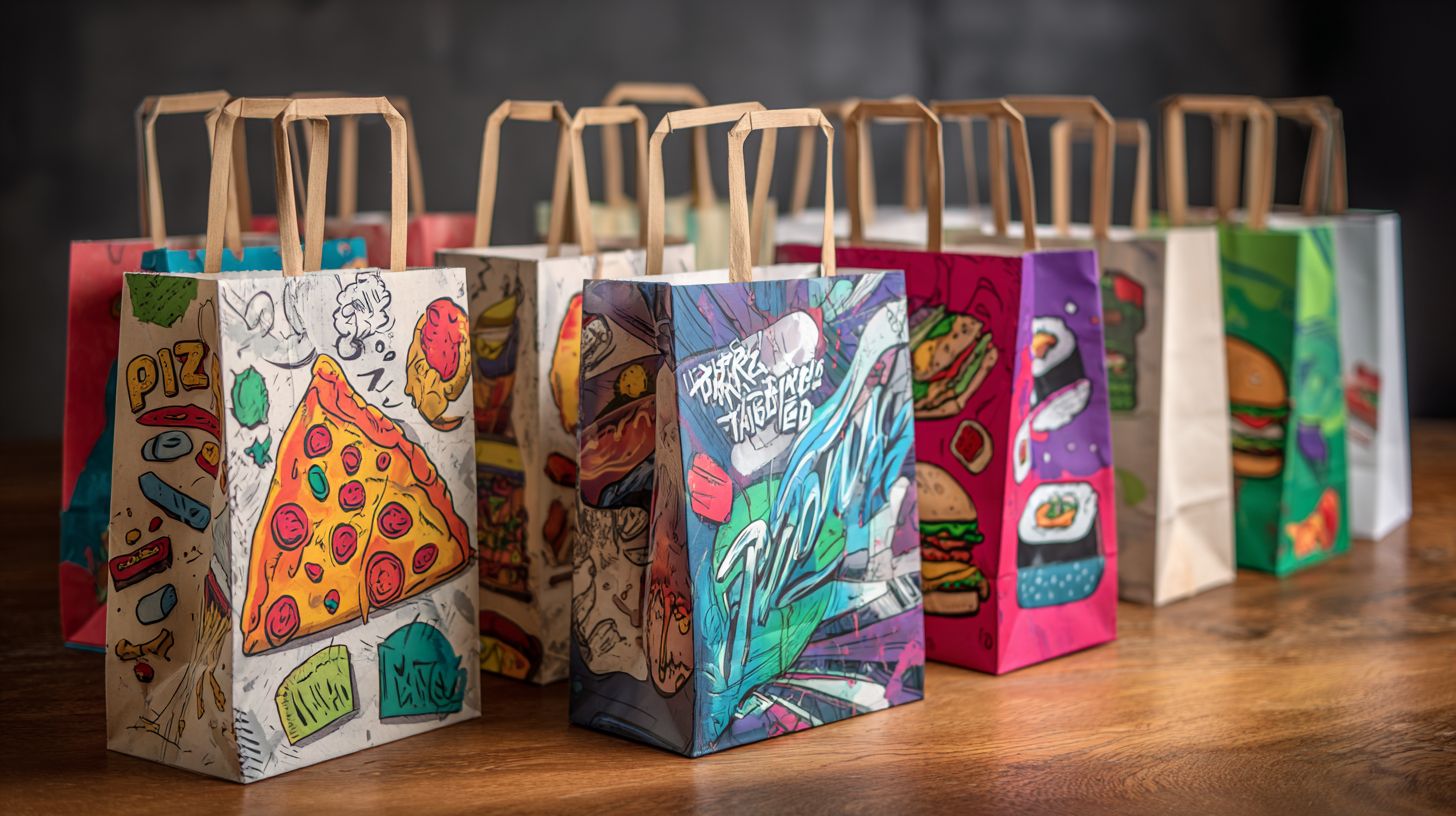
As the holiday season approaches, packaging bags can serve as festive extensions of a menu’s thematic essence.
To develop compelling seasonal designs, experts from the Institute of Packaging Professionals offer the following five recommendations:
- Adapt color palettes to seasonal themes: For summer barbecues, replace cool blues with vibrant reds and oranges to evoke imagery of fire and sunshine. Consult Pantone’s Summer Color Trends report to validate effective combinations.
- Source thematic illustrations in advance: Collaborate with illustrators through platforms such as Behance. For Halloween designs, identify spooky motifs by July to mitigate potential rush fees.
- Coordinate with vendors in a timely manner: Initiate discussions 4-6 months prior, as recommended by professionals at the American Institute of Graphic Arts (AIGA), to ensure custom prints synchronize with menu launches.
- Incorporate interactive elements: Integrate QR codes that link to recipes, enhancing user engagement. Utilize tools like Canva for efficient prototyping.
- Evaluate for sustainability: Select eco-friendly inks from suppliers such as HP, which aligns with findings from the 2023 Nielsen study indicating that 78% of consumers prefer environmentally responsible packaging.
6. Opt for High-Quality, Vibrant Prints
A local diner successfully revitalized its brand image by implementing striking visual prints that captured attention on bustling urban streets.
Joe’s Diner, a family-owned establishment in Chicago, encountered a decline in foot traffic following the shifts induced by the post-pandemic landscape. Informed by the 2022 trends report from Packaging World magazine, which highlighted that vibrant packaging can enhance consumer engagement by up to 25%, the diner undertook a comprehensive rebranding initiative utilizing CMYK full-color printing technology.
The outdated black-and-white menus were replaced with high-gloss, full-spectrum flyers and window decals. These featured bold red and yellow hues designed to evoke the aroma of freshly brewed coffee and the sizzle of grilled burgers. The entire project was executed at a cost of $1,200 through the services of the local printing provider, Vistaprint.
Within three months, foot traffic increased by 35%, as evidenced by data from Google Analytics, with the vibrant visuals effectively attracting pedestrians.
The owners advise initiating efforts with high-contrast designs and conducting A/B testing on printed materials to optimize their appeal. This approach aligns with findings from studies conducted by the International Foodservice Manufacturers Association.
7. Include Personalization Options for Customers
Explore the intricate levels of customization that render each bag uniquely suited to its recipient. Personalization is initiated through variable data printing (VDP), a sophisticated technique that incorporates distinct elements-such as names, logos, or order-specific details-into every individual print iteration.
- To implement this process, first compile a CSV file containing pertinent recipient information, including names, customized messages, or transaction particulars.
- Subsequently, utilize Adobe InDesign’s Data Merge panel to integrate this file with your design template. This functionality superimposes the variables onto the bag artwork, thereby automating production for compatible digital printing systems, such as the Xerox Versant.
For optimal efficiency, integrate point-of-sale (POS) platforms like Shopify or Square through application programming interfaces (APIs) to retrieve real-time order data, thereby enabling immediate personalization.
As evidenced by a 2022 study from the Printing Industries of America, VDP enhances user engagement by 25%, ensuring that each bag resonates with unparalleled relevance.
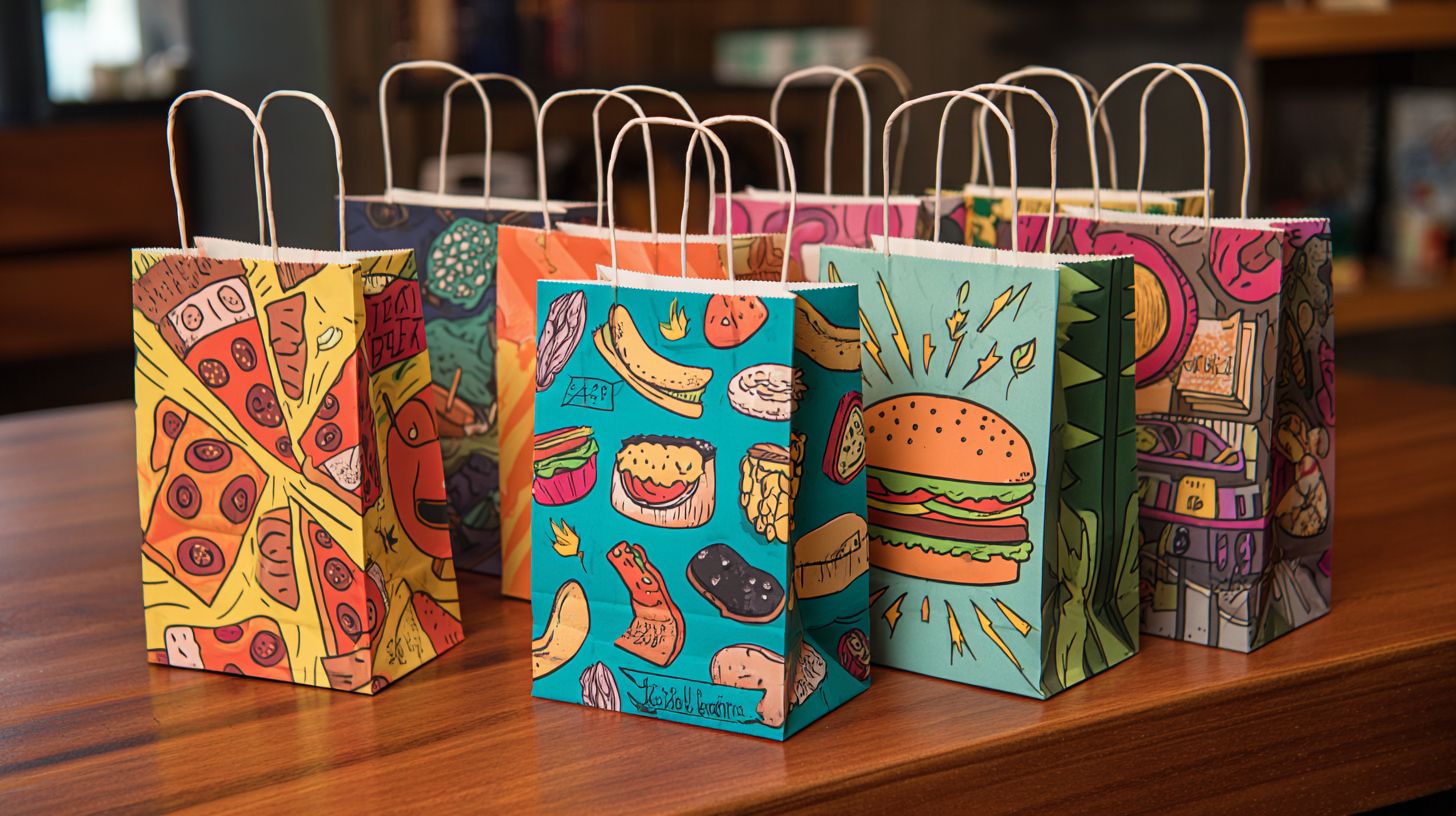
8. Integrate Fun Patterns and Illustrations
Begin by creating a basic sketch to incorporate playful elements into your bags, ensuring they align with your restaurant’s atmosphere.
- Subsequently, digitize the design using free vector libraries such as Freepik or Vecteezy to obtain immediate, royalty-free illustrations. Search for “playful food icons” to identify customizable patterns that reflect the whimsical aspects of your menu.
- Next, implement the designs through spot color printing in software like Adobe Illustrator. This technique utilizes 1-3 inks (for example, Pantone 185 C for vivid reds), which can reduce costs by up to 30% compared to full-color processes, according to data from the Printing Industry Association.
- Test one new pattern per quarter by producing small batches (50-100 units) and monitoring engagement through customer feedback or social media shares to refine the elements that resonate most effectively.
How Can These Designs Boost Your Restaurant’s Visibility?
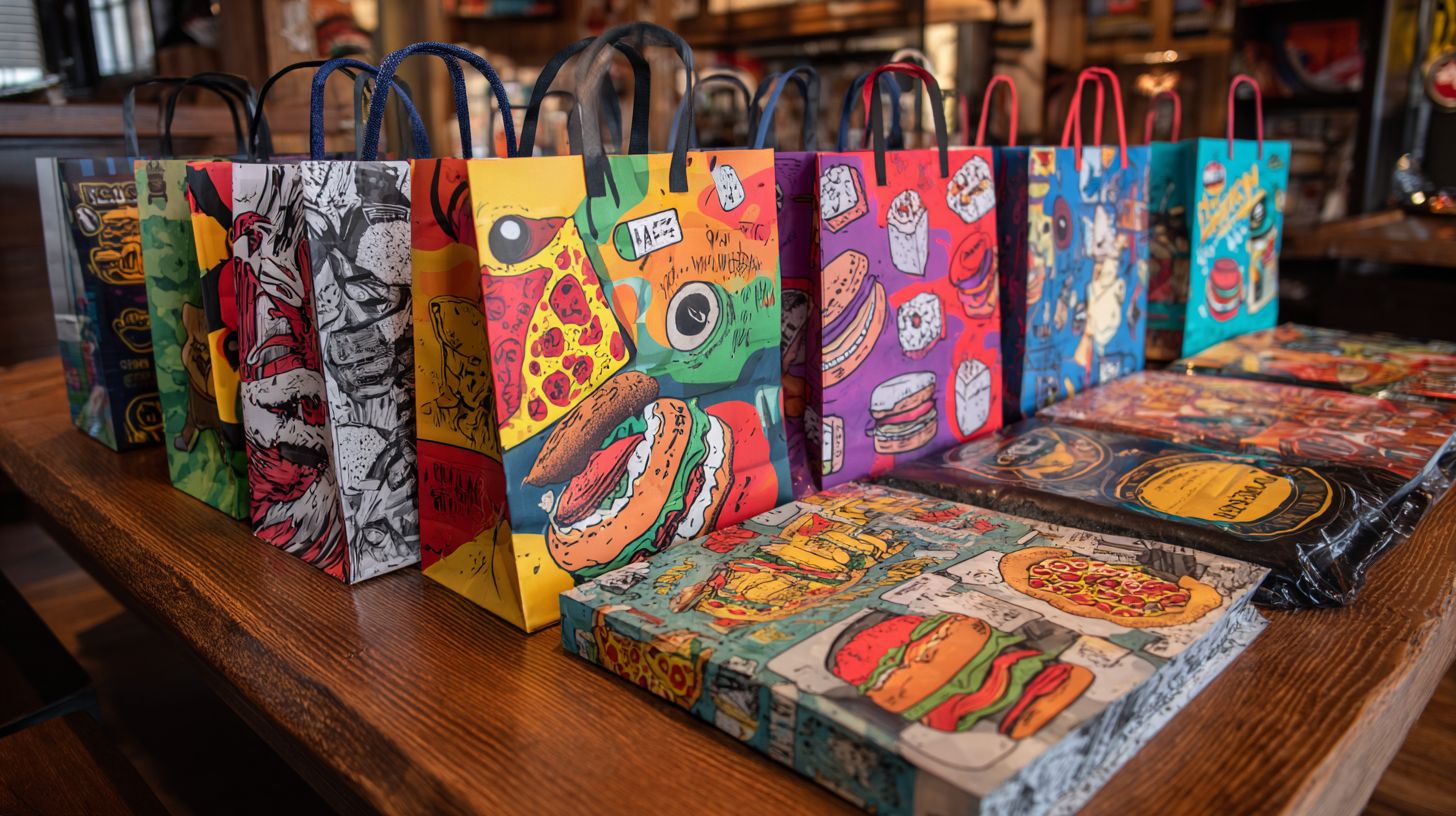
Contrary to the prevailing notion that bags serve solely as disposable items, thoughtfully designed bags can significantly enhance brand visibility in unforeseen manners.
The following addresses three prevalent misconceptions regarding the strategic value of bag design:
- Bags do not enhance brand recall: According to a 2022 Nielsen study, custom-printed bags improve brand recall by 25 percent, as consumers frequently reuse them for everyday tasks such as grocery shopping, effectively transforming them into ongoing promotional tools.To leverage this, incorporate prominent logos and vibrant colors using user-friendly design platforms like Canva for efficient customization.
- Aesthetic benefits are exclusive to luxury brands: The National Restaurant Association’s 2023 report indicates that small restaurants employing eco-friendly, branded bags experienced a 15 percent increase in social media shares, thereby generating substantial online engagement. Businesses can achieve this by collaborating with providers such as Printful, which offers cost-effective and sustainable options beginning at $0.50 per bag.
- Design elements do not influence sales: A 2021 Harvard Business Review analysis reveals that packaging impacts 76 percent of purchasing decisions, with visually compelling designs fostering customer loyalty and encouraging repeat patronage. To optimize results, conduct A/B testing on designs via Google Analytics to measure and refine engagement metrics.
What role does color play in attracting attention?
Certain hues possess the ability to subconsciously attract attention more rapidly than others within a landscape of neutral packaging.
To effectively harness this phenomenon, professionals are encouraged to consult resources on color theory that inform the strategic selection of color palettes.
An excellent foundational text is Sean Adams’ The Designer’s Dictionary of Color ($35), which provides an in-depth analysis of the psychological effects associated with 280 distinct hues, illustrated through practical branding examples.
This resource facilitates the informed choice of vibrant accents, such as fiery orange to evoke a sense of urgency, while mitigating potential conflicts.
This volume can be effectively supplemented by Josef Albers’ Interaction of Color ($20), a foundational treatise on the dynamics of color interactions, corroborated by perceptual studies conducted at MIT.
For practical applications, Pantone’s Color Finder (available free online) generates cohesive color schemes derived from prevailing trends, yielding compelling combinations such as navy accented with teal to capture viewer interest.
Similarly, Adobe Color (free) enables experimentation with analogous palettes, which are particularly suited to subtle refinements; practitioners can utilize its interactive color wheel to evaluate options and prevent visual overload.
How do custom bags enhance customer loyalty?
Envision a customer reusing your branded bag weeks after their visit, thereby subtly reinforcing their association with your establishment.
Q: How does repetition build affinity in customer experiences?
A: Repetition cultivates affinity by forging emotional connections through consistent exposure, as demonstrated by Forrester Research’s 2022 Customer Experience Index. This study revealed that brands achieving repeated positive interactions experience a 23% increase in customer loyalty.
For your restaurant, this translates to the following practical recommendations:
- Provide branded takeout bags featuring your logo and tagline, promoting reuse at markets or events.
- Integrate loyalty applications such as Punchh (with a $99 monthly setup fee) to monitor repeat visits and deliver personalized notifications.
Research from the Harvard Business Review validates the mere-exposure effect, which bolsters subconscious bonds and transforms occasional diners into loyal regulars. To optimize results, target weekly engagement touchpoints.
What Materials Should You Prioritize for Durability?
The selection of appropriate materials for packaging extends beyond aesthetic considerations; it is essential to ensure durability and resilience under practical conditions.
- Commence the evaluation process by identifying critical factors, such as susceptibility to moisture. In environments where moisture is a concern, select waterproof materials, including polyethylene films that demonstrate resistance to water penetration at up to 100% saturation in accordance with ASTM D570 standards, or coated kraft paper, which integrates the structural integrity of paper with an effective moisture barrier. In moisture-free settings, standard corrugated cardboard provides adequate lightweight protection at a reduced cost.
- Subsequently, assess the required weight capacity. For lighter loads under 10 pounds, foam or bubble wrap inserts are suitable. For heavier items exceeding 50 pounds, reinforced solutions such as double-wall cardboard are recommended, capable of withstanding up to 200 pounds of burst strength as validated by ISTA testing protocols.
- For enhanced versatility, hybrid materials like coated kraft offer breathability and durability, making them particularly suitable for e-commerce applications as endorsed by the Fibre Box Association. This methodology achieves an optimal balance between protective efficacy and sustainability, often resulting in a 20-30% reduction in material consumption across various use cases.
Are paper bags sufficient for heavy orders?
For lighter loads, paper bags perform exceptionally well; however, heavier loads necessitate a thorough evaluation of their limitations and potential enhancements.
To assess the suitability of paper bags, employ a structured evaluation process.
- Begin by estimating the load weight: Standard grocery bags can reliably accommodate up to 5 pounds, as supported by packaging studies from the Paper Bag Institute.
- For in-home testing, gradually fill the bag with items such as canned goods, then lift and shake it to replicate transportation conditions; monitor for stretching at the seams, a prevalent failure point that accounts for 40% of tears, in accordance with ASTM D4169 standards.
- Enhance durability by double-layering the bottoms or applying duct tape to the handles, thereby increasing capacity by 20-30%.
- If loads exceed 10 pounds or if base failures occur repeatedly, transition to composite bags that integrate paper with plastic liners for superior strength, as endorsed by EPA guidelines for sustainable heavy-duty packaging.
How to Choose the Right Supplier for Custom Bags?
Selecting suppliers can be a daunting task, yet concentrating on essential criteria can significantly simplify the process.
Consider the case of Sarah, the owner of a busy bistro in Chicago, who encountered a major setback when a substandard printing service resulted in smudged and illegible menus, necessitating $500 in expedited reprints.
Resolved to prevent future issues, Sarah evaluated five printing suppliers based on well-defined standards: initially, confirming certifications such as FSC for environmentally responsible paper sourcing; next, obtaining samples to evaluate color fidelity and material quality; and finally, examining case studies from comparable clients in the hospitality sector.
Resources including the Better Business Bureau website and professional industry forums assisted her in verifying customer feedback.
In the end, she collaborated with a certified local printer that provided rapid prototyping services, reducing her production timeline by 40 percent while delivering high-quality, error-free materials that enhanced customer satisfaction and optimized her operational efficiency.
What factors affect printing quality?
While high-resolution files are essential for optimal results, various frequently overlooked factors can profoundly influence the quality of the final printed output.
Common errors in printing quality control include the following:
- Ignoring substrate compatibility: Utilizing mismatched materials, such as glossy paper with matte inks, can lead to ink bleed resulting from variations in absorption properties. To prevent this, test samples using spectrophotometers, as advised by the Printing Industries of America (PIA).
- Skipping proofs: Proceeding without digital or physical proofs due to haste often results in color inaccuracies stemming from uncalibrated monitors. It is imperative to perform press-side verifications employing devices such as the X-Rite i1Pro to achieve precise Pantone color matching.
- Incorrect color profiles: Employing RGB files within CMYK workflows can produce subdued outputs due to profile incompatibilities. Address this by converting files at an early stage using Adobe Acrobat and validating compliance with ICC standards.
- Inadequate equipment calibration: Issues such as contaminated rollers or misaligned plates may cause ghosting artifacts. Implement routine monthly maintenance in accordance with ISO 12647 standards to maintain operational consistency.
How can you balance cost and customization?
Achieving distinctive designs while maintaining budgetary constraints necessitates strategic trade-offs and meticulous planning.
To optimize outcomes, consider the following three primary strategies.
- First, evaluate minimalist designs against more intricate ones: Minimalist approaches, which emphasize clean typography and stock icons, can reduce costs by 30-50% according to Adobe’s design efficiency studies, although they may result in diminished user engagement.In contrast, detailed custom illustrations can increase interaction rates by up to 20% but often double production expenses.
A balanced solution involves utilizing hybrid tools such as Canva Pro, available for $12.99 per month.
- Second, weigh bulk production against small-scale runs: Bulk printing leverages economies of scale to achieve up to 40% savings on unit costs, as exemplified by Vistaprint’s bulk offerings, making it suitable for high-volume requirements; however, it requires substantial upfront capital investment.Conversely, on-demand services like Printful offer small runs that minimize waste and initial outlays, with costs ranging from $5-10 per item, albeit at a premium per unit.
- Third, assess in-house development versus outsourcing: In-house efforts, supported by free tools such as Figma, can eliminate up to 60% of external fees and provide greater team oversight, though they demand significant internal time resources.Outsourcing to specialized firms like 99designs, where contests start at $299, delivers professional expertise and expedited timelines but escalates overall budgets.
For a cost-effective intermediary option, engaging freelancers through platforms like Upwork can yield substantial savings.
FAQ – Custom Restaurant Bags:
Q: Why are custom restaurant bags important for branding?
Custom restaurant bags help businesses build brand recognition, create a professional appearance, and improve customer experience. Branded packaging also works as mobile advertising when customers carry takeout or delivery bags.
Q: How do custom restaurant bags support marketing strategy?
Custom packaging reinforces brand identity at every customer touchpoint. It increases visibility during delivery, encourages social media sharing, and strengthens brand recall without additional advertising spend.
Q: What printing techniques are used for restaurant bags?
Common printing methods include flexographic printing, digital printing, and screen printing. The choice depends on bag material, design complexity, and order quantity.
Q: How can restaurants design bags for social media appeal?
Restaurants can use bold colors, minimalist branding, creative typography, or interactive elements like QR codes and hashtags to encourage customers to share photos online.
Q: Are eco-friendly custom restaurant bags available?
Yes. Many businesses now use recyclable, reusable, or biodegradable materials such as kraft paper bags to support sustainability goals and appeal to environmentally conscious customers.
Q: How do custom restaurant bags influence customer perception?
High-quality packaging signals professionalism and attention to detail. Customers often associate attractive packaging with better food quality and stronger brand credibility.
Make your restaurant packaging as memorable as your food with high-quality custom bags designed to promote your brand. Whether you need durable takeout bags, eco-friendly options, or fully customized printed packaging, Aplasticbag.com has the perfect solution for your business. Stand out from competitors and leave a lasting impression on every customer order.
Order now from Aplasticbag.com and start packaging your meals with style and professionalism today!

 Custom Restaurant Take Out Bags vs Standard Packaging: What Actually Drives Brand Value and Customer Experience?
  Why Choose Custom Restaurant Bags for Takeaway Branding?
  What Are the Key Features of High-Quality Custom Restaurant Bags?
Comments