
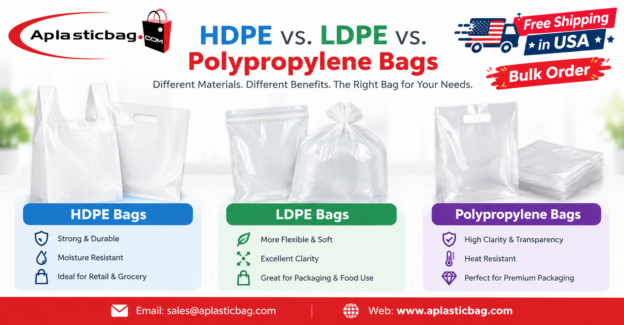
When selecting plastic bags for retail, food, merchandise, or industrial packaging, the material can directly affect strength, flexibility, appearance, durability, and cost. HDPE, LDPE, and polypropylene bags each offer different performance characteristics. Understanding these differences can help businesses choose a bag that fits their product requirements without paying for unnecessary material or sacrificing performance.
HDPE vs. LDPE vs. Polypropylene: Quick Comparison
| Specification | HDPE Bags | LDPE Bags | Polypropylene Bags |
|---|---|---|---|
| Material | High-Density Polyethylene | Low-Density Polyethylene | Polypropylene |
| Feel | Crisp and firm | Soft and flexible | Smooth and firm |
| Flexibility | Moderate | High | Moderate |
| Strength | Excellent for lightweight film | Good flexibility and toughness | High |
| Clarity | Translucent | Clear to translucent | Generally clear |
| Moisture Resistance | Excellent | Excellent | Excellent |
| Common Uses | Grocery, retail, merchandise | Garment, retail, general packaging | Merchandise, specialty and reusable packaging |
| Main Benefit | Lightweight strength | Flexibility | Strength and presentation |
| Best For | Everyday carry applications | Flexible packaging | Applications requiring a clean appearance and durability |
The right material depends on what you are packaging, how much it weighs, how the bag will be handled, and whether flexibility, rigidity, appearance, or durability is the priority.
What Is HDPE and When Should You Use It?
HDPE stands for high-density polyethylene. It is a popular plastic material for lightweight bags because it provides a useful balance of strength, durability, and material efficiency.
HDPE bags are commonly associated with grocery, retail, merchandise, and other carry-out applications. The material has a relatively crisp feel and can maintain its shape better than softer polyethylene films.
For businesses handling large quantities of retail packaging, HDPE can be a practical choice when the objective is to keep the bag lightweight while maintaining adequate strength.
APlasticBag offers custom HDPE bag options, including custom high-density T-shirt bags made with 0.65 mil film. The listed production time for that particular configuration is approximately 4–6 weeks after approval, with a listed quantity of 5,000 bags for the referenced specification.
The important point is that HDPE selection should not be based on material name alone. Bag size, film thickness, handle construction, product weight, and printing requirements all influence final performance.
What Is LDPE and Why Is It Used for Flexible Bags?
LDPE means low-density polyethylene. Compared with HDPE, LDPE is generally softer and more flexible, making it suitable for packaging that needs to bend or conform around its contents.
LDPE is frequently considered for:
- Garment packaging
- Merchandise bags
- Retail packaging
- Flexible protective packaging
- Die-cut handle bags
- Drawcord bags
For example, APlasticBag lists custom die-cut handle bags manufactured from 1.75 mil LDPE. The listed production time is approximately 12–15 working days, and certain configurations can be ordered in quantities starting at 250 bags through the specified post-printing option.
This makes LDPE particularly interesting for businesses that need custom flexible packaging without moving into a heavier material construction.
What Makes Polypropylene Different?
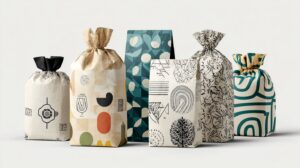
Polypropylene is a separate plastic material with its own performance characteristics. It is known for a smooth surface, good strength, moisture resistance, and an appearance that can work well for merchandise and specialty packaging.
Polypropylene can be considered when packaging needs to combine functionality with presentation.
It is particularly relevant for businesses that want packaging for:
- Retail merchandise
- Specialty products
- Promotional packaging
- Reusable applications
- Products where a smooth, clean appearance matters
Businesses should also distinguish between polypropylene film bags and non-woven polypropylene bags. Although both use polypropylene, their construction, appearance, flexibility, and intended applications can be very different.
HDPE vs. LDPE vs. Polypropylene: Which Is Strongest?
There is no simple answer because material strength is only one part of bag performance.
HDPE is known for its strength and stiffness at relatively low film thicknesses. LDPE provides greater flexibility and can work well where the bag needs to bend or conform around the product. Polypropylene can provide strong performance while offering a distinctive surface and presentation.
The final result depends on:
Material + thickness + bag dimensions + construction + product weight + handling conditions
A thicker LDPE bag, for example, can perform differently from a very thin HDPE bag. Similarly, a polypropylene bag with a particular construction may be appropriate for one application but unnecessary for another.
Expert Guidance From APlasticBag Staff
When selecting a custom plastic bag, businesses often focus on material first. However, the complete specification is more important.
APlasticBag staff guidance: “The product being packaged, its weight, dimensions, and intended use should be considered together when selecting the appropriate material and thickness.”
This is especially important for custom packaging because changing the film thickness or bag construction can affect both performance and cost.
A second consideration is the order quantity.
APlasticBag staff guidance: “Providing the required quantity and desired delivery schedule helps determine which available bag options can best meet the project requirements.”
Rather than selecting a material based only on general characteristics, businesses should provide their packaging supplier with enough information to evaluate the complete requirement.
Realistic MOQ and Lead-Time Considerations
Custom plastic bag orders do not have one universal MOQ or production schedule.
The minimum order quantity can change depending on the bag style, dimensions, printing method, material, and manufacturing process.
For example, product-specific APlasticBag options demonstrate the range that buyers may encounter:
| Example | Material | Example Quantity | Listed Production |
|---|---|---|---|
| Custom Die-Cut Handle Bags | LDPE, 1.75 mil | From 250 in a specified configuration | 12–15 working days |
| Custom HDPE T-Shirt Bags | HDPE, 0.65 mil | 5,000 for listed configuration | 4–6 weeks |
| Imprinted Drawcord Bags | LDPE, 2.5 mil | From 250 for listed configuration | 7–10 business days |
These numbers should be treated as product-specific examples rather than universal MOQ or lead-time promises.
For custom orders, production generally begins after specifications and artwork have been approved. Shipping time should also be considered when planning the final delivery date.
Why Film Thickness Matters
Material selection and thickness should be considered together.
A business packaging lightweight merchandise may not need the same film thickness as a company packaging heavier products. Using an unnecessarily thick bag can increase material usage and cost, while choosing a construction that is too light may affect durability.
APlasticBag describes mil as a measurement used for plastic-film thickness, with different thicknesses suited to different packaging requirements.
This means businesses should provide information such as:
- Product weight
- Product dimensions
- Bag dimensions
- Expected handling
- Required printing
- Approximate order quantity
This information makes it easier to identify an appropriate material and construction.
Custom Polypropylene Bags in USA
Businesses searching for Custom Polypropylene Bags in USA should consider more than the material itself.
The intended application can determine whether film polypropylene or another PP construction is appropriate. Product size, bag style, printing, handles, thickness, and quantity should all be reviewed before production.
For merchandise and specialty packaging, polypropylene can provide a combination of durability and presentation that makes it worth comparing with polyethylene alternatives.
Custom Plastic Bags for Food Manufacturers
Food manufacturers have additional considerations when selecting plastic packaging.
The material, bag construction, thickness, sealing method, printing, and intended food application should be reviewed before production. Businesses should confirm that the specific packaging configuration meets the requirements applicable to their intended use.
For companies researching this category, Custom Plastic Bags for food manufacturers can be evaluated based on the product being packaged and the required packaging specifications.
Custom Bags for Packaging: Start With the Product
The best way to select between HDPE, LDPE, and polypropylene is to start with the product rather than the material.
Ask:
What are you packaging?
A lightweight retail product may have very different requirements from a heavy or irregularly shaped item.
How will the bag be handled?
Frequent carrying, shipping, storage, and repeated handling can influence the required construction.
Does flexibility matter?
If the bag needs to conform around the product, LDPE may be worth considering.
Does rigidity matter?
For applications where a crisp, structured feel is preferred, HDPE may be appropriate.
Does appearance matter?
Polypropylene can be worth evaluating for applications where surface appearance and presentation are important.
How many bags do you need?
Order quantity can affect available options, pricing, and production planning.
Businesses can also compare broader Custom Bags for packaging options based on product type, dimensions, material, printing, and intended use.
How to Choose the Right Plastic Material
A simple decision framework can make the selection process easier.
Choose HDPE when lightweight strength, stiffness, and everyday retail functionality are important.
Choose LDPE when flexibility, softness, and adaptability are more important.
Choose polypropylene when you want to evaluate a strong, smooth material for merchandise, specialty, or presentation-focused packaging.
But the final decision should always consider the complete bag specification rather than material alone.
Get a Free Custom Quote
Choosing the right plastic material is easier when you have your product specifications in front of you.
Get a Free Custom Quote From APlasticBag
Share your product type, bag dimensions, approximate weight, quantity, printing requirements, and preferred delivery timeframe to help determine the most suitable custom bag construction.
Need HDPE, LDPE, or polypropylene bags for your business? Get a Free Custom Quote and start with the right material for your packaging needs.

 Choosing the Right Custom Plastic Bags Partner in USA: 9 Key Factors That Impact Quality, Cost & Delivery
  Why Are Custom Plastic Bags Popular for Trade Shows?
Comments