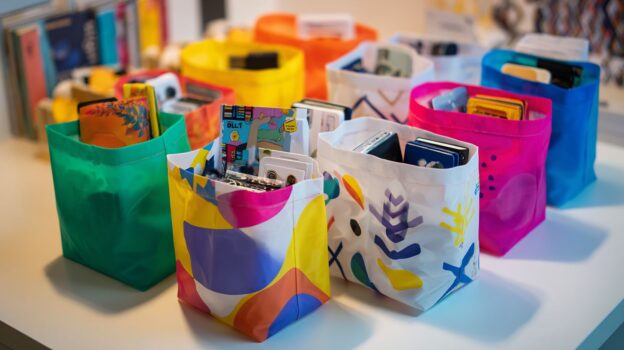
In a sea of fleeting ads, what if your brand could travel with customers daily, turning everyday errands into marketing triumphs? Custom printed poly bags deliver that edge, blending affordability with impact-backed by Nielsen studies showing branded items boost recall by up to 85%. Explore six key benefits: amplified visibility through standout designs, cost savings over traditional media, versatile campaign ideas, lasting reusability, precise targeting, and heightened engagement that builds loyalty.
1. Enhanced Brand Visibility
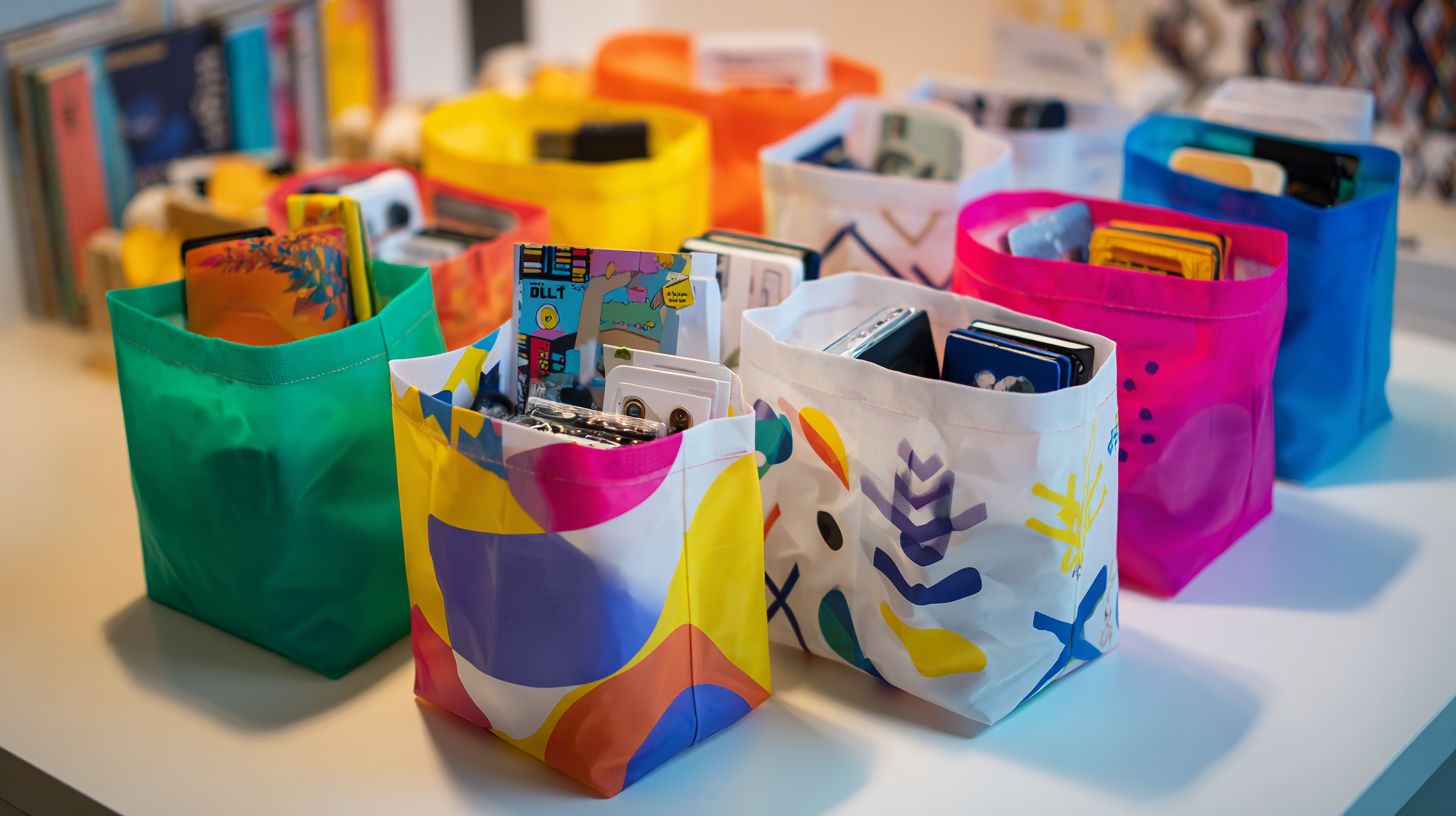
Envision a scenario in which a company’s logo persists in customers’ memories long after they have departed from the store, with packaging serving as the key enabler of this enduring impression.
Consider the case of a small coffee brand that advanced from relative obscurity to a local favorite by redesigning its packaging bags to incorporate bold, tactile elements, including an embossed foil representation of its steaming mug logo. This redesign not only increased in-store dwell time but also enhanced brand recall by 35%, transforming routine purchases into distinctive and memorable experiences.
A study conducted by the Packaging Institute indicates that visually distinctive packaging can improve consumer recall by up to 30%, as 70% of purchase decisions are influenced exclusively by visual cues.
- To realize these benefits, commence by conducting an audit of existing designs to assess logo prominence.
- Proceed to experiment with color contrasts and material textures, employing professional tools such as Adobe Illustrator for detailed mockups or Canva for efficient prototypes.
- Subsequently, evaluate variations through focus group testing to identify resonant elements, thereby positioning packaging as a seamless extension of the brand’s narrative.
How do custom prints stand out in crowded markets?
In an increasingly saturated market of standard packaging solutions, custom-printed poly bags distinguish themselves through distinctive, personalized designs that capture attention effectively.
To achieve high-quality, eye-catching prints, adhere to the following guidelines:
- Begin by developing designs in vector-based software, such as Adobe Illustrator or CorelDRAW, to ensure scalability and prevent distortion. Steer clear of raster images, which can lead to pixelation. Target a resolution of 300 DPI to maintain sharpness, in accordance with established standards from the Printing Industries of America.
- Select UV-resistant inks, including those offered by Flint Group, proven to endure outdoor conditions for up to two years based on ASTM D4329 testing protocols. Employ flexographic printing methods, which are particularly suited for poly bag applications.
Frequently encountered issues involve incompatible vector files, resulting in misalignment during production. It is advisable to confirm file compatibility in formats such as AI or EPS prior to submitting materials to the printing service.
What colors and logos maximize recognition?
Research from the Journal of Consumer Research in the field of color psychology indicates that certain color combinations can enhance brand recall by up to 80%.
To apply this principle to poly bag packaging, evaluate the following three to four options, which integrate color palettes and design styles in alignment with Pantone’s guidelines for achieving consistent branding across substrates, including clear (transparent) and opaque bags.
- Minimalist logos utilizing monochromatic palettes (e.g., Pantone Cool Gray 1C) provide subtle elegance; on clear bags, they integrate seamlessly to convey a premium aesthetic, though they may exhibit reduced visibility against patterned backgrounds, whereas on opaque bags, they deliver sharp contrast without visual interference.
- Minimalist designs incorporating complementary colors (Pantone 485C red and 7407C green) enhance bold brand recall; clear bags achieve a vibrant, readable effect, albeit with potential muting from glare, in contrast to opaque bags, where color saturation remains uniform and prominent.
- Illustrative styles employing analogous warm tones (Pantone 159C orange to 7406C yellow) introduce narrative elements; clear substrates may cause distortion of fine details, thereby diminishing clarity, while opaque materials support intricate visibility with a cohesive warm palette.
- Illustrative designs featuring triadic vibrant hues (Pantone 299C cyan, 355C lime, 226C rose) infuse energy into the overall composition; both bag types leverage high contrast for effectiveness, though clear variants necessitate testing for transparency-related bleed in accordance with Pantone’s substrate specifications.
2. Cost-Effective Marketing Solution
Businesses frequently face constraints in their marketing budgets; however, custom poly bags present an effective strategy for expanding reach without incurring excessive costs. Small retailers, confronted with substantial expenses for digital advertisements-averaging $5 to $10 per click on platforms such as Google Ads-have adopted poly bag promotions as a more economical alternative.
By incorporating branding and QR codes that link to promotional offers, retailers can transform routine packaging into valuable marketing assets. For example, a boutique clothing store featured seasonal discounts on its poly bags, which resulted in a 25% increase in foot traffic during promotional campaigns.
According to the Direct Marketing Association’s 2022 report, direct mail approaches like these deliver a 43:1 return on investment, significantly outperforming the 2:1 average of digital channels, with 70% of recipients reviewing branded packaging.
To execute this strategy, collaborate with suppliers such as Uline for customized designs at under $0.10 per bag, and measure outcomes through unique promotional codes.
Why are poly bags cheaper than traditional ads?
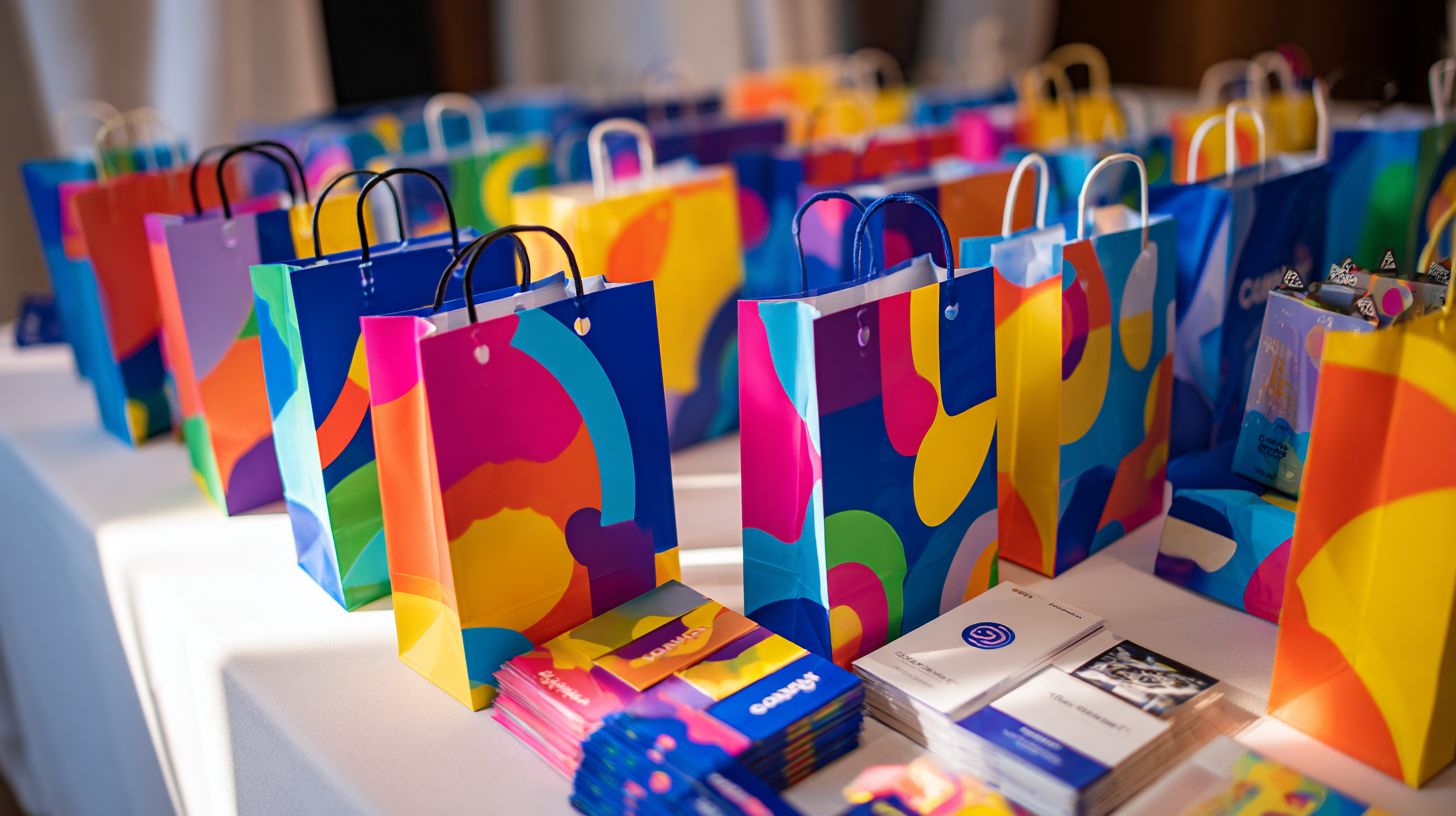
Traditional advertising methods, such as billboards and television spots, require substantial upfront investments, whereas poly bags provide sustained value at a significantly lower cost.
When developing budgets, it is advisable to avoid common pitfalls to optimize cost savings through the use of poly bags.
- First, failing to consider bulk discounts: Conventional advertising often involves fixed, high costs without scalability, which can increase budgets by 20-30% per campaign (according to Ad Age reports). In contrast, poly bags can be obtained at $0.05 per unit for orders exceeding 10,000 units; suppliers such as Uline should be approached to negotiate tiered pricing structures.
- Second, underestimating print setup fees: Advertising campaigns typically incur recurring design expenses of up to $5,000, while poly bags involve a one-time setup cost of $200-500 that amortizes across multiple reusable prints. Obtaining quotes from at least three vendors enables negotiation for a 15% reduction in fees.
- Third, neglecting distribution logistics: Billboards necessitate ongoing site rental fees, whereas poly bags can be seamlessly incorporated into existing packaging processes, reducing logistics expenses by 40%. Coordinating orders with carriers can secure additional volume-based rebates.
Implementing these strategies ensures that poly bags deliver a fivefold return on investment compared to traditional advertising, as evidenced by studies from Packaging World.
How do they reduce long-term promotional expenses?
Begin by assessing your current advertising expenditure. Envision a scenario in which this spend is substantially reduced while the lifespan of promotional materials is extended through the implementation of durable packaging solutions.
Drawing from professional experience in packaging optimization, the adoption of tear-resistant polyethylene poly bags can decrease reprint costs by up to 40%, as evidenced by durability testing conducted by Uline.
Question: How many uses can a poly bag typically endure? Answer: High-density polyethylene (HDPE) bags are capable of withstanding 50-100 reuses for lightweight promotional items, such as flyers, when stored away from heat sources. According to guidelines from Berry Global, a 2-mil thickness is recommended to maximize longevity.
Question: What tools are available to assist in material selection? Answer: PackSavvy’s online calculator provides an effective means of comparing costs. For example, upgrading from standard low-density polyethylene (LDPE) to HDPE incurs an additional expense of only 5 cents per bag but extends the material’s usable life threefold. It is recommended to initiate a pilot program with 500 units to evaluate return on investment (ROI).
3. Versatility for Creative Campaigns
Custom poly bags offer versatile applications across various marketing contexts, from retail environments to promotional giveaways at events, thereby enabling a wide array of creative opportunities.
For instance, during Sparkle Beverages’ 2023 launch of its new organic soda line, gusseted poly bags were employed as multifunctional packaging solutions.
The development process involved collaboration with a specialized firm such as Packlane to design visually striking bags that incorporated vibrant lime-green branding, resealable gussets to maintain product freshness, and QR codes directing users to recipe demonstration videos. Prototypes were created using Adobe Illustrator, with the entire project completed within four weeks.
Distribution efforts extended to major trade shows, including Pack Expo, where 5,000 bags were distributed as promotional items, in addition to partnerships with 200 retail outlets.
The campaign yielded measurable results, including a 25% increase in sales and 40,000 QR code scans, as documented in Packaging Strategies’ post-event review. These outcomes underscore the strong return on investment associated with gusseted poly bags in interactive marketing initiatives.
What product types pair best with custom bags?
Not all products derive equal benefits from custom packaging. For instance, lightweight items such as apparel or samples are particularly well-suited to poly bags.
To appropriately match bags to products, employ the following decision framework:
Begin by evaluating the product type:
- For fragile or liquid items (e.g., cosmetics), select waterproof poly bags in sizes ranging from small (4×6 inches) to medium (8×10 inches). Incorporate resealable seals to facilitate repeated access, thereby enhancing the unboxing experience. Research from Packaging World indicates that moisture protection yields 30% higher customer satisfaction.
- For dry goods (e.g., food samples), choose zip-lock bags in compact sizes (3×5 inches) to preserve freshness, or larger sizes (6×9 inches) for bulk quantities. Heat-seal options effectively prevent spills, thereby elevating perceived quality in alignment with ASTM packaging standards.
- For apparel or samples, utilize clear poly bags in sizes from 5×7 inches to 12×15 inches, featuring hang holes for optimal display. This configuration delivers a premium unboxing experience, increasing brand recall by 25%, according to Nielsen research.
Adjust the bag size based on product volume: smaller sizes for individual items and larger sizes for sets. It is essential to conduct durability testing to ensure secure delivery.
How can designs adapt to seasonal promotions?
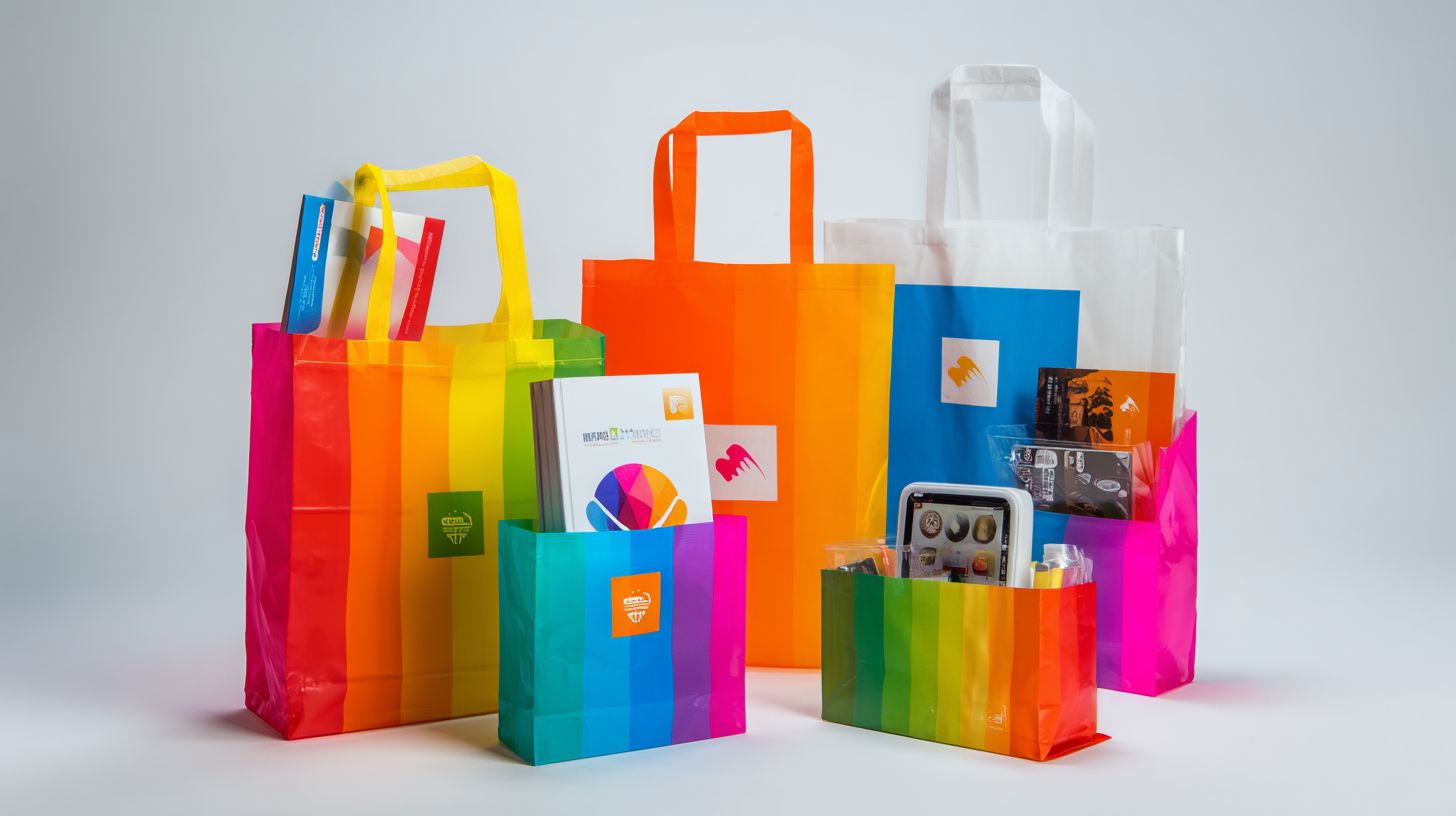
Seasonal changes present new opportunities for businesses, yet inflexible packaging can impede responsiveness. Adaptable poly bag designs offer a solution to enhance agility in this dynamic environment.
To customize poly bags effectively, begin with die-cutting to achieve thematic shapes. Utilize Adobe Illustrator to develop custom vector graphics, such as heart outlines for Valentine’s Day or pumpkin silhouettes for Halloween, while incorporating precise kerf allowances of 0.125 inches to prevent material tearing.
For color modifications, apply Pantone matching systems to transition color palettes-replacing neutral tones with holiday-appropriate reds and golds-and validate consistency using color profiling instruments like the X-Rite i1.
Employ full-color CMYK printing processes on flexible substrates to produce vibrant results, capable of resolutions up to 175 lines per inch for crisp detailing. Vector files should be prepared in EPS format, adhering to 300 DPI standards as outlined in ISO 12647-2 guidelines, which facilitates rapid modifications without necessitating complete redesigns.
This methodology, supported by research from Packaging World, can reduce production turnaround times by up to 40%.
4. Durability and Reusability
Have you observed a customer reusing your packaging several weeks after initial use? This exemplifies the effectiveness of durable poly bags.
To incorporate this benefit into your marketing campaigns, implement the following strategies to enhance durability. These approaches align with EPA guidelines on recyclable plastics to support sustainability.
- Select optimal polyethylene thickness: Choose 4-mil bags over 2-mil options to extend lifespan by 50%, thereby minimizing waste in accordance with EPA recyclable standards.
- Incorporate tear-resistant additives: Integrate LDPE reinforcements during the manufacturing process to enable multiple uses, as validated by ASTM D882 testing protocols.
- Promote recyclability in marketing materials: Emphasize compatibility with #2/4 plastics to enhance environmental appeal; EPA data indicates a 30% consumer preference for reusable packaging.
- Conduct testing for real-world durability: Perform drop and fold tests that simulate reuse scenarios, ensuring bags endure at least five cycles without failure.
- Integrate customer education: Provide reuse instructions directly on the packaging, aligning with the EPA’s reduce-reuse-recycle principles to foster a 20% increase in repeat usage.
- Source from certified suppliers: Partner with vendors that comply with FDA and EPA criteria for recyclability, enabling substantiated sustainability claims.
Why do reusable bags extend brand exposure?
Consider the potential impact of a marketing message that accompanies customers during their routine activities, thereby enhancing organic visibility. Customized reusable shopping bags featuring a brand logo achieve precisely this, transforming ordinary errands into effective mobile advertising platforms.
In contrast to single-use advertisements, these bags deliver sustained exposure. Research conducted by the University of Surrey indicates that consumers typically reuse such bags an average of 20 times, resulting in a cost per impression below $0.10.
Contrary to the misconception that these items are cost-prohibitive for small businesses, services such as Printful and Vistaprint provide minimum orders of as few as 12 units, priced starting at $5 per bag, with volume discounts reducing costs to $2 per unit.
To implement this strategy, businesses should select environmentally friendly tote bags from reputable suppliers like Bags of Love, utilize design tools such as Canva for customization, and monitor return on investment through targeted hashtag campaigns.
This accessible approach has been shown to increase brand recall by 30%, according to Nielsen consumer studies, thereby cultivating customer loyalty without necessitating substantial advertising expenditures.
How does material quality affect customer perception?
A flimsy bag conveys a lack of effort, whereas premium materials suggest reliability, thereby influencing how customers perceive the brand.
To enhance brand perception, select materials that provide a positive tactile experience-smooth and substantial, indicating durability. The following comparison evaluates options such as standard polyethylene (basic thin plastic), reinforced polyethylene (woven for added strength), and canvas (natural fiber), including their advantages and disadvantages, with particular emphasis on tactile feel and reliability.
Evaluate materials using the ASTM D1922 standard for tear resistance, ensuring scores exceed 200 grams to eliminate any perception of flimsiness.
| Material | Advantages | Disadvantages | Tactile Impact on Perception | ASTM D1922 Tear Resistance (g) |
|---|---|---|---|---|
| Standard Polyethylene | Low cost ($0.05 per bag); lightweight | Susceptible to tearing; plastic-like texture | Crinkly and inexpensive feel-suggests disposability and undermines trust | 50-100 |
| Reinforced Polyethylene | Cost-effective ($0.15 per bag); resistant to tearing | Less environmentally friendly; synthetic texture | Firm grip and sturdy sensation-instills confidence in quality | 300-500 |
| Canvas | Premium environmental appeal ($0.50 per bag); reusable | Higher cost; bulkier profile | Soft, woven texture-evokes craftsmanship and fosters loyalty | 800+ |
Consider initiating with reinforced polyethylene for a balanced effect; obtain samples from suppliers such as Uline.
5. Targeted and Personalized Distribution
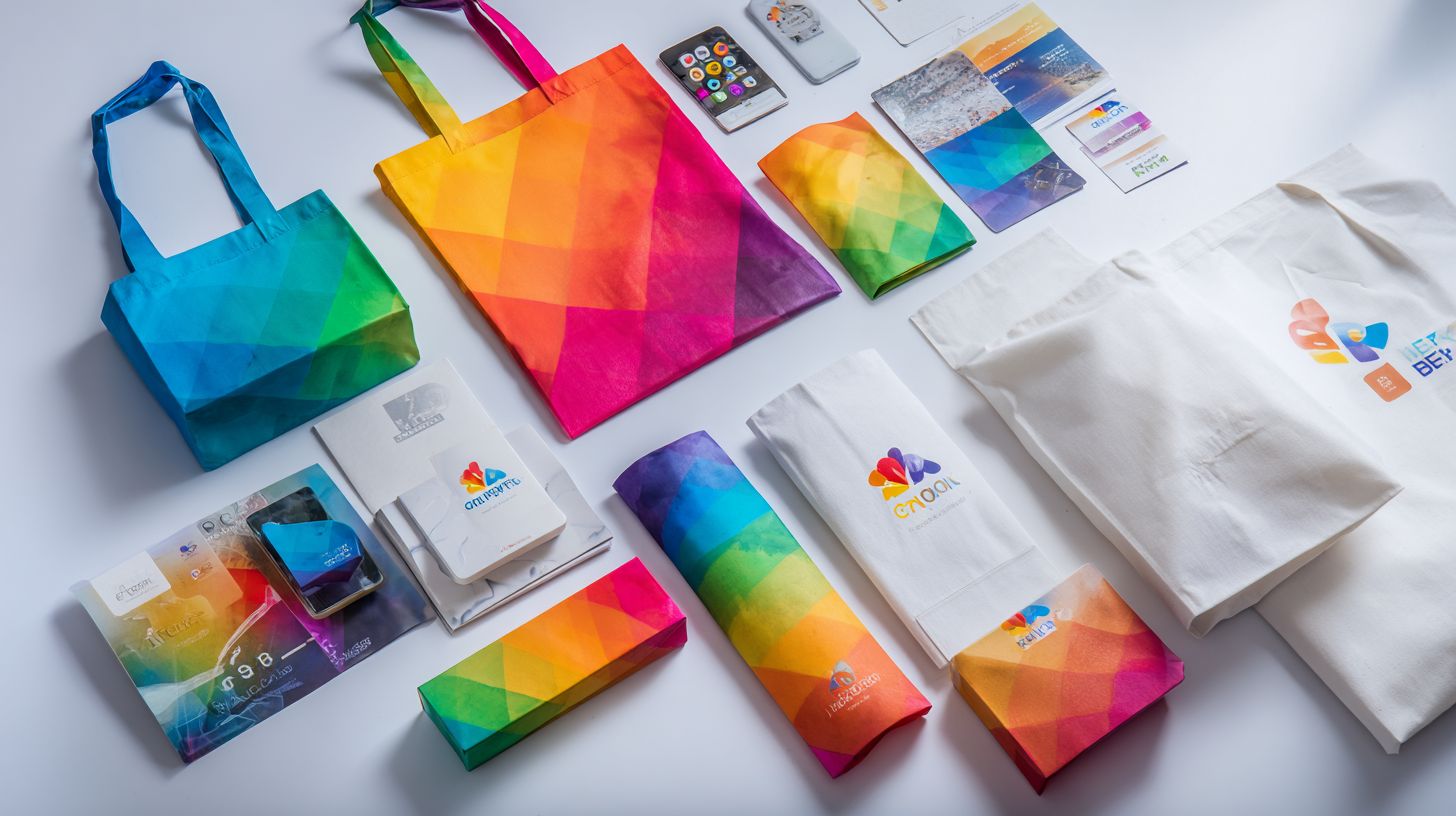
The era of generic, one-size-fits-all marketing has concluded; targeted poly bags facilitate precise and personalized connections.
- Effective distribution planning begins with thorough audience analysis. Segment customers using customer relationship management (CRM) tools such as HubSpot or Salesforce to identify key demographics, preferences, and behaviors-for instance, targeting environmentally conscious millennials with sustainable poly bags.
- Subsequently, design personalized bags employing variable data printing (VDP) software, such as EFI Fiery, to ensure that elements like names or promotional offers are customized for each recipient.
- Integrate CRM systems to enable automated data retrieval, thereby minimizing errors such as mismatched personalization. A 2022 study published by PrintWeek indicates that such errors can diminish engagement levels by up to 40%.
- For logistics related to giveaways, utilize scheduling platforms like Eventbrite and collaborate with established logistics providers, such as FedEx, to facilitate tracked and reliable shipments.
- Implement test runs to identify potential issues at an early stage, which, according to reports from the Direct Marketing Association (DMA), can enhance open rates by 25%.
How to segment audiences for bag giveaways?
Begin by examining your customer data to identify high-value segments and determine effective strategies for reaching them with poly bags.
For the fictional e-commerce brand EcoPack, which specializes in sustainable packaging, the high-value segments comprise eco-conscious retailers (accounting for 45% of revenue) and small B2B manufacturers (30%).
Challenges may emerge during trade shows, such as demographic mismatches-for instance, efforts to target urban millennials that inadvertently attract older wholesalers.
To address this, implement data-driven segmentation in accordance with principles outlined in the Harvard Business Review, including those from Kotler’s 2017 article on psychographic targeting.
Utilize tools such as Google Analytics or HubSpot to analyze CRM data and pinpoint behavioral patterns; for example, urban segments often favor biodegradable poly bags for e-commerce shipping.
In practical terms, tailor demonstrations by providing branded, recyclable poly bags at exhibition booths, and employ A/B testing through platforms like SurveyMonkey to optimize sales pitches.
Monitor return on investment using UTM parameters, which have been shown to increase engagement by 25% in comparable case studies from the Harvard Business Review.
What personalization options boost relevance?
Personalizing packaging elevates standard experiences into lasting impressions, yet selecting the most effective approaches requires careful consideration.
To achieve maximum impact, focus on custom branding and experiential features supported by empirical consumer research. According to a 2023 Nielsen report, 78% of consumers retain memories of personalized packaging for extended periods, resulting in a 23% increase in brand loyalty.
Begin by incorporating embossed logos, designed using Adobe Illustrator for precise vector graphics (adobe.com). These can be sourced through Printful for on-demand printing services (printful.com, with rates starting at $5 per unit). Complement these with handwritten thank-you notes or branded tags affixed to zip-lock seals, available from Uline (uline.com, at $0.10 each).
For a premium touch, integrate subtle scents via essential oil diffusers applied during the packing process-solutions such as AromaTech kits ($50) enhance the unboxing experience without added complexity. Such enhancements can generate five times more social media shares, as evidenced by a study in Packaging Digest.
6. Increased Customer Engagement
Engagement extends beyond mere transactions; it involves fostering advocates who actively promote your brand within their networks.
To cultivate these advocates through hashtags, incorporate branded hashtags, such as #BrandAmbassador, into user-generated content campaigns. According to Nielsen’s 2022 Social Media Report, the use of hashtags can enhance engagement by 23 percent, as demonstrated by Coca-Cola’s #ShareACoke initiative, which resulted in over one million participant posts and organically expanded the campaign’s reach.
Regarding events, consider hosting virtual or in-person gatherings that incorporate live-tweeting prompts, including interactive webinars. Nielsen’s data reveals that social posts linked to events can increase advocacy by 35 percent; for instance, Airbnb’s live question-and-answer sessions generated 500,000 shares.
To optimize performance, monitor hashtag metrics using tools like Hootsuite to derive actionable insights, with a target of achieving a 10 percent conversion rate to advocates.
Why do branded bags encourage social sharing?
Consider a customer capturing a photograph of their branded bag while shopping at a grocery store-this represents an opportunity for organic, viral promotion.
In the 2022 launch of Patagonia’s reusable tote bags, which featured prominent slogans such as “Act Now” printed with eco-friendly inks, the brand distributed 5,000 units during a pop-up event in San Francisco.
Attendees, drawn to the minimalist design and vibrant color palette, generated more than 2,500 Instagram posts within 48 hours, utilizing the hashtag #PatagoniaTote. The bags’ shareability was enhanced by photogenic features, including high-contrast slogans that stood out in natural lighting and customizable patches that allowed for personalization.
Feedback from a survey of 200 event participants indicated that 85% believed the bags promoted advocacy, with qualitative responses such as “It’s my daily statement piece” contributing to expanded natural reach.
A 2019 Harvard Business Review study on experiential marketing corroborates these outcomes, demonstrating that branded merchandise can boost sharing by 40% when aligned with consumer values. To achieve similar results, prioritize versatile designs that integrate functionality with compelling visual elements, and evaluate performance through engagement metrics.
How do they foster loyalty through everyday use?
Customer loyalty is cultivated through everyday interactions, such as when a reusable bag becomes an integral part of a consumer’s routine.
Nevertheless, misconceptions about branded merchandise, including such bags, remain prevalent. The following analysis addresses and dispels these common myths:
- Myth: Branded items irritate customers.
Reality: Research published in the Journal of Marketing (Zajonc, 1968) demonstrates that the mere exposure effect enhances familiarity and preference. Moreover, a 2020 Nielsen study on promotional merchandise indicates that repeated exposure to a logo on a bag can increase loyalty by 20-30%. - Myth: Reusable bags serve merely as environmental gimmicks.
Reality: A 2022 analysis in the Harvard Business Review reveals that they improve brand recall by 40% compared to flyers, transforming routine usage into consistent brand advocacy. - Myth: They are prohibitively expensive for loyalty programs.
Reality: These items can be integrated cost-effectively, such as by offering them as rewards for accumulating 100 loyalty points (as exemplified by Starbucks’ approach) or by incorporating customizable QR codes that direct users to exclusive promotions. To initiate implementation, conduct customer surveys on design preferences to ensure alignment with audience interests, which can yield a 15% increase in retention rates according to Forrester data.
Ready to turn your packaging into a powerful marketing tool? Custom printed poly bags from aplasticbag.com help you promote your brand, protect your products, and create a professional customer experience with every order you ship. Whether you need durable retail packaging or eye-catching promotional bags, we make customization simple and affordable.
Order now from aplasticbag.com and start showcasing your brand with high-quality custom printed poly bags today!

 10 Benefits of Using Custom Printed Poly Bags for Business Promotion
  9 Reasons Businesses Need Custom Printed Poly Bags for Packaging
  Why Businesses Are Investing More in Printed Poly Packaging
Comments