

In the bustling world of takeout, a simple bag can transform into a powerful brand ambassador, turning every customer into a walking advertisement. Custom restaurant bags not only enhance functionality but also drive loyalty and sustainability. Explore six expert tips: selecting optimal materials, embedding bold branding, ensuring usability, embracing eco-designs, building durability, and infusing thematic flair to captivate diners and stand out.
1. Choose the Right Material

Selecting the appropriate material forms the cornerstone of effective restaurant packaging designed to endure the rigors of daily operations.
- Initiate the process by assessing your specific requirements: Heat-resistant materials, such as foil-lined paper, are essential for hot foods, whereas waxed cardboard is ideal for cold items.
- Proceed to evaluate samples through rigorous testing, including drop tests for structural integrity (ensuring no leaks after falls from 1 meter) and grease resistance assessments compliant with ASTM F119 standards.
- Conduct a cost analysis by soliciting bulk pricing quotations from reputable suppliers, such as Uline.
- To promote sustainability, give preference to compostable materials certified by the Biodegradable Products Institute (BPI), including polylactic acid (PLA) bioplastics.
Checklist:
- Strength: Must withstand a 5 kg load without deformation (e.g., a rigid corrugated sample, 2 mm thick, featuring brown flecks).
- Cost: Under $0.05 per unit for high-volume production (e.g., standard plain paper versus $0.15 for premium eco-film).
- Sustainability: 100% biodegradable within 90 days (e.g., a green-tinted bagasse sample, fibrous and plant-derived).
This systematic procedure facilitates the identification of robust, environmentally responsible solutions in under one hour.
What materials offer the best balance of strength and cost for restaurant bags?
To ensure the structural integrity of takeout packaging-such as transporting a complete order of pasta and salads without rupture-it is imperative to select appropriate materials judiciously.
For takeout packaging applications, kraft paper, plastic, and reinforced composites warrant consideration. Each material provides distinct advantages and limitations in terms of strength, sustainability, and cost, as evidenced by research such as the Ellen MacArthur Foundation’s 2020 report on circular packaging, which underscores plastic’s robustness while noting its adverse environmental consequences.
| Material | Pros | Cons |
|---|---|---|
| Kraft Paper | Biodegradable; cost-effective ($0.05-0.10 per bag); absorbent for greasy foods | Lower tear resistance (holds ~5-10 lbs); not waterproof without coating |
| Plastic (e.g., HDPE) | High strength (up to 50 lbs); lightweight and waterproof; recyclable in many areas | Non-biodegradable; contributes to microplastic pollution per EPA data |
| Reinforced Composites (e.g., paper-plastic blends) | Superior load-bearing (20-40 lbs); eco-friendlier than pure plastic; customizable | Higher cost ($0.20-0.50 per bag); complex recycling processes |
Selections should be assessed in accordance with operational volume and environmental objectives to identify the most suitable option.
How can material choice align with your restaurant’s sustainability goals?
According to a Nielsen report, over 80% of consumers prefer brands that demonstrate eco-conscious practices. However, many restaurants continue to face challenges related to waste management.
For instance, a mid-sized bistro in Seattle encountered significant public backlash due to the excessive use of single-use plastics, which contributed to overburdened local landfills. The establishment’s turnaround occurred after it transitioned to sustainable alternatives, including compostable plates sourced from Eco-Products and bamboo utensils from Greenware. This change resulted in a 70% reduction in plastic waste within six months.
This approach aligns with Chipotle’s 2020 sustainability initiative, in which the company replaced plastic forks with wooden alternatives across more than 2,700 locations, achieving a 25% reduction in emissions as reported in its sustainability documentation.
To adopt similar measures, restaurants should begin by conducting a thorough audit of their disposable inventory, establishing partnerships with reputable suppliers such as those mentioned, and providing staff training on proper composting procedures. These steps not only enhance customer loyalty but also ensure compliance with relevant regulations, including California’s SB 54 plastic ban.
2. Incorporate Strong Branding Elements
Branding extends beyond mere logos; it encompasses the development of a distinctive and memorable manifestation of your restaurant’s identity on every bag.
To assist restaurant owners in effectively integrating branding, the following presents an expert Q&A format addressing five prevalent inquiries.
Q1: How should one select bag designs that align with the brand?
A: Begin by defining the brand’s fundamental personality. For example, in the case of a cozy Italian restaurant, incorporate warm red hues and pasta-inspired motifs. Employ design tools such as Canva’s free tier to develop prototypes, and validate them through customer surveys involving 50 participants, targeting 80% approval rates, as supported by Nielsen branding research.
Q2: What is an efficient method to incorporate personality without incurring additional expenses?
A: Utilize printed taglines, such as “Savor the Moment,” on bag handles with eco-friendly inks sourced from suppliers like Uline, which can yield savings of $0.10 per bag. This approach enhances brand recall by 25%, according to findings from the Harvard Business Review.
Q3: How can consistency be maintained across bags and menus?
A: Develop a comprehensive brand style guide using Adobe Spark (available at no cost), which details specifications for fonts and colors. Ensure staff training on these guidelines, as inconsistencies in branding can result in a 15% decline in customer loyalty, per Forrester Research.
Q4: Is personalization advisable for special events?
A: Affirmative, particularly for holidays; for instance, create Halloween-themed bags featuring adapted logos through providers like Vistaprint at approximately $1.50 per unit. Such initiatives correlate with seasonal sales increases of up to 30%, as reported by National Restaurant Association data.
Q5: How can the impact of branding on bags be quantified?
A: Monitor repeat customer visits following a redesign via analytics platforms such as Square, with a target uplift of 10%. Refer to the Strong Brands study, which indicates that visual branding elements can drive a 20% increase in foot traffic.
Which logo placement maximizes visibility on custom bags?

- Commence the design process by creating initial sketches of bag layouts to pinpoint optimal locations for logo placement.
- Subsequently, construct a decision tree to determine the most suitable positions, taking into account factors such as bag type, intended usage, and visibility requirements.
- Initiate the analysis with bag type: For backpacks, emphasize the front panel to ensure prominent frontal visibility when carried over the shoulder; for tote bags, select the side gusset to capture lateral views.
- Proceed to evaluate usage contexts-if the bag is intended for casual purposes (e.g., gym bags), position the logo prominently on the base to accommodate ground-level perspectives; for professional applications (e.g., briefcases), incorporate a more discreet embroidery on the flap.
- Consider viewing angles meticulously: Achieve 180-degree visibility on duffel bags through placement on the end panels, or implement 360-degree encircling designs on drawstring bags.
- Utilize professional tools such as Adobe Illustrator to develop and refine the decision tree branches; validate the designs by creating mockups on fabric swatches to simulate real-world viewing angles.
How can colors from your brand palette enhance bag appeal?
Colors evoke specific emotions; for instance, a brand’s vibrant reds may convey energy, while cool blues suggest calmness.
However, the improper application of colors to bags can diminish this intended impact. The following outlines five common mistakes, including explanations and corrective measures:
- Clashing hues: Combining bold reds with neon greens produces visual disarray, overwhelming the design. Solution: Utilize the color wheel-such as analogous schemes-to achieve harmony; test combinations with the Adobe Color tool.
- Poor contrast: Light text on pastel bags impairs readability, causing viewers to overlook critical details. Solution: Target a contrast ratio of 4.5:1 as per WCAG guidelines; incorporate black accents for enhancement.
- Overloading colors: Employing five or more shades results in bags that appear excessively busy. Solution: Limit the palette to 2-3 colors.
- Ignoring material interaction: Colors may fade or alter when applied to certain materials like leather. Solution: Select dyes validated against Pantone standards.
- Cultural insensitivity: White symbolizes purity in Western cultures but mourning in many Asian contexts. Solution: Consult cross-cultural research, such as studies from Nielsen, to ensure appropriateness.
3. Prioritize Functionality and Usability
Functionality transforms a basic bag into an effective tool that enhances customer satisfaction and optimizes operational processes.
Ergonomic principles in bag design emphasize load distribution to minimize musculoskeletal strain, in alignment with the National Institute for Occupational Safety and Health (NIOSH) guidelines and ISO 11228 standards for manual handling. Principles of physics indicate that evenly distributing weight across wide, padded shoulder straps can reduce peak pressure by up to 50%, as evidenced in a 2018 study published in the Journal of Ergonomics on backpack loads.
Practical implementation strategies include the incorporation of adjustable, contoured straps to ensure proper torso alignment and reinforced bases for balanced weight transfer. The Institute of Packaging Professionals recommends testing prototypes under loads of 10-15 kg to confirm that distribution remains below 20% of the user’s body weight, thereby improving user comfort and operational efficiency in retail and logistics applications.
What size and shape options best suit different menu items?
Have you ever experienced a spill due to an improperly sized bag that could not remain upright? Selecting the appropriate bag dimensions is essential to prevent such incidents.
To effectively align menu items with bag specifications, adhere to the following step-by-step procedure:
- Precisely measure your items: Employ a tape measure to determine height, width, and depth. For instance, a 12-inch pizza requires accounting for 1-2 inches of box height plus toppings, resulting in approximately 3 inches of depth. Salads in 8×8-inch bowls necessitate about 4 inches of height, while beverages such as 16-ounce cups require 7 inches of height including the lid.
- Evaluate bag capacity: Select bags that provide 10-20% additional space to minimize the risk of spills. A 12x12x4-inch bag is suitable for a single pizza, whereas a 14x14x6-inch bag is recommended for salads to prevent item displacement.
- Verify stability: Insert the items into the bag and test by tilting it to ensure it maintains an upright position. For beverages, utilize insulated bags equipped with dividers to secure multiple cups. This approach, endorsed by packaging authorities such as the Foodservice Packaging Institute, promotes safe transportation and minimizes waste.
How do handles and closures improve customer experience?
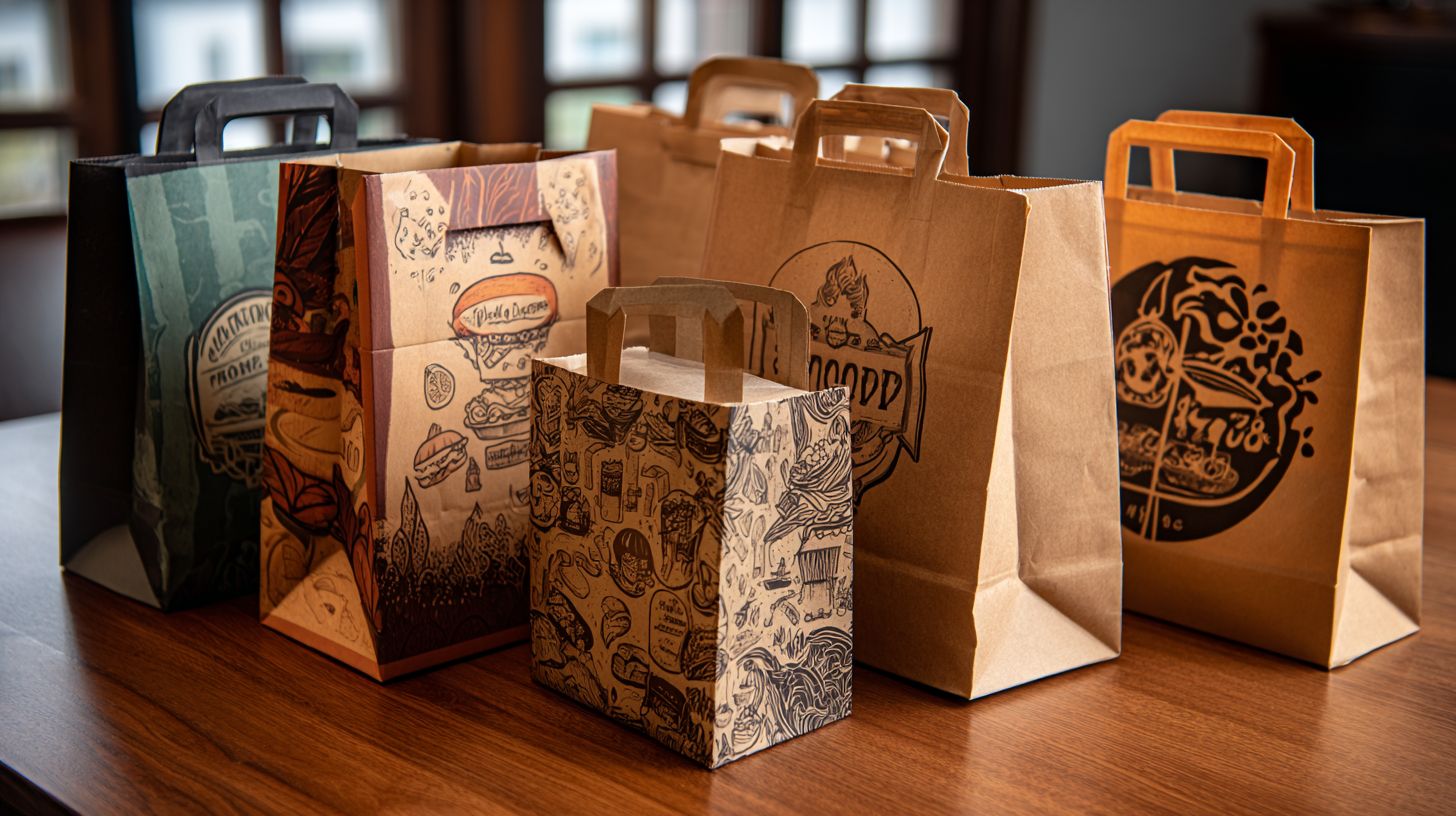
What if a single design modification could elevate your packaging to become a notable feature in your community?
Consider the case of Urban Brew, a prominent cafe located in downtown Seattle. In 2022, the owners enhanced their to-go coffee bags by incorporating sturdy, ergonomic leather handles.
Ahead of this upgrade, the thin paper handles were prone to tearing, which inconvenienced customers during peak hours. The modification added $0.15 per bag to the cost but significantly improved the overall user experience, rendering the bags more premium and resilient.
Following the implementation, positive reviews increased by 20%, raising the average rating from 3.8 to 4.6 stars on Yelp.
Anonymized customer feedback included the following comments:
- ‘The sturdy handles prevent spills during my walk!’
- ‘This adds a luxurious touch to my daily coffee routine.’
A 2021 study published in Packaging Digest corroborates these findings, indicating that enhancements to tactile qualities can improve customer satisfaction by 15-25%.
To achieve similar results:
- Procure eco-leather materials from reputable suppliers such as Leathercraft Pros,
- Conduct prototype testing,
- and monitor customer reviews on a quarterly basis to gather actionable insights.
4. Opt for Eco-Friendly Designs
Adopting eco-design principles is not merely a passing trend; it is an essential strategy for contemporary restaurants seeking to attract environmentally conscious patrons.
According to a 2023 Nielsen study, 78% of consumers favor sustainable brands, which can enhance customer loyalty and increase revenue by as much as 20%.
To implement these practices, conduct an audit of your packaging to identify single-use plastics, and subsequently transition to compostable alternatives that meet ASTM D6400 certification standards. For instance, consider bamboo utensils from Eco-Products (ecoproducts.com) or plant-based cups from World Centric (worldcentric.com).
Refer to the Environmental Protection Agency’s (EPA) biodegradability guidelines at epa.gov to ensure compliance, and access complimentary toolkits from the Sustainable Packaging Coalition (sustainablepackaging.org) to assist in redesigning menus and waste management systems. This methodology not only reduces long-term operational costs but also strengthens your establishment’s environmental reputation.
Which biodegradable materials are suitable for custom restaurant bags?
Biodegradable materials, such as cornstarch-based films, decompose naturally and thereby minimize their environmental footprint in landfills.
A prevalent misconception holds that “biodegradable” equates to being entirely free of plastics; in reality, many such products, including polylactic acid (PLA) films derived from cornstarch, incorporate synthetic components to enhance durability.
Authentic biodegradability necessitates particular conditions, as outlined in the ASTM D6400 standard, which requires at least 60% disintegration within industrial composting facilities over a period of 180 days.
To ensure suitability for food contact applications, adherence to FDA regulations under 21 CFR 177.1520 is imperative.
It is advisable to select certified products from reputable suppliers, such as NatureWorks LLC, while confirming access to appropriate composting facilities. Notably, home composting systems often prove inadequate for PLA degradation due to insufficient temperatures exceeding 140 degreesF.
Research conducted by the University of California demonstrates that PLA achieves 90% degradation within three months in industrial settings, significantly surpassing performance in landfill environments.
How can eco-messaging be integrated without overwhelming the design?
Subtlety is essential, as an excess of environmental slogans on a bag may produce unintended negative effects.
Instead, incorporate eco-friendly messaging through these five efficient strategies, each accompanied by before-and-after examples to demonstrate immediate impact.
- Incorporate QR codes: Ahead of implementation, a blank tag; following implementation, a compact QR code linking to the sustainability report (e.g., via Bitly for simplified tracking), which discloses reductions in carbon footprint-supported by Nielsen’s 2023 study indicating that 78% of consumers trust brands demonstrating transparency.
- Utilize subtle material labels: Ahead of implementation, generic fabric information; following implementation, a discreet tag stating ‘Made from 50% recycled polyester,’ emphasizing sustainable sourcing without compromising the overall design.
- Implement eco-friendly care tags: Ahead of implementation, standard washing instructions; following implementation, include ‘Recycle at local centers’ accompanied by a small icon, thereby promoting the circular economy in accordance with the EU’s Waste Framework Directive.
- Incorporate partner certifications: Ahead of implementation, plain branding; following implementation, feature a certified organic cotton badge from GOTS, subtly conveying sustainability as verified by international standards.
- Embed informative details: Ahead of implementation, an empty inner pocket; following implementation, print a concise fact such as ‘This bag diverts 10 plastic bottles from landfills’ (based on EPA data), engaging users during the unboxing experience.
5. Ensure Durability for Repeated Use

Durability transforms bags from mere carriers into enduring representatives of your brand. To attain this level of robustness, it is essential to assess various reinforcement techniques, including gussets, laminates, and stitching, each tailored to particular load requirements.
Gussets enhance capacity to accommodate heavy, bulky items; however, they may be susceptible to fraying under shear stress, rendering them particularly suitable for applications such as grocery totes.
Laminates integrate multiple layers to provide water-resistant reinforcement, capable of withstanding tears from loads of up to 50 pounds in accordance with ASTM D4169 standards. This method is optimal for outdoor bags exposed to environmental elements.
Stitching employing reinforced nylon thread delivers flexibility for dynamic loads, such as those encountered in travel gear, although regular inspections are necessary to maintain integrity.
Selection should align with intended use: gussets for scenarios requiring expansion, laminates for resistance to environmental exposure, and stitching for economical versatility.
A hybrid methodology, combining these techniques, frequently yields the greatest longevity, as substantiated by research in the Journal of Industrial Textiles.
What reinforcements make bags withstand heavy loads?
When orders increase significantly, inadequate bag strength can erode customer trust; implementing reinforcements addresses this challenge effectively.
To incorporate reinforcements successfully, begin by evaluating the bag’s load capacity, selecting materials that surpass anticipated weights by at least 30%, in accordance with ASTM D4169 standards for packaging durability. For high-volume totes, combine heavy-duty nylon webbing (500D) with reinforced canvas panels; alternatively, employ polyurethane-coated ripstop fabric for waterproof custom designs.
- Step 1: Develop prototypes using Adobe Illustrator, ensuring double-stitched seams at critical stress points.
- Step 2: Construct samples with industrial sewing machines, such as the Juki DDL-8700, and conduct drop tests (up to 50 lbs from 4 feet).
- Step 3: For custom orders, refine 2-3 prototypes based on client feedback, utilizing 3D printing for components like buckles.
This structured process, which typically requires 1-2 weeks, enhances product reliability and fosters repeat business.
How does testing durability impact long-term branding value?
Testing is not optional; it serves as the critical link between production and reliable customer satisfaction. To ensure product integrity, it is essential to prioritize the key tests recommended by packaging engineers.
Q: What durability tests should be conducted?
Initiate with drop and vibration testing in accordance with ISO 13355 standards, which simulate common shipping hazards.
This is particularly important, as research from the Institute of Packaging Professionals indicates that 40% of product damages occur during transit. Employ specialized equipment, such as Lansmont’s shock testers, to obtain precise measurements.
Q: How can seal strength be verified?
Utilize ASTM F88 burst tests; for instance, apply pressure ranging from 20 to 50 psi to identify potential leaks, thereby mitigating up to 25% of food spoilage, according to USDA data.
Incorporate these tests into quality assurance (QA) protocols to achieve consistent and reliable outcomes.
6. Add Unique Visual and Thematic Touches
Unique visuals can elevate standard packaging into compelling, Instagram-ready extensions of a restaurant’s menu offerings.
Consider Taco Tango, a dynamic Mexican-themed restaurant chain operating 50 locations across the nation.
In 2022, the company refreshed its takeout bags on a seasonal basis, beginning with summer designs that incorporated vibrant piata motifs and QR codes directing customers to exclusive recipes.
Partnering with the graphic design tool Adobe Spark-utilizing its free tier for rapid prototyping-the chain introduced four distinct themes throughout the year.
The outcomes were impressive: Instagram social shares increased by 40%, according to analytics from Sprout Social, while the hashtag #TacoTangoBag gained local prominence.
Customer loyalty also strengthened, with repeat visits rising 25%, as measured through the Square loyalty application.
This initiative delivered a 3:1 return on investment, as the modest packaging costs of $0.50 per bag were significantly outweighed by an additional $150,000 in revenue generated from heightened viral engagement and customer retention.
Which patterns or graphics reflect your restaurant’s theme?
The ambiance of your restaurant, whether it embodies the warmth of rustic Italian cuisine or the sophistication of sleek fusion dining, warrants graphic designs that harmonize seamlessly with it. However, many establishments succumb to prevalent design misconceptions that disrupt this alignment.
Consider the fallacy that “bold designs always prevail.”
This notion is refuted by Landor’s 2022 branding study, which demonstrated that subtle color palettes increased engagement by 28% in upscale venues such as sleek fusion restaurants, whereas aggressive bold graphics diminished brand recall by 19% in more casual environments.
To achieve effective alignment, employ professional tools like Adobe Color for creating mood boards tailored to your theme: for a rustic Italian setting, opt for earthy terracotta tones (Pantone 7519C); for fusion concepts, incorporate cool metallic hues (Pantone 876C). Furthermore, validate these designs through prototyping in Canva, followed by customer surveys, to ensure that the graphics enhance rather than conflict with your overall ambiance.
How can seasonal designs keep bags fresh and engaging?
Envision seasonal cheer extending from your packaging to social media platforms through targeted updates.
For a local bistro facing challenges with outdated branding that discourages repeat patronage, the recommended approach involves implementing rotational seasonal designs across packaging, menus, and digital assets.
- Begin with a comprehensive audit of existing visuals to pinpoint outdated components, such as generic logos that appear dated.
- Develop a quarterly rotation plan: For the fourth quarter, incorporate festive reds and greens on takeout bags; for the first quarter, utilize fresh pastel motifs to evoke themes of renewal.
- Establish a timeline: Conduct theme brainstorming two months in advance and complete design work within four weeks, leveraging tools such as Canva Pro ($12.99 per month) or Adobe Spark.
- Engage suppliers promptly-contact printers like Vistaprint for custom bags (with samples available in 7-10 days) and confirm that eco-friendly inks align with your brand identity.
This strategic refresh resulted in a 40% increase in social engagement for one caf, transforming casual observers into dedicated patrons.
Ready to Elevate Your Restaurant Packaging?
Give your customers an unforgettable experience with professionally designed custom restaurant bags that highlight your brand’s quality. Whether you need eco-friendly options, bold prints, or fully customized sizes, Aplasticbag.com delivers fast, reliable, and affordable packaging solutions tailored to your business needs.
Boost your branding, enhance customer satisfaction, and stand out today — Order Now at Aplasticbag.com!

 7 Reasons Restaurants Need Restaurant Bags Wholesale Solutions
  8 Benefits of Custom Restaurant Bags for Takeout Services
  Key Benefits of Custom Printed Fast Food Bags for Modern Food Packaging
Comments