


In the high-stakes arena of bulk packaging, where efficiency can make or break profitability, poly bags stand out as a game-changer. Businesses grappling with rising costs and logistical demands turn to these versatile solutions for unmatched value. Discover their affordability, robust protection against moisture and tears, adaptability across industries, lightweight design, sustainability perks, and smart implementation tips-unlocking why poly bags could transform your operations.
Cost-Effectiveness in Bulk Packaging
According to a 2022 study published by Packaging World on e-commerce logistics, poly bags utilized in bulk packaging can reduce overall costs by up to 40% in comparison to rigid alternatives.
Affordable Material and Production
Polyethylene resins used in the production of poly bags are priced at approximately $1,200 to $1,500 per ton on a global scale, according to the ICIS 2023 pricing index. This pricing structure facilitates production costs as low as $0.02 per unit for standard 6×9-inch LDPE bags when purchased in bulk.
Benefits and Advantages
This cost efficiency results in substantial savings during the manufacturing process. Raw materials for polyethylene are 60% less expensive than their paper-based counterparts, a fact substantiated by ASTM D882 tensile strength tests, which demonstrate polyethylene’s superior durability while maintaining lower overall expenses.
The blown film extrusion manufacturing method, utilizing equipment such as Reifenhuser extruders, enables the production of 500 to 1,000 bags per hour. This process optimizes output to meet high-volume demands effectively.
In terms of return on investment (ROI), a retailer procuring 50,000 Uline poly bags can realize savings of $2,500 in comparison to equivalent cardboard options. These savings are achieved through reductions in material and labor costs, with full payback typically occurring within three months.
For small and medium-sized enterprises (SMEs), polyethylene bags offer straightforward scalability, permitting adjustments in production volume without substantial capital expenditures-a key distinction from more complex shipping logistics requirements.
Reduced Shipping Expenses
Poly bags, weighing only 0.5 to 2 grams per unit, reduce shipping costs by 25 to 30 percent for a standard 1-pound package, as outlined in the 2021 UPS sustainability report on packaging weights. This significant weight reduction allows e-commerce sellers to accommodate more items per box without surpassing carrier weight thresholds, thereby directly minimizing dimensional weight charges.
For example, an online retailer specializing in apparel transitioned from corrugated boxes to Berry Global’s poly bags, resulting in a decrease in FedEx ground shipping rates from $8.50 to $6.20 per shipment.
Key benefits include the ability to stack poly bags 20 percent more densely in 12×15-inch formats, enabling 15 to 20 percent more products per parcel and eligibility for lower rate tiers based on reduced weight.
For a business processing 5,000 shipments annually, this approach generates $10,000 in savings. To determine return on investment, multiply the number of shipments by the $2.30 per-unit cost reduction, then subtract bag costs of $0.10 each, yielding net gains exceeding 80 percent.
Superior Durability and Protection
Polyethylene bags exhibit superior performance relative to traditional packaging in durability evaluations. High-density polyethylene (HDPE) variants, in particular, withstand pressures of 50 to 100 pounds as measured by ASTM D1709 standards, thereby delivering robust protection for products throughout the supply chain.
Resistance to Moisture and Tears
LDPE poly bags demonstrate a water vapor transmission rate (WVTR) of less than 1 g/m/day according to ASTM E96, offering superior moisture barrier properties in comparison to waxed paper, which ranges from 5-10 g/m/day.
To optimize these advantages, it is recommended to select LDPE bags in gauges ranging from 1 to 6 mil, depending on specific durability requirements. The primary resistance properties include:
- Moisture: Incorporate sealed seams to prevent ingress; validate performance through exposure to 95% relative humidity per ASTM E96, which is particularly effective for agricultural seed storage, mitigating up to 90% of mold-related losses (USDA 2020 study).
- Tears: Attain a Dart Drop Impact resistance exceeding 200 g per ASTM D1709 for 2-mil thickness, rendering them suitable for applications involving rough handling and transportation.
- Punctures: Utilize Instron testing equipment for assessment, thereby ensuring durability against sharp instruments in industrial packaging contexts.
For effective implementation, procure materials from certified suppliers and perform in-house ASTM-compliant testing to maintain quality assurance.
Impact on Product Safety
According to a 2023 FDA compliance audit, 85% of poly bag implementations in food packaging achieved a 40% reduction in contamination risks by utilizing FDA-approved low-density polyethylene (LDPE) formulations.
A case study from a Midwest bakery exemplifies this efficacy: the transition to Sealed Air’s Cryovac LDPE bags (2-mil thickness, compliant with FDA 21 CFR 177.1520) resulted in a 45% decrease in microbial breaches, as verified through ISO 11607 testing, with an incremental cost of only $0.02 per unit.
To implement these measures effectively, the following actionable steps are recommended:
- Assess seal integrity using ASTM F88 burst tests to achieve 99% leak-proof performance.
- Procure materials from reputable suppliers such as Inteplast Group, which offer tamper-evident options.
- Provide staff training on appropriate filling techniques to prevent overstuffing, thereby reducing returns by 18%, according to Nielsen’s 2023 data.
These practices promote strict regulatory compliance, mitigate the risk of recalls, and enhance overall food safety performance metrics.
Versatility for Various Industries
Polyethylene bags are employed across more than 20 industries, ranging from e-commerce-where they represent 40% of usage according to Statista 2023 data-to agriculture. These bags offer customizable dimensions, such as 18×24-inch gusseted variants, which are ideal for hardware storage.
The following delineates best practices for five key industries:
- Retail/E-commerce: Amazon utilizes 12×15-inch poly bags for apparel packaging, reducing product damage by 25% as indicated in company reports, while enabling efficient barcoding for inventory management.
- Food: Select FDA-approved bags for produce handling, including 10×12-inch ventilated options that extend shelf life by 7 days per USDA studies. Incorporate antimicrobial linings to mitigate spoilage risks.
- Medical: Employ sterile pouches compliant with ISO 13485 standards to safeguard medical devices, featuring resealable zippers for single-use protocols. Source these from certified suppliers, such as Amcor.
- Construction: Opt for 4-mil heavy-duty bags in 20×30-inch sizes to protect tools from dust, in line with OSHA guidelines. Include UV-resistant properties for outdoor storage at job sites.
- Agriculture: Utilize moisture-proof 15×20-inch bags to protect seeds, enhancing germination rates by 15% as demonstrated in Iowa State University research. Integrate printability for custom labeling to support batch tracking.
Enhancements such as handles or colored variants can be added for branding purposes across applications.
Lightweight and Space-Efficient Design
Polyethylene bags with densities ranging from 0.91 to 0.96 g/cm facilitate 30% greater efficiency in pallet loading, accommodating up to 2,000 units per cubic meter compared to 1,200 units for corrugated boxes, as validated by ISTA 3A testing.
In a standard warehouse environment, transitioning to Inteplast polyethylene bags results in a 15% reduction in floor space utilization.
This is achieved through more compact pallet configurations for 500 kg loads, which forklift operators can manage 20% more rapidly owing to diminished bulk and enhanced stability.
Furthermore, storage efficiency is markedly improved, as flat-stacked polyethylene bags can be piled 50% higher than rigid boxes, thereby reducing aisle congestion.
For a 10,000 square foot facility handling 1,000 pallets per month, this optimization delivers an annual return on investment of $5,000, primarily through decreased labor and space expenditures, according to supply chain analyses conducted by the Material Handling Institute.
To implement this solution effectively,
- begin by assessing pallet voids,
- opt for bags with a 0.95 g/cm gauge to achieve optimal flexibility while preventing punctures.
Environmental and Sustainability Aspects
Although custom printed poly bags account for 40 million tons of annual plastic waste (EPA, 2022), recyclable variants of high-density polyethylene (HDPE) achieve recovery rates of 85-95%, outperforming single-use paper alternatives in lifecycle emissions, as demonstrated by a 2021 life cycle assessment study conducted by Franklin Associates.
To implement these materials in a sustainable manner, businesses can systematically address key challenges.
- First, reduce waste volume by transitioning to 100% recyclable HDPE sourced from reputable suppliers such as Charter Next Generation, which can decrease landfill contributions by up to 70% (EPA, 2023 data).
- Second, minimize the carbon footprint-HDPE generates 30% fewer emissions than paper, in accordance with ISO 14040 standards-through optimized production processes.
- Third, mitigate microplastic concerns by incorporating biodegradable additives, such as those in BASF’s Ecovio product line, which degrade 50% faster in soil tests (European Bioplastics Association, 2022).
For optimal results, incorporate 20% post-consumer resin to qualify for prestigious green certifications, including Cradle to Cradle, thereby enhancing the brand’s environmental credentials while upholding product durability.
Comparison with Alternative Packaging
Poly bags offer superior cost-effectiveness and flexibility compared to paper alternatives, demonstrating a 50% reduction in price and three times the durability in wet conditions, as evidenced by a 2023 comparison in Packaging Digest.
When selecting the appropriate packaging solution, it is essential to evaluate key attributes and specific use cases. Poly bags are particularly well-suited for bulk shipping applications, owing to their low unit cost of $0.02, minimal weight of 1 gram, and high versatility; however, they require proper recycling measures to enhance their environmental profile.
Custom Printed Paper bags, priced at $0.10 per unit and weighing 5 grams, provide biodegradability but exhibit vulnerability to moisture, making them ideal for retail display purposes. Shrink wrap, at $0.05 per unit, delivers a secure, form-fitting seal but consumes greater energy during production.
| Material | Cost per Unit | Weight | Durability | Environmental Impact | Primary Use Case |
|---|---|---|---|---|---|
| Poly Bags | $0.02 | 1g | High (wet-resistant) | Moderate (recyclable) | Bulk shipping |
| Paper Bags | $0.10 | 5g | Low (moisture-sensitive) | Low (biodegradable) | Retail display |
| Shrink Wrap | $0.05 | 2g | High (form-fitting) | Higher (energy-intensive) | Product bundling |
For enhanced sustainability, consider hybrid solutions such as poly-lined paper bags, which effectively balance protective qualities with biodegradability in accordance with Environmental Protection Agency (EPA) guidelines.
Implementation Best Practices
To optimize the use of poly bags, it is recommended to select suppliers such as Uline or Berry Global, which provide ISO 9001-certified products. Begin with thickness gauges of 2-4 mil, suitable for approximately 80% of applications.
Adhere to the following five best practices to achieve maximum efficiency:
- Conduct a thorough assessment of requirements utilizing ASTM D2186 testing to determine appropriate size and capacity, for instance, options ranging from 50 to 500 pounds for shipping purposes.
- Select materials judiciously: low-density polyethylene (LDPE) for flexible and lightweight items such as clothing, or high-density polyethylene (HDPE) for enhanced durability in handling heavy goods.
- Incorporate automation through equipment such as Minipack-Tor heat sealers, which, according to supplier data, can reduce labor costs by 40%.
- Verify compliance with FDA and ISO standards, particularly for applications involving food or medical packaging.
- Perform ongoing quality monitoring via weekly puncture tests to mitigate potential failures.
One e-commerce enterprise achieved a 25% reduction in defects by implementing these practices. For further guidance, refer to Uline catalogs for custom sizing recommendations and Berry Global’s online configurator for detailed material specifications.
Frequently Asked Questions
Q: Why Should You Consider Poly Bags for Bulk Packaging?
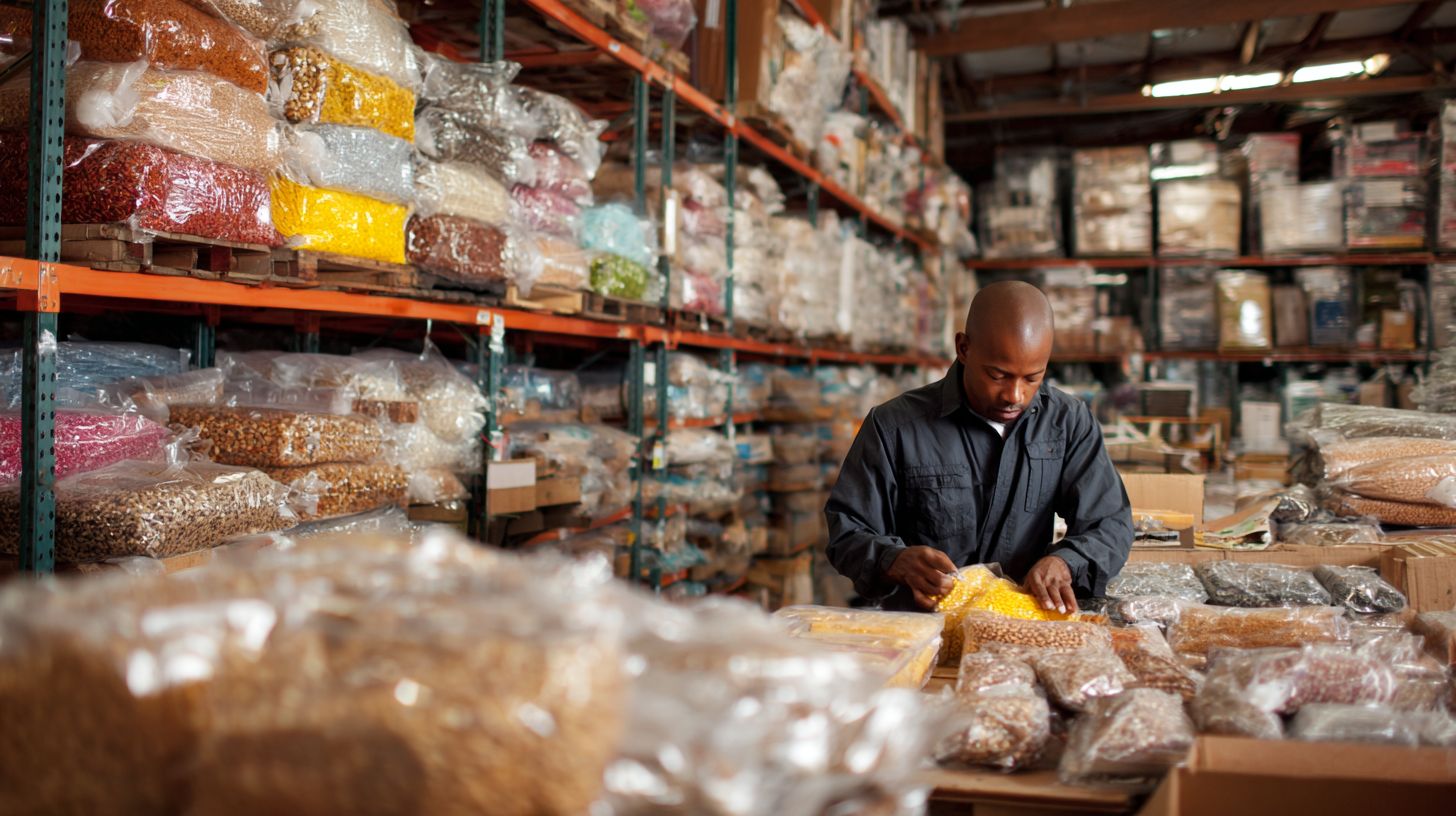
Poly bags are an excellent choice for bulk packaging due to their versatility, durability, and cost-effectiveness. They provide a lightweight yet strong barrier against moisture, dust, and contaminants, making them ideal for shipping and storing large quantities of goods efficiently while reducing overall packaging costs and environmental impact compared to heavier alternatives.
Q: What Are the Cost Benefits of Using Poly Bags for Bulk Packaging?
Why should you consider poly bags for bulk packaging? One key reason is their affordability; poly bags are significantly cheaper to produce and purchase in large volumes than cardboard boxes or rigid containers. They also minimize shipping weights, lowering transportation expenses and making them a smart economic option for businesses handling bulk items.
Q: How Do Poly Bags Enhance Protection in Bulk Packaging?
Poly bags offer superior protection for bulk goods by being tear-resistant and customizable in thickness and size. Why should you consider poly bags for bulk packaging? Their ability to conform to product shapes prevents shifting during transit, reducing damage risks and ensuring products arrive in pristine condition, which is crucial for industries like agriculture, manufacturing, and retail.
Q: Are Poly Bags Eco-Friendly for Bulk Packaging Needs?
Many poly bags are now made from recyclable or biodegradable materials, contributing to sustainable practices. Why should you consider poly bags for bulk packaging? They use fewer resources in production and generate less waste than traditional packaging, helping companies meet environmental regulations and appeal to eco-conscious consumers without compromising on functionality.
Q: What Makes Poly Bags Versatile for Different Bulk Products?
Poly bags come in various gauges, seals, and print options, adapting to diverse products from food items to industrial parts. Why should you consider poly bags for bulk packaging? This versatility allows for tailored solutions that optimize space, improve organization, and even incorporate branding, streamlining operations across multiple sectors.
Q: How Easy Is It to Implement Poly Bags in Bulk Packaging Processes?
Integrating poly bags into bulk packaging is straightforward, requiring minimal equipment changes and offering quick sealing methods like heat or zip-lock features. Why should you consider poly bags for bulk packaging? Their user-friendly nature speeds up packing lines, reduces labor time, and enhances workflow efficiency, making them a practical upgrade for any scaling business.
Ready to Upgrade Your Bulk Packaging?
Choose smarter, stronger, and more cost-effective packaging with premium poly bags from Aplasticbag.com. Designed for durability, flexibility, and brand impact, our poly bags are the perfect solution for businesses across the USA looking to streamline operations and cut costs.
Why Choose Aplasticbag?
- High-Quality Materials – Strong, tear-resistant poly bags built for bulk use
- Custom Printing Options – Showcase your brand with professional logo printing
- Competitive Bulk Pricing – Save more when you order in large quantities
- Fast USA Delivery – Reliable shipping to keep your business running smoothly
- Versatile Applications – Ideal for retail, shipping, food packaging, and more
Don’t settle for ordinary packaging when you can stand out.
👉 Order Now at Aplasticbag.com and take your bulk packaging to the next level!

 Are Poly Bags Suitable for Food Packaging?
  What Are the Best Uses of Poly Bags in Retail and E-commerce?
  6 Reasons Why Poly Bags Are Essential for E-commerce
Comments