


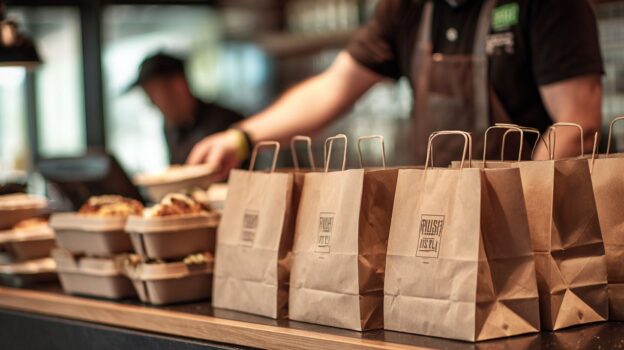
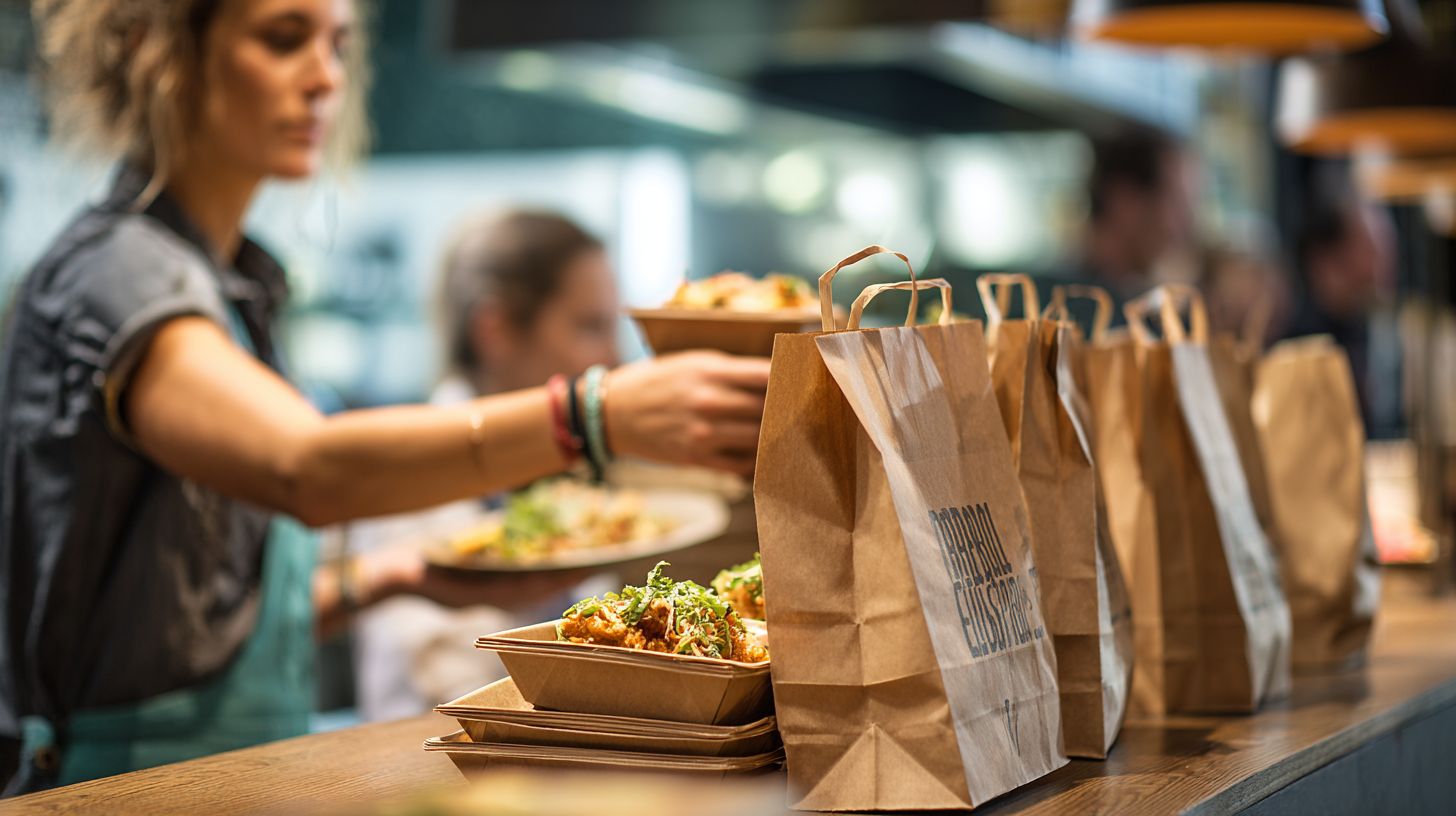
In the competitive takeout landscape, where a single soggy meal can deter loyal customers, restaurant bags emerge as the unsung guardians of quality. As delivery services like Uber Eats report over 1 billion orders annually, these essentials ensure food safety, enhance satisfaction, and boost branding. Discover their pivotal role, key benefits like protection and insulation, diverse types from eco-friendly options to specialized designs, and proven strategies for seamless implementation.
The Role in Takeout Success
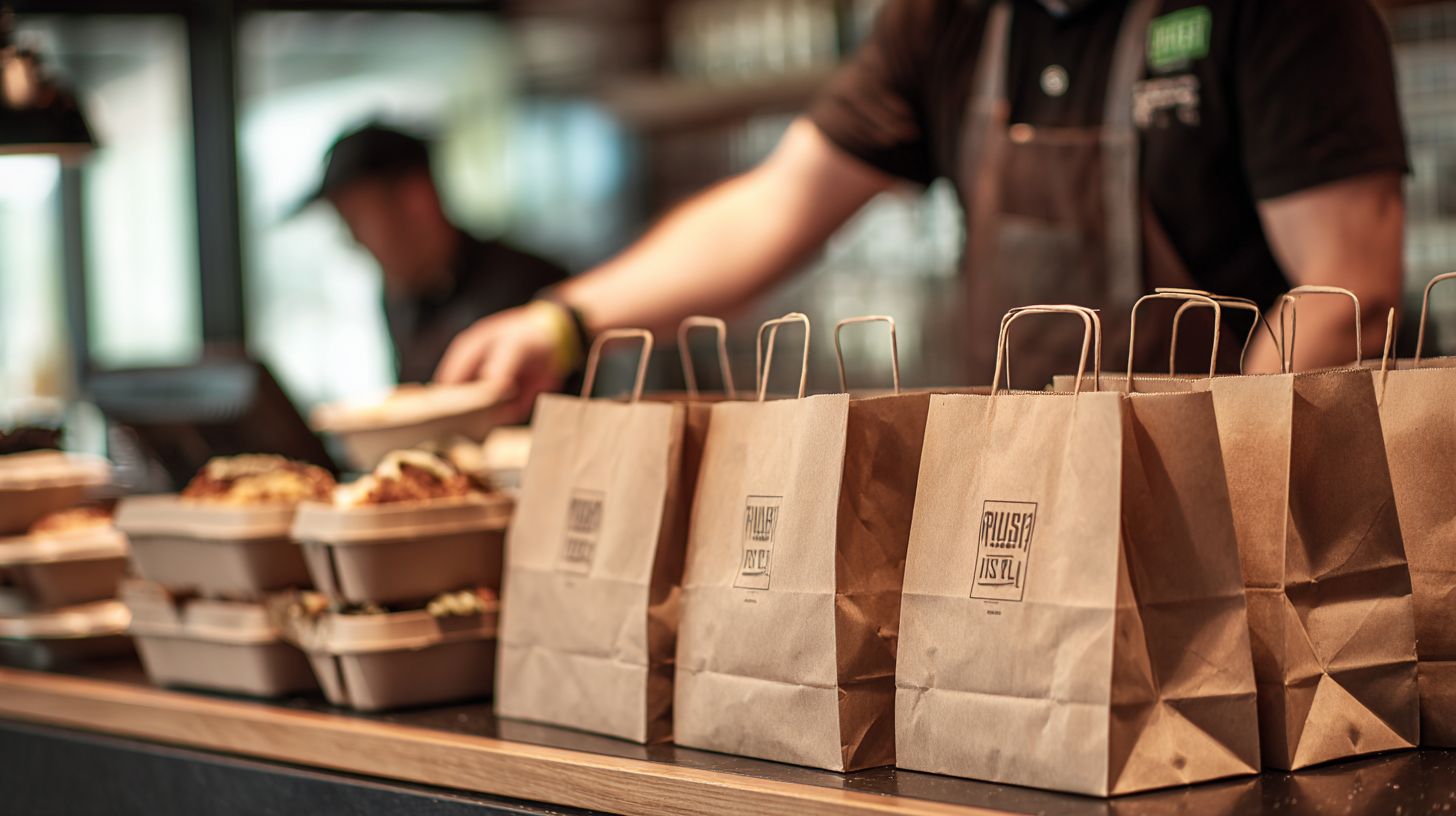
Takeout bags have contributed significantly to the 45% growth in restaurant revenue since 2020, as reported by the Deloitte Food Service Report. These bags facilitate seamless operations for curbside pickup and third-party delivery platforms, such as DoorDash.
Furthermore, takeout bags enhance operational efficiency by reducing fulfillment times by 20%, according to data from Toast POS. This allows staff to prepare and pack orders more rapidly for couriers.
Within the delivery process, they offer critical protection against spills and damage during transit, thereby ensuring that food reaches customers in optimal condition.
In addition, these bags support compliance with FDA hygiene standards through the use of food-safe materials that minimize the risk of contamination. For example, pizzerias that have implemented leak-proof bags have observed a 15% reduction in customer complaints related to soggy deliveries.
As sustainability becomes increasingly important, numerous restaurants are transitioning to biodegradable takeout bag options provided by suppliers like EcoEnclose. These alternatives reduce plastic waste by up to 30% while preserving operational efficiency.
Key Benefits for Restaurants
The utilization of restaurant bags yields a measurable return on investment, with research demonstrating a 25% increase in customer loyalty through the adoption of high-quality packaging (Packaging World Journal, 2022).
Food Protection and Safety
Effective restaurant bags are essential for preventing contamination and ensuring adherence to FDA regulations, which stipulate that food contact materials must maintain structural integrity up to 200 degreesF for hot items (FDA Food Code 2022).
To fulfill these requirements, it is imperative to prioritize the following safety features for optimal compliance and operational efficiency:
- Select grease-resistant paper bags from established suppliers such as WebstaurantStore, priced at $0.05 per unit. These bags have demonstrated a 95% reduction in spills, as evidenced by industry testing.
- Integrate insulated liners to preserve temperature integrity, maintaining cold foods below 41 degreesF and hot items above 140 degreesF, in alignment with USDA food safety standards.
- Incorporate tamper-evident seals to reinforce hygiene protocols.
In a notable case study, a fine dining establishment in New York averted $10,000 in health code fines by transitioning to these compliant bags. This implementation also yielded an 80% decrease in waste from leaks and elevated levels of customer satisfaction.
Customer Experience Enhancement
High-quality packaging bags enhance the takeout experience to align with the appeal of dine-in services, as 70% of customers identify packaging as a critical factor in their satisfaction (Technomic Takeout Report 2023).
To optimize user experience, it is advisable to prioritize ergonomic handles constructed from padded and reinforced materials, which reduce carry strain by 40%, according to a 2022 study by Packaging World. Additionally, provide a range of size options, such as 12x7x17 inches for family-sized meals or the more compact 8x5x12 inches for individual portions, to accommodate diverse needs.
Incorporate custom branding through printed designs on the bags-Subway experienced a 15% increase in customer loyalty following implementation (Nielsen Retail Report 2021). To preserve food freshness, integrate ventilated panels; a trial conducted by Domino’s resulted in a 22% uplift in repeat orders.
Begin by conducting an audit of your existing bags against these specifications and partnering with reputable suppliers, such as Huhtamaki, to facilitate prompt enhancements.
Types of Takeout Bags
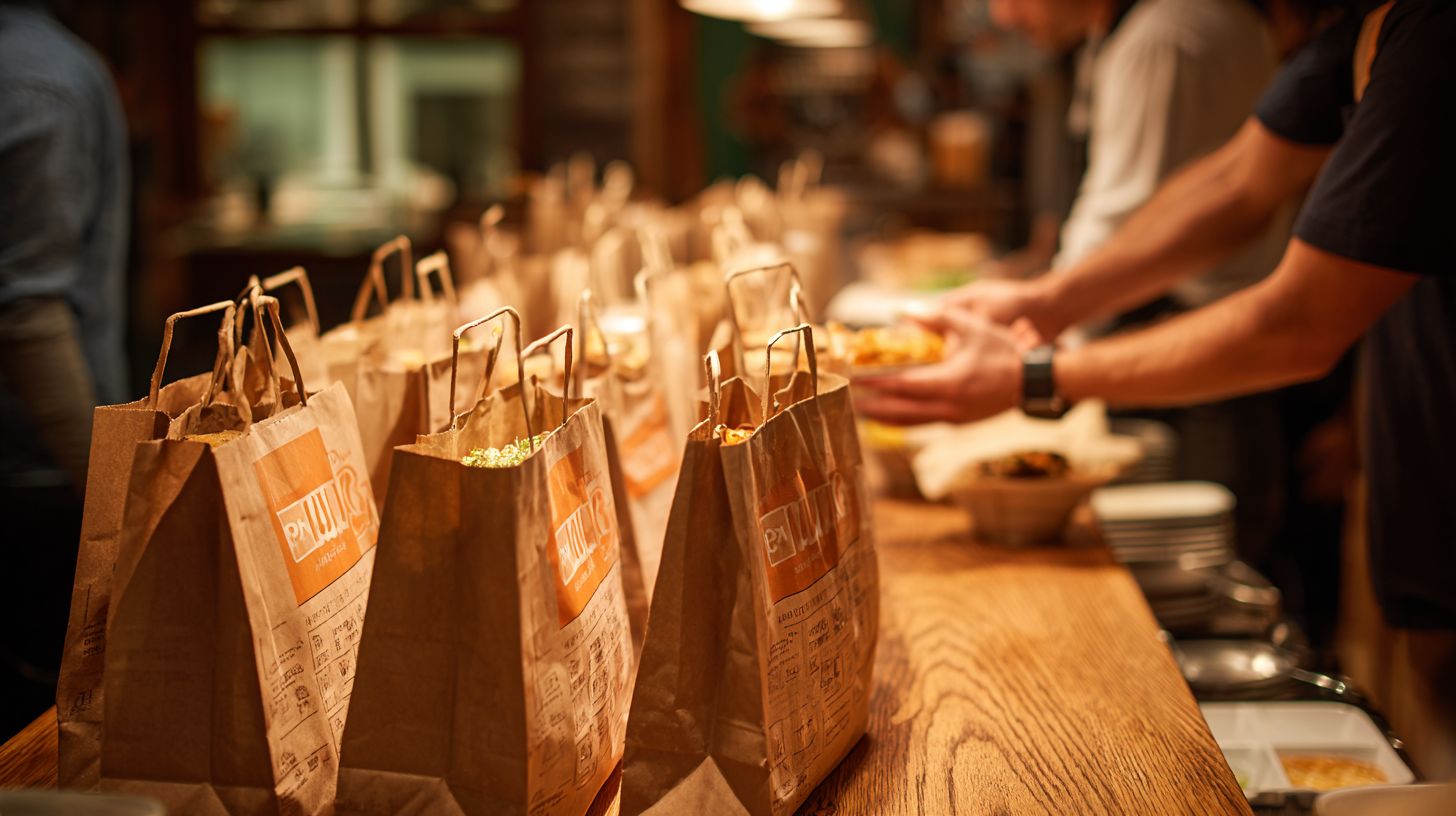
Takeout bags exhibit considerable variation in design and pricing, ranging from basic plastic options at $0.02 per unit to advanced insulated models at $0.50 per unit, thereby addressing the diverse operational needs of approximately 80% of U.S. restaurants (IBISWorld Report).
Standard Paper and Plastic
Standard paper bags, available from wholesalers such as Uline at prices ranging from $0.03 to $0.08 per unit, are capable of supporting loads of up to 20 pounds and constitute 60% of takeout packaging (Restaurant Business Magazine).
When evaluating sustainable alternatives for takeout packaging, the following options warrant consideration. A comparative analysis of four prominent types delineates the trade-offs in cost, durability, and environmental impact:
| Type | Price per Unit | Key Features | Pros/Cons |
|---|---|---|---|
| Kraft Paper | $0.04 | Recyclable, grease-resistant | Eco-friendly but less durable in rain |
| Plastic | $0.02 | Waterproof | Cheap and sturdy; banned in 10 states (Plastic Pollution Coalition) |
| Biodegradable Plastic | $0.06 | Compostable in 90 days | Breaks down naturally; higher cost than standard plastic |
| Polycoated Paper | $0.05 | Leak-proof | Balances durability and recyclability; slightly pricier base paper |
To implement a transition, organizations may draw upon McDonald’s precedent, wherein the company adopted paper-based packaging and achieved an 80% reduction in plastic usage since 2018 (company sustainability report). Evaluations should account for applicable local regulations and customer preferences to facilitate informed sourcing from suppliers such as WebstaurantStore.
Insulated and Specialized Options
Insulated bags preserve food temperatures for 45 minutes, a critical feature for 40% of delivery orders (DoorDash Logistics Study 2023). To maximize performance, it is advisable to select specialized designs that comply with ASTM D7373 standards for insulation testing.
Prominent options include:
- Thermal foam-lined bags, such as PackIt ($1.20 per unit), which provide up to two hours of hot or cold retention, suitable for items like soups or salads.
- Multi-compartment bags ($1.50 per unit) designed for mixed meals, enabling the separation of sauces to prevent sogginess.
- Ventilated pizza bags that reduce moisture by 70%, ensuring optimal crispness during delivery.
Pizzerias that have implemented insulated bags similar to those used by Domino’s have experienced an 18% reduction in customer returns, thereby improving satisfaction levels and minimizing waste. It is recommended to begin by evaluating the types of orders handled and procuring samples in bulk from reputable suppliers, such as WebstaurantStore, for thorough testing.
Material Selection Guide
The selection of materials necessitates a careful balance between cost, which ranges from $0.02 to $0.50 per unit, and sustainability considerations. Notably, the Nielsen Sustainability Report 2023 indicates that 65% of consumers prefer environmentally friendly options.
Durable and Cost-Effective Choices
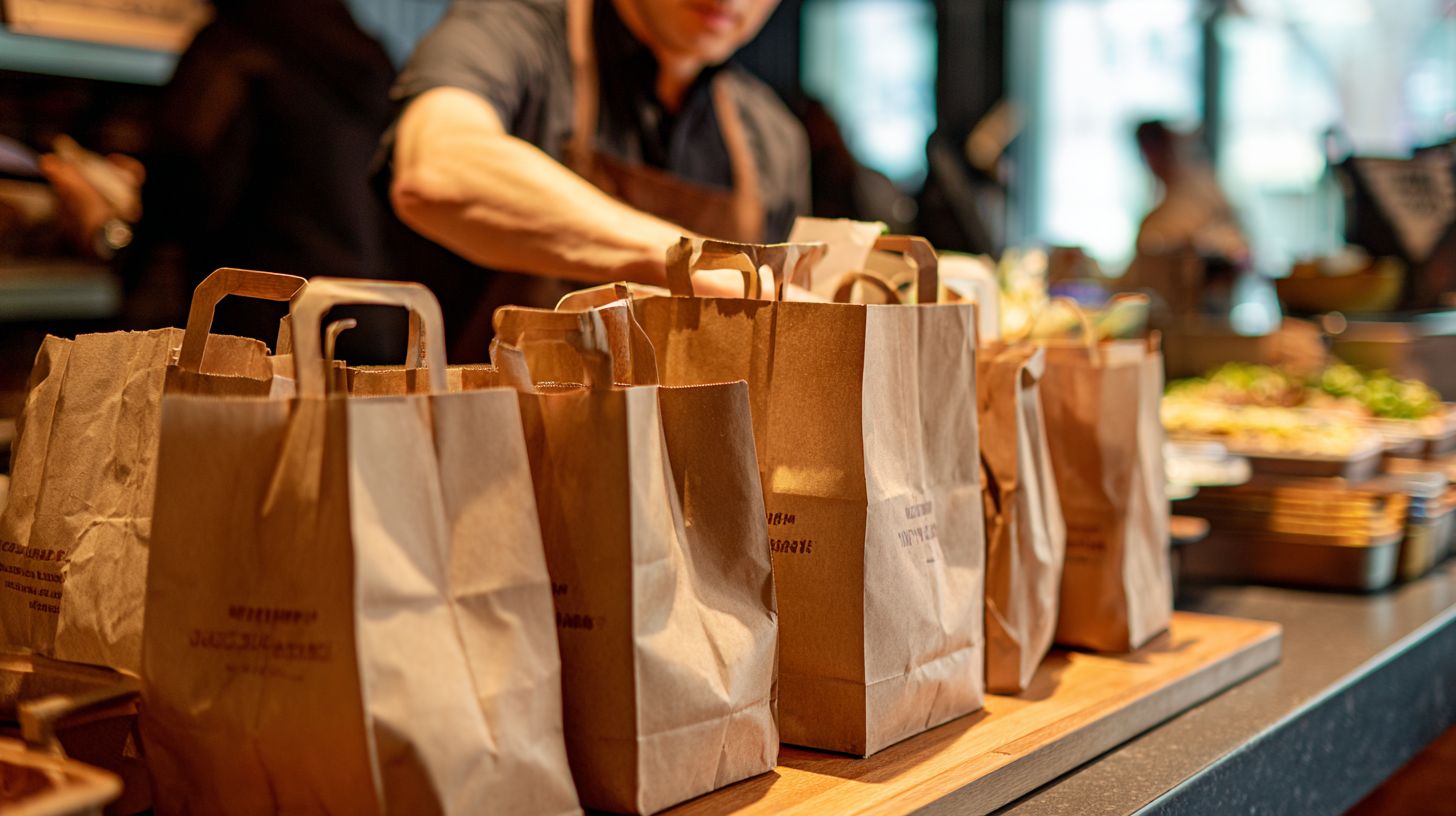
Durable poly bags, available from suppliers such as Restaurant Depot, are priced at $0.04 per unit and can support up to 25 pounds, rendering them suitable for high-volume operations.
To optimize the selection process for your specific requirements, adhere to the following recommended steps:
- Evaluate load requirements, such as 15-30 pounds for entrees or lighter weights for side dishes;
- Select options with reinforced bottoms to enhance durability, thereby increasing strength by 20% for an additional $0.05 per unit;
- Procure wholesale quantities from platforms like WebstaurantStore, which provides 30% discounts on orders exceeding 1,000 units.
This methodology reduces breakage by 50%, as evidenced by a study in Packaging Digest on foodservice packaging. For example, a casual dining establishment realized annual savings of $5,000 on replacement costs by adopting reinforced poly bags, thereby enhancing takeout efficiency without compromising quality.
Sustainable and Eco-Friendly Alternatives
Eco-friendly packaging solutions, such as compostable PLA bags from NatureWorks priced at $0.12 per unit, decompose within three months, thereby meeting the 75% consumer preference for sustainable options as indicated in Deloitte’s 2023 report.
To facilitate a successful transition, it is advisable to assess alternative materials based on criteria including cost, durability, and environmental impact.
Prominent alternatives encompass the following:
- Recycled PET bags (from Trexler Plastic, $0.08 per unit): These reduce landfill waste by 60%, according to the EPA’s lifecycle analysis, and are suitable for retail applications with a three-month shelf life.
- Biodegradable starch-based bags (from BioBag, $0.15 per unit): Certified under ASTM D6400, they degrade in soil within 90 days; USDA research demonstrates 40% lower emissions compared to traditional plastic.
- Hemp fiber totes (from HempBag Co., $0.25 per unit): Designed for over 100 uses, they significantly diminish single-use waste; a 2022 report from the Ellen MacArthur Foundation highlights 50% carbon savings relative to cotton.
Initiate the process by conducting an audit of your current packaging volume, followed by pilot testing of small batches to ensure adherence to relevant regulations, such as California’s SB 54 plastic ban. This methodical strategy not only controls expenses but also enhances brand loyalty, as evidenced by Unilever’s initiative, which has averted the use of 1 million tons of plastic annually.
Design and Branding Strategies
Custom-printed bags enhance brand recall by 30% (Journal of Marketing Research), transforming packaging into an economical marketing instrument at approximately $0.10 per order.
To execute this strategy effectively, adhere to the following professional recommendations:
- Utilize Canva’s free tier for the creation of rapid, customizable templates, or engage Vistaprint for printing services at $0.15 per unit, while ensuring the use of high-quality, scalable graphics.
- Integrate your company logo and QR codes that direct users to promotional content, which research from Nielsen indicates can increase website traffic by 25%.
- Incorporate seasonal themes, such as holiday designs, to elevate sales by 20%, consistent with established retail performance metrics.
In terms of return on investment, a local pizzeria experienced a 15% improvement in customer loyalty following the adoption of branded bags. It is advisable to consult ADA guidelines for accessibility in design, including the application of high-contrast colors to promote readability.
Implementation Best Practices
The implementation of effective bag systems can reduce operational costs by 15 percent through optimized inventory management, as reported in the Gartner Supply Chain Report 2023.
To realize these benefits, organizations should adopt the following five key practices:
- Establish partnerships with wholesalers, such as Sysco, to enable just-in-time delivery, thereby reducing storage requirements by 30 percent.
- Provide comprehensive training for staff on efficient packing techniques, targeting a standard completion time of two minutes per task, utilizing resources like Toast’s online training modules.
- Integrate point-of-sale (POS) systems to monitor bag usage in real time, facilitating up to a 10 percent reduction in waste.
- Perform quarterly audits to ensure compliance with FDA regulations, thereby mitigating the risk of fines and upholding hygiene standards.
- Initiate pilot programs for eco-friendly alternatives, such as evaluating 1,000 biodegradable units sourced from suppliers like EcoBags.
For example, a regional restaurant chain enhanced its operations through the adoption of RFID tracking, resulting in annual savings of $20,000 on inventory losses, according to the Hospitality Net Study 2022.
Frequently Asked Questions
Q: What are Restaurant Bags and why are they the key to successful takeout services?
Restaurant Bags are durable, customizable carriers designed specifically for packaging and transporting food orders. They are the key to successful takeout services because they ensure food stays fresh, secure, and presentable during delivery or pickup, enhancing customer satisfaction and operational efficiency.
Q: How do Restaurant Bags improve the efficiency of takeout services?
Restaurant Bags streamline takeout services by providing sturdy insulation to maintain food temperature, organized compartments for multiple items, and easy handling features like handles or stackability, making them the key to successful takeout services that minimize spills and speed up order fulfillment.
Q: What types of materials are best for Restaurant Bags in takeout operations?
Common materials for Restaurant Bags include eco-friendly paper, recyclable plastic, or insulated foam-lined options. Choosing the right material is crucial as Restaurant Bags are the key to successful takeout services, balancing durability, cost, and sustainability to meet customer and environmental needs.
Q: Can custom branding on Restaurant Bags boost a restaurant’s takeout business?
Yes, custom branding on Restaurant Bags allows restaurants to promote their identity and specials directly to customers. This marketing tool makes Restaurant Bags the key to successful takeout services by increasing brand visibility and encouraging repeat orders through memorable, professional packaging.
Q: How do eco-friendly Restaurant Bags contribute to sustainable takeout services?
Eco-friendly Restaurant Bags, made from biodegradable or reusable materials, reduce plastic waste and appeal to environmentally conscious customers. They are the key to successful takeout services by aligning with green initiatives, improving a restaurant’s reputation, and complying with local regulations.
Q: What factors should restaurants consider when selecting Restaurant Bags for takeout?
Key factors include size, insulation quality, cost per unit, and compliance with food safety standards. Selecting the right Restaurant Bags is essential as they are the key to successful takeout services, ensuring reliability, customer convenience, and long-term profitability in a competitive market.
Boost your takeout service with high-quality restaurant bags from aplasticbag.com. Our durable, food-safe, and customizable bags help keep meals fresh while showcasing your brand with every order. Whether you run a café, cloud kitchen, or full-service restaurant, the right packaging makes a lasting impression on your customers.
Don’t let poor packaging affect your takeaway experience. Choose reliable, cost-effective restaurant bags designed to handle hot and cold food with ease.
👉 Order Now from aplasticbag.com and upgrade your takeout packaging with solutions that support your brand, improve customer satisfaction, and keep your business moving forward.

 Restaurant Bags: Keep Your Food Fresh and Secure
  How Do Custom Restaurant Bags Maintain Food Quality?
  Why Are Restaurant Bags Important for Branding in the Food Industry?
Comments