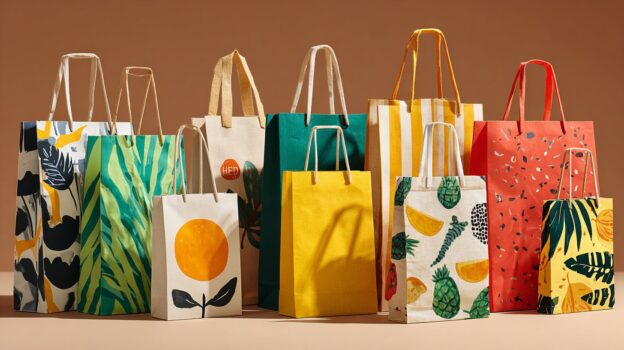
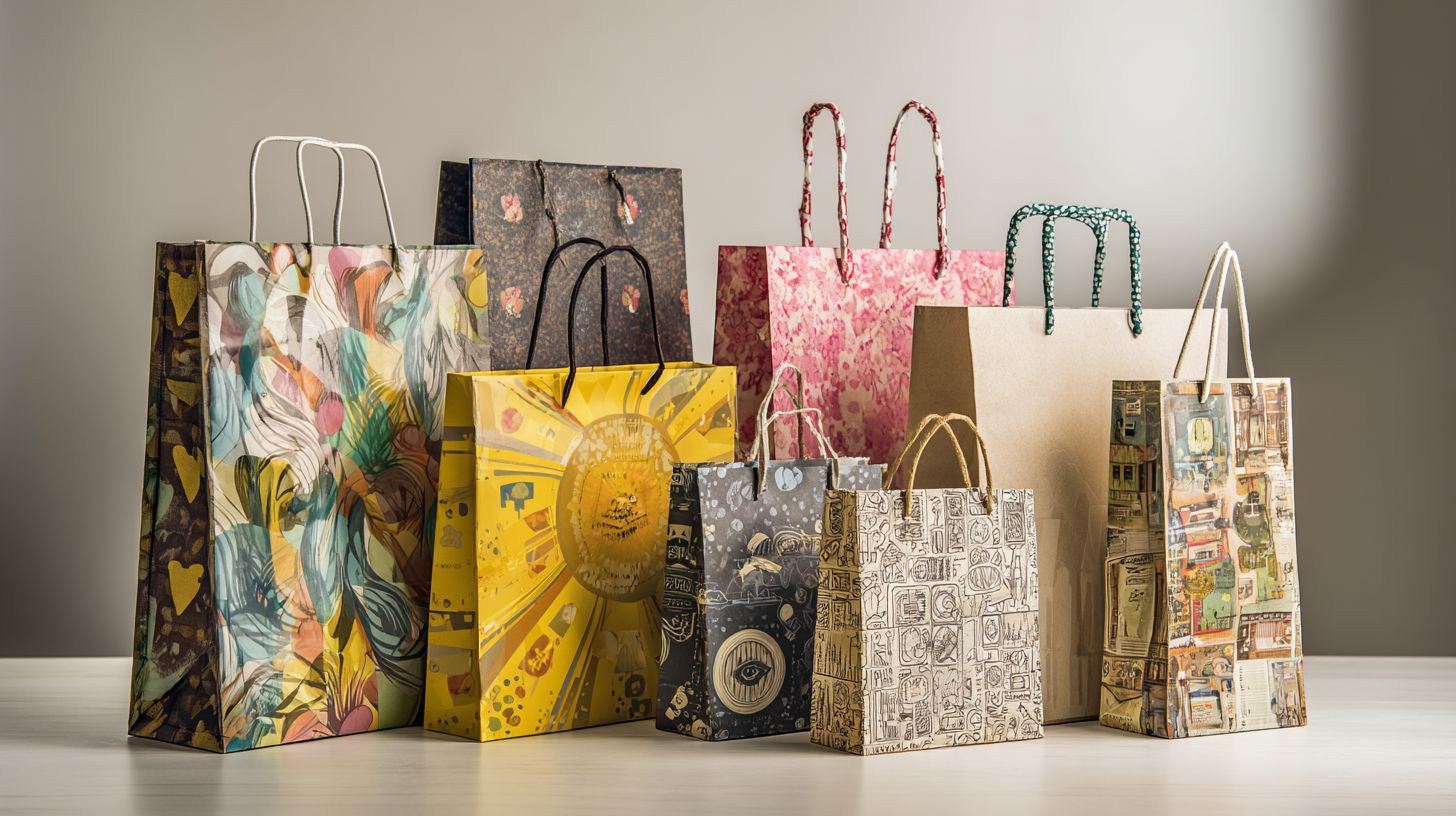
In the competitive retail landscape, custom shopping bags serve as silent brand ambassadors, blending functionality with marketing flair. As sustainability demands rise-backed by a 2023 Nielsen report showing 78% of consumers prefer eco-conscious packaging-choosing the right type becomes crucial for businesses. Explore paper-based options like kraft and glossy varieties, plastic alternatives from polyethylene to biodegradable, fabric totes in cotton and canvas, non-woven synthetics, reusable eco-picks, and innovative niche designs that elevate your brand.
Paper-Based Custom Bags
Paper-based custom bags represent a biodegradable alternative to traditional plastic options. According to data from the Environmental Protection Agency (EPA), more than 70% of retailers have transitioned to these bags in the wake of plastic regulations introduced in 2019.
Kraft Paper Bags
Kraft paper bags, constructed from 100% recycled pulp, are priced at $0.15 to $0.30 per unit when purchased in wholesale quantities of 1,000, making them an excellent choice for environmentally conscious grocery retailers such as Trader Joe’s.
These bags are crafted from brown recycled paper with a thickness of 50-70 grams per square meter (gsm), providing adequate durability while minimizing excess weight. Handles are available in twisted or flat configurations, ranging from 12 to 18 inches in length, to accommodate various carrying requirements.
Standard sizes include small (8 x 4 x 10 inches) suitable for bakery applications, medium (12 x 6 x 14 inches) for general retail purposes, and large (16 x 8 x 18 inches) for grocery needs.
- Advantages: These bags are fully biodegradable and offer a rustic aesthetic that supports branding aligned with sustainability objectives. They are frequently certified by the Forest Stewardship Council (FSC), as supported by a 2022 U.S. Environmental Protection Agency (EPA) study on recyclable packaging materials.
- Disadvantages: They exhibit reduced resistance to moisture, rendering them unsuitable for applications involving heavy produce loads.
For customization, screen-printed logos can be incorporated with a minimum order of 500 units, incurring an additional cost of $0.05 per bag-an effective option for tailored eco-friendly promotional initiatives.
Coated and Glossy Paper Bags
Coated glossy paper bags deliver a premium aesthetic finish, as evidenced by brands such as Sephora, which reported a 30% increase in perceived value according to a 2021 Packaging Digest survey.
To further elevate visual appeal, consider polyethylene (PE) lamination for a high-gloss effect or aqueous coating for a refined matte surface, incurring an additional cost of $0.10 to $0.20 per bag.
These enhancements improve water resistance by up to 20%, making them particularly suitable for retail environments, while advanced digital printing techniques guarantee crisp and vibrant logo reproduction.
Standard dimensions include medium-sized bags measuring 10 x 5 x 12 inches, ideal for cosmetics merchandising, and larger variants at 14 x 7 x 16 inches, appropriate for boutique product lines.
Advantages of these bags encompass their striking appearance and robustness, supporting repeated use; however, they are comparatively less environmentally sustainable than uncoated kraft alternatives.
For bespoke options, incorporate foil stamping at an additional $0.15 per unit, with a minimum order quantity of 250 units.
Adherence to EU Regulation 94/62/EC is imperative, which restricts heavy metal content in inks to less than 100 parts per million to ensure product safety.
Plastic-Based Custom Bags
Custom bags made from plastic continue to enjoy popularity due to their superior durability, with the capacity to support loads ranging from 20 to 50 pounds. However, their usage in the United States has declined by 15% following the introduction of bag fee laws in 2020, as reported by the Ocean Conservancy.
Standard Polyethylene Bags
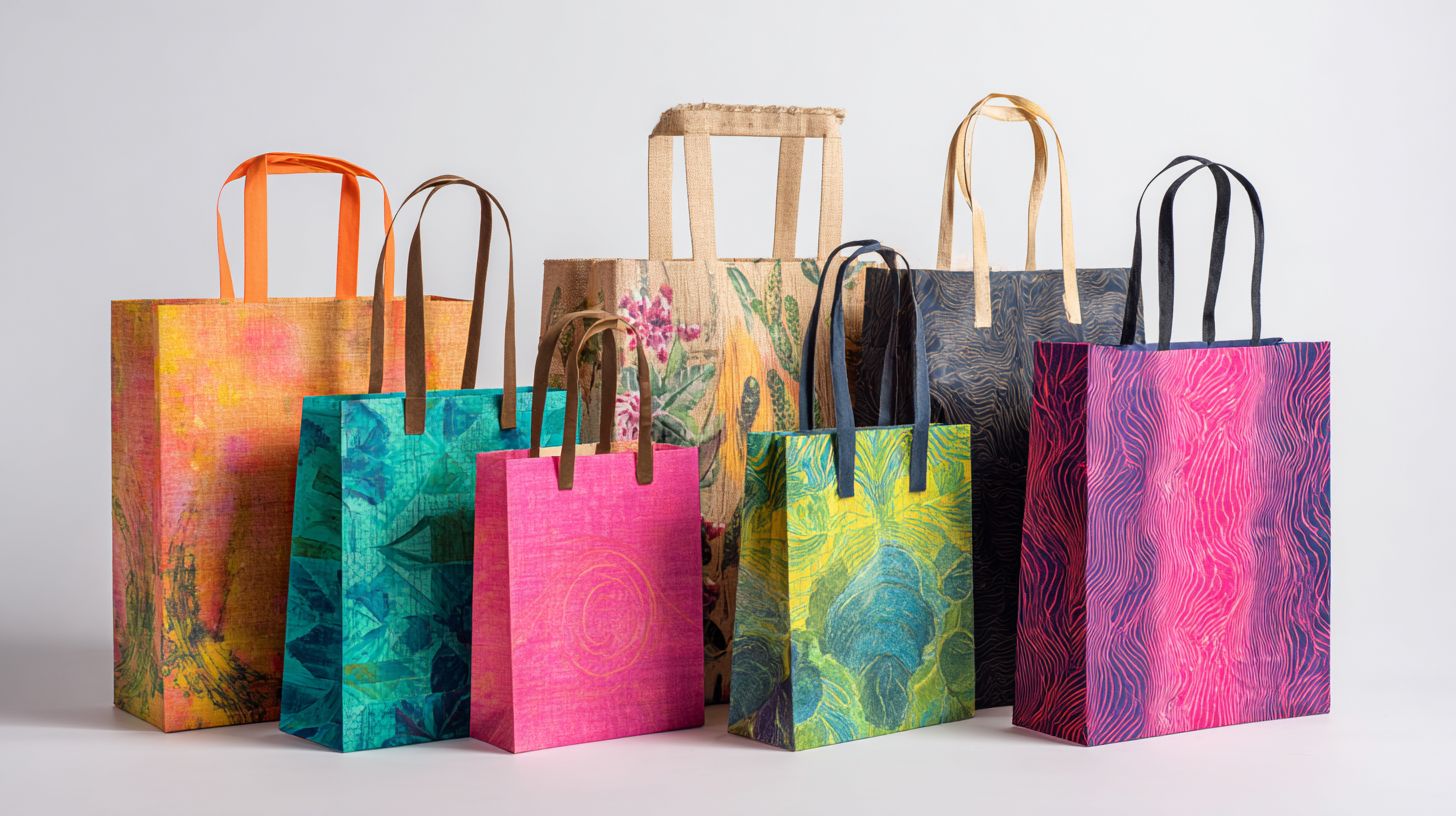
Standard polyethylene bags, typically ranging from 0.5 to 1 mil in thickness, are available at a cost of $0.04 to $0.10 per unit when purchased in bulk quantities. These bags support high-volume retail operations, such as those at Walmart, which utilizes approximately 1 million bags daily.
Constructed from low-density polyethylene (LDPE) or high-density polyethylene (HDPE)-both recyclable under plastic resin identification codes #2 and #4-these bags provide versatility for various retail applications. For medium-duty purposes, a thickness of 0.75 mil is recommended to achieve an optimal balance between durability and cost efficiency.
Select die-cut handles for loads of 10 to 15 pounds or loop handles for heavier items weighing up to 30 pounds.
Available sizes include:
- Small (9 x 6 inches), suitable for cosmetics and small accessories;
- Medium (12 x 7 inches), ideal for fashion apparel;
- Large (16 x 9 inches), appropriate for hardware or bulk goods.
Advantages of these bags include their waterproof properties and economic viability for high-volume usage.
However, they present notable drawbacks, particularly concerning environmental impact. A single bag may take up to 100 years to decompose, contributing to microplastic pollution.
According to studies by the Plastic Pollution Coalition, approximately 8 million tons of plastic enter the oceans annually.
For branding purposes, customization with UV-resistant ink logos is available, with a minimum order quantity of 5,000 units, to improve visibility and professional presentation.
Biodegradable Plastic Bags
Biodegradable plastic bags, which incorporate additives such as D2W, decompose within 3 to 5 years, in contrast to the 500 years required for conventional plastic bags. Major retail chains, including Tesco, have adopted these bags to meet compliance requirements under UK plastic taxes.
These bags are available in two primary categories: oxo-biodegradable variants, which rely on additives to facilitate fragmentation, and starch-based options, such as polylactic acid (PLA) derived from corn.
Pricing typically ranges from $0.15 to $0.35 per unit. Notable features include 60-80% degradation in soil, as measured by ASTM D6954 standards, along with 12-inch loop handles for enhanced durability.
They are particularly suited for grocery applications, with medium-sized bags (11 x 6 x 8 inches) capable of supporting loads of up to 15 pounds.
- Advantages: These bags serve as an environmentally friendly alternative that helps reduce landfill waste.
- Disadvantages: They involve higher initial costs and raise questions regarding the completeness of their breakdown process, as discussed in the 2022 United Nations Environment Programme (UNEP) report on plastic alternatives.
For customization and branding purposes, digital printing is recommended, with a minimum order quantity of 1,000 units to achieve efficient production.
Fabric and Textile Custom Bags
Custom bags crafted from fabric and textiles significantly promote reusability. According to estimates from the Environmental Protection Agency (EPA), a single tote bag can replace as many as 500 plastic bags annually.
Furthermore, the adoption of such sustainable alternatives has been shown to enhance brand loyalty by up to 20%.
Cotton Tote Bags
Cotton tote bags, constructed from 10-12 oz canvas, are available at a cost of $1.20-$2.50 per unit when purchased in quantities of 100. These bags are particularly favored by prominent brands such as Patagonia due to their exceptional durability, capable of enduring over 1,000 reuse cycles.
To select the most suitable tote bag, prioritize the fabric composition, such as organic cotton, which is entirely natural and adheres to Fair Trade certification standards for ethical sourcing. Standard dimensions typically measure 15×16 inches, featuring reinforced straps with drop lengths of 16-28 inches to facilitate comfortable carrying.
For branding purposes, consider embroidery options accommodating up to 5,000 stitches at an additional cost of $0.50 per bag, or screen printing that supports up to six colors to achieve vibrant and detailed logos.
The advantages of these tote bags include their softness and versatility, making them ideal for applications such as trade shows or grocery transport; however, a notable disadvantage is their tendency to wrinkle easily.
A practical recommendation is to order samples from reputable suppliers, such as those available on Alibaba, to evaluate the product’s durability firsthand.
It is noteworthy that IKEA’s blue tote bag achieved sales of 1.5 million units in 2022, demonstrating significant market demand and appeal.
Canvas and Denim Bags
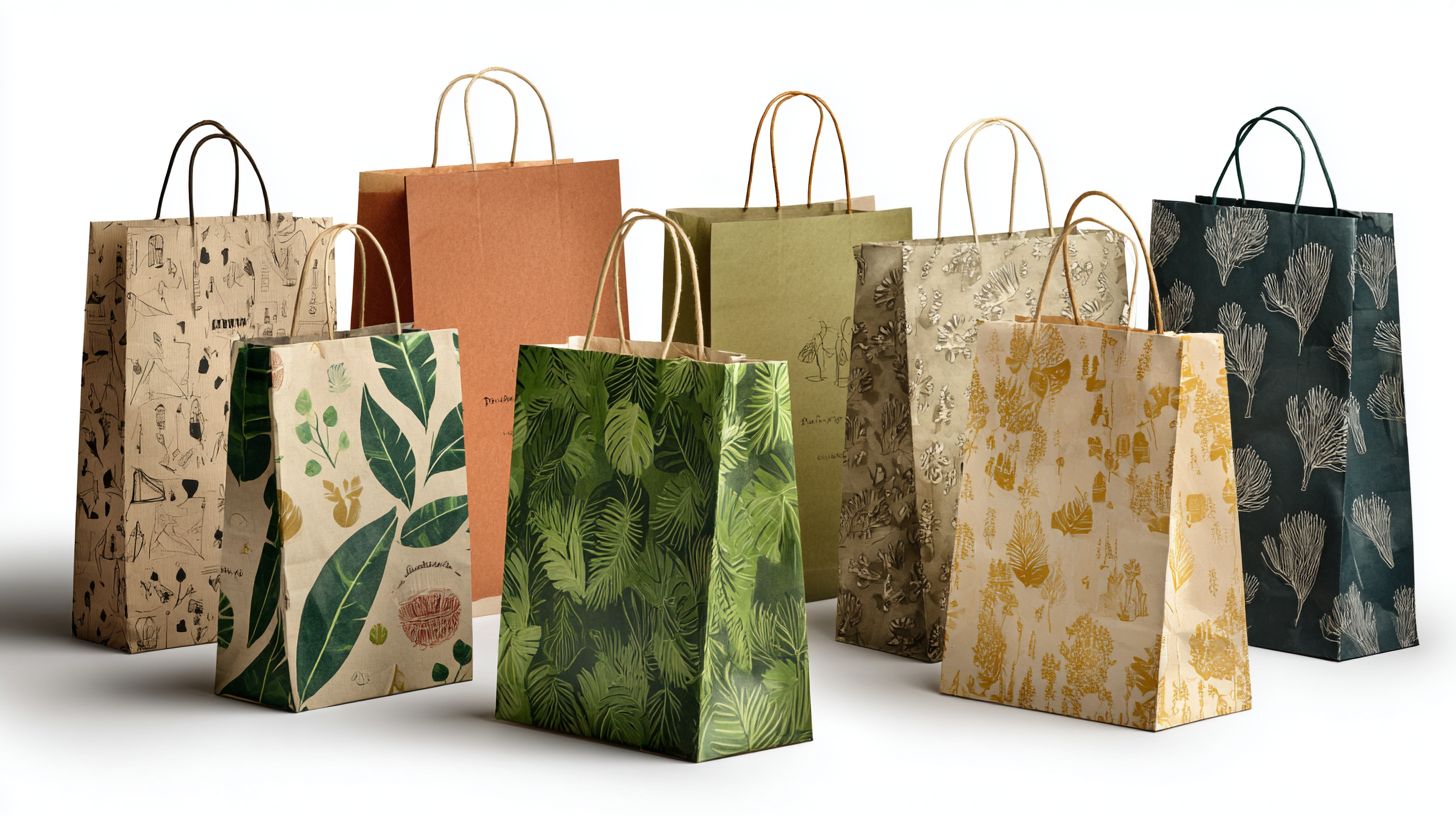
Canvas and denim bags provide exceptional rugged durability, featuring fabric weights of 12-16 ounces capable of supporting up to 25 pounds. These bags are employed by Levi’s for branded merchandise, contributing to an annual generation of $10 million in add-on sales.
Canvas subtypes typically utilize duck cloth, with costs ranging from $1.50 to $3 per unit, whereas denim variants incorporate recycled materials priced between $2 and $4 per unit. According to the 2023 Textile Exchange report, the use of recycled fibers in such materials has increased by 20%.
Durability can be further enhanced through reinforced bottoms, 4- to 6-inch gusseted sides for increased capacity, and 20-inch webbing straps to ensure secure handling.
For customization purposes, heat transfer printing can be applied to denim patches, enabling the creation of vibrant logos.
The advantages of these bags include a lifespan exceeding 500 uses, promoting longevity; however, a notable drawback is their heavier weight, which can reach up to 1 pound when empty.
Selecting the appropriate size-such as small (10×12 inches) for gift applications or large (18×20 inches) for event use-allows for the maximization of promotional impact.
Non-Woven and Synthetic Custom Bags
Non-woven and synthetic custom bags offer lightweight reusability at a cost of $0.30 to $0.80 per unit, with an 80% recyclability rate. These options are particularly favored for trade shows, where attendance can enhance brand exposure by 35%, according to a study by Event Marketer.
To determine the most suitable variant, evaluate the following options, all manufactured in accordance with ISO 9001 standards to ensure quality assurance. For instance, hybrid non-woven totes sourced from Alibaba suppliers provide an optimal balance of affordability and durability, making them ideal for e-commerce promotions.
| Material | Price (per unit) | Key Features | Primary Uses | Pros | Cons |
|---|---|---|---|---|---|
| Non-woven Polypropylene | $0.40 | Foldable, 10L capacity, soft loop handles | Promos, conferences | Cost-effective, available in vibrant colors | May lack a premium aesthetic |
| Polyester | $0.70 | Water-resistant, zip closure, nylon drawstrings (24in) | Travel, e-commerce | Durable and versatile | Synthetic texture |
| Cotton Canvas | $1.20 | Heavy-duty, padded handles, 15L capacity | Trade shows, events | Environmentally friendly and robust | Higher cost |
| Nylon | $0.90 | Lightweight, adjustable drawstrings (24in), foldable | Conferences, giveaways | Quick-drying and portable | Less structured form |
| Recycled PET | $0.60 | 10L gusseted, soft loop handles, eco-lining | E-commerce, promos | Sustainable and affordable | Potential for color fading over time |
Recommendation: Procure samples from certified suppliers to assess compatibility with your branding requirements, thereby confirming that the 80% recyclability rate supports your sustainability objectives.
Eco-Friendly and Reusable Options
Eco-friendly reusable bags can reduce plastic waste by 90% per user, according to a 2021 World Wildlife Fund study. For instance, jute bags typically last 4 to 5 years and cost between $1.50 and $3.
Among the most popular options are the following:
- Jute (natural fiber, $2, 20 lb capacity, compostable): Advantages include biodegradability and sturdiness for groceries; disadvantages include moisture absorption. It is best suited for daily shopping.
- Recycled PET (derived from plastic bottles, $1.20, 15 lb capacity, UV resistant): Advantages include lightweight construction and outdoor durability; disadvantages include reduced breathability. It is ideal for beach outings.
- Organic cotton ($2.50, 25 lb capacity, machine-washable): Advantages include softness and versatility; disadvantages include water-intensive production processes. It is well-suited for heavy loads.
- Hemp ($2.80, 18 lb capacity, antimicrobial): Advantages include its origin from a fast-growing crop; disadvantages include a stiffer texture. It is appropriate for gym use.
- Bamboo fabric ($1.80, 22 lb capacity, hypoallergenic): Advantages include a silky feel and eco-friendly sourcing; disadvantages include the need for chemical processing. It is particularly suitable for produce.
It is recommended to source these products from B Corp-certified suppliers to ensure quality. Consider cotton-jute hybrids for optimal balance of strength and functionality.
Compliance with California’s AB 793 bag fee law is essential. Unilever’s 2022 reusable bag initiative successfully eliminated 1 million plastic bags, demonstrating the scalability of such programs.
Specialty and Niche Custom Bags
Specialty custom bags, such as insulated totes, offer 4-6 hours of cold retention and are employed by leading brands like Yeti for promotional events, thereby increasing giveaway engagement by 40%.
When exploring niche opportunities, the following options provide effective avenues for targeted branding.
- Insulated (foil-lined, $4-$6, suitable for cosmetics/pharmacy sectors): Equipped with a zip closure and reinforced handles for enhanced durability; customization available through embroidery (minimum order: 100 units); lead time of 7-10 days. Advantages: Preserves product coolness; Disadvantages: Higher minimum order quantity (250+ units).
- Luxury (velvet/foil-stamped, $5-$10, ideal for boutiques): Features a drawstring closure and metallic accents; customization via foil stamping (minimum order: 100 units); lead time of 7-10 days. Advantages: Enhances the unboxing experience, akin to Tiffany’s signature blue bags; Disadvantages: Premium pricing structure.
- Event (mesh drawstring, $1-$2, appropriate for trade shows): Lightweight design with grommet reinforcements; customization options include screen printing (minimum order: 100 units); lead time of 7 days. Advantages: Promotes reusability; Disadvantages: Limited resistance to moisture.
- Eco-friendly (recycled cotton, $3-$5, aligned with sustainability initiatives): Constructed from biodegradable materials with adjustable straps; customization through eco-dye printing (minimum order: 100 units); lead time of 8-10 days. Advantages: Supports environmental objectives; Disadvantages: Texture may exhibit variations.
According to 2023 data from the Promotional Products Association, custom bags have improved brand recall by 35% during events, establishing them as a critical tool for fostering engagement.
Frequently Asked Questions
Q: What Are the Different Types of Custom Shopping Bags?
Custom shopping bags come in various types, each suited for different needs and branding opportunities. The main types include paper bags, which are eco-friendly and recyclable; plastic bags, often durable and lightweight but less sustainable; reusable tote bags made from fabric like cotton or canvas for long-term use; non-woven polypropylene bags, which are affordable and reusable; jute or burlap bags for a natural, rustic look; and insulated bags for carrying perishables. Each type can be customized with logos, colors, and designs to promote your brand effectively.
Q: What Are Paper Custom Shopping Bags and Their Benefits?
Paper custom shopping bags are made from kraft paper or recycled materials and are popular for retail packaging. They are biodegradable, printable with high-quality graphics, and give a premium feel. Benefits include environmental friendliness, versatility for handles (twisted, flat, or die-cut), and compliance with plastic bag bans in many areas. What Are the Different Types of Custom Shopping Bags? Paper ones stand out for their sustainability and branding potential.
Q: What Are Reusable Custom Shopping Bags and How Do They Work?
Reusable custom shopping bags are designed for multiple uses, typically made from durable materials like polyester, nylon, or cotton. They fold compactly and feature strong straps for heavy loads. These bags reduce waste and enhance brand loyalty when personalized. What Are the Different Types of Custom Shopping Bags? Reusable options like totes and backpacks are ideal for eco-conscious consumers and promotional giveaways.
Q: What Are Non-Woven Custom Shopping Bags Used For?
Non-woven custom shopping bags are crafted from polypropylene fabric that’s spun-bonded for strength without weaving. They’re lightweight, water-resistant, and cost-effective for events or stores. Common uses include grocery carrying, trade shows, and advertising. What Are the Different Types of Custom Shopping Bags? Non-woven bags offer a balance of affordability and reusability, making them a staple in custom merchandising.
Q: How Do Plastic Custom Shopping Bags Differ from Other Types?
Plastic custom shopping bags, often made from polyethylene, are flexible, waterproof, and inexpensive to produce. They come in t-shirt style or gusseted forms but face restrictions due to environmental concerns. Unlike paper or fabric types, they’re less eco-friendly but highly durable for wet items. What Are the Different Types of Custom Shopping Bags? Plastic ones are best for short-term use where recyclability programs are available.
Q: What Are Eco-Friendly Custom Shopping Bags and Examples?
Eco-friendly custom shopping bags prioritize sustainability, using materials like recycled PET, organic cotton, or bamboo. Examples include jute bags for a natural texture and compostable options. They’re ideal for green branding and reducing plastic use. What Are the Different Types of Custom Shopping Bags? Eco-friendly variants like these promote environmental responsibility while allowing full customization for logos and messages.
Order Now & Elevate Your Brand with Premium Custom Shopping Bags
Looking for high-quality custom shopping bags that make your brand stand out in the USA market? Choose Aplasticbag for durable, stylish, and fully customizable packaging solutions designed to boost your business visibility and customer experience.
Why Businesses Across the USA Choose Aplasticbag
- Premium-quality custom shopping bags for retail, grocery, boutiques, and events
- Affordable bulk pricing with fast USA shipping
- Eco-friendly and reusable bag options available
- Vibrant custom printing to showcase your logo professionally
- Wide variety of styles including plastic, laminated, tote, die-cut, and handle bags
- Low minimum order quantities for small and large businesses
- Trusted by brands nationwide for reliable packaging solutions
Order Custom Shopping Bags Today
Make your packaging work as a powerful marketing tool. Whether you need retail bags, promotional shopping bags, or wholesale custom packaging, Aplasticbag.com delivers quality, value, and fast turnaround you can trust.
Ready to Grow Your Brand?
- Custom Sizes & Designs
- Wholesale Pricing Available
- Fast Production & Delivery Across the USA
- Free Quote & Expert Support
Order Now from Aplasticbag.com and Give Your Customers Packaging They’ll Remember!

 Why Are Custom Shopping Bags a Must for Retail Businesses?
  Why Custom Printed Gloss Shopping Bags Are a Smart Choice for Modern Retail
  How Can Custom Shopping Bags Elevate Your Brand’s Image?
Comments