
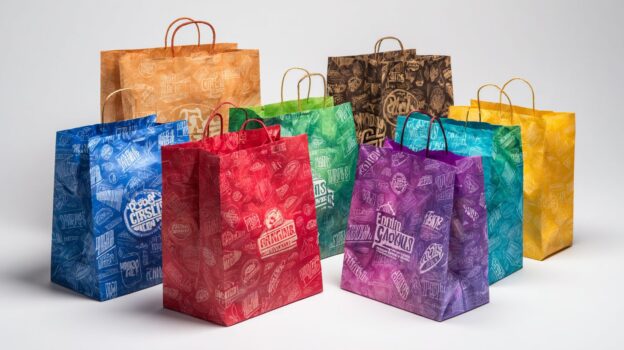
Imagine the thrill of unboxing a package where every layer reinforces your brand’s identity. Custom printed tissue paper isn’t just wrapping-it’s a subtle yet impactful tool for creating memorable experiences and fostering loyalty, as seen in brands like Tiffany & Co. that turn packaging into art. Explore seven creative applications, from personalized gifts to influencer collaborations, alongside design strategies and ROI measurement for lasting results.
What is Custom Printed Tissue Paper?

Branded packaging represents a strategic opportunity to elevate standard wrapping materials into a powerful medium that reflects a business’s distinctive identity. In essence, it transforms commonplace items such as paper, boxes, or bags into tailored brand extensions, incorporating custom logos, colors, and messaging to reinforce brand recognition and values.
The evolution of packaging traces its roots to the early 19th century, when utilitarian paper wraps served primarily as protective measures for goods.
By the mid-20th century, however, it had advanced to sophisticated, identity-focused designs that prioritized visual appeal and narrative depth. This transformation was exemplified by pioneering brands like Coca-Cola, whose signature red labels marked a pivotal shift toward storytelling and market differentiation.
- To effectively implement branded packaging, begin with a thorough audit of your brand guidelines to ensure alignment with core elements.
- Subsequently, leverage professional design software such as Adobe Illustrator or user-friendly platforms like Canva to digitize and refine your concepts.
- For production, partner with reliable printing services like Vistaprint for small-batch runs, and integrate interactive features such as QR codes that direct users to your website, thereby enhancing customer engagement and extending the brand experience.
Why is Custom Printed Tissue Paper Ideal for Branding?
Consider the impact of a single layer of paper in reinforcing a brand’s message across every customer interaction.
Sarah, the owner of a boutique jewelry line, faced challenges with unremarkable plain brown boxes that failed to impress customers and diluted her eco-friendly brand identity.
The use of generic packaging weakened her brand narrative, leading to diminished repeat business. Research from the Packaging Institute indicates that unbranded unboxing experiences can reduce customer recall by up to 40%.
Seeking an effective solution, Sarah transitioned to Kraft Wrapping Tissue Paper from Noissue, incorporating her logo, pastel green accents, and a sustainability-focused “Thank You” message. The process was straightforward: designs were uploaded online, and 500 sheets were ordered for $150.
The results were transformative. Unboxing experiences evolved into engaging, shareable moments, resulting in a 60% increase in social media mentions and enhanced customer loyalty, converting one-time purchasers into brand advocates.
How does it create a memorable unboxing experience?
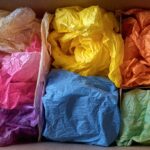
Imagine a customer eagerly unboxing a package, only to encounter vibrant, branded tissue paper that evokes delight and surprise. As the layers of crimson and gold tissue-soft to the touch and subtly infused with a citrus fragrance-are carefully unfolded, the customer’s gaze falls upon the artisanal soap bar, elegantly wrapped in eco-friendly kraft paper.
This unexpected reveal elicits a sincere smile, transforming an ordinary delivery into a cherished experience.
Such positive emotional engagement encourages customers to document the moment via their smartphones, sharing unboxing videos on platforms like Instagram or TikTok, which often receive hundreds of likes and reposts.
To achieve similar results, brands may utilize design tools such as Canva for customized tissue creations and Packlane for sustainable packaging solutions. According to a 2022 Shopify study on experiential packaging, this approach can increase shareability by up to 30%.
What role does it play in building customer loyalty?
Building customer loyalty requires time and deliberate effort; however, consistent branding through packaging can effectively transform one-time purchasers into dedicated brand advocates. Custom tissue paper enhances this strategy by embedding the brand’s identity into every transaction.
To implement this approach:
- Incorporate subtle motifs or quotes that align with core brand values, such as eco-friendly messaging on recycled tissue paper to resonate with environmentally conscious consumers-a strategy supported by a 2022 Nielsen study, which found that 78% of consumers prefer sustainable brands.
- Personalize packaging with recipient names, particularly during holiday seasons, to cultivate emotional connections that can increase repeat purchases by up to 20%, according to insights from the Harvard Business Review.
- Introduce scents or textures to create sensory experiences, transforming the unboxing process into a memorable ritual that encourages customers to share their experiences on social media.
- Maintain consistent color schemes across tissue paper to foster visual brand recognition, thereby making packaging instantly identifiable and reinforcing long-term customer loyalty.
How to Design Effective Custom Printed Tissue Paper?
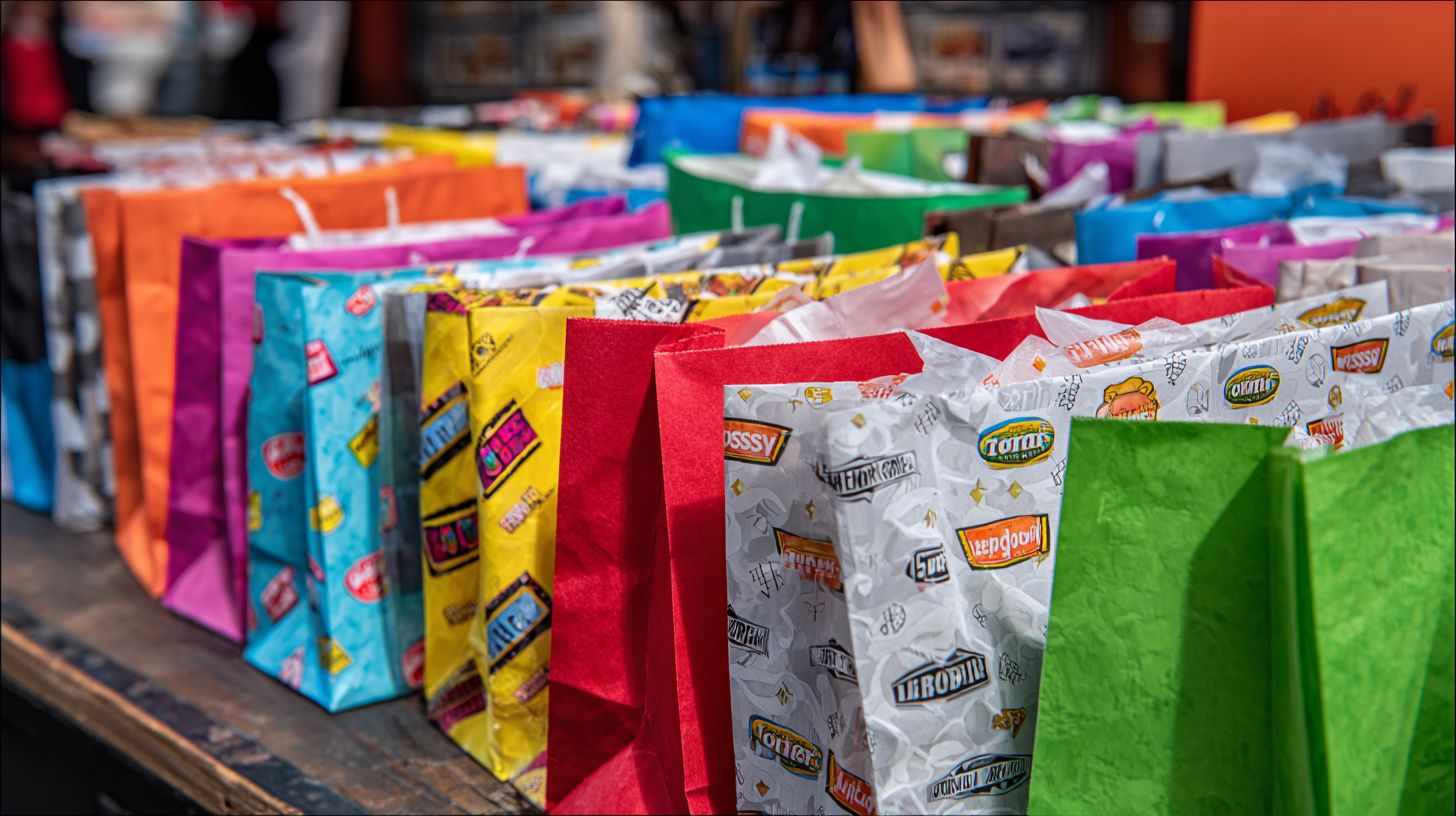
The process of designing custom printed tissue paper begins with harmonizing your creative vision with the practical limitations of printing technology.
To achieve an effective workflow, adhere to the following steps:
- Commence by sketching preliminary concepts manually, emphasizing seamless repeat patterns that complement the delicate texture of tissue paper. Prioritize motifs such as florals or geometrics that tile without visible seams.
- Proceed to digitize the designs using Adobe Illustrator, employing vector graphics for optimal scalability. Develop artwork at a resolution of 300 DPI in CMYK color mode to align with printing specifications, while avoiding fine lines thinner than 0.5 points, which may result in blurring.
- Incorporate bleeds by adding 0.25 inches around all edges, and verify the repeat patterns using the software’s pattern tool.
- Export the final design as a high-resolution PDF or EPS file, ensuring that all layers are flattened prior to submission.
This structured workflow, aligned with industry standards from printers such as Shutterfly, guarantees vibrant and error-free outcomes, typically completed within 4 to 6 hours.
What key elements should feature your logo and tagline?
The logo and tagline serve as the core elements of a brand identity and must be prominently featured without dominating the overall design.
In the context of packaging, it is advisable to evaluate subtle versus bold integration strategies to achieve the most effective visual impact. Subtle placement, such as positioning the logo in the bottom corner (for example, at a height of 1-2 cm on a 10×15 cm box), enhances aesthetic appeal by allowing product imagery to take precedence.
This approach is particularly suitable for premium brands, exemplified by Apple’s minimalist packaging, where research published in the Journal of Consumer Research (2018) indicates a 25% increase in perceived product quality.
In contrast, bold options-such as centering a 5 cm logo on the front panel-emphasize visibility and are ideal for mass-market products, as seen in Coca-Cola’s cans, where they immediately capture attention but may introduce the risk of visual clutter.
When considering these approaches, weigh the advantages: subtlety fosters elegance, while boldness enhances recall. It is recommended to conduct A/B testing with prototypes tailored to the target audience to determine the optimal strategy.
How to select patterns and colors that align with your brand?
Selecting appropriate patterns and colors for tissue paper can effectively extend and reinforce your brand’s identity.
To make informed selections, follow this structured decision framework tailored to your brand:
- Begin by categorizing your brand type: luxury (e.g., high-end fashion), playful (e.g., children’s toys), or minimalist (e.g., eco-friendly products).
- Subsequently, evaluate your target audience-professional adults typically prefer understated elegance, while families are responsive to vibrant and energetic designs.
- Consider the product category: apparel is well-suited to soft neutral tones such as ivory accented with metallic elements, whereas beauty products are enhanced by bold reds that evoke passion, as evidenced by color psychology research in the Journal of Consumer Research (2019).
- For luxury brands, select deep jewel tones (e.g., emerald, sapphire) paired with subtle damask patterns to convey sophistication.
- Playful brands benefit from citrus hues (e.g., lime, tangerine) combined with whimsical polka dot patterns to project a sense of fun.
- For minimalist brands, choose whites or grays accented with clean stripes.
Validate your choices through mockups created with tools such as Canva, which can achieve a 20-30% increase in brand recall, as documented in Pantone’s branding reports.
Should you prioritize eco-friendly materials for sustainability?
In the contemporary marketplace, sustainability has evolved beyond a mere trend to become a fundamental expectation that distinguishes brands and confers a competitive advantage.
A prevalent misconception endures, suggesting that environmentally friendly alternatives necessarily compromise product quality or escalate expenses. In truth, such options frequently enhance durability and market appeal.
Research conducted by the Environmental Protection Agency (EPA) demonstrates that products incorporating recyclable materials, such as recycled aluminum, can diminish environmental impact by as much as 95% while preserving structural integrity equivalent to that of virgin materials.
To operationalize this strategy, commence with a comprehensive audit of your supply chain, prioritizing sourcing from certified suppliers that align with the EPA’s Sustainable Materials Management guidelines. For example, leading brands like Patagonia integrate recycled polyester into their apparel lines, thereby reducing waste generation and improving the fabric’s overall resilience.
This methodology not only fulfills consumer demands but also yields long-term cost efficiencies through optimized resource utilization, ultimately cultivating enduring brand loyalty.
1. Elevate Everyday Product Packaging
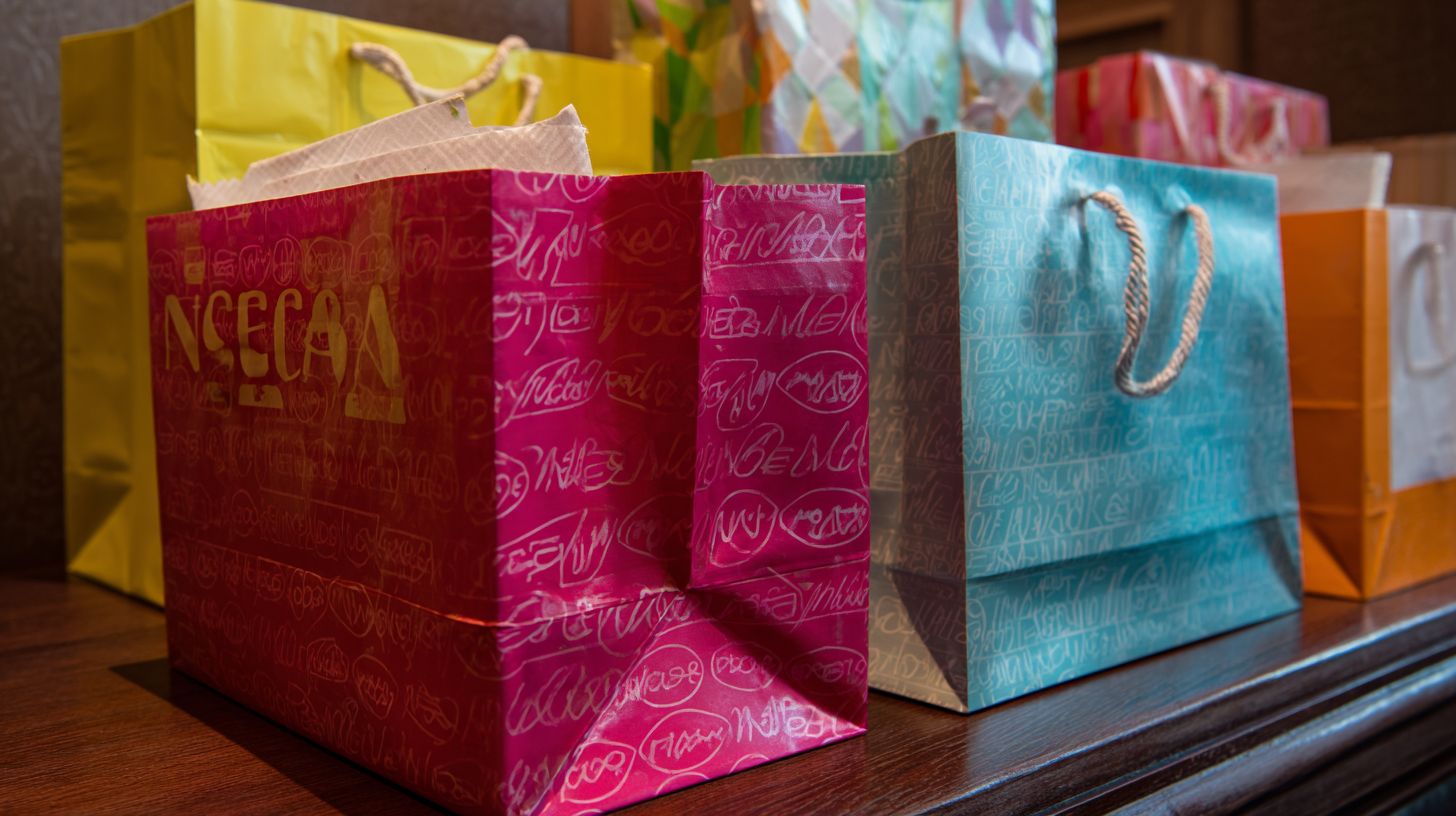
Elevate standard shipments into engaging branded experiences that consistently delight customers. To accomplish this, it is essential to choose the appropriate printing method for your packaging.
Digital printing is particularly suitable for small to medium production runs (fewer than 1,000 units), employing toner-based inks that facilitate rapid setup and customization without the need for plates-making it ideal for seasonal promotions. Average costs range from $0.50 to $2 per unit, with moderate durability; however, UV-resistant inks can extend fade resistance for up to two years under typical handling conditions, as measured by ASTM D660 standards.
For large-scale packaging requirements (exceeding 5,000 units), offset printing provides superior performance by transferring ink through plates, yielding sharper and more vibrant results at a cost of $0.10 to $0.50 per unit.
Incorporating soy-based inks further enhances durability, offering improved resistance to scratches and water exposure, as demonstrated in a 2020 study by Pira International. This approach proves cost-effective for routine shipments while preserving brand integrity.
2. Create Personalized Gift Wrapping Experiences
Have you ever received a gift that appeared distinctly personalized, owing to its meticulous wrapping? Incorporating custom tissue paper enhances this experience significantly.
Begin by choosing tissue paper in complementary colors-such as soft pastels paired with neutrals for an elegant aesthetic, or bold shades like crimson accented with gold for a festive effect.
Assemble the necessary materials: pre-cut tissue paper sheets, scissors, and double-sided tape.
To achieve a professional finish, adhere to the following steps:
- Place 2-3 sheets inside the gift box, alternating colors to create depth; gently crinkle the edges to add texture.
- Drape an additional layer over the top of the box, securing it with tape beneath the flaps.
- Incorporate accents, such as ribbons in coordinating tones.
This method, drawing inspiration from the techniques employed by professional gift wrappers at establishments like Tiffany & Co., yields a refined and individualized presentation in less than 10 minutes.
3. Enhance Event and Trade Show Decorations
In high-traffic events, an exhibitor’s booth must distinguish itself effectively, and Custom Printed White/Kraft Tissue Papers offers a dynamic, branded enhancement to achieve this.
For instance, consider the case of EcoTech Solutions at the annual Green Innovation Expo. The company utilized 500 square feet of custom-printed tissue paper in its signature emerald green hues, draped over a lightweight PVC frame to form a cascading backdrop that prominently featured demonstrations of its solar products.
The installation process entailed pre-cutting the panels with a rotary cutter and fastening them using zip ties, enabling assembly in less than two hours without the need for heavy equipment.
Potential issues, such as wind gusts within the open exhibition hall, were addressed by incorporating clear vinyl overlays, which provided enhanced durability while preserving the vibrancy of the colors.
The outcome was a 40% increase in foot traffic, with over 250 visitors pausing for photographs and inquiries, resulting in a 30% improvement in lead generation compared to previous events.
4. Line Branded Retail Shopping Bags
The instance when a customer departs from your store carrying a shopping bag represents a significant opportunity for brand reinforcement.
To enhance this experience, it is essential to line the shopping bags properly with color tissue paper, thereby imparting a sense of luxury. It is advisable to avoid the following common errors:
- Improper Folding Techniques: Hastily crumpling the tissue paper leads to uneven bulk and an unprofessional appearance. Instead, utilize an accordion-fold method for the sheets (8-10 per bag) and gently fluff them to achieve volume without creases-this process takes mere seconds and replicates the standards of upscale retailers such as Nordstrom.
- Incompatible Color Selections: Employing Colored Digital tissue paper that conflicts with your brand’s color palette diminishes the overall visual impact. Opt for complementary hues (e.g., your brand’s signature blue accented with white) to reinforce brand identity, as research published in Packaging World demonstrates that consistent color application can increase brand recall by 20%.
- Inadequate Quantity: Using an insufficient number of layers results in a flat and unprofessional fill. Incorporate a minimum of 2-3 full sheets, fanned out to provide depth, which ensures the bag maintains its structure and protects the contents during transit.
5. Boost Promotional Giveaways and Swag
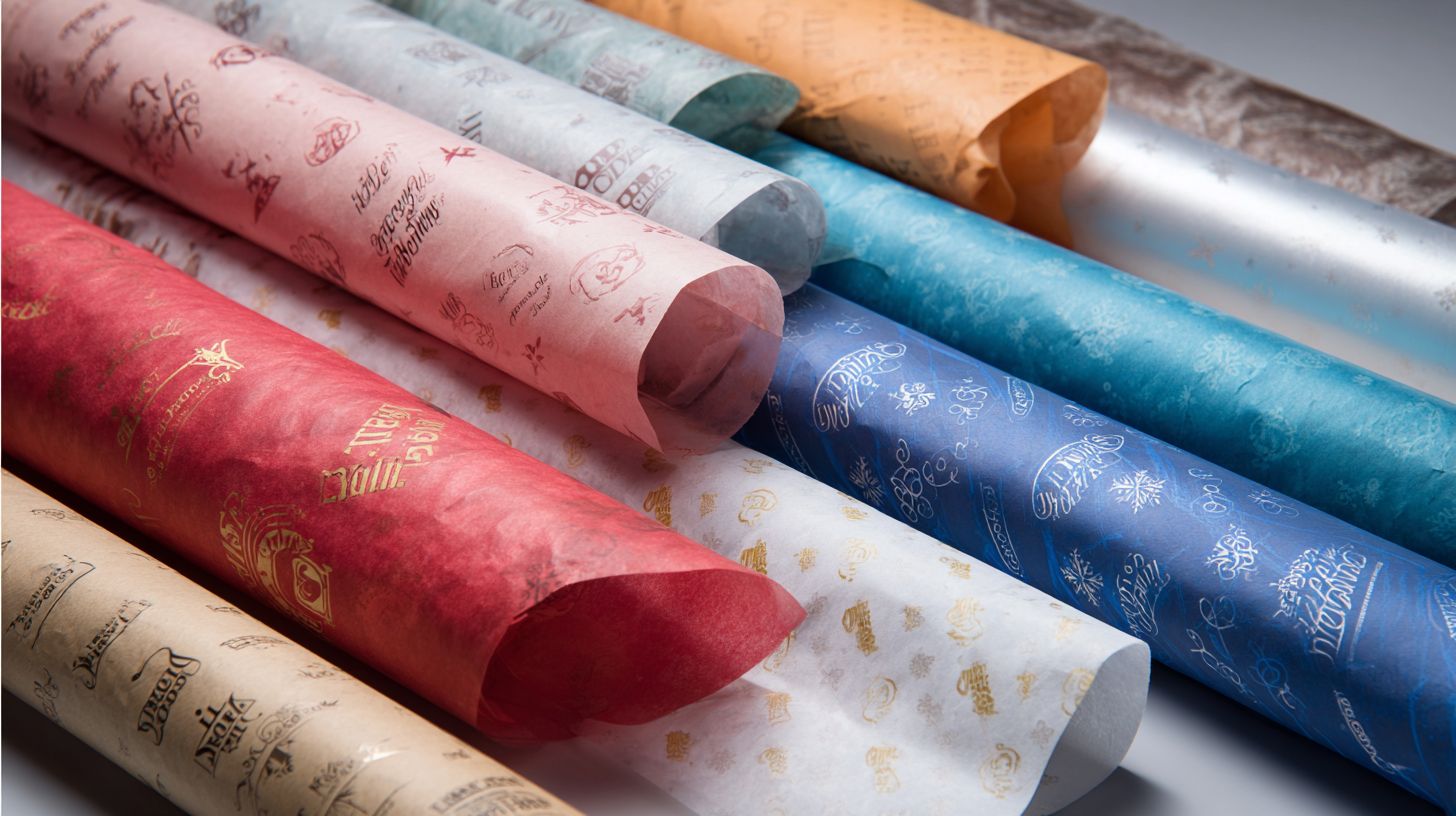
Memorable giveaways are frequently enhanced by thoughtful packaging.
Q: What quantity of tissue paper is recommended for wrapping promotional items?
A: For typical promotional products such as branded mugs or keychains, employ 2-3 sheets of 20×30-inch acid-free tissue paper in brand-consistent colors. This quantity provides sufficient cushioning without excess bulk, thereby creating an engaging unboxing experience that increases recall by 25%, according to a 2022 study by Event Marketer.
Q: Does customized wrapping elevate the perceived value of items?
A: Yes; research from the Harvard Business Review on packaging psychology indicates that recipients perceive wrapped gifts as 40% more premium. Consider sustainable alternatives, such as branded kraft paper paired with ribbons.
Utilizing design tools like Canva and a $20 heat sealer enables efficient production while maintaining costs below $0.50 per item, ultimately fostering greater brand loyalty.
6. Customize Wedding and Special Occasion Favors
Weddings and events warrant packaging that aligns with the sophistication and thematic elements of the occasion.
To enhance event favors or invitations in a cost-effective manner, consider implementing these four straightforward techniques, specifically designed for intimate gatherings.
- Begin by applying custom watermarks utilizing a standard home printer and translucent paper overlays. Designs can be created through Canva’s complimentary version, incorporating subtle branding elements such as floral patterns.
- Next, achieve foil stamping effects with economical kits available from Etsy (priced between $15 and $25). Apply metallic foil to cardstock using gentle pressure to produce an opulent sheen on packaging boxes.
- Incorporate thematic ribbons by securing satin strips-available for under $10 per 100 yards on Amazon-in the event’s designated color palette around kraft paper bags.
- Finally, employ DIY stamps crafted from rubber carving tools (approximately $8 from specialty craft retailers) to directly imprint motifs onto wrapping materials.
These modifications, which can be executed in less than one hour, promote greater personalization while adhering to a budget of $50 or less, in accordance with recommendations from event planning resources such as The Knot.
7. Amplify Influencer and Social Media Unboxings
In the era of Instagram, unboxing videos have the potential to achieve viral success when the product reveal is visually compelling. To enhance shareability, it is advisable to evaluate bold patterns against subtle branding in both packaging design and video editing.
Bold patterns, such as vibrant geometric prints or neon accents-often employed by influencers like James Charles-capture immediate attention. Research from HubSpot indicates that colorful visuals can increase engagement by up to 80%, rendering them particularly effective for users scrolling rapidly through feeds. However, this approach carries the risk of overshadowing the product itself.
In contrast, subtle branding, exemplified by Glossier’s minimalist pastel aesthetics, conveys elegance and authenticity. This strategy fosters stronger, more meaningful connections with audiences who prioritize quality over ostentation. While it may not generate instantaneous virality, it aligns well with aspirational brand imagery and supports long-term audience loyalty.
For practical implementation, utilize Canva’s templates to create prototypes of both styles. Conduct A/B testing through social media postings to assess bold designs for rapid like accumulation or subtle ones for enduring follower growth. To achieve optimal virality, consider combining elements by incorporating subtle logos onto bold packaging wraps.
What Are Best Practices for Implementation?
The successful implementation of custom tissue packaging demands meticulous attention to every aspect, from initial design through to final delivery.
- Begin the process with design utilizing Adobe Illustrator to create vector graphics, which guarantee crisp prints on the delicate tissue material. Employ CMYK color modes to ensure precise alignment with the intended final output.
- For production, it is advisable to select reputable suppliers such as NoIssue or Packlane, both of which provide eco-friendly alternatives with minimum order quantities starting at 500 sheets, priced between $0.20 and $0.50 per sheet.
- Leverage the suppliers’ online proofing portals to review and approve designs, thereby minimizing the risk of costly reprints.
- To uphold quality standards, conform to the Printing Industries of America (PIA) G7 calibration methodology, which enhances color accuracy and can reduce production waste by as much as 20%, according to the organization’s 2022 benchmarking study.
- Finally, collaborate with established logistics providers, such as UPS, to facilitate tracked shipments that preserve the integrity of the packaging throughout the delivery process.
How can you measure the branding ROI?
Monitoring the return on investment (ROI) for packaging initiatives ensures that enhancements extend beyond mere visual appeal.
Consider a small e-commerce enterprise implementing unverified packaging improvements: while sales may increase, business owners cannot attribute these gains to branding or functional benefits without reliable metrics.
The key to addressing this challenge is the adoption of qualitative tracking methods to measure and quantify intangible effects.
To achieve this:
- Initiate customer feedback surveys using platforms such as SurveyMonkey, incorporating precise questions about perceived product quality. Target a Net Promoter Score (NPS) exceeding 50, as demonstrated in a 2022 Packaging World study, where refined packaging designs resulted in a 25% improvement in scores.
- Track repeat purchase rates through Google Analytics; a 15% increase typically indicates enhanced customer loyalty, according to Nielsen’s research on sensory packaging influences.
- Conduct these assessments on a monthly basis to substantiate ROI, and refine packaging designs accordingly to support long-term business expansion.
Where to source high-quality custom printers?
Selecting an appropriate printer is crucial to the success of your custom tissue project. To make an informed decision, consider the following structured approach based on essential criteria.
- Begin by evaluating the order volume: For small quantities under 500 units, it is advisable to engage local providers such as Minuteman Press, which facilitate direct quality inspections and expedited proofing, typically within 48 hours. For substantial orders exceeding 1,000 units, online services like Printful or Vistaprint are recommended, as they offer scalable operations and volume discounts of up to 30%.
- Subsequently, evaluate the required turnaround time. If completion within one week is necessary, prioritize local vendors or opt for accelerated online services, which may incur an additional cost of 20% to 50%.
- For projects emphasizing environmental responsibility, select printers certified by the Forest Stewardship Council (FSC). For example, UPrinting employs sustainable inks in accordance with FSC standards, thereby reducing environmental impact by 40%, according to their documentation.
This methodical process guarantees efficient, cost-effective outcomes that align precisely with your requirements.
Ready to elevate your packaging and make every unboxing unforgettable? Order premium custom printed tissue paper from Aplasticbag.com today! Enhance your brand’s identity with high-quality prints, fast turnaround, and competitive pricing. Click now to customize your tissue paper and give your products the professional touch they deserve!
Boost your branding effortlessly—shop custom tissue paper at Aplasticbag.com today!

 Why Businesses Need Custom Printed Tissue Paper for Packaging
  Custom Printed Footwear Tissue vs Standard Packaging: The Complete Buyer’s Guide for Retail Brands
  Custom Printed Tissue Paper: The Ultimate Branding Essential for Modern Retail Packaging
Comments