
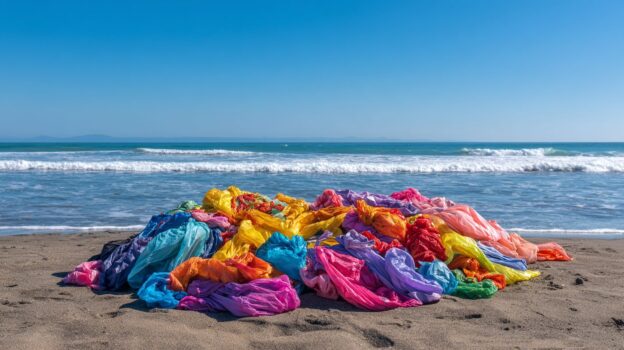
Every year, billions of plastic bags swirl through our lives as fleeting conveniences, yet their legacy endures for centuries in landfills and oceans. This ubiquitous staple drives marine wildlife deaths, microplastic proliferation, and fossil fuel dependency, as highlighted by UN Environment Programme reports. Explore 10 pivotal facts-from their 1950s origins to global bans and reusable alternatives-that reveal the hidden toll and give the power to sustainable choices.
1. Plastic Bags Were Invented in the 1950s
Before the mid-20th century, the convenience of thin, lightweight plastic carriers at retail checkouts was nonexistent, representing the standard reality of the era.
The development of polyethylene traces its origins to 1933, when British chemists Reginald Gibson and Eric Fawcett, working at Imperial Chemical Industries (ICI), inadvertently discovered the material during high-pressure experiments with ethylene gas. This breakthrough was formally documented in ICI’s 1935 patent (UK Patent 471,362), which included schematic diagrams of polymerization reactors.
During the 1940s, World War II accelerated production of polyethylene for applications such as radar insulation. In 1953, Mobil Chemical Company introduced low-density polyethylene to the United States market, facilitating advancements in thin-film extrusion processes essential for bag manufacturing.
In 1959, Swedish inventor Sten Gustaf Thulin secured a patent for the contemporary one-handled shopping bag (Swedish Patent 178,100). This innovation transformed the retail sector by reducing costs by 70% compared to paper bags, according to a 1960s study conducted by the Swedish Institute for Packaging Research.
Archival photographs from Mobil’s records depict early bag prototypes undergoing testing in supermarkets, thereby enhancing operational efficiency at checkouts.
2. Billions Are Produced Annually Worldwide
The magnitude of plastic bag production is comparable to that of entire industries.
Since the 1970s, global demand for Custom plastic bags has increased dramatically, with annual production rising from less than 1 million tons to over 5 million tons by 2020. This surge has been propelled by the expansion of retail sectors and the widespread adoption of single-use convenience.
This excessive production has caused profound environmental damage, including an annual contribution of 8 million tons to ocean plastic pollution and posing significant threats to marine ecosystems. These impacts are detailed in the United Nations Environment Programme (UNEP) 2021 report, “From Pollution to Solution.”
To address this issue, governments can pursue effective, scalable strategies, such as introducing tax incentives for biodegradable alternatives-for instance, Kenya’s 2017 plastic bag levy, which reduced usage by 80 percent-and providing subsidies to manufacturers who incorporate recycled materials. These measures promote a circular economy and substantially mitigate waste generation.
3. They Take Hundreds of Years to Decompose
A single plastic bag, interred in a landfill, initiates a protracted and silent degradation process that may endure for centuries. In contrast to natural materials, plastics exhibit remarkable resistance to decomposition owing to their synthetic polymer composition.
Rather than fully breaking down, they fragment into microplastics that persist in the environment and contaminate soil, as documented in Environmental Protection Agency (EPA) reports on landfill leachate.
Natural materials, such as leaves, decompose expeditiously through microbial activity, thereby replenishing soil nutrients and diminishing landfill volume. However, this process may initially attract pests.
Similarly, paper undergoes biological degradation, though the presence of inks or adhesives can impede complete breakdown unless the material is recycled.
The advantages of natural materials encompass accelerated nutrient cycling and reduced environmental pollution. Potential drawbacks include variability in decomposition rates, influenced by factors such as moisture and oxygen availability.
According to the EPA’s 2020 study, transitioning to biodegradable alternatives substantially mitigates long-term waste impacts. This research advocates for consumers to select compostable options as a practical measure toward achieving sustainable waste management.
4. Plastic Bags Contribute to Ocean Pollution
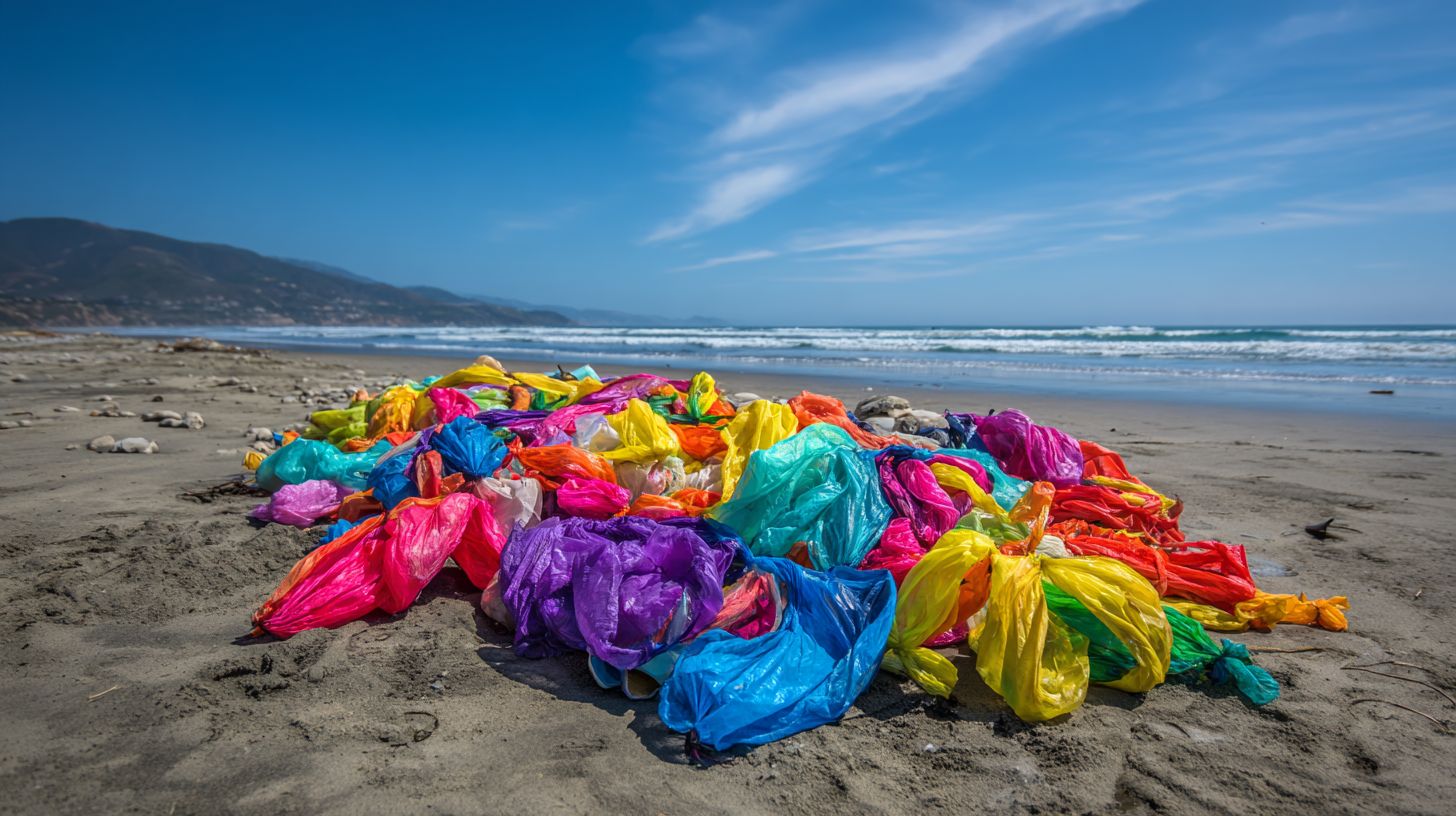
Annually, a vast quantity of custom plastic bags evades landfills and waterways, ultimately entering expansive ocean ecosystems where they inflict substantial environmental harm.
According to the World Wildlife Fund’s 2022 report on ocean debris, five principal pathways facilitate this pollution. The following delineates these pathways along with recommended preventive measures:
- Littering: Plastic bags discarded on streets or beaches are conveyed into waterways through wind or pedestrian traffic. Prevention involves participating in local cleanup initiatives and utilizing reusable bags, which the WWF indicates can reduce litter by 30%.
- Stormwater Runoff: Rainfall transports plastic bags from urban areas into storm drains. Mitigation strategies include installing trash traps in gutters and advocating for comprehensive municipal sweeping programs.
- Improper Waste Management: Inadequate collection systems, particularly in low-income regions, permit plastic bags to overflow from waste sites. Supporting recycling programs and promoting proper bin usage can reduce such escapes by half, as supported by WWF data.
- Shipping Losses: Plastic bags may be dislodged from cargo ships during storms. Preventive actions encompass securing loads with netting and complying with International Maritime Organization (IMO) regulations for maritime waste.
- River Transport: Custom Plastic bags deposited upstream are carried by rivers into marine environments. Engaging in riverbank cleanups and enforcing anti-dumping laws can intercept up to 40% of riverine plastic, according to WWF estimates.
5. They Harm Marine Wildlife
Consider the poignant scenario of a sea turtle mistaking a floating plastic bag for a jellyfish, resulting in a fatal mishap.
Dr. Elena Vasquez, a marine biologist at the Scripps Institution of Oceanography, elucidates: “Marine animals such as sea turtles, whales, and seabirds become entangled chiefly due to marine debris, including discarded fishing nets and six-pack rings. For example, ghost nets-abandoned fishing gear-may ensnare turtles for weeks, leading to starvation or drowning. According to a 2022 Greenpeace study, 80% of marine mammals worldwide encounter plastic annually.”
Regarding the long-term implications, Dr. Raj Patel of the World Wildlife Fund observes: “Such incidents compromise population viability; for instance, leatherback turtle populations have declined by 40% since 1980 owing to ingestion and entanglement, as reported by IUCN data. To address this, it is advisable to support legislation for gear traceability and engage in beach cleanup initiatives, utilizing resources such as the Ocean Conservancy’s app for identifying debris hotspots.”
6. Recycling Rates for Plastic Bags Are Low
Despite the prevalence of recycling bins, the vast majority of plastic bags fail to achieve a second life through proper recycling processes.
San Francisco’s recycling program serves as a prime illustration of this persistent challenge. Initiated in 2009 with the ambitious goal of achieving zero waste by 2020, the program has encountered significant obstacles due to contamination from plastic bags, which are frequently misidentified as recyclables.
This issue has led to blockages in sorting facilities, resulting in operational cost increases of up to 25%, according to a 2022 report from the SF Environment Department.
Key challenges stem from insufficient public awareness, evidenced by contamination rates of 18% in curbside recycling bins.
To address these issues, the city has implemented comprehensive educational initiatives. These include multilingual workshops facilitated through Recology’s complimentary mobile application, which provides interactive tutorials on proper sorting; educational programs in schools that reach approximately 50,000 students each year; and targeted direct mail campaigns directed at neighborhoods with elevated contamination levels.
These efforts have yielded measurable successes, including a rise in diversion rates to 80% by 2023. Resident surveys further indicate a 35% improvement in sorting habits, contributing to the cultivation of a more precise and responsible recycling culture.
7. Production Relies on Fossil Fuels
The apparent convenience of lightweight plastic bags conceals a substantial dependence on non-renewable resources.
The production process commences with the refining of crude oil into naphtha, which is subsequently subjected to steam cracking at temperatures between 750 degreesC and 900 degreesC to yield ethylene.
This step requires approximately 25-30 gigajoules (GJ) of energy per ton of ethylene, as reported by the American Chemistry Council (ACC).
Ethylene is then polymerized to form polyethylene, the primary material in plastic bags.
For low-density polyethylene (LDPE), this occurs under high pressure (1,000-3,000 bar) and temperatures of 150-300 degreesC, whereas high-density polyethylene (HDPE) employs catalytic methods, such as the Ziegler-Natta process, at lower pressures.
Overall, the energy consumption for polyethylene production totals 70-80 GJ per ton.
Furthermore, emissions amount to 1.5-2 tons of CO2 equivalent per ton, according to the ACC’s 2022 lifecycle analysis.
These figures underscore the significant environmental burden imposed by this fossil fuel-intensive supply chain.
8. Many Countries Have Banned Single-Use Bags
Governments across the globe, from the vibrant markets of Kenya to the supermarkets of Europe, are enacting prohibitions on disposable plastics.
These measures yield immediate benefits in curtailing plastic waste. Examine the implementations in three regions, as evidenced by United Nations Environment Programme (UNEP) case studies that illustrate significant behavioral changes.
| Region | Key Implementation | Enforcement Strategies | Measurable Outcomes (UNEP Data) |
|---|---|---|---|
| EU | Single-Use Plastics Directive (2019), prohibiting straws and cutlery since 2021 | Impose fines of up to EUR4,000 for non-compliance; collaborate with retailers to conduct audits | 30% reduction in marine litter; 21 billion fewer single-use items annually |
| California, USA | SB 54 (2014), statewide ban on thin plastic bags, expanded in 2022 | Provide staff training for spot-checks; offer incentives for reusable bags to encourage adoption | 70% reduction in bag consumption; 3 billion fewer bags annually |
| Bangladesh | 2002 fatwa-based ban on polythene bags thinner than 20 microns | Deliver community education through mosques; enforce via market inspections and promotion of alternatives | Near-total elimination in urban areas; 80% increase in jute bag usage, resulting in a 50% reduction in waste |
Recommendation: Commence with localized fines and educational initiatives to emulate these successes, while monitoring waste metrics on a quarterly basis.
9. Plastic Bags Break Down into Microplastics
What begins as a visible nuisance disintegrates into invisible threats that infiltrate ecosystems. Common misconceptions veil the significant risks posed by microplastics derived from degrading plastics.
- Myth 1: Plastic bags degrade and disappear over time. Fact: These bags undergo photodegradation through exposure to ultraviolet (UV) radiation, fragmenting into microplastics that persist for centuries. A 2020 study by the Ocean Conservancy indicates that 5.25 trillion pieces of plastic are currently afloat in global oceans.
- Myth 2: Microplastics pose no harm. Reality: They release toxins such as bisphenol A (BPA), which infiltrate food chains and adversely affect marine organisms. A 2019 report from the United Nations Environment Programme associates microplastics with infertility in fish populations.
- Myth 3: Recycling fully resolves the issue. Fact: Only 9% of plastics are recycled, according to the World Economic Forum (2022). To mitigate fragmentation, it is essential to reduce plastic consumption through the use of reusable bags and adherence to proper waste sorting protocols.
10. Reusable Bags Can Significantly Reduce Waste
Transitioning to a durable custom tote bag can significantly reduce an individual’s contribution to plastic waste accumulation in a short time.
To fully embrace reusable alternatives and the principles of the circular economy-wherein products are designed for repeated use to minimize waste-the following 10 practical resources are recommended:
- Zero Waste Home Guide by Bea Johnson: Provides a step-by-step approach to eliminating single-use items (zerowastehome.com).
- My Little Plastic Footprint app: Enables tracking of reusable substitutions and associated plastic reductions.
- Ellen MacArthur Foundation’s Reusable Packaging Report (ellenmacarthurfoundation.org): Offers a lifecycle analysis demonstrating 80% lower emissions compared to single-use packaging.
- Reusable Straw Kit from FinalStraw: Features a collapsible, BPA-free design ($20).
- Loop Store app: Provides a subscription service for reusable containers, including incentives for returns.
- EPA’s Reduce, Reuse, Recycle Guide: Outlines federal strategies for implementing these practices in households (epa.gov).
- Habitica app: Transforms the monitoring of reusable habits-such as carrying personal bags-into a gamified experience.
- Cradle to Cradle Products Innovation Institute: Certifies reusable products for adherence to circular design standards (c2ccertified.org).
- A Life Without Plastic book: Details do-it-yourself alternatives with recommendations for cost savings.
- UNEP’s Global Plastics Outlook study: Presents data indicating that reusables can reduce ocean pollution by 30% (unep.org).
Initiate one substitution per week to foster enduring environmental benefits.
What Are the Main Environmental Impacts of Plastic Bags?
Along with visible litter, plastic bags initiate a series of ecological disturbances. To identify the specific impacts in a given region, a structured decision-making framework can be employed: Begin by determining whether the issue is primarily land-based.
If the concern is land-based, attention should be directed toward contributions to landfill methane emissions. Plastics, including bags, increase waste volume and thereby intensify these emissions.
According to the U.S. Environmental Protection Agency (EPA), landfills represent the third-largest source of methane in the United States, accounting for 14.4% of total emissions in 2021. Non-biodegradable plastic bags exacerbate this process by promoting anaerobic decomposition.
For mitigation strategies, conduct audits of local waste management sites using the EPA’s Landfill Methane Outreach Program (LMOP) database and advocate for regulatory bans on single-use plastics.
If the issue is water-based, the focus shifts to the loss of marine biodiversity. Custom printed Plastic bags pose significant risks through entanglement and ingestion by marine organisms, leading to population declines.
The Intergovernmental Panel on Climate Change (IPCC) 2022 Ocean and Cryosphere in a Changing Climate report indicates that microplastics derived from such bags threaten over 800 species and contribute to the annual influx of 11 million metric tons of plastic pollution into the oceans.
Monitoring efforts can be supported through the National Oceanic and Atmospheric Administration (NOAA) Marine Debris Program, alongside participation in cleanup and conservation initiatives.
How Can Individuals Reduce Plastic Bag Usage?
- Initiate with modest adjustments: A single habit modification at the grocery store can engender widespread sustainability benefits.
- Commence by consistently carrying a reusable bag-pair this practice with your keys, as recommended in James Clear’s *Atomic Habits*, to cultivate automaticity.
- Should you occasionally forget, establish a phone reminder or associate it with your morning coffee routine, a method employed in the World Wildlife Fund’s plastic-free initiatives, which increased participant compliance by 40% according to a 2022 study.
- Subsequently, select bulk bins to minimize packaging waste; employ cloth bags for produce, thereby averting the use of approximately 500 plastic bags per household annually, as reported by the Environmental Protection Agency.
- Opt for seasonal and locally sourced items to reduce your carbon footprint-applications such as Eat Local facilitate the identification of suitable options, thereby promoting enduring environmental practices with minimal effort.
Are There Effective Alternatives to Plastic Bags?
Indeed, viable options are available that effectively balance convenience with environmental responsibility. For reusable shopping bags, suitable alternatives include cotton totes, jute bags, and compostable starch-based options.
A lifecycle assessment conducted by the Sustainable Packaging Coalition (2022) indicates that cotton totes can withstand more than 1,000 uses, generating minimal waste but requiring substantial water during production (2,700 liters per kilogram).
Jute bags provide comparable durability, accommodating up to 800 uses, at a reduced cost of $0.50 per unit and with a 40% smaller carbon footprint, attributable to the natural growth of jute fibers.
Starch-based bags biodegrade within 90 days, though they support only 50 uses and cost $0.20 per unit, making them suitable for short-term applications.
Selection should be guided by frequency of use; for instance, jute bags are recommended for daily errands to optimize environmental impact minimization.
| Bag Type | Durability (Uses) | Cost/Unit | Lifecycle Impact (kg CO2e) |
| Cotton Tote | 1,000+ | $1.00 | 5 |
| Jute Bag | 800 | $0.50 | 3 |
| Starch-Based | 50 | $0.20 | 1.5 |
Ready to take your brand to the next level with high-quality, fully customizable plastic bags?
APlasticBag.com makes it easy to create durable, stylish, and eco-friendly packaging that leaves a lasting impression on your customers. Whether you need custom shopping bags, retail bags, or branded packaging for events, we offer fast turnaround times, low minimums, and unbeatable pricing.
👉 Boost your brand visibility — Start designing your custom plastic bags today!
Visit APlasticBag.com to get an instant quote, upload your logo, and bring your packaging vision to life.

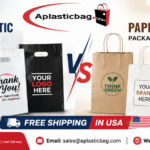 Custom Plastic Shopping Bags vs Paper Packaging: Cost, Branding & Convenience
  Wholesale Plastic Shopping Bags: A Complete Buying Guide for Retail Businesses
  Why Plastic Bags With Logo Help Businesses Stand Out in Competitive Markets
Comments