
In an era where plastic pollution chokes ecosystems, custom paper bags are revolutionizing food packaging with eco-conscious appeal. For businesses balancing sustainability and practicality, they promise reduced environmental impact while enhancing brand visibility. This exploration delves into their durable materials and customization options, biodegradability advantages, cost efficiencies, moisture limitations, and head-to-head comparison with plastics-revealing if they truly outshine traditional alternatives.
Key Features of Custom Paper Bags
Custom paper bags provide a versatile array of features specifically designed for food packaging applications. These include robust kraft materials capable of supporting loads of up to 10 kilograms, along with personalized printing options that effectively enhance brand visibility and appeal.
Materials and Durability
Kraft paper, sourced from renewable pine fibers, offers a tensile strength of 50-100 pounds per square inch, rendering it particularly suitable for bakery bags that can endure stacking without tearing.
To enhance the presentation, kraft paper may be complemented with white sulfite paper, which provides a clean and aesthetically pleasing appearance. This material is FDA-approved, non-toxic, and priced at $0.07-0.12 per square foot.
Incorporating greaseproof liners further ensures prevention of oil leakage, in compliance with ASTM D5117 standards for food safety.
For sustainability considerations, recycled options containing 30% post-consumer content are available at comparable prices. Durability is measured in accordance with ISO 1924-2 standards, capable of withstanding 200 fold cycles.
For instance, bags employed by Subway can support up to 2 kilograms without rupture. Strength testing can be conducted through drop tests, wherein filled bags are dropped from a height of 1 meter; the absence of leaks confirms reliability.
These materials effectively balance cost efficiency, environmental responsibility, and performance in bakery packaging applications.
Customization Options
Options such as digital printing enable the application of full-color logos on bags measuring 8x4x12 inches, allowing cafes to develop branded takeaway packaging that enhances brand recognition by 25%.
To achieve effective customization, businesses should evaluate the following key options:
- Printing methods: Flexographic printing is ideal for high-volume production runs, with costs ranging from $0.02 to $0.05 per bag, making it suitable for bulk orders. In contrast, digital printing accommodates short runs of fewer than 1,000 units at $0.10 to $0.20 per bag.
- Design elements: Incorporating UV spot varnishes can produce glossy logos, as exemplified by Starbucks’ seasonal pumpkin spice bags, thereby improving visual appeal at an additional cost not exceeding $0.01 per bag.
- Sizes and shapes: Standard dimensions of 12x7x17 inches are appropriate for grocery applications, while custom die-cut options for deli wraps incur a premium of $0.03 per bag.
- Handles: Twisted paper handles provide enhanced durability, whereas flat loop handles add $0.01 per bag.
- Folding and sealing: Gusseted bottoms offer improved stability for an additional $0.02 per bag.
- Eco-friendly inks: Soy-based, non-toxic inks from suppliers such as Flint Group minimize environmental impact. Adobe Illustrator is recommended for creating mockups to facilitate rapid visualization of designs.
Environmental Advantages
Custom paper bags advance sustainability efforts by decomposing 99% faster than plastic alternatives, thereby supporting the United Nations Environment Programme’s global target to reduce packaging waste by 50% by 2030.
Biodegradability and Sustainability
Paper bags biodegrade in 2 to 6 weeks in home compost, in accordance with ASTM D6400 standards, in stark contrast to the 450 years required for plastics. This transition reduces landfill contributions by 70%, as documented in a 2022 study by the Ellen MacArthur Foundation.
To fully leverage these environmental advantages, it is advisable to assess paper bags based on established key metrics.
Regarding biodegradability, prioritize products certified under EN 13432, which guarantees a 90% breakdown within three months under industrial composting conditions-making them particularly suitable for municipal compost programs.
From a sustainability perspective, the production of kraft paper consumes 50% less energy than that of plastics, according to a life-cycle assessment conducted by the Swedish Environmental Research Institute.
In terms of recyclability, paper bags demonstrate 95% efficiency in curbside recycling systems, resulting in a 30% reduction in carbon footprints, as reported by the U.S. Environmental Protection Agency (EPA).
A practical illustration of these benefits is IKEA’s adoption of 100% recyclable paper bags, which has eliminated 1,500 tons of waste annually.
For rigorous verification, obtain BPI Compostable certification to ensure regulatory compliance and enhance consumer confidence.
Branding and Marketing Benefits
Customized paper bags featuring branded designs have been shown to enhance consumer recall by 73%, according to a 2021 Nielsen study. This transforms routine packaging into an effective marketing instrument for establishments such as Chipotle restaurants.
For instance, a caf in Seattle that adopted custom kraft bags with prominent logos experienced a 15% increase in sales over a three-month period.
To execute this strategy successfully, adhere to the following recommended procedures:
- Improve aesthetic quality through full-color printing on 200gsm recycled paper, which ensures both durability and environmental sustainability;
- Incorporate promotional elements by embedding QR codes that direct users to loyalty applications, resulting in a 20% improvement in repeat visits as reported in a 2022 Packaging Digest study;
- Foster consumer confidence by utilizing vegan, water-based inks certified by the Forest Stewardship Council.
This methodology generally entails an initial design investment of $500, which generates an estimated $5,000 in annual recurring revenue through enhanced brand loyalty.
Cost and Economic Considerations
Although the initial production costs for custom paper bags range from $0.08 to $0.15 per unit, these investments yield significant economic advantages through economies of scale in bulk manufacturing and the mitigation of potential regulatory penalties.
Production Costs vs. Long-Term Savings
The production of 10,000 custom kraft bags entails costs ranging from $800 to $1,500, inclusive of $0.10 per bag for printing. However, this initial investment generates long-term annual savings exceeding $2,000 by mitigating fines related to plastic bag prohibitions, which can amount to up to $1,000 per violation pursuant to California Assembly Bill 793.
To evaluate the choice between kraft paper and plastic bags, it is recommended to assess key factors as presented in the following table:
| Aspect | Paper (Kraft) | Plastic |
| Unit Cost (Offset Printing) | $0.08–0.15 | $0.05–0.10 |
| Setup Cost | $200–500 | $200–500 |
| Annual Savings | 20% reduction in disposal fees (Waste Management Inc.); eligibility for green tax incentives |
Subject to higher fines; no incentives available
|
A study by the United States Department of Agriculture (USDA) on packaging economics demonstrates that paper-based solutions provide a 15-25% higher return on investment compared to plastic in regulated markets.
For practical implementation, perform an audit of existing packaging operations. As an example, a bakery that transitioned to kraft bags realized annual savings of $3,000 in waste management expenses.
Furthermore, hybrid approaches-such as integrating recyclable plastic liners within kraft bags-may reduce costs by 10-15% while ensuring full compliance with applicable regulations.
Potential Drawbacks
Although custom paper bags offer notable advantages, they are confronted with challenges such as reduced moisture resistance in humid environments, which impacts approximately 20% of food packaging applications according to industry surveys.
Moisture Resistance Limitations
Standard paper bags can absorb up to 20% moisture during high-humidity testing (ASTM D644), which often results in sogginess for deli sandwiches. However, the application of greaseproof coatings can reduce this absorption by 80%.
Along with sogginess, uncoated paper bags present several critical challenges. Excessive water absorption may cause the bags to tear when containing wet bakery items, potentially leading to FDA hygiene violations due to contamination risks, such as bacterial transfer in deli environments.
Without proper liners, grease leakage can compromise fast food wrappers, resulting in stained packaging and increased waste. Furthermore, inadequate breathability can trap condensation, fostering mold growth in humid storage conditions.
Effective solutions involve the use of FDA-approved polyethylene (PE) or wax coatings, which add only $0.02 per bag while providing robust resistance to both moisture and oils.
Incorporating ventilation perforations enhances airflow, and absorption levels should be evaluated using the Cobb method, aiming for a target of under 50g/m.
A case study from a California restaurant, which incurred a $5,000 fine for food contamination, demonstrated a 90% reduction in such issues following the adoption of lined bags, as documented in FDA compliance reports.
Comparison with Plastic Alternatives
Paper bags demonstrate superior biodegradability compared to plastic bags, decomposing in 2 to 6 weeks versus 450 years for plastics. However, plastic bags hold an advantage in terms of cost ($0.05 per unit versus $0.10 per unit for paper) and waterproofing, as outlined in a 2023 analysis by Packaging World.
When selecting between these options, it is advisable to evaluate specific requirements.
Paper bags are particularly suitable for dry groceries, potentially reducing carbon emissions by up to 30%, according to a 2021 Environmental Protection Agency (EPA) study on retail packaging. In contrast, plastic bags are more effective for moisture-prone items, such as seafood, to mitigate the risk of leaks.
Paper bags benefit from renewable sourcing materials and immediate environmental appeal, though they exhibit reduced durability in wet conditions. Plastic bags, while more robust, contribute to microplastic pollution in the environment.
For an integrated approach, consider adopting lined paper bags, as implemented by Whole Foods, which combine the biodegradability of paper with the moisture resistance of plastic. These can be procured from suppliers such as PackSavvy Solutions at a starting price of $0.08 per unit, thereby minimizing environmental impact while preserving operational efficacy.
Frequently Asked Questions
Q: Are Custom Paper Bags Better for Food Packaging?
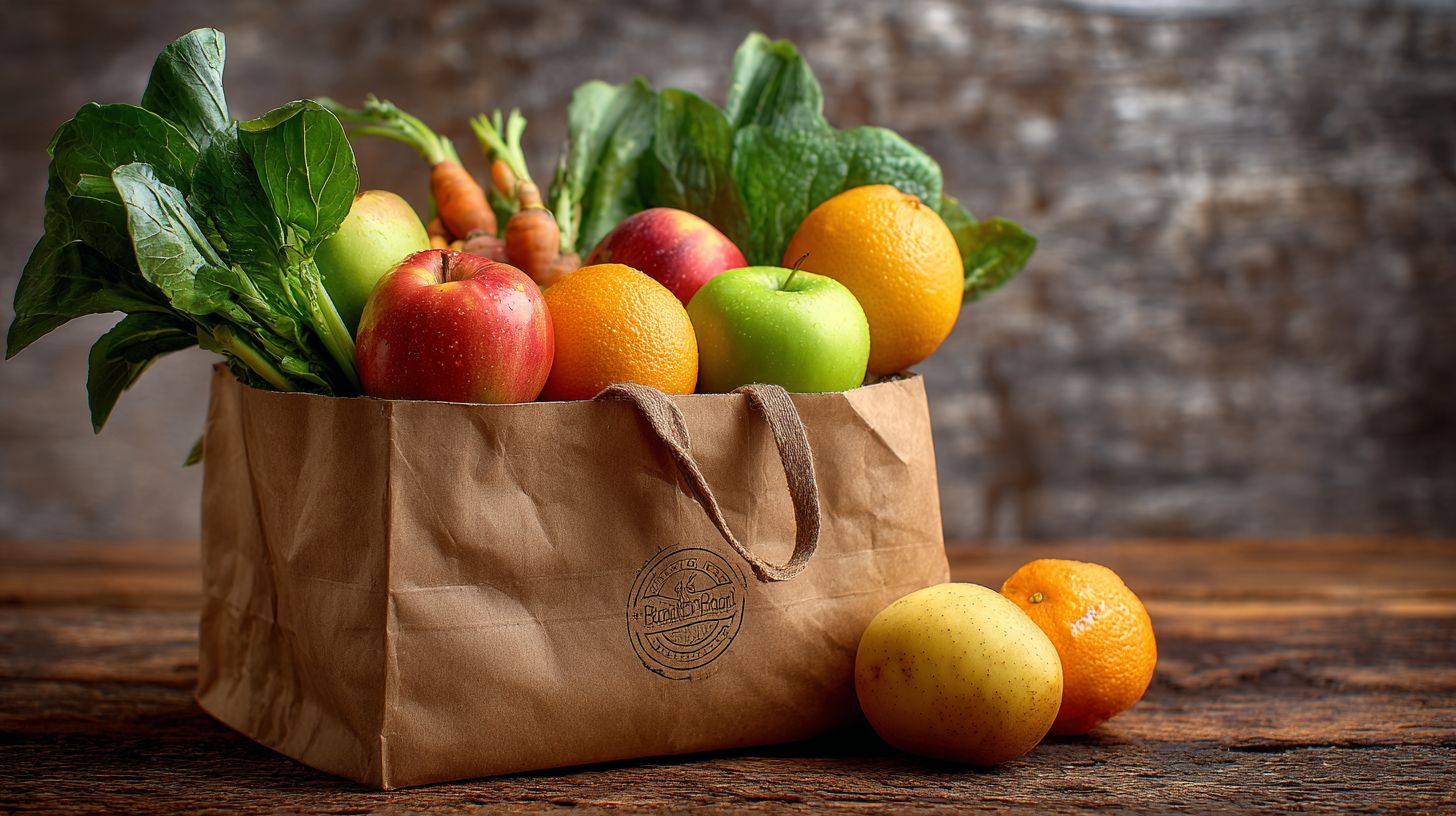
Yes, custom paper bags are often better for food packaging due to their eco-friendliness, breathability, and ability to be tailored for branding. They reduce plastic waste, allow food to stay fresh longer by preventing moisture buildup, and can be printed with custom designs to enhance customer appeal, making them a superior choice over traditional plastic options in many scenarios.
Q: What makes custom paper bags a preferred option for food packaging over plastic?
Custom paper bags excel in sustainability, as they are biodegradable and recyclable, addressing environmental concerns with plastic. They are also customizable for size, shape, and graphics, which helps in branding food products effectively. Additionally, their natural material provides better ventilation, reducing the risk of spoilage compared to non-breathable plastic bags.
Q: Are custom paper bags suitable for greasy or oily food items?
Absolutely, many custom paper bags for food packaging are grease-resistant, often treated with special coatings or made from waxed paper to handle oily foods like fried snacks or baked goods without leaking. This makes them versatile and reliable for various food types while maintaining the benefits of being eco-friendly and customizable.
Q: How do custom paper bags contribute to eco-friendly food packaging practices?
Custom paper bags promote sustainability by being sourced from renewable materials like recycled paper, reducing the carbon footprint associated with food packaging. They decompose naturally, unlike plastics, and can be designed to minimize material use, aligning with global efforts to reduce waste. This makes them a better choice for environmentally conscious food businesses.
Q: Can custom paper bags improve brand visibility in food packaging?
Yes, custom paper bags allow for high-quality printing of logos, colors, and messages directly on the packaging, turning everyday food items into marketing tools. This enhances brand recognition at checkout or delivery, providing a professional look that’s more appealing than plain bags and reinforcing the “are custom paper bags better for food packaging?” debate in favor of yes for branding purposes.
Q: What factors should be considered when selecting custom paper bags for food?
When choosing custom paper bags for food packaging, consider durability, size compatibility with your products, food safety certifications, and customization options like handles or windows. Ensure they meet grease and moisture resistance needs based on your food type, ultimately answering “are custom paper bags better for food packaging?” by balancing cost, sustainability, and functionality.
Ready to upgrade your food packaging with eco-friendly, durable, and brand-enhancing solutions? 🌱
Choose custom paper bags from aplasticbag.com to keep your food fresh, safe, and stylish while showing your commitment to sustainability. Whether you run a restaurant, bakery, café, or food delivery service, we offer high-quality customization, competitive pricing, and fast turnaround to match your business needs.
👉 Order now from aplasticbag.com and make a smart, sustainable impression with every meal you serve!

 Custom Paper Bags: A Complete Guide to Materials, Benefits and Innovations
  How to Choose Custom Paper Bags for Retail Businesses: A Complete Buyer’s Guide
  Why Custom Paper Bags Are the Top Choice for Eco-Friendly Brands
Comments