
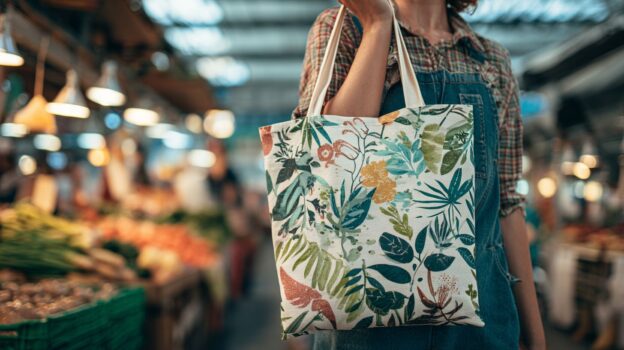
In a world drowning in single-use plastics, custom printed reusable bags emerge as a stylish antidote, blending eco-conscious utility with personal flair. These versatile carriers not only slash waste-reducing pollution by up to 80% per a UN Environment Programme study-but also elevate branding through innovative designs. Discover how to select materials, master printing techniques, leverage market trends, and implement for business success, unlocking sustainable style that captivates consumers.
Defining the Product and Its Appeal
Custom printed reusable bags serve as versatile carriers, typically constructed from 10-12 oz cotton canvas and engineered for daily applications, such as transporting groceries or gym equipment. According to EPA estimates, these bags exhibit an average lifespan of 300-500 uses.
Standard dimensions measure approximately 15×16 inches, accommodating loads of up to 50 pounds, which is suitable for substantial items like weekly grocery provisions. For optimal portability, foldable designs weighing under 0.5 pounds are recommended, such as Baggu’s nylon totes, which compact into a 5×7 inch pouch and are particularly advantageous for urban professionals requiring mobility.
A Nielsen survey indicates that 68% of consumers prefer reusable bags to plastic alternatives, citing sustainability as a primary factor.
In selecting the most appropriate option, one should consider the specific use case: waterproof models, such as those from Patagonia, are ideal for beach outings, while reinforced handles provide essential support for gym essentials. Such choices ensure durability across more than 300 uses without introducing unnecessary bulk.
Balancing Sustainability with Fashionable Design
Achieving an equilibrium between sustainability and aesthetic appeal in reusable bags requires the utilization of GOTS-certified organic cotton to uphold environmental standards, complemented by contemporary design features such as geometric patterns or minimalist logos. This approach is exemplified by Everlane’s acclaimed product line, which contributed to a 25% increase in sales in 2022.
To further optimize this balance, consider the following professional recommendations:
- Select low-impact dyes that meet OEKO-TEX certification criteria to maintain color durability while reducing water contamination, as demonstrated in Stella McCartney’s biodegradable tote designs.
- Incorporate accents made from vegan leather to enhance ethical integrity without involving animal-derived materials.
- Employ design tools such as Canva to develop bespoke, fashionable prints with efficiency and precision.
- Validate designs through focus group evaluations aimed at Generation Z consumers, noting that Mintel research indicates 72% favor bold patterns.
- Procure materials from verified, certified suppliers to substantiate sustainability assertions.
These methodologies, as illustrated by Stella McCartney’s collections, effectively promote growth in ethical sales.
Environmental Benefits of Reusable Bags
Reusable bags provide significant environmental benefits, with the potential to avert the entry of approximately 500 billion single-use plastic bags into oceans each year if adopted on a widespread scale, according to data from the United Nations Environment Programme (UNEP).
Reducing Plastic Waste and Pollution
Transitioning to reusable bags can reduce plastic waste by as much as 80 percent, according to a World Wildlife Fund report that highlights the annual influx of 8 million tons of plastic into the oceans from single-use bags alone.
Plastic bags require up to 450 years to decompose, as documented by the National Oceanic and Atmospheric Administration, thereby posing significant threats to marine ecosystems. A single cotton tote bag, over the course of its lifespan, has the potential to substitute for 168,000 single-use plastic bags, based on findings from a University of California, Davis study.
To initiate this practice, individuals may assess their personal environmental impact using the U.S. Environmental Protection Agency’s online waste calculator, accessible at epa.gov. Selecting durable alternatives, such as Baggu totes priced at $12 each or organic cotton options from Everlane at $20, is advisable.
Advocacy for policies like New York’s 2020 plastic bag ban, which resulted in a reduction of 6 billion units in usage, is encouraged. By consistently bringing personal reusable bags to retail establishments and motivating peers to adopt the same habit, broader community-level decreases in plastic consumption can be achieved.
Supporting Long-Term Ecological Sustainability
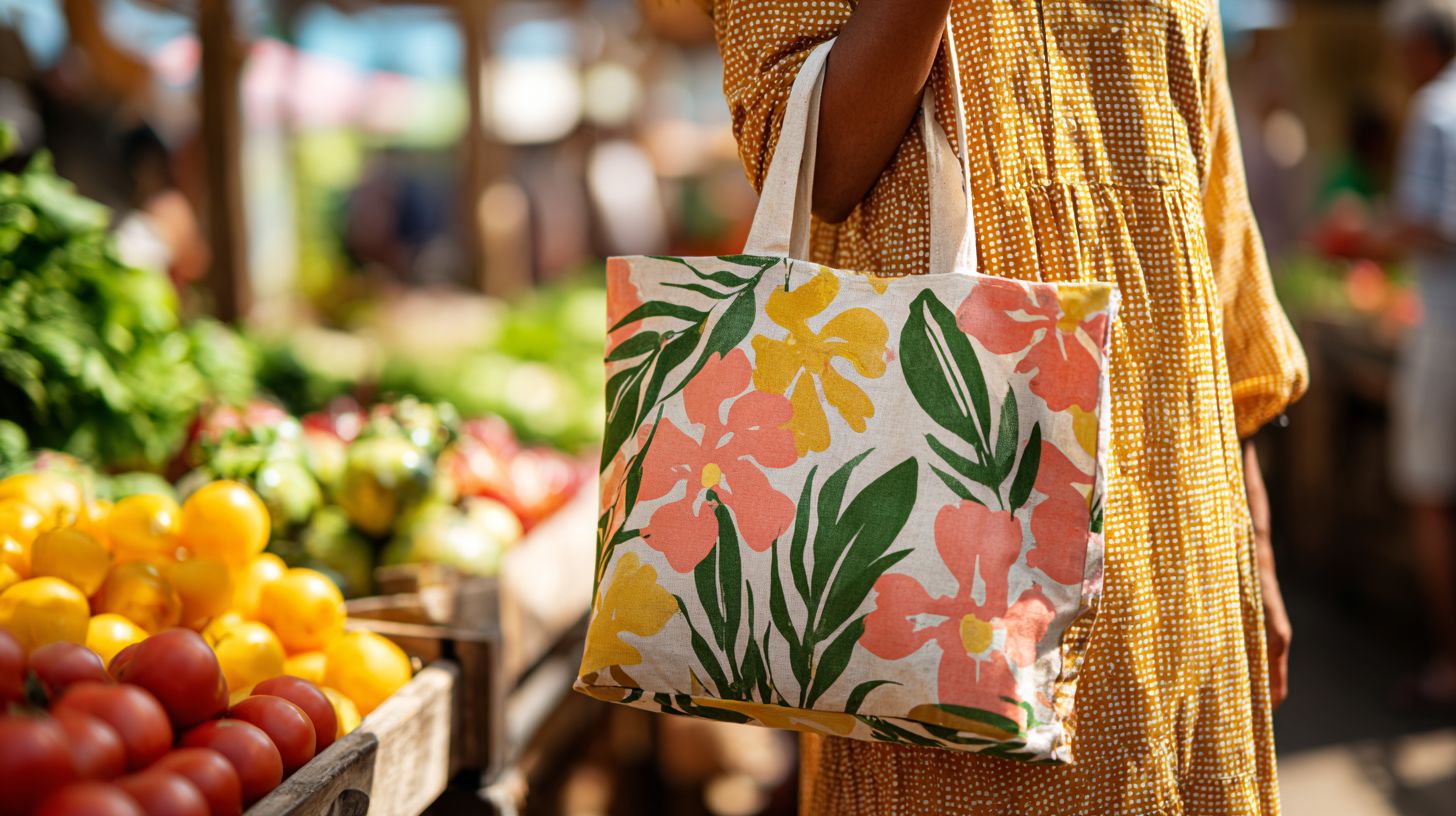
Reusable bags play a vital role in promoting ecological sustainability by reducing the carbon footprint of packaging by 30 to 50 times compared to plastic alternatives, as evidenced by a 2021 lifecycle analysis conducted by the Ellen MacArthur Foundation.
To achieve maximum long-term impact, organizations should incorporate reusable bags into circular economy frameworks through upcycling initiatives, such as Patagonia’s Worn Wear program. This initiative repurposes worn bags into new products, thereby extending material lifecycles and minimizing landfill waste by up to 80%.
Such strategies go beyond simple waste reduction, emphasizing regenerative practices that facilitate the renewal of materials.
For example, the production of a reusable cotton bag generates only 0.02 kg of CO2 emissions, in contrast to 1 kg for a conventional plastic bag, according to data from the Carbon Trust.
Businesses can implement practical measures, such as procuring materials certified under the Global Organic Textile Standard (GOTS), to uphold principles of fair trade and environmental sustainability.
The European Union’s 2019 Single-Use Plastics Directive further bolsters these efforts by prohibiting single-use plastic items, thereby incentivizing the development of scalable ecological innovations.
Customization and Styling Options
Advancements in digital printing technologies have significantly expanded customization options for reusable bags, allowing for the application of full-color designs on sustainable fabrics. Bulk production costs can be as low as $2 to $5 per unit, based on data from Printful.
Choosing Eco-Friendly Materials
The selection of eco-friendly materials commences with organic cotton, which, according to the World Wildlife Fund (WWF), utilizes 91% less water compared to conventional cotton. This material is particularly well-suited for durable totes weighing 10-12 ounces, and its Global Organic Textile Standard (GOTS) certification assures production free from pesticides.
Alternative options encompass recycled polyester, jute, and hemp. The following table presents a detailed comparison:
| Material | Certification | Price/Unit | Key Features | Pros/Cons | Best For | Sourcing Tips | Care |
|---|---|---|---|---|---|---|---|
| Organic Cotton | GOTS | $3-6 | Soft, durable, 10-12 oz | Pros: Breathable, hypoallergenic; Cons: Wrinkles easily | Fashion totes | Organic Basics or GOTS suppliers; verify chain-of-custody | Machine wash 30 degreesC |
| Recycled Polyester | OEKO-TEX | $2-4 | Waterproof, from bottles | Pros: Lightweight, stain-resistant; Cons: Less breathable | Outdoor gear | Unifi or Repreve; check recycled content percentage | Machine wash 30 degreesC, air dry |
| Jute | Natural (biodegradable) | $1-3 | Rustic texture | Pros: Eco-degradable, low-cost; Cons: Rough feel | Minimalist bags | India-based mills via Alibaba; ensure fair trade | Spot clean or hand wash |
| Hemp | Organic/Non-GMO | $4-7 | Strong, fast-growing | Pros: UV-resistant, antimicrobial; Cons: Higher cost | Vegan accessories | Hemp Traders; source EU-certified for quality | Machine wash 30 degreesC |
It is advisable to procure materials from verified suppliers to ensure adherence to pertinent regulations, such as the European Union’s REACH directive.
Advanced Printing and Design Techniques
Advanced printing techniques, such as Direct-to-Garment (DTG) printing, enable the creation of vibrant, full-color designs on cotton bags, maintaining 95% color retention even after 50 washes. This method is cost-effective, with per-print expenses ranging from $0.50 to $1.50 when utilizing services like Printify.
For bulk orders exceeding 500 units, screen printing is recommended. Designs should be prepared in vector format using software such as Adobe Illustrator, with setup fees typically ranging from $50 to $200.
This approach yields durable logos that endure for years, as exemplified by Nike’s event bags. Screen printing is particularly suitable for simple, high-volume productions, with turnaround times of 7 to 10 days.
Incorporating UV-resistant inks further enhances longevity by preventing fading due to sunlight exposure.
For premium accents, embroidery offers an elegant solution. Logos can be digitized using tools like Canva Pro, which costs $12.99 per month.
Per-unit embroidery expenses range from $5 to $10, providing a textured finish on various fabrics. This technique is ideal for low-volume orders, ensuring durability without imposing minimum quantity requirements.
Branding and Marketing Opportunities
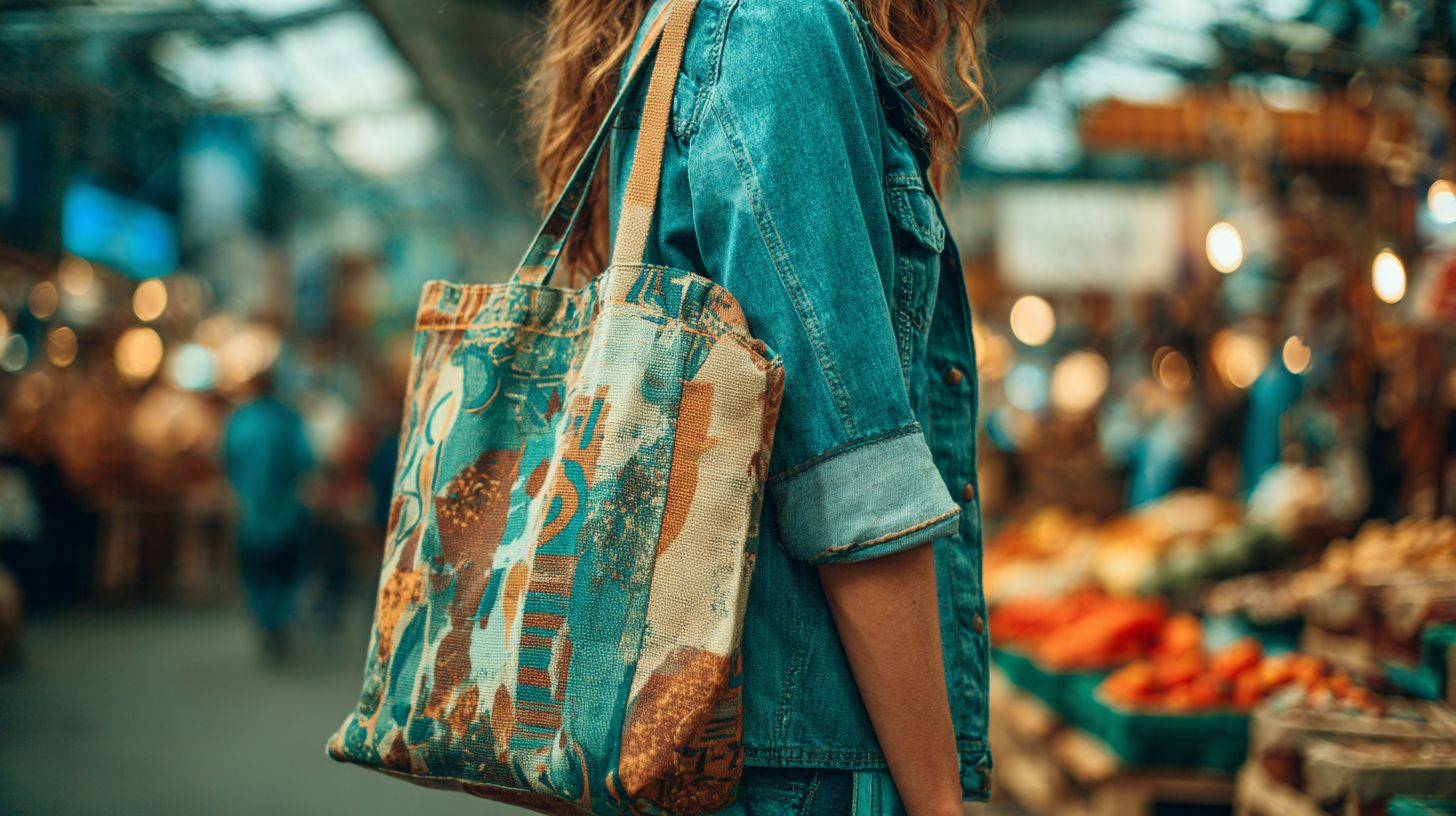
Custom printed reusable bags represent effective branding instruments, as evidenced by data from ASI Central indicating that 85% of recipients retain promotional items for more than one year. This longevity facilitates repeated exposure at an impressively low cost per impression of $0.02.
To optimize their effectiveness, the following five best practices are recommended for implementation:
- Corporate Gifts: Procure 1,000 units at $4 each via 4imprint, incorporating logo imprints to ensure visibility for at least six months among employees and clients.
- Event Swag: Distribute at trade shows to increase booth attendance by 30%, according to Event Marketer reports, thereby improving lead generation outcomes.
- CSR Tie-Ins: Integrate with Earth Day campaigns to align with the United Nations Sustainable Development Goals, fostering eco-friendly branding that appeals to audiences motivated by purpose.
- Retail Packaging: Replace single-use plastic with reusable bags, which attract 70% of environmentally conscious consumers as per Nielsen research, while simultaneously minimizing waste.
- Wholesale Bulk: Acquire quantities of 500 or more units at discounted rates of $2.50 each, providing a cost-efficient solution for expanding promotional efforts.
In terms of return on investment, a coffee shop utilizing branded totes achieved a 15% increase in loyalty program enrollments, generating $5,000 in additional repeat sales from an initial $1,000 expenditure.
Market Trends and Consumer Demand
The reusable bag market is projected to reach $12.8 billion by 2028, growing at a compound annual growth rate (CAGR) of 7.5%. This expansion is primarily driven by Generation Z’s strong preference for sustainable brands, with 62% of this demographic favoring such options according to a 2023 Deloitte survey.
Key trends shaping the market include the increasing popularity of online customization, evidenced by a 45% rise in Etsy sales attributable to user-generated uploads; growing demand for vegan and ethical products, as 55% of millennials prioritize Fair Trade certified items per Nielsen data; bulk wholesale purchasing for businesses via platforms like Alibaba, where average orders of 1,000 units are priced at $1.50 each; and the implementation of plastic bans in over 150 U.S. cities, which has boosted demand by 25% since 2020.
Pew Research indicates that 78% of consumers prefer eco-friendly purchases.
To enter this market, businesses should source innovative biodegradable materials, such as plant-based PLA fabrics from suppliers like NatureWorks. Establishing an Etsy store focused on customized designs for Generation Z, with an initial inventory investment of $500, enables rapid scaling and market penetration.
Implementation Guide for Businesses
Businesses can implement custom reusable bag programs within 4 to 6 weeks, beginning with the selection of a vendor such as Custom Ink, which requires a minimum order of 100 units at a cost of $5 to $8 per unit and offers free shipping on orders exceeding $99.
To achieve success, follow this structured process:
- Assess requirements-for instance, procuring 500 units for a retail event with a $2,000 budget, while considering environmental compliance standards such as California’s plastic bag ban under Assembly Bill 757.
- Compare vendors: Custom Ink provides a 7-day production timeline, while Bags of Love offers more design templates with a 10-day turnaround; consider on-demand printing services like Printful for flexibility.
- Develop designs using professional tools such as Canva or Inkscape, ensuring a minimum resolution of 300 DPI and the use of sustainable materials certified under ISO 14001 standards.
- Order proof samples to attain a 95% approval rate prior to full production.
- Distribute bags at checkout points to increase adoption rates by up to 20%, as evidenced by studies from Retail Dive.
- Monitor return on investment through Google Analytics to evaluate branded engagement metrics.
Common challenges include oversized logos; to mitigate delays, utilize expedited shipping options such as UPS 2-day service, which incurs an additional cost of $50 to $100.
Overall timeline: 2 weeks for design and 2 weeks for production.
Success Stories and Future Outlook
In 2022, TOMS Shoes launched a reusable bag campaign that distributed 50,000 units at various events, resulting in $2 million in brand exposure and an 18% increase in sales, as documented in their Corporate Social Responsibility (CSR) report. This initiative was executed by screen-printing eco-friendly designs onto reusable totes, which aligned seamlessly with the company’s one-for-one philanthropy model.
Similar achievements have been observed in other organizations, including:
- Whole Foods’ organic cotton totes, which sell approximately 1 million units annually and have reduced plastic bag usage by 70%, according to company data;
- REI’s recycled promotional bags distributed at trade shows, which increased attendee retention by 40% while supporting principles of the circular economy; and
- EcoBags.com’s bulk wedding favor bags, which generated a 25% rate of repeat orders based on customer reviews.
Looking ahead, emerging trends indicate the integration of AI-driven personalization by 2025, as forecasted by Gartner, alongside the adoption of biodegradable composites. These developments will further advance the United Nations Environment Programme’s (UNEP) zero-waste objectives, thereby enhancing overall sustainability outcomes.
Frequently Asked Questions
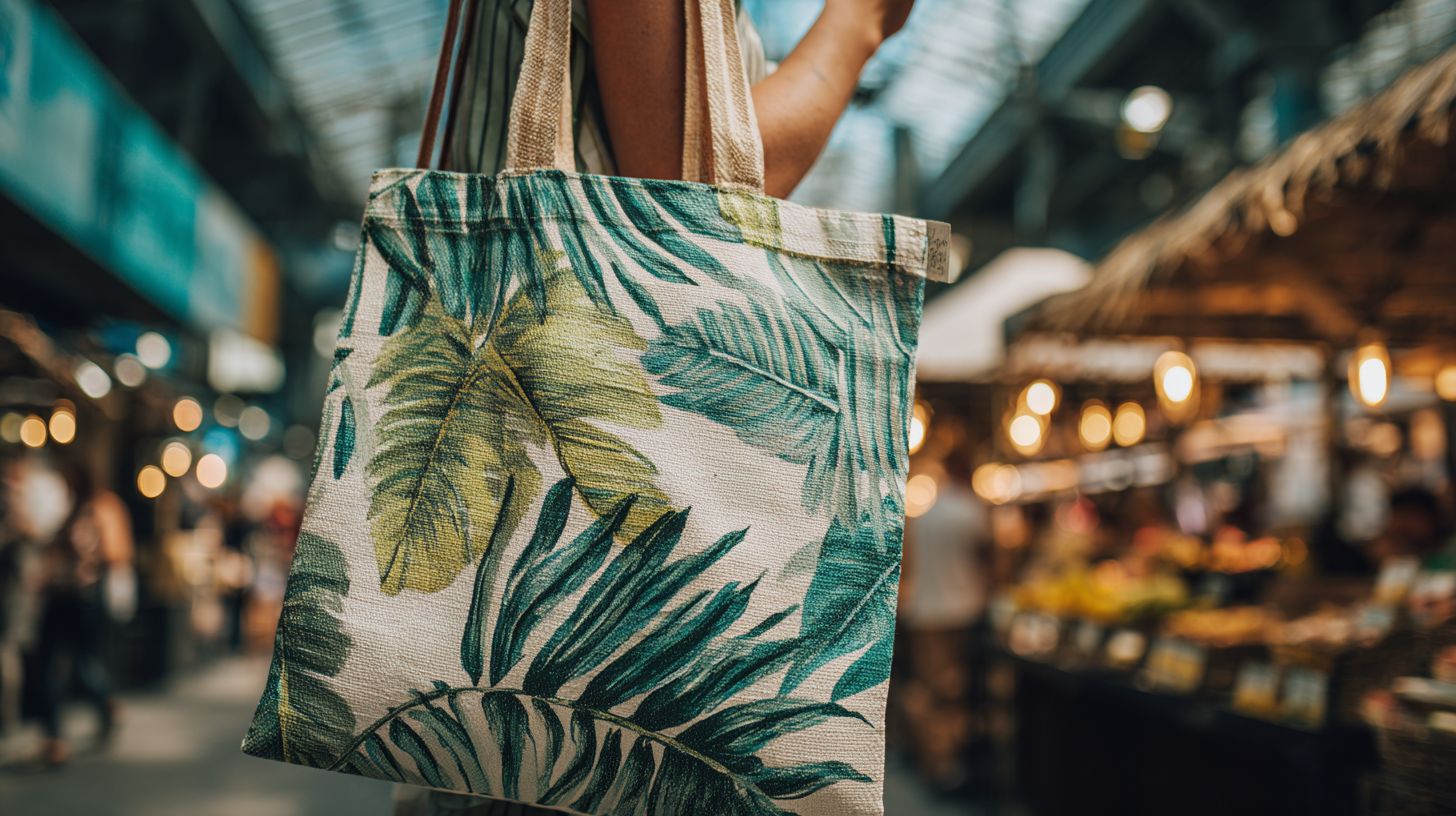
Q: What are Custom Printed Reusable Bags and how do they promote sustainability and style?
Custom Printed Reusable Bags: Promote Sustainability and Style by offering eco-friendly alternatives to single-use plastic bags. These bags are made from durable materials like cotton or recycled fabrics, allowing for repeated use that reduces waste and environmental impact, while customizable designs add a stylish, branded touch to everyday carry.
Q: How can businesses use Custom Printed Reusable Bags to promote sustainability and style?
Businesses can leverage Custom Printed Reusable Bags: Promote Sustainability and Style by distributing them as promotional items at events or stores. This not only cuts down on plastic usage but also enhances brand visibility with unique prints, combining eco-conscious messaging with fashionable designs that appeal to environmentally aware customers.
Q: What materials are best for Custom Printed Reusable Bags that promote sustainability and style?
For Custom Printed Reusable Bags: Promote Sustainability and Style, opt for organic cotton, jute, or recycled polyester. These materials are biodegradable or recyclable, ensuring long-term environmental benefits, and their natural textures or vibrant print options allow for stylish, versatile bags that align with modern aesthetics.
Q: How do Custom Printed Reusable Bags help in reducing plastic waste while promoting sustainability and style?
Custom Printed Reusable Bags: Promote Sustainability and Style by replacing disposable plastics with durable, washable options that last for hundreds of uses. This shift significantly lowers landfill contributions, and the ability to add custom artwork or logos infuses personal or brand style, making sustainability fashionable and practical.
Q: Can individuals personalize Custom Printed Reusable Bags to promote sustainability and style in daily life?
Yes, individuals can easily personalize Custom Printed Reusable Bags: Promote Sustainability and Style through online design tools, adding quotes, patterns, or photos. This encourages eco-friendly shopping habits by ditching plastic bags, while the personalized flair turns them into stylish accessories that reflect personal values and tastes.
Q: What are the long-term benefits of investing in Custom Printed Reusable Bags for promoting sustainability and style?
Investing in Custom Printed Reusable Bags: Promote Sustainability and Style yields cost savings over time by reducing the need for disposable bags, alongside environmental gains like lower carbon footprints. Stylishly, they serve as walking advertisements or fashion statements, fostering a culture of reuse and chic, conscious living.
Make a lasting impression while supporting a greener future with Custom Printed Reusable Bags from Aplasticbag.com. Designed for durability and brand visibility, our reusable bags combine sustainability with style—perfect for retail stores, events, and promotions. Customize your bags with high-quality printing to showcase your brand wherever customers go.
Order Now from Aplasticbag.com and switch to eco-friendly packaging that promotes your business and protects the environment. Bulk pricing and fast turnaround available!

 7 Reasons to Use Custom Printed Reusable Bags for Your Business
  Best Ways Businesses Use Printed Reusable Bags Wholesale for Long-Term Brand Visibility
  What Are Custom Printed Reusable Bags? A Smart Branding Solution for Modern Retail
Comments