
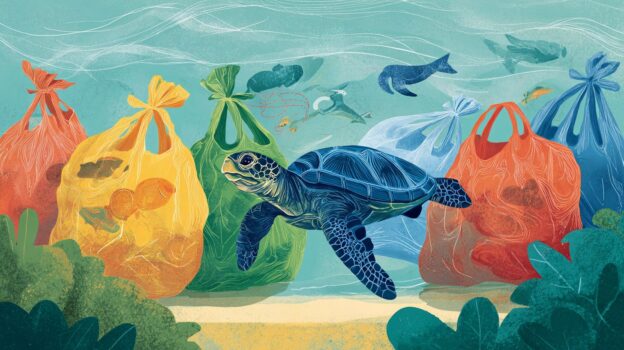
Picture a branded plastic bag drifting into the ocean, entangling marine life and fragmenting into microplastics that persist for centuries. As businesses increasingly opt for custom designs, understanding their environmental toll becomes essential for sustainable practices. This article examines material composition and resource extraction, manufacturing energy use and emissions, lifecycle assessments, waste disposal challenges, ecosystem disruptions, and key regulatory responses-uncovering actionable insights for greener alternatives.
Material Composition of Custom Plastic Bags
Custom plastic bags are generally manufactured from non-biodegradable polymers sourced from fossil fuels, with polyethylene comprising approximately 60% of global production, as reported by Plastics Europe in 2021.
Common Plastic Types Used
High-density polyethylene (HDPE) and low-density polyethylene (LDPE) are the predominant materials in custom bag production, accounting for 70% of the market according to a 2023 report by Grand View Research. Their widespread adoption stems from their exceptional durability and cost-effectiveness.
The following table provides a comparative overview of key materials used in custom bag manufacturing:
| Type | Composition | Thickness (microns) | Biodegradability | Best For | Pros/Cons |
|---|---|---|---|---|---|
| HDPE | High-density polyethylene | 40-80 | Non-biodegradable | Grocery bags | $0.02-0.05/bag; durable, high recyclability / Low eco-impact |
| LDPE | Low-density polyethylene | 20-50 | Non-biodegradable | Shopping bags | Flexible, lightweight / Prone to tearing, lower strength |
| PP | Polypropylene | 20-50 | Low | Woven totes | Strong, reusable / Moderate eco-impact, harder to recycle |
| PLA | Polylactic acid (bio-based) | 30-60 | Compostable in 90 days industrially | Eco-friendly packaging | Renewable source / Higher cost, needs industrial composting |
In terms of sustainability, a comparison between HDPE and polylactic acid (PLA) reveals that PLA exhibits a 65% lower carbon footprint, as documented in a 2019 study published in Nature Sustainability. This attribute positions PLA as an optimal choice for brands committed to environmental stewardship and green initiatives.
Both HDPE and PLA accommodate custom printing through established techniques such as flexography or digital inks. However, PLA necessitates the use of bio-compatible inks to prevent material degradation.
For practical implementation, it is recommended to conduct testing of PLA prototypes in industrial composting facilities to verify adherence to ASTM D6400 standards.
Resource Extraction Effects
The production of polyethylene through crude oil extraction requires 1.5 to 2 barrels per ton of plastic, resulting in approximately 1.8 gigatons of CO2 emissions annually across the sector, as outlined in the 2020 Intergovernmental Panel on Climate Change (IPCC) report.
Beyond these emissions, oil extraction imposes significant environmental and social harms.
- First, it leads to water contamination. In Nigeria’s Niger Delta, for instance, drilling activities result in daily spills of 10 million liters of oil, according to Amnesty International’s 2018 report, which adversely impacts local fisheries and public health.A viable mitigation strategy involves transitioning to bio-based polyethylene alternatives, such as polyhydroxyalkanoates (PHA) derived from algae, which could reduce oil dependency by 90% and substantially minimize spill risks.
- Second, habitat destruction arises from the construction of refineries and related infrastructure, affecting approximately 5% of global biodiversity hotspots, as reported in the World Wildlife Fund’s (WWF) 2021 study. This has led to the displacement of species, including Amazonian jaguars.Bio-sourced materials help preserve ecosystems by eliminating the need for invasive drilling operations.
- Third, the process exacerbates resource depletion, with the plastics industry consuming 8% of the world’s oil supply, according to the International Energy Agency’s (IEA) 2022 analysis, thereby hastening global scarcity. Algae-derived PHA offers a renewable approach to resource utilization, promoting long-term sustainability.
A compelling example is ExxonMobil’s operations in the Permian Basin, which contribute to 20% of local water stress, as detailed in a 2023 United States Geological Survey (USGS) analysis. This underscores the urgent necessity of adopting bio-based alternatives to prevent escalating environmental crises.
Manufacturing Process Considerations
The production of custom plastic bags entails energy-intensive extrusion and printing processes, resulting in the emission of 2 to 3 kilograms of CO2 per kilogram of plastic, as detailed in the 2022 lifecycle analysis conducted by the European Commission.
Energy Consumption in Production
The production of one ton of polyethylene bags demands 70-80 gigajoules (GJ) of energy, sourced predominantly from natural gas, accounting for approximately 4% of global industrial energy consumption according to the International Energy Agency (IEA) in 2023.
To evaluate and mitigate this energy footprint, organizations are advised to adhere to the following structured approach:
- Establish a baseline assessment utilizing the U.S. Environmental Protection Agency’s (EPA) ENERGY STAR tool, which facilitates thorough factory audits and enables the comparison of current energy consumption against established benchmarks.
- Pinpoint energy-intensive processes, such as extrusion, which accounts for 60% of total energy usage as outlined in the U.S. Department of Energy’s (DOE) 2020 industrial energy report.
- Adopt energy-efficient measures, including upgrades to LED lighting and the installation of variable speed drives, which can deliver 20-30% reductions in energy use, as evidenced by Siemens’ manufacturing case studies.
Energy audits generally require 1-2 weeks to complete. It is critical to circumvent common oversights, such as the exclusion of transportation-related emissions, which can contribute an additional 15% to the overall energy total.
For mid-sized facilities, these initiatives often yield a return on investment through annual energy cost savings of approximately $5,000.
Emissions and Chemical Pollutants
Bag manufacturing processes release volatile organic compounds (VOCs) at a rate of 5-10 kg per ton, accompanied by wastewater containing phthalates that exceed European Union limits by 200%, according to the 2021 EPA Toxic Release Inventory.
Beyond these issues, the industry confronts three primary emission challenges.
- First, carbon dioxide (CO2) emissions from plastic extrusion average 2.5 tons per ton of plastic, as reported in the IPCC 2020 data. These emissions can be mitigated by transitioning to recycled polyethylene terephthalate (PET), which reduces output by 70%.
- Second, VOCs from inks such as toluene used in flexographic printing account for 15% of urban smog formation (WHO 2019). Effective solutions include installing scrubbers, which can reduce emissions by 80% at an approximate cost of $50,000 per unit, or adopting water-based inks to achieve 90% less evaporation.
- Third, wastewater contaminated with heavy metals from dyes pollutes approximately 10% of rivers located near manufacturing facilities (UN Water 2022). Compliance with regulations can be attained through treatment with biofilters.
In a notable 2022 case study, a manufacturing plant in China incurred fines of $1 million due to benzene leaks, which were subsequently resolved through the implementation of advanced filtration systems.
Lifecycle Assessment Overview
A comprehensive life cycle assessment (LCA) of custom printed plastic bags indicates a carbon footprint ranging from 3 to 6 kg CO equivalent per bag, with approximately 70% of emissions arising during the raw material extraction phase, according to a 2019 study published in the Journal of Cleaner Production.
To perform such an LCA, adhere to the ISO 14040 standards, which outline four distinct phases:
- Define the scope: Establish the boundaries for a cradle-to-grave analysis, encompassing production, usage, and disposal stages.
- Inventory data collection: Gather data on inputs and outputs, utilizing specialized software such as SimaPro (with a license fee of $5,000) to model material and energy flows.
- Impact assessment: Employ methodologies like ReCiPe to evaluate 18 impact categories, with particular emphasis on global warming potential (GWP) assessed over a 100-year time horizon.
- Interpretation: Analyze results to compare alternatives, for example, noting that paper bags demand four times more water in their production process.
For example, Walmart’s 2021 LCA demonstrated that reusable totes achieve emissions offsets after only 10 uses, thereby endorsing transitions to more sustainable options.
Usage and Waste Generation
Custom plastic bags typically enjoy a fleeting lifespan-averaging just 12 minutes of use-before they are discarded into waste streams. According to the Ocean Conservancy’s 2020 report, these bags contribute to the production of approximately 500 billion units annually, accounting for 10% of municipal solid waste.
Single-Use Disposal Patterns
More than 80% of custom plastic bags ultimately end up in landfills, where they require between 20 and 1,000 years to decompose, thereby releasing methane emissions equivalent to 1.5% of global totals, according to a 2021 World Bank study.
In the United States, landfills manage 60-70% of plastic waste (EPA, 2022), while an estimated 8 million tons of plastic waste from littering enters the oceans annually (Jambeck et al., 2015, Science).
Incineration accounts for approximately 20% of plastic waste disposal, generating about 500 kWh of energy per ton but also producing harmful dioxins in the process.
To address this environmental challenge, it is advisable to promote reusability initiatives. For example, tote bags can withstand more than 100 uses, offering a durable alternative to single-use plastics.
A practical illustration is provided by a supermarket that transitioned to multi-use systems, achieving a 40% reduction in waste (Unilever case study, 2020).
An effective actionable measure involves implementing bag fees or bans, as demonstrated by California’s SB 270 law, which has reduced plastic bag usage by 70%.
Over the long term, the methane emissions from a single plastic bag across 500 years equate to approximately 10 kg of CO2 equivalent. Transitioning to reusable options could prevent millions of tons of such emissions on a global scale.
Recycling Challenges
Globally, only 9% of custom plastic bags are recycled, primarily due to contamination and sorting challenges, which result in a 90% loss of material value-estimated at $80-120 billion annually by the Ellen MacArthur Foundation (2016).
This crisis is intensified by several key challenges. Contamination from food residues contributes to rejection rates of up to 30% (EPA, 2023), while inadequate collection infrastructure further impedes progress; for instance, recycling rates in the United States stand at just 5%, in stark contrast to the European Union’s 40% achieved through deposit return systems.
Current sorting technologies, such as near-infrared scanners, fail to identify approximately 20% of mixed plastics. Moreover, the cost of recycled polyethylene is 10-20% higher than that of virgin material, which diminishes its economic viability.
Promising solutions include advanced AI-based sorters from AMP Robotics, which require an installation cost of approximately $1 million but can increase yields by up to 25%. Additionally, chemical recycling methods like pyrolysis-exemplified by Agilyx’s 2022 pilot project that converts plastic waste into oil-offer viable alternatives. In California, Senate Bill 54 elevated recycling rates to 15%, though persistent contamination levels of 50% underscore the necessity for comprehensive educational initiatives and technological enhancements.
Ecosystem and Wildlife Effects
Plastic bags degrade into microplastics that pose significant threats to marine ecosystems, impacting 700 species and resulting in the annual death of 100,000 marine mammals due to ingestion, according to a 2022 report by the International Union for Conservation of Nature (IUCN). These bags account for approximately 10% of oceanic plastic pollution, fragmenting into an estimated 5 trillion microplastic particles each year (UNESCO, 2021).
The primary environmental impacts encompass the following:
- Marine entanglement, whereby seals experience a 50% injury rate from discarded plastic bags (National Oceanic and Atmospheric Administration [NOAA], 2020);
- Toxicity from ingestion, which causes bioaccumulation of chemical additives in fish at concentrations 20 times higher than ambient levels (Science, 2019); and
- Soil contamination on land, leading to a 30% reduction in earthworm reproduction rates (PLOS One, 2021).
The Great Pacific Garbage Patch serves as a stark illustration of this issue, comprising 1.8 trillion plastic fragments, with 80% originating from bags and comparable debris.
To address these challenges, it is advisable to adopt biodegradable alternatives, such as cornstarch-based bags, which diminish environmental harm by 70% via accelerated decomposition processes.
Regulatory and Policy Responses
Since 2002, more than 100 countries have enacted bans or imposed fees on plastic bags, resulting in significant reductions in usage-such as an 80% decrease in locations including Kenya, where a 2017 ban led to a 90% reduction in litter, as reported by United Nations Environment Programme (UNEP) monitoring.
Key strategies encompass the following:
- Bans, exemplified by the European Union’s Single-Use Plastics Directive of 2019, which aims for a 90% reduction by 2025;
- Fees, such as Ireland’s EUR0.22 levy on plastic bags introduced in 2002, which achieved a 90% decline in usage;
- Extended Producer Responsibility mechanisms, as implemented through California’s Assembly Bill 793, requiring manufacturers to finance recycling programs;
- Certifications, including ISO 14001 for environmental management systems, which have been adopted by over 500,000 organizations worldwide;
- International treaties, such as the ongoing negotiations for a United Nations treaty on plastic pollution, targeting a 50% reduction by 2040.
A notable case study is Bangladesh’s 2002 ban on plastic bags, enacted in response to severe flooding, which averted the accumulation of one million tons of waste.
For businesses, adherence to Environmental, Social, and Governance (ESG) standards enhances stock value by up to 10%, according to a 2022 McKinsey report.
Frequently Asked Questions
Q: What Are the Environmental Considerations for Custom Plastic Bags?
Custom plastic bags, while versatile for branding and packaging, raise several environmental concerns. They are primarily made from non-biodegradable petroleum-based plastics like polyethylene, which contribute to pollution through littering, wildlife harm, and long-term accumulation in landfills. Production involves high energy use and greenhouse gas emissions, and single-use designs exacerbate waste. To mitigate, consider thinner gauges, recyclable materials, or opting for reusable alternatives to reduce overall ecological footprint.
Q: Are Custom Plastic Bags Recyclable, and What Impact Does That Have on the Environment?
Many custom plastic bags are recyclable if made from standard polyethylene, but contamination from food residues or mixed materials often hinders effective recycling. Environmentally, this leads to low recycling rates-less than 10% in many areas-resulting in more plastic ending up in oceans and landfills. Choosing bags labeled with recycling symbols and educating users on proper disposal can help, but the best approach is designing for recyclability to lessen pollution and resource depletion.
Q: How Do Custom Plastic Bags Contribute to Marine Pollution?
Custom plastic bags break down into microplastics over time, which enter waterways and oceans, where they are ingested by marine life, disrupting ecosystems and entering the food chain. Billions of plastic bags pollute globally each year, with custom ones adding to branded litter in coastal areas. Environmental considerations include sourcing bags with degradation additives or switching to biodegradable options to prevent harm to aquatic habitats and biodiversity.
Q: What Role Does Material Choice Play in the Environmental Impact of Custom Plastic Bags?
The material in custom plastic bags significantly affects their environmental profile; virgin plastics deplete fossil fuels and emit CO2 during manufacturing, while recycled content reduces energy use by up to 80%. Opting for bio-based or oxo-degradable plastics can lower persistence in the environment, but not all are truly sustainable. Key considerations involve balancing durability with eco-friendliness to minimize resource extraction and waste generation throughout the product lifecycle.
Q: Can Custom Plastic Bags Be Made More Sustainable Without Compromising Design?
Yes, sustainability can be integrated into custom plastic bags by using thinner, lighter films that require less material, incorporating post-consumer recycled content, or adding handles from sustainable sources. These changes reduce raw material needs and emissions while maintaining branding options like custom prints. Environmental benefits include lower carbon footprints and reduced landfill contributions, making it feasible to align aesthetics with eco-responsibility.
Q: What Regulations Affect the Environmental Use of Custom Plastic Bags?
Various regulations, such as plastic bag bans or fees in regions like the EU and parts of the US, aim to curb environmental damage from custom plastic bags by promoting reusability and reducing single-use consumption. These laws encourage biodegradable alternatives and limit production of non-compliant materials. Businesses must consider compliance to avoid fines and support global efforts against plastic pollution, fostering innovation in greener custom packaging solutions.
Make Your Brand Greener with Smart Packaging Choices!
Don’t just package your products—make a statement for sustainability. At Aplasticbag.com, we help U.S. businesses switch to eco-conscious custom plastic bags without compromising on quality, durability, or brand impact.
Why Choose Aplasticbag.com?
✔ Eco-friendly material options that reduce environmental impact
✔ Premium custom printing to elevate your brand visibility
✔ Competitive U.S. pricing with bulk order advantages
✔ Fast production & reliable nationwide delivery
✔ Trusted by businesses across retail, eCommerce & food industries
Take the next step toward sustainable branding today!
👉 Order Now from Aplasticbag.com and get high-quality, environmentally responsible custom plastic bags designed for your business success.

 Understanding the Benefits of Custom Plastic Bags for Your Business
  Custom Plastic Bags: Combining Style with Functionality
  5 Benefits of Using Custom Plastic Bags for Marketing
Comments