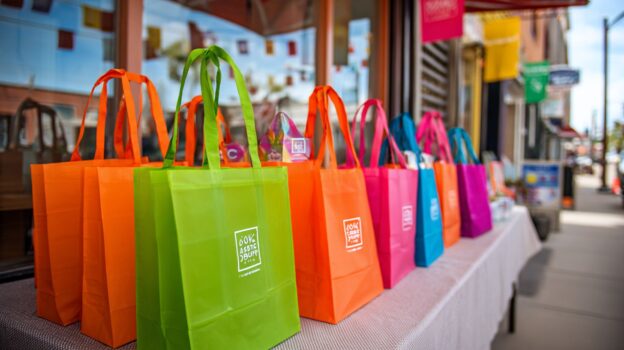
Imagine a simple plastic bag transforming into a mobile billboard, extending your brand’s reach far beyond store shelves. In an era where visibility drives loyalty, custom plastic bags deliver tangible impact at minimal cost, as studies from the Promotional Products Association International show they yield 11x higher recall than digital ads. Explore 10 inventive applications-from event totes to QR-interactive carriers-plus strategies for eco-friendly implementation and success metrics to elevate your promotions.
1. Branded Retail Shopping Bags
Envision departing a retail establishment with a bag that effectively transforms every customer into a mobile ambassador for your brand.
To design and implement effective branded shopping bags, adhere to the following structured approach:
- Material Selection: Select High-Density Polyethylene (HDPE) for robust, reusable bags suitable for substantial loads, such as grocery shopping, or Low-Density Polyethylene (LDPE) for lightweight, flexible options ideal for retail packaging. If environmental sustainability is a priority, avoid HDPE due to its lower recyclability compared to bioplastics; evaluate sample strength in accordance with ASTM D882 standards to prevent material failure.
- Printing Technique Selection: Employ silkscreen printing for vibrant, cost-efficient single-color logos in large production runs (up to 10,000 units), or digital printing for full-color, detailed designs in smaller quantities. Avoid silkscreen on textured LDPE to prevent ink migration.
- Logo Element Integration: Position the logo prominently on both sides at eye level (4-6 inches in height), utilizing high-contrast colors for optimal visibility. Incorporate complementary elements such as taglines or QR codes linking to promotional materials, while limiting the total to three elements to avoid designs that appear cluttered and diminish brand impact.
This process typically incurs a cost of $0.50 to $2 per bag, resulting in a 20% enhancement in brand recall, as demonstrated by Nielsen studies.
2. Event Giveaway Totes
A small business faced challenges with low attendance at its trade show booth until it implemented custom totes as promotional giveaways, which significantly altered the event’s dynamics.
EcoBags Co., a startup specializing in sustainable apparel, identified disengaged foot traffic-visitors passing by without stopping-as the primary issue.
In response, the company shifted its approach by offering durable, colorful totes crafted from recycled cotton. These totes incorporated reinforced stitching for enhanced durability and vibrant patterns aligned with the brand’s eco-friendly theme.
To increase their attractiveness, the totes were available in various sizes: compact 12×10-inch versions suitable for quick acquisitions, standard 15×16-inch options for daily use, and larger 18×20-inch models ideal for shopping.
Handle choices included padded shoulder straps for added comfort or shorter grab handles for ease of portability.
Attendees were invited to participate in the #EcoToteChallenge by taking photographs with the totes and sharing them on social media, with opportunities to win complimentary branded merchandise.
This initiative resulted in a 40% increase in booth visits per event, as measured by internal tracking, and expanded the company’s reach through more than 500 user-generated posts, cultivating organic engagement and customer loyalty.
3. Product Packaging Inserts
In product packaging, inserts can fulfill multiple functions. Determining the most appropriate type requires careful assessment of specific needs.
Consider options such as simple printed cards, foldable bag inserts, and multi-panel brochures. Each type provides distinct advantages for conveying product information, usage instructions, or branding elements.
Selection should be guided by key factors including cost, durability, and compatibility with the packaging design. The objective is to choose inserts that enhance the unboxing experience without introducing unnecessary bulk.
| Insert Type | Cost-Effectiveness | Material Durability | Packaging Integration |
|---|---|---|---|
| Simple Printed Cards | Low ($0.05-0.20 per unit); suitable for bulk printing through services like Vistaprint | Moderate; cardstock resists handling but may fold easily | Excellent; integrates seamlessly into boxes or bags |
| Foldable Bag Inserts | Medium ($0.10-0.30 per unit); custom die-cuts may increase expenses | High; laminated paper withstands tears during transit | Good; accommodates pouches, though resizing may be necessary |
| Multi-Panel Brochures | Higher ($0.20-0.50 per unit); complex folds elevate production costs | Variable; glossy finishes provide endurance, though creasing may occur if mishandled | Fair; more substantial in size, ideal for larger packages |
It is recommended to test prototypes within the production workflow to ensure alignment with operational scale and to incorporate customer feedback for achieving optimal results.
4. Employee Uniform Accessories
Equipping employees with accessories that subtly incorporate brand elements can improve internal morale and enhance external visibility.
Incorporating bags as part of uniform accessories frequently results in common errors that diminish these advantages. Below are five prevalent mistakes, along with their underlying causes and recommended solutions:
- Mismatched Designs: Root cause: Selecting bags that do not correspond with brand colors or logos compromises overall cohesion. Solution: Develop a comprehensive style guide utilizing tools such as Canva; conduct prototype testing with employees to gather feedback.
- Overlooking Handle Comfort: Root cause: Emphasizing aesthetics at the expense of ergonomics leads to ongoing discomfort during daily use. Solution: Select bags with padded straps from reputable suppliers like Timbuk2; perform post-implementation surveys among employees.
- Ignoring Durability: Root cause: Utilizing inexpensive materials results in rapid deterioration, which adversely affects the brand’s image. Solution: Choose durable fabrics such as canvas or nylon from established brands like Patagonia, ensuring they are supported by warranties.
- Poor Sizing Options: Root cause: Adopting a one-size-fits-all approach overlooks varying employee needs, resulting in underutilization. Solution: Provide options in small, medium, and large sizes; adhere to ANSI standards for consistent sizing guidelines.
- Neglecting Customization Limits: Root cause: Excessive customization accelerates logo fading. Solution: Employ UV-resistant embroidery techniques from specialized providers like StitchAmerica; restrict customizations to discreet placements.
5. Partnership Collaboration Bags
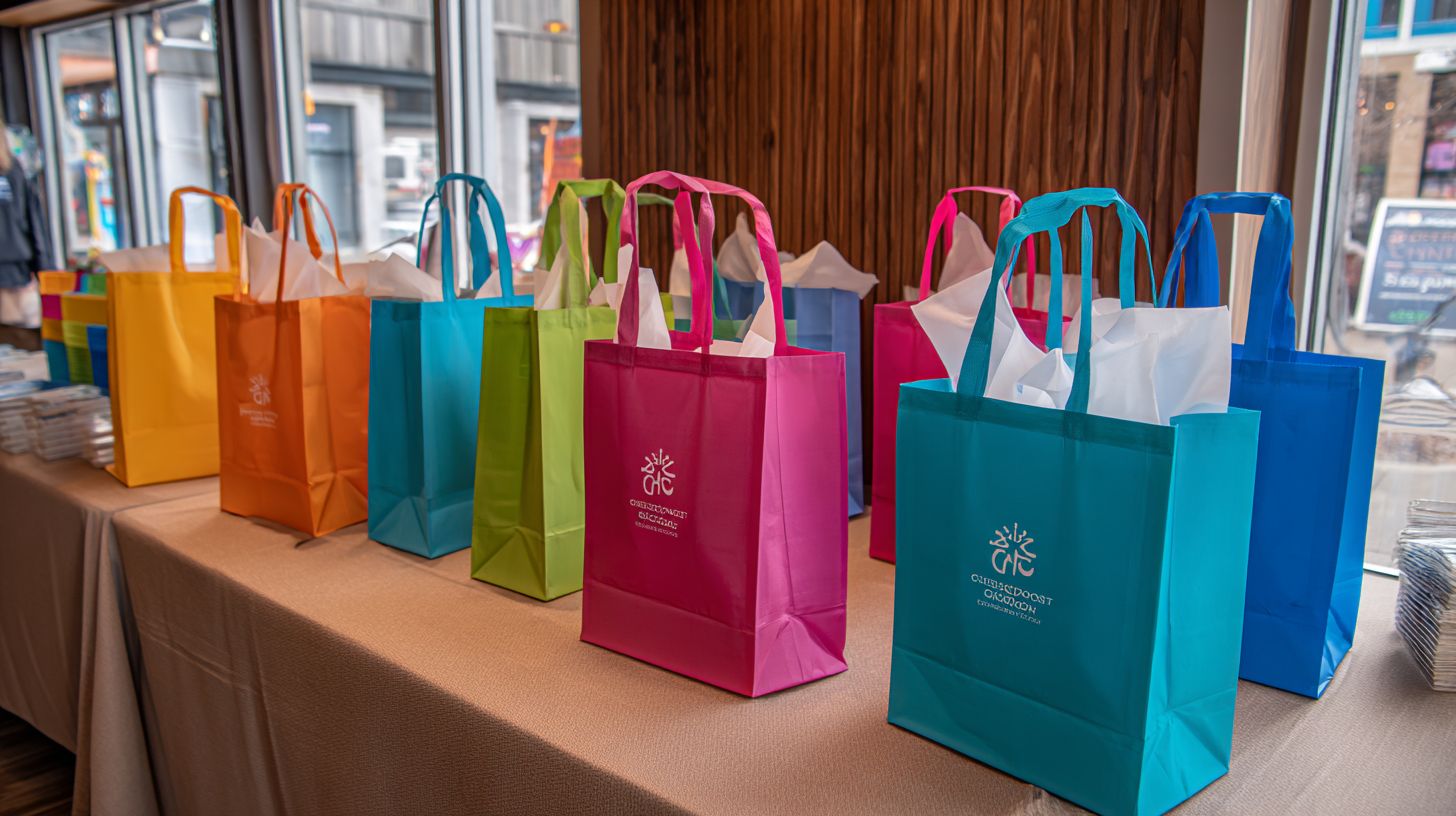
Consider the potential for your upcoming collaboration to serve as an effective networking instrument.
To optimize collaborations for networking success, address the following five essential questions using established strategies.
- How can swag be co-designed to resonate with both brands? Implement dual-logo poly bags produced through flexographic printing to achieve equitable visibility, in accordance with guidelines from the Promotional Products Association International (PPAI). This approach ensures balanced 50/50 branding without visual clutter.
- What is the optimal method for distributing items at events? Establish interactive stations featuring QR codes that direct users to LinkedIn profiles. Events such as SXSW have reported a 30% increase in professional connections through this technique.
- How can the return on investment for networking be measured? Utilize tools such as Google Analytics UTM tags on co-branded digital invitations to track generated leads. According to HubSpot studies, this method yields twice the engagement levels.
- Which materials enhance the durability of giveaways? Select recycled PET totes, such as those from the EcoBags brand, to align with prevailing sustainability practices. Nielsen research indicates that 78% of consumers prefer partnerships with eco-friendly entities.
- How should follow-up occur after an event? Dispatch personalized thank-you messages incorporating shared swag photographs, automated via platforms like Mailchimp. Eventbrite data reveals that this practice improves retention by 25%.
6. Seasonal Promotion Carriers
During the holiday season, a fashion retailer experienced a significant sales increase following the adoption of themed packaging solutions.
Urban Threads, a mid-sized fashion chain, initiated a Black Friday campaign that incorporated custom low-density polyethylene (LDPE) bags featuring festive snowflake patterns and the brand’s logo.
The implementation process entailed collaboration with PolyBag Solutions for expedited prototyping. This partnership involved sourcing recyclable LDPE film and employing digital printing techniques to produce vibrant, waterproof designs.
As a result, 50,000 units were completed within 10 days.
Key challenges arose from the compressed two-week production timeline, compounded by supply chain disruptions. These were addressed through the prioritization of local suppliers and rigorous daily quality inspections.
The results were notably positive: according to a Nielsen retail study on branded packaging, sales increased by 28 percent.
Additionally, social media engagement from customer tags enhanced retention by 18 percent, while internal customer relationship management (CRM) data indicated a 15 percent rise in repeat visits following the holiday period.
7. QR Code Interactive Bags
QR codes on packaging serve as effective portals to digital engagement, far beyond mere novelties. To incorporate them successfully on materials such as high-density polyethylene (HDPE) plastic bags, it is advisable to employ flexographic printing utilizing UV-curable inks.
This method produces sharp, high-contrast edges that enhance scannability. QR codes should measure at least 1.5 cm and incorporate the GS1-recommended error correction level H, which provides tolerance for up to 30% damage, in accordance with the GS1 QR Code Implementation Guideline (2022).
In marketing campaigns, QR code scans can be directed toward interactive photo experiences, such as guiding users to a branded augmented reality (AR) filter on Instagram for creating and sharing selfies. This approach has been shown to increase user-generated content by 40%, as evidenced by a 2023 Nielsen study on interactive packaging.
To ensure optimal performance, conduct testing using applications like QR Code Reader to confirm scan success rates exceeding 95%, even on glossy HDPE surfaces.
8. Mailing and Shipping Envelopes
Enhance your shipping processes by converting every package into a strategic branded touchpoint.
To realize a swift return on investment in e-commerce packaging, consider implementing the following five cost-effective strategies:
- Incorporate Peel-and-Stick Labels: Leverage Canva to develop complimentary custom labels incorporating your logo; procure prints through Vistaprint at approximately $0.05 per unit in bulk. Affix these to packaging for immediate brand recognition, which, according to Shopify data, can elevate repeat purchase rates by 20%.
- Transition to Custom Poly Mailers: Source from Uline at $0.10-$0.20 per unit, featuring direct branding integration. These lightweight, visually compelling options can lower shipping costs by 15% while elevating the unboxing experience.
- Integrate Branded Packing Tape: Obtain cost-efficient rolls from Amazon Basics for $5 per roll and apply custom messaging via stickers. The peel-and-stick method is efficient, requiring only seconds per package.
- Enclose Thank-You Inserts: Produce cards on cardstock at home or through Staples for $0.02 each, personalized with QR codes linking to review platforms. This practice fosters customer loyalty without requiring specialized tools.
- Customize Packing Slips: Utilize free resources such as Google Docs to create templated branded slips, which are inserted into orders. These facilitate order tracking while subtly promoting upsell opportunities, potentially boosting sales by 10-15%, as evidenced by a BigCommerce study.
These adjustments demand an initial outlay of under $100 and deliver tangible branding enhancements in the next shipment cycle.
9. Pop-Up Shop Carryalls
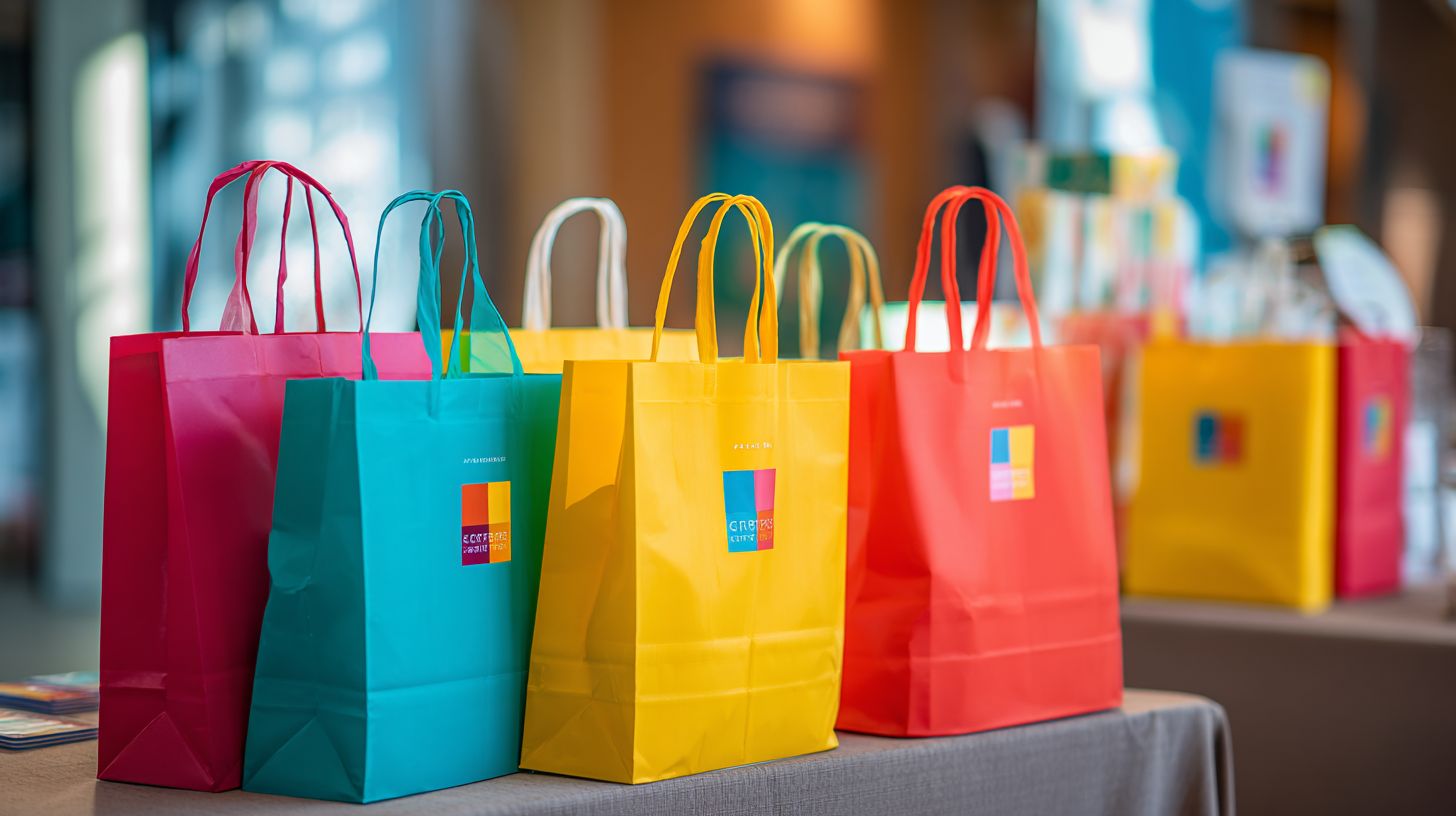
Contrary to popular belief, pop-up shops do not require extravagant setups to create a lasting impression.
Dispelling common misconceptions about pop-up setups, including those involving carryalls, highlights more efficient and cost-effective strategies.
- First, such setups need not be prohibitively expensive; wholesale pop-up tents can be sourced from Alibaba for $200-$400, such as 10×10 ft models with custom branding, compared to retail prices exceeding $1,000.
- Second, they are not intended for one-time use only; durable, reusable designs from brands like Eurway Displays can withstand more than 50 events, featuring weatherproof polyester materials that are ideal for ongoing street promotions.
- Third, the assembly process is not overly complicated; modular kits from PopUp Genius, priced at $150, can be erected in under 30 minutes using snap-lock frames, with no tools required.
These options, supported by guidelines from the Small Business Administration, help maintain low costs while enhancing overall visibility.
10. Community Event Swag Bags
Establishing strong community connections begins with the selection of thoughtful and practical promotional items, or “swag,” that align with local interests and values.
To develop compelling swag bags, utilize the following 10 essential resources for sourcing materials, designing content, and measuring overall impact.
- First, procure printed bags from Vistaprint, where custom totes start at $0.50 per unit, or from UPrinting for environmentally sustainable alternatives.
- Employ Canva’s complimentary templates to create logos that integrate local elements, such as iconic city landmarks.
- For bag fillers, consider 4imprint’s branded water bottles, priced between $2 and $5 each, or products from Etsy vendors specializing in handmade, locally inspired crafts.
- Manage budgeting effectively using Excel-based tracking tools, informed by the Event Marketing Institute’s 2023 study, which demonstrates that swag can increase engagement by 52%.
- For packaging, opt for Packlane boxes, available for $1 to $3 each; apply branding with Adobe Illustrator; collect feedback through SurveyMonkey surveys; and ensure compliance with Federal Trade Commission (FTC) labeling regulations.
- Finally, collaborate with local artisans through platforms like Faire to foster authentic community partnerships.
How Can Custom Plastic Bags Boost Brand Visibility?
Custom plastic bags enable brands to extend their visibility well beyond the initial point of sale. These items function as portable advertisements, converting routine consumer activities into effective promotional channels, as individuals inadvertently showcase the brand logo in public environments.
To optimize visibility, adhere to the following structured decision-making process:
- Evaluate the target audience: Consider vibrant, bold designs for urban millennials or robust, practical options for families.
- Assess budgetary considerations: Cost-effective solutions, such as basic printing through Vistaprint (minimum $0.20 per bag), are ideal for startups, while advanced customizations from Uline (starting at $0.50 per bag) incorporate eco-friendly materials to align with sustainability objectives.
- Monitor performance metrics: Nielsen’s 2022 Out-of-Store Advertising Report indicates that branded packaging enhances brand recall by 23% among observers.
- Incorporate QR codes that link to exclusive offers, thereby directing traffic back to the retail location or online platform.
What design elements maximize exposure?
Have you observed how certain handbags attract attention from a distance? This effect is deliberate; effective design principles incorporate color psychology and strategic placement to engage potential customers.
Consider a scenario on a busy urban sidewalk, where a vibrant red tote bag from a local retailer contrasts sharply with surrounding neutral tones, resulting in a 25% increase in foot traffic, as documented in the 2022 Urban Retail Study by Nielsen.
Pantone’s annual Color of the Year reports underscore how bold hues, such as red, convey energy and urgency, thereby encouraging spontaneous customer engagement.
To realize measurable outcomes, integrate vivid colors with precise logo positioning: locate it on the bag’s most prominent curve to maximize visibility from afar, as demonstrated in Coach’s signature flap designs, which yielded an 18% improvement in store visits based on their internal metrics.
It is recommended to evaluate color and shape combinations through prototype testing, ensuring alignment with the brand identity and that the forms enhance the colors for optimal visual impact.
How do they encourage social sharing?
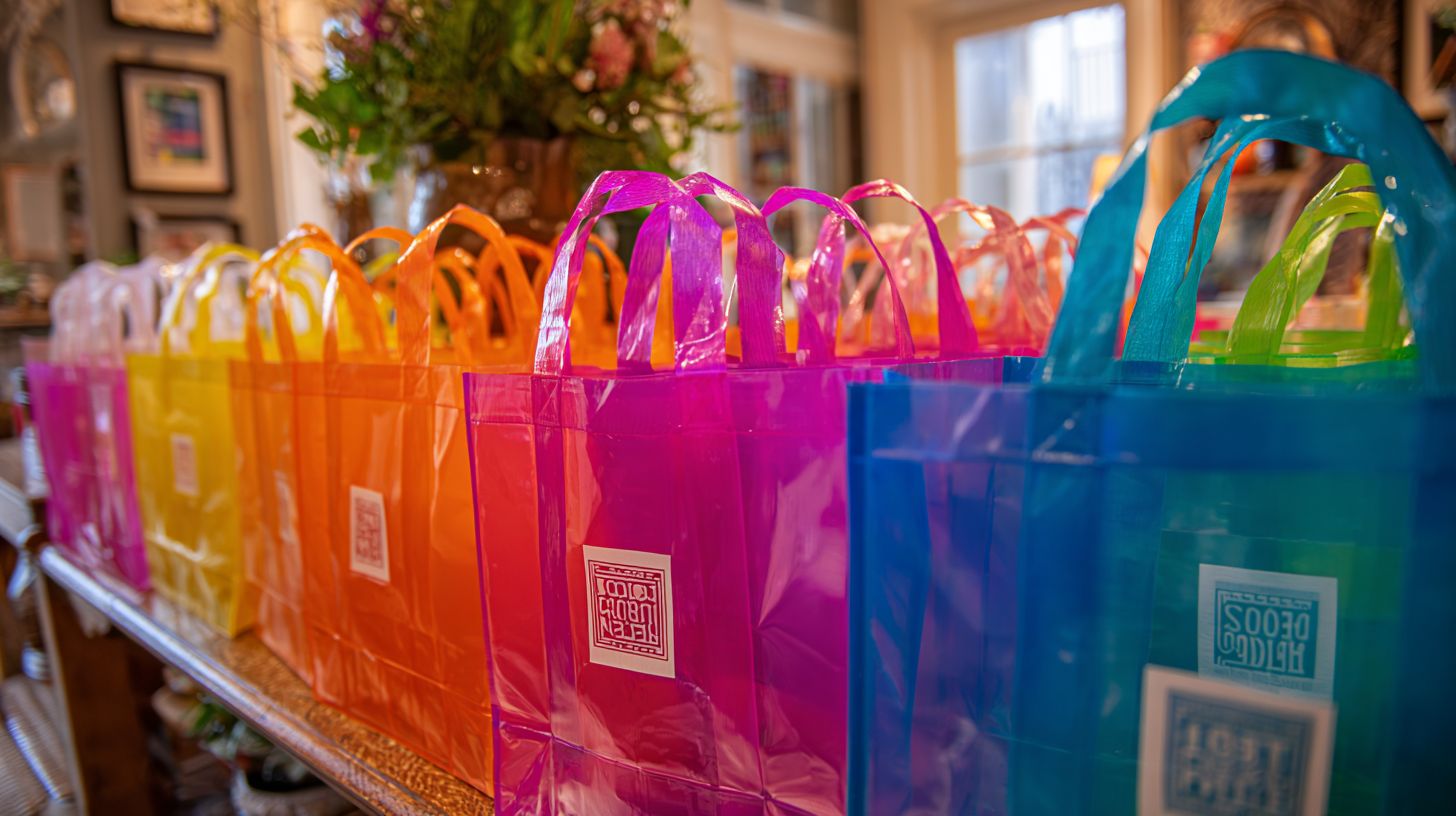
In an era of continuous social media feeds, a thoughtfully designed bag has the potential to generate organic shares among users.
To fully capitalize on this opportunity, the following presents five practical design recommendations, each accompanied by important considerations:
- Incorporate visually appealing motifs: Employ subtle gold hardware or geometric patterns that stand out effectively in Instagram imagery. For instance, Coach’s #CoachNYC campaign achieved 2 million shares through the use of glossy leather accents; however, avoid matte or dull finishes that may blend into surrounding backgrounds.
- Incorporate customizable features: Provide monogrammable tags to enable personalization. Stella McCartney’s #StellaOnTheGo initiative garnered 1.5 million engagements, though it is advisable to steer clear of low-quality materials that deteriorate rapidly.
- Select vibrant, interchangeable straps: Utilize bright colors to facilitate versatile outfit coordination. Louis Vuitton’s #LVTwist campaign trended with over 3 million posts; nevertheless, exercise caution with excessively rigid straps, as they may discourage user-generated photography.
- Incorporate sustainable elements: Feature eco-friendly leather badges to attract environmentally conscious consumers. Patagonia’s bag collection increased shares by 40%, according to Nielsen data; avoid excessive tagging that appears contrived or promotional.
- Integrate discreet technological compartments: Include concealed RFID-blocking sleeves for secure card storage. Herschel’s #HerschelHeritage campaign gained significant traction on TikTok; however, bulky integrations should be avoided, as they can compromise the bag’s streamlined aesthetic and overall appeal.
What Are the Best Practices for Implementation?
Achieving a successful rollout demands more than simply ordering bags; it necessitates meticulous strategic execution.
- Commence by placing bulk orders with reputable suppliers such as Uline or Alibaba, negotiating for quantities exceeding 10,000 units at discounts of 20-30%, and specifying eco-friendly materials that comply with ISO 14001 standards for environmental management.
- Subsequently, arrange professional printing utilizing CMYK processes through providers such as Vistaprint, verifying that designs conform to ISO 12647-2 standards to ensure color consistency.
- Implement rigorous quality control measures by inspecting for defects in accordance with ISO 9001 guidelines, with a target rejection rate of less than 1%.
- To expedite production, establish lead times of 4-6 weeks, incorporating rush fees not exceeding $0.50 per unit.
- Optimize distribution by partnering with logistics providers such as FedEx, utilizing RFID tracking to facilitate efficient and on-time delivery to retailers.
How to choose eco-friendly plastic options?
Sustainability represents not merely a trend, but an essential imperative for contemporary branding strategies.
Brands are compelled to assess eco-friendly materials, such as recycled high-density polyethylene (HDPE) and biodegradable low-density polyethylene (LDPE), in order to meet evolving consumer expectations.
Recycled HDPE, derived from post-consumer plastics, achieves a 31% recycling rate in the United States according to 2018 EPA data. It provides exceptional durability for packaging applications while reducing the demand for virgin plastic by up to 80%.
Furthermore, it offers cost efficiency at $0.80-$1.00 per pound, although the availability of collection infrastructure may vary by region.
Biodegradable LDPE, sourced from renewable materials, decomposes within 6-24 months under industrial composting conditions as defined by ASTM D6400 standards, thereby reducing long-term landfill accumulation. However, its recycling rate remains below 10%, and initial procurement costs range from $1.20-$1.50 per pound.
Selection of these materials should be guided by considerations of the product’s lifecycle and supply chain viability to achieve an objective environmental impact.
How to Measure the Success of These Promotions?
Tracking the impact of promotional activities transforms speculative assessments into informed, data-driven decision-making.
To implement this effectively, utilize established measurement frameworks from the American Marketing Association (AMA), including their integrated marketing communications model, which prioritizes evaluation across multiple touchpoints.
For assessing brand recall, conduct pre- and post-campaign surveys using platforms such as Qualtrics or SurveyMonkey. Develop targeted questions, for example, “Which promotions from last month’s advertisements are you able to recall?” with the objective of achieving a 15-25% increase in recall rates, as evidenced by benchmarks in the AMA’s 2019 Journal of Marketing study on promotional effectiveness.
For monitoring redemption rates, employ tools like Google Analytics to track unique coupon codes or customer relationship management (CRM) systems such as HubSpot to observe real-time conversions. Configure event tracking to capture metrics on clicks and sales uplifts.
Additionally, incorporate AMA-endorsed A/B testing methodologies by comparing control groups with segments exposed to the promotions, followed by statistical analysis using t-tests to ensure result validity.
This structured approach, as outlined in the AMA’s 2022 guide to promotion metrics, generally yields insights into return on investment (ROI) within 4 to 6 weeks.
What metrics track engagement?
Engagement extends beyond mere likes; it encompasses meaningful interactions that foster customer loyalty. To accurately measure true engagement, it is essential to avoid common pitfalls in the selection of metrics.
Key pitfalls include:
- Overlooking qualitative feedback, such as customer comments, which disregards the depth of sentiment expressed.
- Focusing excessively on vanity metrics, like follower counts, which overlooks the potential for conversions.
- Disregarding contextual factors, such as seasonal fluctuations, which can distort long-term trends.
Contrary to common misconceptions, effective key performance indicators (KPIs) emphasize actions that drive loyalty. For example, repeat purchase rates serve as a more reliable predictor of customer retention than likes alone.
A Harvard Business Review study on e-commerce firms demonstrated a 20% increase in loyalty when this metric was prioritized over social media engagement.
To implement these measures, utilize tools such as Google Analytics for tracking. Establish baselines using historical data to derive actionable insights.
Frequently Asked Questions (FAQs)
1. How can custom plastic bags help promote a business?
Custom plastic bags act as mobile advertisements by displaying your logo, brand colors, and marketing message wherever customers carry them, increasing brand visibility and recognition.
2. Are custom plastic bags effective for small businesses?
Yes. Custom plastic bags are a cost-effective marketing tool for small businesses because they provide ongoing exposure long after a purchase is made.
3. What information should be printed on promotional plastic bags?
Businesses commonly print their logo, company name, website, contact information, social media handles, QR codes, and promotional messages.
4. Which industries benefit most from custom plastic bags?
Retail stores, grocery shops, boutiques, restaurants, trade show exhibitors, healthcare providers, and event organizers can all benefit from branded plastic bags.
5. Can custom plastic bags be used at trade shows and events?
Absolutely. Custom plastic bags are ideal for distributing brochures, samples, catalogs, and promotional products while increasing brand awareness among attendees.
6. What are the most popular types of custom plastic bags for branding?
Popular options include die-cut handle bags, patch handle bags, soft loop handle bags, drawstring bags, zip lock bags, and reusable plastic shopping bags.
7. How do reusable custom plastic bags improve brand exposure?
Reusable bags are used multiple times by customers, creating repeated impressions and extending the reach of your brand to new audiences.
8. Can QR codes be printed on custom plastic bags?
Yes. Adding QR codes allows customers to access your website, product catalog, promotions, loyalty programs, or social media pages instantly.
9. Are custom plastic bags affordable for bulk marketing campaigns?
Yes. Ordering custom plastic bags in bulk significantly reduces per-unit costs, making them an economical choice for large-scale promotional campaigns.
10. How do custom plastic bags compare to other promotional products?
Unlike many promotional items, custom plastic bags provide practical daily use while continuously displaying your brand, delivering a higher return on marketing investment.
11. What design features make a custom plastic bag more effective for branding?
High-quality printing, bold colors, clear logos, memorable slogans, and strong call-to-action messages help maximize the promotional impact of custom plastic bags.
12. Where can businesses order high-quality custom plastic bags in the USA?
Businesses can order customized plastic bags from Aplasticbag, which offers a wide range of wholesale packaging solutions, custom printing options, competitive pricing, and nationwide delivery across the USA.
Turn Every Bag Into a Powerful Marketing Tool
Your packaging is more than just a way to carry products—it’s a mobile advertisement that keeps promoting your brand long after the sale. Whether you’re a retailer, restaurant, trade show exhibitor, or eCommerce business, custom plastic bags can help increase visibility, strengthen brand recognition, and create a memorable customer experience.
Why Choose Aplasticbag?
✓ USA-based packaging solutions for businesses of all sizes
✓ Premium-quality custom plastic bags at competitive wholesale prices
✓ Full-color custom printing for maximum brand exposure
✓ Fast production and reliable nationwide shipping
✓ Low minimum order quantities available
✓ Eco-friendly and recyclable bag options
✓ Expert support from design to delivery
✓ Trusted by retailers, restaurants, event organizers, and growing brands
Ready to turn your packaging into a powerful marketing asset?
At Aplasticbag, we specialize in creating custom plastic bags that help businesses stand out, attract customers, and build lasting brand awareness. Whether you need retail bags, shopping bags, die-cut handle bags, or custom promotional packaging, our team is ready to help bring your vision to life.
Promote Your Brand With Every Customer Purchase
- Custom sizes and styles available
- High-impact logo printing
- Wholesale pricing for USA businesses
- Fast turnaround times
- Dedicated customer support
Request Your Free Quote Now
Don’t settle for ordinary packaging when your brand deserves to be noticed.
Get a FREE custom quote today and discover how Aplasticbag can help your business make a lasting impression with professionally printed plastic bags.
👉 Visit Aplasticbag 📧 Email: sales@aplasticbag.com
Start growing your brand one custom bag at a time with Aplasticbag!

 HDPE vs. LDPE vs. Polypropylene Bags: How to Choose the Right Plastic Material
  Choosing the Right Custom Plastic Bags Partner in USA: 9 Key Factors That Impact Quality, Cost & Delivery
Comments