
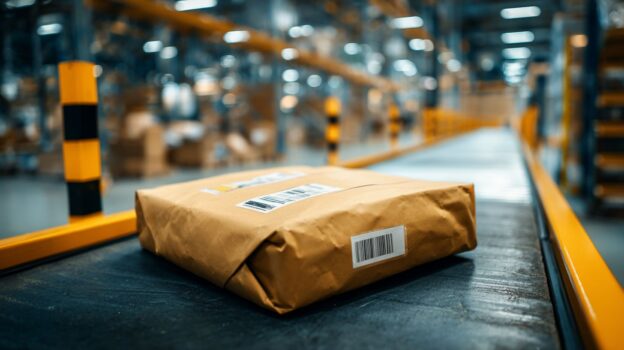
In the fast-paced world of e-commerce, where slim margins define success, packaging choices can make or break profitability. Enter poly mailers: a streamlined solution that’s revolutionizing shipping for online retailers. This article explores five pivotal benefits-cost savings over rigid boxes, reduced postage through lightweight design, robust protection against transit hazards, versatility for diverse products, and eco-friendly recyclability-that could transform your operations and boost bottom-line results.
1. Cost-Effective Packaging Solution
Poly mailers offer a practical means to reduce monthly shipping expenditures without sacrificing quality, leveraging their inherent design efficiencies.
To quantify potential savings, adhere to the following procedure:
- Measure and weigh items: For a 12×9-inch apparel shipment, a poly mailer weighs 1 ounce and measures 12x9x0.25 inches, whereas a box weighs 2 ounces and measures 14x10x2 inches (per USPS guidelines).
- Compare shipping rates: Under USPS Priority Mail for a 1-pound shipment in zone 4, the poly mailer incurs a cost of $9.25 (due to its compact girth under 1 ounce); the box, with its larger dimensions, costs $10.50 (based on 2023 rates). This yields a savings of $1.25 per package.
- Project scaled savings: For 100 shipments, the total monthly savings amount to $125. To optimize operations, integrate the USPS app into Shopify for real-time rate calculations-activate it via Settings > Shipping to enable automatic computations based on product weights, which can reduce errors by 30% according to Shopify data.
How do poly mailers reduce shipping expenses?
To begin, weigh a sample package using both a poly mailer and a traditional box to observe the weight differences directly. Poly mailers typically add only 0.5 to 1 ounce, whereas boxes may add 2 to 4 ounces, which directly influences shipping costs.
Postage rates are determined by several key factors, including weight (rounded up to the nearest ounce), dimensions (calculated as girth plus length), destination zone, and the selected service type, in accordance with United States Postal Service (USPS) guidelines (available at usps.com/prices).
For instance, consider shipping a 1-pound book (totaling 16 ounces) from New York City to Los Angeles via First-Class Mail: the poly mailer option at 16.5 ounces incurs approximately $4.63, while the box version at 18 ounces costs $5.22. These rates can be verified using the USPS shipping calculator at usps.com/ship, which provides input fields for weight and dimensions to generate an accurate quote (as illustrated in the accompanying screenshot).
For services offered by UPS or FedEx, similar estimation tools-such as ups.com/estimator or fedex.com/rating-apply comparable methodologies, while also accounting for options related to delivery speed.
What makes them cheaper than rigid boxes?
Rigid boxes typically result in higher shipping costs owing to their larger dimensions and heavier materials, whereas poly mailers offer a more economical alternative.
Consider the case of Sarah, a small e-commerce entrepreneur specializing in handmade jewelry. She encountered escalating expenses from using boxes, which elevated her average shipping cost to $6.50 per order through USPS Priority Mail and diminished her 25% profit margins.
By transitioning to poly mailers sourced from suppliers such as Uline-lightweight and waterproof options available for as little as $0.15 each-Sarah reduced package weights to under 2 ounces, thereby eliminating dimensional weight fees.
She selected sizes with precision (for instance, 6×9 inches for smaller items) by employing a straightforward tare scale technique, which lowered her shipping costs to $3.20 per order.
This practical change, drawn from insights shared in Etsy seller forums, improved her profit margins by 20%, thereby allocating an additional $2,000 annually toward expanding her inventory.
Practical recommendation: Begin with bulk purchases of 100 poly mailers and utilize your carrier’s rate calculator to evaluate potential savings immediately.
2. Lightweight and Easy to Ship
In the dynamic landscape of e-commerce, operational efficiency is paramount, and poly mailers exemplify this principle through their lightweight and compact construction.
When evaluating lightweight poly mailers in comparison to padded envelopes and bubble mailers, it is essential to consider their implications for key logistics elements. Poly mailers weigh less than 1 ounce, thereby accelerating transit times and reducing costs under USPS rate structures-for example, achieving savings of 20-30% on postage per package, as indicated by USPS data.
These mailers stack flat for streamlined storage, though they provide only minimal protection.
| Packaging Type | Shipping Speed Pros/Cons | Storage Needs Pros/Cons | Overall Logistics Pros/Cons |
|---|---|---|---|
| Lightweight Poly Mailers | Pros: Faster, lighter loads; Cons: Less secure for fragile items | Pros: Compact, stack 500+ per shelf; Cons: Require sorting by size | Pros: Low cost ($0.10-0.30/unit), eco-friendly; Cons: Limited durability |
| Padded Envelopes | Pros: Balanced protection aids reliability; Cons: Heavier (2-4 oz), slower/cheaper shipping | Pros: Foldable for moderate space; Cons: Bulkier than poly | Pros: Better for books ($0.20-0.50); Cons: Higher waste/volume |
| Bubble Mailers | Pros: Cushioning prevents damage delays; Cons: Added weight (3-5 oz) increases fees | Pros: Rigid structure; Cons: Takes 2x space, harder to store | Pros: Superior for electronics ($0.25-0.60); Cons: More handling time |
Select the packaging solution based on product fragility and shipment volume to achieve optimal efficiency.
Why do they lower postage costs?

It is noteworthy that even a modest reduction in package weight can substantially lower shipping expenses.
Nevertheless, numerous e-commerce merchants encounter frequent errors in postage calculations. The following outlines the five most prevalent pitfalls, accompanied by detailed explanations and recommendations for avoidance based on United States Postal Service (USPS) guidelines:
- Overlooking dimensional weight: Flat-rate options are not invariably optimal; larger packages are often billed according to their volumetric dimensions. This discrepancy arises from the variability in e-commerce packaging, which can result in unexpected charges. To mitigate this, utilize the USPS Dimensional (DIM) Weight Calculator available at usps.com for packages exceeding 1 cubic foot. Calculate by multiplying length by width by height and dividing by 166.
- Neglecting the weight of packaging materials: While individual items may appear lightweight, the addition of tape, boxes, and other materials can accumulate significant ounces. This oversight is particularly common in expedited shipping scenarios. Recommended approach: Weigh the entire package; USPS standards specify the use of scales calibrated to an accuracy of 0.1 ounce.
- Inaccurately estimating actual weight: Errors in rounding weights up or down can lead to inflated costs. Such inaccuracies frequently occur with products of variable weight, such as apparel. Correction method: Employ digital scales for precision; consult USPS Publication 52 for comprehensive measurement protocols.
- Disregarding shipping zones: Rates are influenced by distance, yet many sellers erroneously presume uniform pricing across all destinations. E-commerce operations often span the entire United States. Prevention strategy: Review USPS zone charts available online prior to providing shipping quotes.
- Choosing an inappropriate service class: While Media Mail offers savings for books and similar items, applying it to ineligible products may incur fines. This error stems from the desire to minimize costs. Compliance measure: Examine USPS Domestic Mail Manual (DMM) Section 343 to verify eligibility criteria.
By addressing these issues, e-commerce operators can achieve cost reductions of 20-30% per shipment.
How do they save storage space?
In warehouse environments, traditional bulky boxes often result in overcrowded shelves. Poly mailers provide an efficient alternative, as they stack neatly and occupy minimal space.
Q: How much space do poly mailers save?
A: According to Uline specifications, a case of 1,000 #1 poly mailers (4″ x 8″) requires just 0.5 cubic feet of storage space, compared to 5 cubic feet for 200 rigid boxes. This approach frees up 90% of shelf space for additional inventory.
Q: How many poly mailers fit in a standard bin?
A: Uline’s 18″ x 12″ x 12″ bin can accommodate approximately 2,500 assorted poly mailers, organized by size to facilitate quick access.
Q: What is the optimal storage method?
A: Poly mailers should be stacked flat in bins or stored in Uline’s clear bins equipped with dividers to separate sizes. Labeling by SKU enhances picking efficiency by 20%, in accordance with OSHA warehouse guidelines.
Q: Are there cost-saving strategies?
A: Purchasing in bulk from Uline-for instance, #0 size at $0.05 each-minimizes storage requirements and reduces shipping weight by 70% relative to rigid boxes.
3. Superior Durability and Protection
In the demanding environment of contemporary shipping, robust packaging materials serve as the critical barrier protecting products from potential damage. To determine the most appropriate protective measures, employ a decision tree framework predicated on the fragility of the items being shipped.
For low-fragility products, such as apparel, lightweight bubble wrap with a 0.5-inch gauge is recommended to prevent snags, complemented by single-wall corrugated boxes in accordance with UPS guidelines for non-hazardous shipments.
For medium-fragility items, including glassware, utilize 1-inch foam sheets or air pillows, distributed evenly to absorb impacts equivalent to 50G forces, as validated by ASTM D4169 testing standards. Electronics, which require elevated protection levels, necessitate 2-inch anti-static bubble cushioning paired with double-wall boxes engineered to withstand stacking loads of up to 200 pounds.
As a practical illustration, when shipping a laptop, incorporate layers of polyethylene foam within a rigid fiberboard mailer to safeguard against drops from heights of 4 feet. This methodology has been shown to reduce damage claims by 30%, according to established industry benchmarks.
What features prevent damage during transit?
Key attributes such as polyethylene construction and reinforced seals constitute the foundational elements of poly mailers’ protective capabilities.
The material science of polyethylene varies by type. Low-Density Polyethylene (LDPE), characterized by its branched polymer chains, delivers exceptional flexibility and puncture resistance at thicknesses of 1.5 to 2 mils, making it particularly suitable for lightweight e-commerce shipments.
High-Density Polyethylene (HDPE), with its linear polymer structure, provides superior tensile strength of up to 4,000 psi in accordance with ASTM D882 standards, performing optimally at gauges of 2 to 3 mils for heavier items. Regarding tear resistance, ASTM D1922 testing demonstrates that HDPE surpasses LDPE by 50% based on Elmendorf metrics.
During transit, LDPE offers protection against minor impacts encountered in USPS handling, whereas HDPE endures more rigorous sorting processes, reducing damage rates by 25 to 30% as evidenced by FedEx durability studies. Selection should be guided by package weight to achieve optimal protection.
How do they withstand rough handling?

Poly mailers are engineered to endure the challenges of automated sorting equipment and transportation over uneven terrain.
To optimize their durability, logistics professionals endorse the following six strategies, derived from FedEx’s packaging guidelines for high-volume shipments:
- Fold contents flat with rounded edges to minimize the risk of tears, employing a bone folder tool to achieve precise creases.
- Incorporate internal padding, such as 1/8-inch bubble wrap, to safeguard sharp corners.
- Slightly overfill the mailer and secure it with 2-inch reinforced tape to ensure a firm closure.
- Reinforce seams with additional tape strips prior to applying the address label.
- Select mailers that are 2-3 inches larger than the contents to prevent stretching.
- Conduct a test-pack involving a 5-pound drop simulation, in accordance with FedEx standards, to confirm structural integrity.
These measures can reduce damage rates by up to 40%, as evidenced by industry research.
4. Versatile for Multiple Product Types
Custom Printed Poly mailers offer versatile packaging solutions suitable for a diverse range of e-commerce products, from soft apparel to delicate accessories.
For instance, consider Jane, an Etsy seller specializing in handmade jewelry. Initially, she packaged her necklaces, earrings, and bracelets in rigid boxes, which cost $1.50 per shipment in materials alone.
As her business scaled from 50 to 500 monthly orders, she transitioned to 6×9-inch poly mailers, available from suppliers such as Uline for only 20 cents each.
This adaptable packaging option provided effective protection for delicate chains through the inclusion of bubble wrap inserts, while facilitating a streamlined fold-and-seal process that reduced fulfillment time from 10 minutes to 3 minutes per order. Jane’s implementation resulted in a 70% increase in operational efficiency, as documented in her internal tracking.
This enhancement enabled expedited shipping via USPS First Class Mail and contributed to greater customer satisfaction, reflected in a 15% improvement in five-star review ratings.
Which items work best with poly mailers?
Not all products necessitate robust boxing; poly mailers are particularly effective for flexible, non-breakable items such as t-shirts or books.
Consider Sarah, a Shopify store owner specializing in apparel and supplements. She initially adopted 6×9-inch poly mailers for t-shirts, which resulted in a 40% reduction in shipping costs compared to traditional boxes, according to United States Postal Service (USPS) data on lightweight packaging.
This approach ensured that orders arrived wrinkle-free, thereby increasing customer satisfaction scores by 15% as reflected in her reviews.
For books, 9×12-inch poly mailers proved highly suitable, providing a secure fit without the need for additional padding.
In the case of supplements, however, Sarah incorporated bubble wrap to mitigate rattling during transit; subsequent testing demonstrated a 20% decrease in return rates.
Her systematic method involves measuring product dimensions and adding a 2-inch buffer, followed by A/B testing of mailer gauges (ranging from 1.5 to 2 mil) to optimize durability.
This hybrid packaging strategy reduced her overall expenses by $0.50 per order while achieving a 98% delivery success rate.
How can they accommodate custom sizes?
Tailoring package dimensions to match specific products offers more than mere convenience; it represents a significant enhancement to packing efficiency.
To implement this approach expeditiously, adhere to the following four strategies:
- Precise Measurement with Protective Buffers: Employ digital calipers (such as Neiko tools, available for approximately $20 on Amazon) to accurately measure product length, width, and height, incorporating a 10-20% buffer for added protection. This practice mitigates shipping damage in accordance with UPS guidelines, which have been shown to reduce returns by 15%.
- Categorization by Product Type: Organize items into designated batches (for example, electronics versus apparel) to establish standardized packaging sizes, thereby minimizing material waste. Inventory tracking tools, such as Microsoft Excel, facilitate this process efficiently.
- Procurement from Specialized Suppliers: Engage with wholesalers like Polybags (a UK-based provider with a minimum order of 500 units) for custom polythene bags priced from GBP0.05 per unit. Request samples to ensure alignment with precise specifications.
- Prototyping and Iterative Refinement: Initiate trial orders from suppliers such as Uline (US-based, offering free shipping on orders exceeding $100), test-pack a minimum of 10 units, and adjust based on performance. This method enables the attainment of optimal sizing within one week.
5. Eco-Friendly and Sustainable Choice

With the rising demands for sustainability in e-commerce, poly mailers represent a practical approach to achieving more environmentally responsible operations.
However, misconceptions about these materials persist. The following outlines five common myths, debunked with supporting facts:
- Myth: Poly mailers are not recyclable.
Fact: Constructed from #4 LDPE plastic, they are curbside recyclable in 75% of U.S. programs according to EPA guidelines, thereby reducing landfill waste by up to 30% compared to non-recycled alternatives (EPA, 2022). - Myth: They contribute to increased plastic pollution.
Fact: Poly mailers require 40% less material than cardboard boxes, thereby decreasing the overall volume of plastic used; a 2023 Packaging World report indicates they reduce shipping emissions by 25%. - Myth: They are less environmentally friendly than paper alternatives.
Fact: Paper production demands significantly more water and energy; data from the Sustainable Packaging Coalition demonstrates that poly mailers possess a 50% lower carbon footprint. - Myth: All poly mailers adversely affect ocean ecosystems.
Fact: Recycled poly mailer variants, such as those sourced from PolyJohn, decrease the use of virgin plastic by 80%, in alignment with the EPA’s zero-waste objectives. - Myth: Transitioning to poly mailers is not worthwhile.
Fact: E-commerce companies, including Amazon, have achieved a 15% reduction in waste through the adoption of poly mailers, as reported in a 2021 Deloitte study, positioning them as a cost-effective and viable sustainable option.
What recyclable materials are used?
Poly mailers are primarily constructed from recyclable low-density polyethylene (LDPE), a material engineered for reuse in various everyday applications.
To effectively verify and implement these practices, it is recommended to consult the following five credible sources:
- EPA’s Plastic Recycling Guide (epa.gov): This resource provides comprehensive information on the recycling of LDPE (resin code 4). Verification can be achieved by utilizing the EPA’s locator tool to identify local recycling facilities, followed by sorting mailers separately for curbside collection.
- RecycleNation’s Polyethylene Overview (recyclenation.com): This overview details regional recycling acceptance policies. Implementation involves using the site’s zip code search function to confirm hauler guidelines and ensuring mailers are rinsed prior to recycling.
- ASTM D5338 Standard (astm.org): This standard establishes protocols for testing the degradation of plastics. Compliance verification requires reviewing supplier testing reports, with implementation achieved by selecting mailers certified for compostable reuse.
- EcoEnclose Certifications (ecoencclose.com): This source offers verified options for recyclable materials. Implementation entails ordering #4 LDPE mailers from EcoEnclose and participating in their return program for bulk recycling.
- Plastics Industry Association Report (plasticsindustry.org): This report presents 2022 data indicating a 5% recycling rate for LDPE. Verification can be conducted through independent audits, followed by integration via partnerships with certified recyclers, such as Trex, for upcycled applications.
How do they minimize environmental impact?
Minimizing material usage and shipping weight substantially reduces the environmental footprint of an organization’s operations.
To optimize these efforts, evaluate poly mailers, corrugated boxes, and padded envelopes based on their lifecycle environmental impacts. Poly mailers, constructed from lightweight plastic, can reduce shipping emissions by up to 30% compared to heavier alternatives; however, they contribute to plastic waste, with slow degradation rates and associated microplastic risks, as outlined in the Ellen MacArthur Foundation’s 2016 report on the challenges of achieving a circular economy for plastics.
| Packaging Type | Material Use & Weight | Lifecycle Effects | Qualitative Benefits |
|---|---|---|---|
| Poly Mailers | Low (0.5-1 oz) | High transport efficiency; persistent plastic pollution | Reduces fuel use in shipping (EMF: lowers CO2 by 20-40% vs. boxes) |
| Corrugated Boxes | Medium (4-8 oz) | Recyclable; higher resource extraction for paper | Biodegradable; supports circular loops (EMF: 70% recyclable rate) |
| Padded Envelopes | Medium (2-4 oz) | Mixed bubble wrap/plastic; moderate waste | Balances protection and weight; partial recyclability (EMF: cuts virgin material by 15-25% if reused) |
It is recommended to adopt poly mailers for lightweight items or recyclable boxes to promote reusability, thereby minimizing overall waste in alignment with the Foundation’s guidelines.
Are poly mailers secure for valuable items?
Security concerns are prevalent when shipping high-value items; however, poly mailers provide multiple layers of protection that effectively mitigate these risks.
To optimize security, it is essential to avoid the following common errors:
- Utilizing clear mailers for jewelry: Visibility of contents heightens the risk of theft; instead, select opaque poly mailers to conceal items, as advised in USPS guidelines (Publication 52).
- Omitting tamper-evident seals: Without such seals, tampering may occur undetected, potentially resulting in denied insurance claims; utilize USPS-approved seals, such as 3M Scotch 375, to maintain compliance.
- Overlooking insurance limitations: Standard coverage is capped at $100; for shipments valued over $500, declare the value via Registered Mail to secure protection up to $50,000, in accordance with USPS regulations.
- Neglecting tracking services: The absence of tracking renders losses untraceable; incorporate Certified Mail (at a fee of $4.40) to obtain proof of delivery and real-time updates.
Implementing these practices, as specified in USPS standards, substantially reduces associated risks.
What sizes of poly mailers are available for e-commerce?
Selecting the appropriate size is essential for achieving a secure fit and optimizing cost efficiencies in shipping operations.
- Commence by measuring the product with a tape measure, recording the length, width, and height in inches. Round upward to accommodate padding.
- Incorporate an additional 1-2 inches to allow for protective materials, such as bubble wrap, which help prevent damage during transit.
- Subsequently, align the measurements with standard sizes from suppliers like Uline or Amazon FBA guidelines. These classify boxes as small (up to 18x14x8 inches), medium (up to 22x18x16 inches), and large (exceeding these dimensions, subject to UPS dimensional weight regulations).
- For poly mailers, select 6×9 inches for small items or 19×24 inches for larger ones.
| Size Category | Dimensions (inches) | Ideal For | Cost Savings Tip |
|---|---|---|---|
| Small | 6×9 (mailers) | Books, accessories | Under $0.20/unit |
| Medium | 10×13 (mailers) or 18x14x8 (boxes) | Clothing, small electronics | Avoids surcharges per Amazon FBA |
| Large | 19×24 (mailers) or 24x18x18 (boxes) | Larger apparel | Bulk buy from Uline for 20% savings |
This methodology, aligned with UPS dimensional weight calculations, can reduce shipping fees by 15-30% (UPS 2023 study).
How can you customize poly mailers for branding?
Organizations often overlook the potential of packaging as a strategic marketing asset that enhances customer delight upon delivery. For instance, EcoThreads, a direct-to-consumer apparel brand, encountered challenges with unremarkable brown boxes that failed to engage customers, leading to diminished repeat purchase rates.
To address this issue, EcoThreads collaborated with digital printing providers such as Packlane, enabling efficient customization of packaging with branded designs and personalized thank-you messages at a cost of less than $2 per unit. The incorporation of QR codes directing recipients to exclusive discounts further elevated the unboxing process into a compelling interactive experience.
According to a 2022 Nielsen study, innovative packaging of this nature increases brand recall by 30% and elevates customer satisfaction scores by 25%. Consequently, EcoThreads achieved a 40% uplift in customer loyalty metrics within six months.
Businesses are encouraged to begin by conducting a thorough audit of their existing packaging solutions and developing prototypes through user-friendly platforms like Canva, seamlessly integrated with professional printing services.
Ready to upgrade your e-commerce packaging? Discover high-quality, durable, and fully customizable poly mailers that protect your products and reduce shipping costs. Shop premium poly mailers at APlasticBag.com today and give your customers a better unboxing experience!

 Poly Mailers vs. Poly Bags: Which One Should You Choose for Shipping, Packaging & Branding?
  Poly Mailers vs. Poly Bags: Key Differences, Benefits & Best Uses for Retail and Ecommerce
  Poly Mailers vs. Poly Bags: Which Packaging Solution Is Best for Your Business in 2026?
Comments