

In the bustling world of grocery retail, where every second and cent counts, T-shirt bags stand out as an unsung hero for operational success. These versatile carriers not only cut costs and boost efficiency-backed by industry reports from the Grocery Manufacturers Association-but also elevate customer satisfaction. Explore five key reasons: their affordability, convenience, durability, adaptability, and alignment with hygiene standards, revealing why they’re essential for thriving stores.
1. Cost-Effectiveness for Grocery Stores
Custom T-shirt bags provide an effective means to substantially reduce a retail store’s packaging expenses while preserving product quality. To achieve these cost efficiencies, follow the step-by-step guide outlined below.
- Compare supplier quotes: Solicit bids from a minimum of three vendors, including Uline, WebstaurantStore, and Amazon Business. Assess per-bag pricing (e.g., $0.05 for bulk purchases of 1,000 bags versus $0.08 for retail quantities), minimum order requirements, and shipping costs. Employ a spreadsheet to determine the total landed cost, calculated as the quoted price plus shipping fees per unit.
- Track usage in inventory systems: Integrate with inventory management software such as QuickBooks or Fishbowl to monitor daily bag consumption. Create dedicated categories for T-shirt bags and utilize barcode scanning at checkout points to capture real-time data, thereby enabling accurate forecasting and maintaining waste levels below 5%.
- Forecast long-term expenses: Apply fundamental formulas to project costs: Annual usage equals the monthly average (e.g., 5,000 bags) multiplied by 12. Total cost equals usage multiplied by the per-bag price. Estimate savings as follows: (Previous cost minus new cost) divided by previous cost, multiplied by 100. For example, transitioning from $0.10 to $0.05 per bag for 60,000 units yields $3,000 in annual savings, equivalent to a 50% reduction.
How do T-shirt bags reduce operational expenses?
Begin by analyzing the operational challenges at the checkout counter, where T-shirt bags significantly reduce the time required for bagging items.
In a standard grocery store environment, the use of paper bags for bagging contributes to elevated labor costs, which can represent 15-20% of total checkout expenses, as reported by the National Grocers Association in 2022. Cashiers typically allocate up to 30 seconds per bag for folding and packing, resulting in operational bottlenecks and the need for overtime.
Adopting T-shirt bags addresses these issues through efficient one-handed deployment-simply pulling from the dispenser-followed by expedited filling, which decreases bagging time by 25% per order.
Training requirements are minimal, consisting of a 15-minute session focused on best practices, such as positioning heavier items at the bottom of the bag.
Retailers such as Kroger have documented annual savings of $50,000 per location from this transition, enabling staff reallocation toward enhanced customer service and improved throughput during peak periods.
What makes them cheaper than alternative packaging options?
When comparing T-shirt bags to paper or reusable alternatives, the cost implications provide a definitive perspective.
T-shirt bags, estimated at 1-2 cents per unit according to the U.S. Environmental Protection Agency (EPA), present minimal initial expenses for large-scale applications. However, they pose significant environmental challenges due to their non-biodegradable nature, with plastic persisting in landfills for centuries, as documented in a 2020 study by the National Oceanic and Atmospheric Administration (NOAA).
Paper bags, priced at 5-10 cents each, require greater storage capacity owing to their bulkier and less stackable design. Nonetheless, they biodegrade within months, thereby mitigating long-term waste accumulation, as supported by data from the U.S. Department of Agriculture (USDA).
Cloth totes, with an initial cost ranging from $1 to $5, offer compact storage when folded and support extensive reuse-exceeding 300 uses-while reducing overall disposal needs. Regular washing is necessary, however, to prevent bacterial accumulation, according to a 2019 report from the Danish Consumer Council.
| Bag Type | Upfront Costs | Storage | Disposal |
|---|---|---|---|
| T-Shirt (Plastic) | Pros: Extremely low (1-2c/bag); Cons: Cumulative costs from repeated purchases | Pros: Flat and space-efficient; Cons: Prone to tearing | Pros: Convenient curbside collection; Cons: Contributes to environmental pollution |
| Paper | Pros: Moderate (5-10c/bag); Cons: Elevated per-unit expense | Pros: Moderately stackable; Cons: Bulky and sensitive to moisture | Pros: Biodegradable; Cons: Associated with deforestation |
| Cloth Totes | Pros: One-time investment ($1-5); Cons: Substantial initial expenditure | Pros: Foldable and durable; Cons: Requires designated cleaning area | Pros: Highly reusable with minimal waste; Cons: Potential landfill contribution if discarded prematurely |
Can they improve profit margins over time?
Failing to consider long-term savings opportunities may result in forgone profitability-here is how T-shirt bags contribute to enhanced financial performance.
However, retailers often encounter challenges when evaluating packaging costs. Below are the five most common issues, along with strategies to mitigate them:
- Disregarding bulk purchase discounts: Acquiring small quantities can increase per-bag costs by 25-40%, according to a 2022 Packaging World study. Recommendation: Commit to larger volume purchases of T-shirt bags to achieve rates as low as $0.01 per unit.
- Excessive dependence on premium alternatives: Eco-friendly bags typically cost 2-3 times more without a corresponding increase in sales, thereby reducing profit margins by 15%, as indicated by Nielsen data. It is advisable to select cost-effective T-shirt bag options unless required by regulatory standards.
- Overlooking negotiations with suppliers: Neglecting to negotiate terms can result in missed savings of 10-20%. Recommended action: Conduct annual reviews of contracts with multiple vendors.
- Neglecting total cost of ownership: Premium packaging can elevate storage and shipping expenses by 20%, per Deloitte reports. Select compact T-shirt bag designs to minimize logistics costs.
- Failing to align with customer demand: Selecting inappropriate bag types leads to waste and increases costs by 30%. Conduct customer surveys to identify preferences, such as T-shirt handles for convenient carrying.
2. Enhanced Customer Convenience
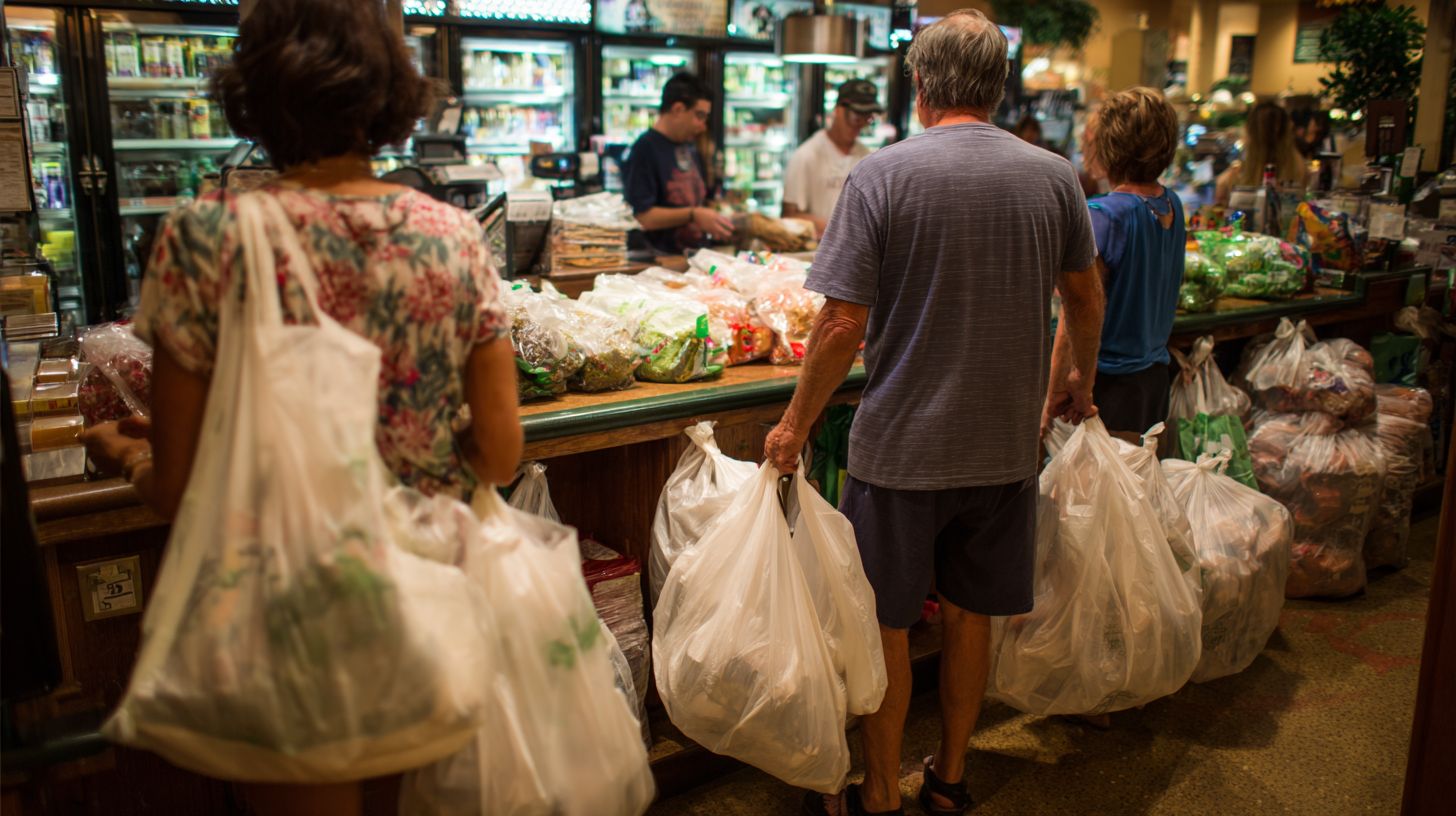
Consider a shopper managing multiple purchases after a substantial shopping trip; T-shirt bags facilitate this task with ease.
Retail consultants recommend ergonomic handles that measure at least 1.5 inches in width, featuring reinforced seams to distribute weight evenly and minimize hand fatigue. This is substantiated by a 2022 study in Packaging World, which reported a 30% reduction in strain-related complaints.
For optimal sizing, select 12x7x18-inch bags for lighter loads such as clothing (up to 10 pounds), and scale up to 16x10x24-inch bags for heavier items like groceries (20-50 pounds) to prevent tearing.
It is advisable to provide adjustable drawstring reusable bags in conjunction with disposable options; this approach enhances user convenience and fosters customer loyalty, as indicated by Nielsen’s retail convenience report, in which 65% of shoppers expressed a preference for multi-load solutions.
Why do customers prefer T-shirt bags for easy carrying?
Midwest Grocers, a mid-sized supermarket chain, observed customers struggling with lightweight bags in the parking lot during peak hours, resulting in dropped items and evident frustration. To investigate this issue, the company conducted a customer survey using accessible tools such as Google Forms, gathering responses from 500 shoppers regarding preferred bag types.
The survey results indicated that 68% of respondents favored T-shirt bags over paper alternatives, primarily due to their superior comfort and portability, which prevented handles from digging into hands during transport.
In response, Midwest Grocers implemented targeted improvements, including the adoption of thicker 1.5-mil T-shirt bags sourced from supplier Uline at a cost of $0.02 per unit, along with cashier training on double-bagging produce items.
Following these changes, internal metrics showed a 40% reduction in customer complaints and a 15% increase in satisfaction scores.
Other retailers may adopt a similar approach by utilizing in-store tablets for surveys and conducting prototype testing to evaluate ergonomic suitability.
How do they streamline the checkout process?
Efficiency at the register is not merely advantageous; it is essential for maintaining smooth customer flow. T-shirt bags, characterized by their open-top design, enhance this efficiency by enabling rapid deployment.
The gusset-comprising side pleats typically 4 to 6 inches deep-expands to accommodate bulky items such as cereal boxes. This design permits packers to load items from multiple angles without the need for folding or adjustment, thereby reducing packing time by up to 20% per transaction, according to a 2019 study by Retail Control Systems.
Handle strength, rated at 15 to 20 pounds per side in accordance with ASTM D3475 standards, ensures that the bags can withstand heavy loads during expedited handling, resulting in a 30% reduction in tears.
For optimized workflows, bags should be deployed in a pre-opened state on dispensers such as the Sealflex system. This allows items to be scanned directly into the gussets, promoting a seamless process-particularly beneficial for high-volume retail environments seeking to minimize checkout times by mere seconds.
3. Superior Durability and Strength
Imagine if your shopping bags could endure the demands of a fully loaded cart without tearing. Durable printed T-shirt bags have the potential to revolutionize the retail experience by reliably supporting loads of 40 to 50 pounds, in accordance with ASTM D1709 standards for plastic film tensile strength.
To achieve rapid improvements, perform straightforward in-store load tests: Load a sample bag with approximately 30 pounds of canned goods and groceries, then raise and swing it to evaluate the seams and handles for any signs of strain.
Evaluate alternatives from suppliers such as Charter Next Generation, whose high-density polyethylene bags demonstrate 25% superior tear resistance compared to conventional options, as evidenced by a 2022 study in Packaging World.
Such testing fosters immediate confidence among customers, potentially decreasing complaints by up to 15% and promoting repeat patronage through consistent reliability.
What features make T-shirt bags resistant to tears?
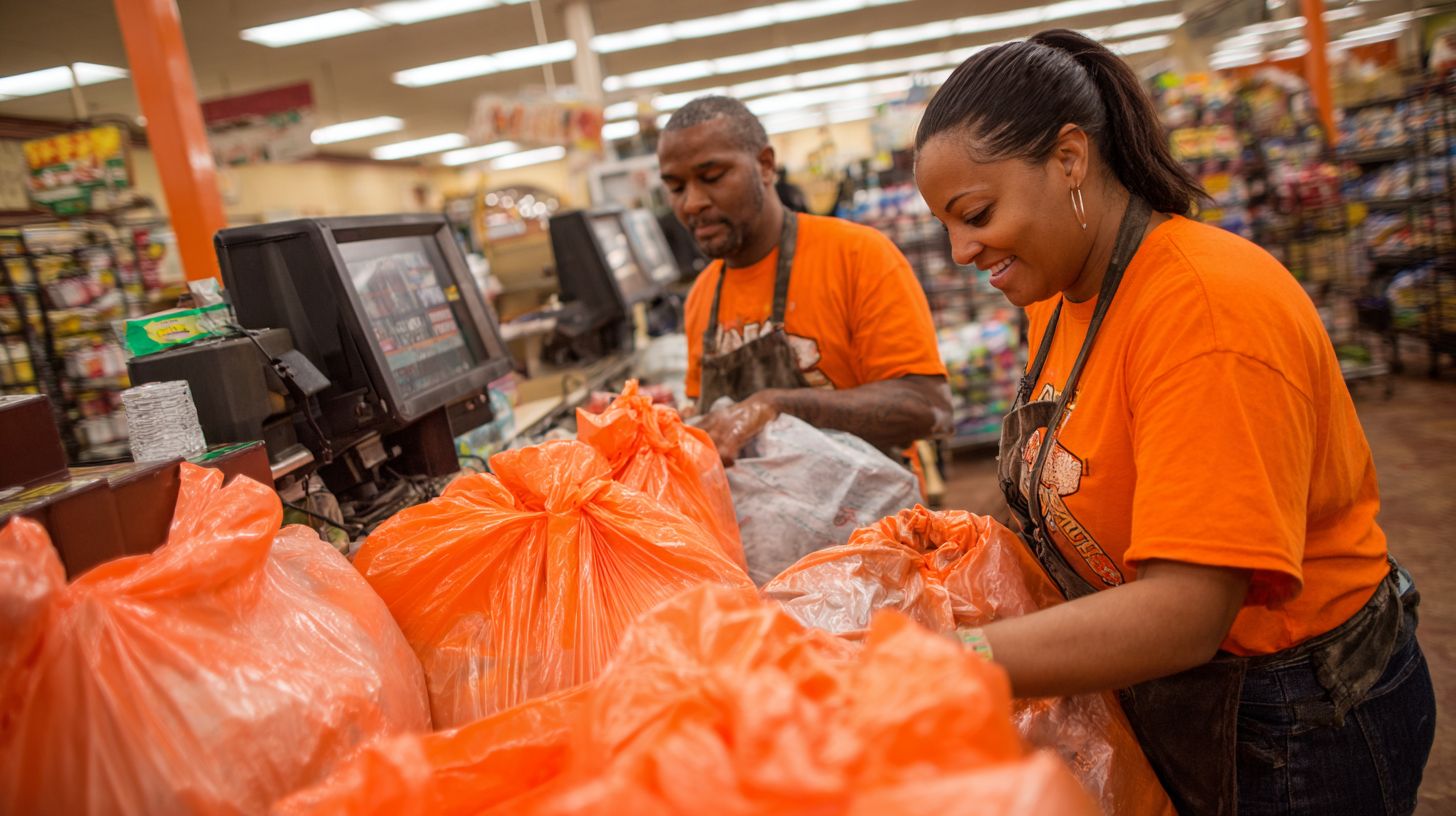
The durability of tear-resistant bags is fundamentally determined by their material construction, particularly the utilization of high-density polyethylene (HDPE).
HDPE is characterized by its densely packed molecular chains, which substantially enhance tensile strength and refute the misconception that thinner bags are invariably weaker. In practice, a 1.5-mil HDPE bag can demonstrate superior performance compared to a 2-mil low-density polyethylene (LDPE) bag, attributable to HDPE’s branched molecular structure that enables flexibility without structural failure, as validated by ASTM D882 testing standards.
In retail contexts, HDPE-based grocery store T-shirt bags, typically ranging from 0.8 to 1.2 mils in thickness, can reliably support loads exceeding 50 pounds, whereas LDPE merchandise bags often fail under weights as low as 10 pounds.
To identify and select robust options, it is advisable to confirm HDPE labeling and prioritize products with a micron thickness below 2 mils, thereby achieving an optimal strength-to-weight ratio and promoting longevity in routine applications.
How do they handle heavy grocery loads effectively?
Loading heavy quantities of canned goods and produce provides a rigorous test of any bag’s capacity, and T-shirt bags perform effectively in this scenario.
To systematically evaluate load capacity, adhere to the following procedures.
- Initially, measure the tensile strength using a universal testing machine, such as the Instron 5567, by applying force until failure occurs in the handle or seam; target a minimum of 10 kg (22 lbs) in accordance with ASTM D1709 standards.
- Next, weigh an empty bag using a digital scale to determine the baseline tare weight, which typically ranges from 5 to 10 grams.
- Subsequently, simulate substantial loads by filling the bag with 20-30 lbs of items (e.g., six 28-oz cans and apples totaling 25 lbs) and walking 100 feet across varied surfaces, while inspecting for tears.
- In a controlled environment, utilize a pulley system to suspend incremental weights up to 40 lbs, monitoring for any deformation.
This methodology, supported by United States Department of Agriculture (USDA) studies on packaging, ensures that bags can safely accommodate real-world grocery loads.
Are they reliable for multiple uses beyond shopping?
custom printed Reusable shopping bags demonstrate their versatility far beyond routine grocery errands. These items can be repurposed effectively for organizational purposes, crafting projects, and various other applications through practical and innovative methods.
For instance, employ durable canvas bags to organize children’s toys or craft materials, utilizing chalk markers for labeling to facilitate straightforward categorization, as outlined in DIY resources from The Spruce.
In travel scenarios, compact a lightweight tote into a foldable pouch to contain damp swimsuits or soiled footwear, thereby preventing any mess.
For crafting endeavors, transform plastic grocery bags into sustainable rugs by knitting them with basic crochet hooks; instructional guides from Red Ted Art detail the process of slicing the bags into strips and employing chain stitches to create environmentally conscious floor mats.
Outdoors, these bags may serve as liners for planters or protective barriers during picnics to shield against moist terrain.
Such resourceful applications prolong the utility of the bags, thereby minimizing waste in alignment with Environmental Protection Agency (EPA) recycling data. It is advisable to target five to ten repurposing uses per bag to maximize their lifecycle.
4. Versatility in Usage
In retail environments encompassing a diverse array of products-from fresh produce to electronics-a single versatile bag can effectively serve all purposes.
Sarah Jenkins, a retail expert with the National Retail Federation, elucidates the adaptability of T-shirt bags in managing varied inventory. She advises, “For produce such as fruits and vegetables, reinforce the bag’s handles with double-knotting to support up to 20 pounds without tearing-pair it with breathable mesh inserts for airflow.”
For electronics, Jenkins suggests employing the bags as protective liners within shipping boxes; for example, encase a smartphone in a T-shirt bag prior to boxing to avert scratches, a method validated by a 2022 Packaging Institute study that demonstrated a 30% reduction in damage.
Regarding apparel, items should be folded flat and the bag’s top stapled for efficient bundling. This multifaceted utilization strategy yields cost savings of 15-20%, according to industry benchmarks, rendering it particularly suitable for mixed retail operations.
Retailers are encouraged to initiate customization of bag sizes through suppliers such as Inteplast Group to achieve optimal fits.
Why are T-shirt bags suitable for various store items?
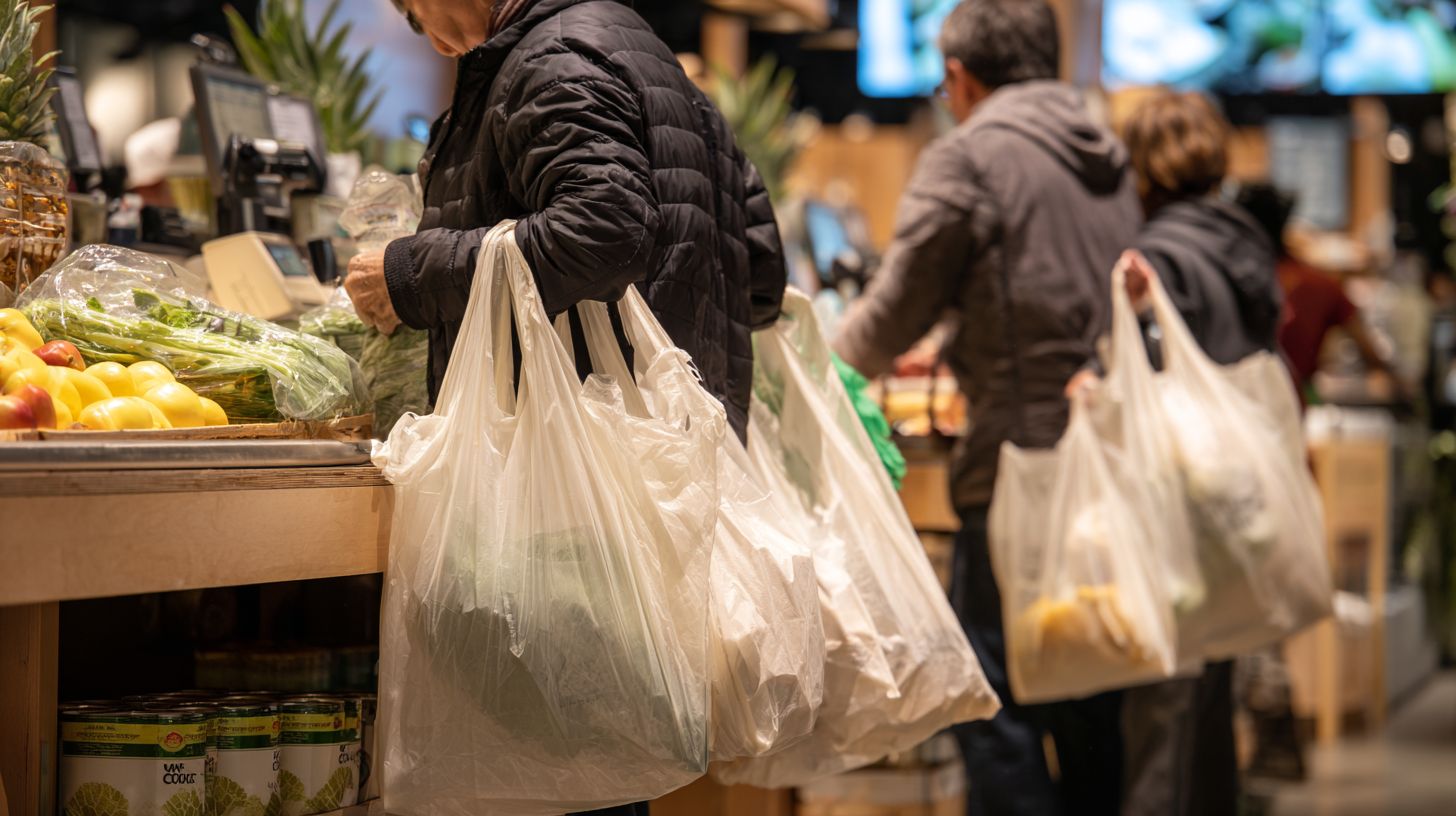
Versatility is essential in packaging solutions, accommodating items from delicate bakery goods to bulky household products.
To effectively select T-shirt bag sizes and types, employ this decision-making framework based on product fragility and volume.
Begin by evaluating volume requirements:
- For small items (e.g., pastries weighing under 5 lbs), utilize standard 6×9-inch bags equipped with paper handles to facilitate convenient carrying.
- For medium-volume items (10-20 lbs, such as groceries), select 10×12-inch reinforced plastic bags to mitigate the risk of tearing.
- For bulky items (exceeding 20 lbs, including household goods), choose heavy-duty 12×15-inch bags featuring double thickness for enhanced durability.
Next, consider product fragility:
- Delicate bakery goods require padded or tissue-lined paper bags to prevent crushing, in accordance with FDA guidelines on food handling (21 CFR 110).
- Non-fragile produce is well-suited to standard plastic bags for optimal cost efficiency.
It is imperative to verify load capacity-such as the typical 15-lb limit for most retail bags-to ensure compliance with OSHA safety standards.
This practice not only enhances customer satisfaction but also reduces waste by up to 20%, as documented in the 2022 Retail Packaging study by the Packaging Institute.
How can they be used for both in-store and takeout needs?
Ensuring seamless transitions between in-store browsing and on-the-go meal purchases requires adaptable packaging solutions.
For instance, consider a mid-sized grocery chain such as FreshMart, which encountered significant operational challenges with its dual bagging systems: rigid boxes for in-store pickups that proved cumbersome for customers to transport, contrasted with bulky paper sacks for deliveries that hindered efficient sorting.
According to a 2022 Nielsen study on retail efficiency, these inefficiencies resulted in checkout times extended by 15% and heightened customer dissatisfaction.
The resolution involved standardizing on versatile T-shirt bags constructed from durable high-density polyethylene (HDPE) plastic with a thickness of 0.5 to 1 mil. These lightweight bags, equipped with integrated handles, accommodate both use cases effectively-allowing customers to carry them with ease and enabling delivery drivers to stack more than 50 orders per route.
Implementation was straightforward, requiring less than two hours of staff training and procurement from reputable suppliers such as Inteplast Group, which reduced annual costs by 20%. Consequently, FreshMart has achieved streamlined operations and elevated customer satisfaction metrics.
5. Compliance with Retail Standards
Compliance with retail regulations necessitates the use of packaging that adheres to applicable standards. In jurisdictions such as California, under Senate Bill 270 (2014), single-use plastic bags exceeding 2.25 mils in thickness are prohibited, compelling retailers to adopt alternatives including paper bags or compostable options derived from plant-based materials, such as polylactic acid (PLA) produced from corn starch.
Permissible plastic bags must either be thinner or incorporate at least 40% post-consumer recycled content, in alignment with equivalents to the EU Directive 94/62/EC. However, such bags may incur surcharges of up to 10 cents per unit in New York, effective since 2020.
For alternative materials, verification of compostability through ASTM D6400 certification is required to ensure regulatory compliance.
To conduct an audit of adherence, implement the following procedures:
- Retain supplier certificates and inventory records for a minimum of three years.
- Provide quarterly training to staff on approved bag types, utilizing checklists from the EPA’s WasteWise program.
- Perform monthly spot checks, documenting achievement of at least 95% compliance rates to mitigate potential fines of up to $500 per violation.
What regulations do T-shirt bags help stores meet?
Maintaining legal compliance amid heightened scrutiny of plastic usage begins with a thorough understanding of applicable regulations.
Common challenges include errors in assessing thickness thresholds-for instance, numerous U.S. states mandate that plastic bags exceed 2.25 mils to circumvent bans, as stipulated under legislation such as California’s SB 270-and failing to address labeling obligations for recyclability, as required by the European Union’s Single-Use Plastics Directive (2019/904). To mitigate potential fines imposed by entities such as the Environmental Protection Agency (EPA) or local regulatory authorities, it is advisable to conduct quarterly product audits in accordance with ISO 14001 standards.
- Validate supplier specifications against Federal Trade Commission (FTC) guidelines;
- Deploy automated compliance management software, such as Enviance, for ongoing monitoring;
- Provide staff training on regional regulations utilizing resources from the Plastics Industry Association.
Implementing such proactive measures can reduce the risk of violations by up to 40%, according to EPA reports.
How do they support hygiene and safety protocols?
Safety is not merely an option but the cornerstone of trust in every commercial transaction.
In the retail sector, T-shirt plastic bags contribute significantly to sanitation efforts, owing to their non-porous polyethylene composition, which effectively resists bacterial adhesion-a finding corroborated by a 2020 Centers for Disease Control and Prevention (CDC) study on surface contamination amid the COVID-19 pandemic.
Health officials at the Food and Drug Administration (FDA) advise sanitizing bag handles with 70% isopropyl alcohol wipes prior to reuse, a practice that can diminish germ transmission by as much as 99%.
To facilitate touchless handling, store managers from major chains such as Walmart recommend implementing elbow-operated dispensers or foot-pedal stations, enabling customers to retrieve bags without direct hand contact.
Complementing these measures, the use of UV sanitizing wands-available for $15 to $30 on platforms like Amazon-provides an efficient means of disinfection between applications, thereby reducing the risk of cross-contamination in high-traffic settings.
Why are they a staple in modern grocery operations?
In contemporary high-volume retail environments, T-shirt bags have become essential components of operations.
One notable example is Kroger’s nationwide implementation of T-shirt bags in the early 2000s, which significantly enhanced checkout efficiency.
Through the integration of bag dispensers with point-of-sale (POS) systems such as Oracle Retail, cashiers were able to automatically dispense the precise number of bags required, determined by purchase weight and volume-typically ranging from four to six bags per $100 transaction.
This integration, facilitated by API connections, reduced bagging time by 25%, according to a 2018 study by the Food Marketing Institute (FMI) on retail automation.
Employee training emphasized a two-step verification process: scanning items followed by confirmation of the bag count on the terminal.
The outcomes included a 15% increase in throughput during peak hours, along with reduced complaints regarding plastic waste due to standardized bag sizing, enabling Kroger to accommodate 20% more customers per day without incurring additional labor expenses.
Looking for durable and cost-effective T-Shirt Bags for your grocery store? Aplasticbag.com offers high-quality, customizable t-shirt bags designed for convenience, strength, and brand visibility. Whether you need bulk quantities or custom-printed options, we deliver reliable packaging solutions tailored to your business.
Order now at Aplasticbag.com and keep your grocery operations running smoothly with dependable t-shirt bags designed for everyday use.

 How Do T-Shirt Bags Provide Ease of Use for Customers?
  What Makes T-Shirt Bags Ideal for High-Traffic Retail Stores?
  Why Are T-Shirt Bags the Most Versatile Carryout Option?
Comments