
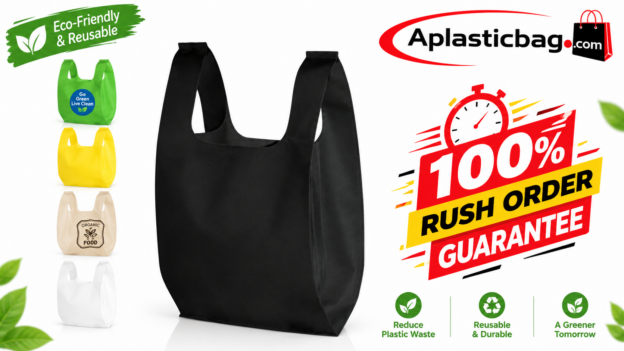
T-shirt bags are a widely recognized bag style used by many retail and food-service businesses for carrying compatible purchases. Named for their two extended handles, which resemble the shape of a T-shirt, these bags are considered for applications ranging from grocery shopping and convenience stores to takeout orders and everyday retail packaging.
For businesses purchasing packaging in quantity, choosing the right T-shirt bags involves more than comparing prices. Bag dimensions, material thickness, carrying requirements, order volume, and applicable local regulations all influence which product is suitable for a particular application.
This guide explains what T-shirt bags are, how businesses use them, and what to consider when selecting packaging for everyday operations.
What Are T-Shirt Bags?
T-shirt bags are bags featuring two extended handles that create a T-shirt-like silhouette. They are commonly associated with grocery stores, convenience stores, food-service businesses, and general retail environments.
Depending on their specifications, these bags can accommodate compatible merchandise, packaged products, and other items that fit their dimensions and carrying capacity.
T-shirt bags are available in different sizes and material configurations. Businesses should review individual product details to determine which bags are suitable for their products, expected loads, and intended use.
Benefits of T-Shirt Bags for Businesses
1. Convenient Carrying Handles
The extended handles provide a familiar way for customers to carry purchases. This design can be useful in retail environments where staff need to package and hand over orders efficiently.
The bag’s actual carrying suitability depends on its material, thickness, construction, and stated load recommendations.
2. Useful for Everyday Retail Applications
T-shirt bags may be suitable for grocery stores, convenience stores, general retailers, and certain food-service businesses. They can accommodate a range of compatible products when the correct size and specifications are selected.
Businesses should match the bag to the products they sell instead of assuming that a single bag size works for every application.
3. Different Sizes for Different Products
Small purchases, larger retail orders, and multiple packaged items can have different space requirements. Reviewing available bag dimensions helps businesses choose a format that accommodates their typical products.
Retailers with varied product ranges may find it useful to evaluate more than one size.
4. Options for Business Packaging Needs
Depending on the product range, businesses may be able to select different colors, material specifications, and printing configurations. Where customization is available, printed bags can display a business name, logo, or promotional message.
Confirm printing availability and any minimum order requirements before placing a custom order.
How to Choose the Right T-Shirt Bags
Step 1: Identify Your Main Application
Start by identifying how your business will use the bags. A grocery store may need packaging for a variety of purchases, while a convenience store may focus on smaller retail items. A food-service business may require bags that accommodate packaged orders.
The intended application helps determine the size, construction, and material specifications to evaluate.
Step 2: Choose the Appropriate Size
Measure the products you expect to package, including their width, height, and depth. Allow sufficient space for inserting and removing items without forcing them into the bag.
If your business handles different order sizes, compare several available dimensions and determine which formats best match your regular packaging requirements.
Step 3: Review Material Thickness and Construction
Material thickness and bag construction influence suitability for different products and loads. Do not assume that two bags with similar dimensions will have identical carrying performance.
Review the supplier’s specifications and stated load recommendations. For heavier or irregularly shaped items, test the bag under representative conditions before committing to a large order.
Step 4: Consider Plain or Printed Bags
Plain T-shirt bags may suit general packaging needs, while custom printed options can help businesses present their branding at the point of purchase.
If you are considering printed bags, check the available print area, artwork requirements, colors, setup charges if applicable, and minimum quantities. Choose a design that remains readable and consistent with your brand identity.
Step 5: Compare Total Order Costs
For businesses buying packaging in quantity, compare the complete cost of an order rather than focusing only on the unit price.
Consider order quantities, shipping costs, customization charges, storage space, and anticipated usage. Estimating monthly or seasonal demand can help you plan purchasing requirements more effectively.
Step 6: Check Applicable Bag Regulations
Requirements for plastic carryout bags vary by state and locality in the United States. Some jurisdictions restrict or prohibit particular types of single-use plastic bags, while others apply different requirements.
Before purchasing T-shirt bags, verify the current rules applicable to your business location and intended use.
T-Shirt Bags vs. Die-Cut Handle Bags
T-shirt bags and die-cut handle bags have different handle designs and may suit different packaging preferences.
T-shirt bags have two extended handles and are often considered for everyday retail, grocery, and convenience-store applications where permitted. Die-cut handle bags feature an opening cut directly into the bag material and may be preferred for certain retail or promotional packaging applications.
The right choice depends on the products being packed, the desired appearance, bag specifications, and applicable regulations. Compare both styles before selecting packaging for your business.
Who Uses T-Shirt Bags?

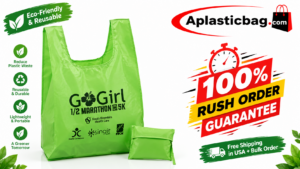
T-shirt bags may be considered by several types of businesses, depending on local requirements and product suitability.
• Grocery stores: For compatible purchases and retail items.
• Convenience stores: For everyday merchandise and packaged products.
• General retailers: For carrying suitable customer purchases.
• Restaurants and takeout businesses: For packaged orders when the bag is appropriate for the application.
• Small businesses: For retail packaging needs that match the bag’s dimensions and carrying specifications.
Each business should verify that the selected product meets its packaging requirements and complies with local rules.
Where Can Businesses Buy T-Shirt Bags in the USA?
When comparing suppliers, businesses should review available sizes, material details, construction, ordering quantities, delivery terms, and any customization options.
APlasticBag.com offers an online selection of packaging products for customers in the United States. Explore the T-Shirt Bags category to review available products and identify options that fit your retail or business packaging requirements.
You can also compare related products, such as Restaurant Bags, Die-Cut Handle Bags, and Custom Printed Plastic Bags, when evaluating different bag styles for compatible applications.
Replace each bracketed phrase with a link to the corresponding live category page on APlasticBag.com.
Find T-Shirt Bags for Your Business
Choosing T-shirt bags starts with understanding your products, expected carrying loads, and packaging requirements. By comparing dimensions, construction, customization options, order quantities, and applicable regulations, businesses can make informed purchasing decisions.
Explore APlasticBag.com‘s T-Shirt Bags category to review available packaging options for your business.

 How Do T-Shirt Bags Provide Ease of Use for Customers?
 What Makes T-Shirt Bags Ideal for High-Traffic Retail Stores?
 Why Are T-Shirt Bags the Most Versatile Carryout Option?

Comments