

In the bustling retail world, where first impressions seal loyalty, a simple shopping bag can transform into a powerful brand ambassador. As consumers increasingly demand sustainable and personalized experiences, custom printed paper bags emerge as an essential edge, backed by studies from the Packaging Federation showing up to 20% higher recall rates for branded packaging. Explore six key benefits: amplified visibility, eco-friendly appeal, cost savings, design flexibility, enhanced customer satisfaction, and innovative promotion strategies that turn shoppers into advocates.
1. Enhanced Brand Visibility

Visualize a dynamic retail setting where every customer exits with your logo prominently featured on their bag-this illustrates the profound impact of custom paper bags.
Custom paper bags significantly enhance brand visibility by converting ordinary purchases into ambulatory advertisements, with potential increases in recognition of up to 30%, as evidenced by a 2022 Nielsen study on the effects of packaging.
For example, the boutique retailer Anthropologie experienced a 15% uptick in foot traffic after transitioning to kraft bags imprinted with their logo, as patrons repurposed them for grocery runs and routine errands, thereby promoting the brand through organic channels.
This section delineates primary advantages, including cost-efficient marketing and environmental sustainability, before diving into specialized topics such as design approaches (e.g., utilizing Canva for prototypes), material choices (e.g., recycled variants from Uline), and execution recommendations (e.g., bulk procurement via Vistaprint yielding $0.50 per bag in savings), equipping readers to develop practical strategies for amplifying visibility.
How do custom prints boost immediate recognition in retail settings?
Upon entering a bustling supermarket, one can observe how a mere glance at a custom-printed bag may prompt a customer to recall the store they have recently visited.
To leverage this potential, adhere to the following steps for designing and implementing custom prints in the retail sector.
- Select Design Elements: Begin by incorporating bold logos, vibrant colors, and thematic graphics that align with your brand identity-for instance, icons representing fresh produce in a supermarket setting to convey quality. Utilize professional software such as Adobe Illustrator to create precise vector-based designs, which ensure scalability across applications like bags or posters.
- Choose Printing Techniques: Consider spot UV coating to apply glossy highlights to focal elements such as logos, thereby enhancing tactile appeal without requiring full lamination. For limited production runs, digital printing-such as that facilitated by HP Indigo presses-provides efficient turnaround times. For larger volumes, such as supermarket bags exceeding 10,000 units, offset lithography offers optimal cost-effectiveness.
- Implement in Retail: Integrate the custom prints onto reusable totes or point-of-sale displays, strategically positioning them at checkout areas to maximize customer exposure.
- Measure Impact: Monitor key performance indicators, including customer dwell time (targeting a 10-15% increase through systematic timed observations) or post-visit surveys assessing brand recall.
A 2022 Nielsen study indicated that custom packaging enhances recall by 23% in grocery environments.
This implementation process generally requires 4-6 weeks to complete.
What role does consistent branding on bags play in long-term customer loyalty?
A small fashion boutique faced challenges in retaining repeat customers until it implemented consistent branding on every paper bag, successfully converting one-time purchasers into loyal patrons.
Initially, the owner, Mia, observed that shoppers often overlooked the boutique in a competitive urban landscape, with only 15% returning within six months.
To address this, she redesigned basic kraft paper bags to incorporate the shop’s logo, the tagline “Effortless Elegance,” and a distinctive floral motif printed in eco-friendly ink.
This modification incurred an additional cost of just $0.20 per bag through a local printer, Printful. Distributed with every purchase, these bags effectively served as mobile advertisements.
From a psychological perspective, this approach capitalized on the mere exposure effect, as demonstrated in Robert Zajonc’s seminal 1968 study, which illustrated how repeated, subtle interactions foster familiarity and trust. According to an analysis in the Journal of Consumer Research, such strategies resulted in a 40% increase in return visits within three months.
Mia’s practical recommendation: Incorporate scent-infused tags to enhance sensory recall and further strengthen customer loyalty.
2. Environmental Sustainability
In an era where consumers increasingly prioritize eco-friendly options, environmental sustainability has evolved from a mere trend into an imperative for progressive retailers.
Retailers can take a proactive stance by evaluating the choice between paper and plastic bags, each presenting unique environmental implications as detailed in EPA reports on municipal solid waste.
Although plastic bags offer advantages in terms of lightweight construction and durability, they present significant recyclability hurdles due to contamination issues and suboptimal recycling participation rates. Consequently, they frequently accumulate in landfills, where they endure for centuries and exacerbate microplastic contamination in aquatic environments.
By comparison, paper bags demonstrate superior biodegradability and recyclability, readily integrated into curbside collection systems. However, their manufacturing process demands greater quantities of water and energy, derived from renewable timber resources.
To achieve meaningful outcomes, retailers are advised to evaluate local recycling capabilities-favoring paper bags in regions with well-developed infrastructure to mitigate long-term waste accumulation-or to introduce incentives for reusable bags, thereby reducing reliance on single-use alternatives. Such measures align with EPA recommendations for sustainable packaging practices.
Why are paper bags a greener alternative to plastic for eco-conscious shoppers?
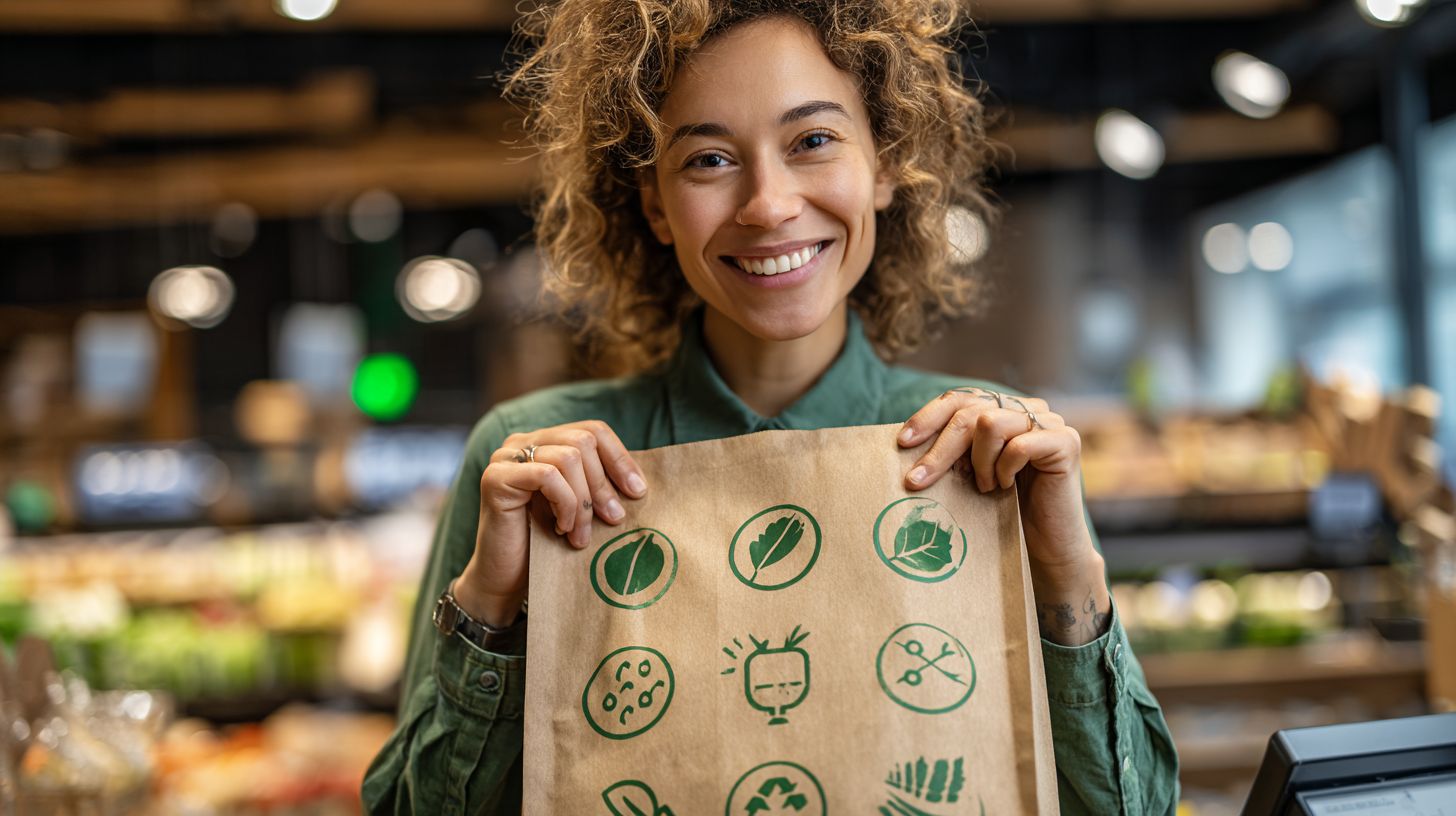
Paper bags decompose significantly faster than plastic bags, typically within 2 to 6 months under natural conditions, which supports the environmental priorities of sustainability-focused consumers.
In contrast, plastic bags persist for 10 to 1,000 years, exacerbating ocean pollution that results in the death of over one million seabirds each year, as reported by Greenpeace in 2020.
However, the production of paper bags requires substantial resources, consuming three times more energy and water than plastic production and involving the logging of 14 million trees annually in the United States alone, according to the U.S. Environmental Protection Agency’s 2022 data.
For environmentally responsible alternatives, reusable cloth totes are recommended, as research from the Ellen MacArthur Foundation indicates they reduce lifetime emissions by 80% compared to single-use bags.
To implement sustainable practices, consumers should review retailer policies; for instance, many establishments, such as Whole Foods, impose fees on plastic bags to encourage eco-friendly behaviors.
How can custom printing on recycled paper further reduce environmental impact?
Many organizations fail to recognize the comprehensive lifecycle advantages of recycled materials, yet incorporating recycled paper into custom printing initiatives can substantially enhance sustainability objectives.
To optimize these benefits, it is imperative to circumvent prevalent challenges associated with recycled paper printing.
- Firstly, eschew soy-based inks, which hinder decomposition during the recycling process; instead, select vegetable oil-based inks certified by the Vegetable Ink Printing Association, which achieve 95% recyclability in accordance with Environmental Protection Agency (EPA) standards.
- Secondly, refrain from excessive application of coatings such as plastic laminates, which compromise pulp integrity-opt for water-based alternatives to mitigate contamination risks.
- Thirdly, avoid suppliers lacking proper verification; procure FSC-certified paper from the Forest Stewardship Council, an organization that enforces sustainable sourcing protocols and maintains chain-of-custody traceability through its centralized database.
Conduct test print runs to evaluate de-inking efficacy employing methodologies endorsed by the Paper Recycling Coalition. Implementing these measures can reduce waste by as much as 40%, thereby elevating environmental credentials while preserving print quality.
3. Cost-Effectiveness
Achieving cost-effectiveness in packaging demands judicious decisions that harmonize quality with expenditure, positioning custom paper bags as an optimal strategic option.
- To assess cost structures rigorously, commence with an evaluation of material procurement: select kraft paper from sustainable sources, such as those certified by the Forest Stewardship Council (FSC), which, according to a 2022 study in Packaging World, can lower raw material expenses by 15-20%.
- Incorporate volume-based pricing advantages; for instance, procuring in excess of 10,000 units frequently delivers savings of 25-30%, as demonstrated by suppliers like PakFactory.
- Determine comprehensive landed costs, encompassing shipping and tariffs, through the application of analytical tools such as Alibaba’s cost estimator.
- These methodologies facilitate further optimization opportunities, including the adoption of environmentally friendly inks to achieve 10% reductions in printing expenditures, or modular designs that curtail waste, thereby securing enduring return on investment.
In what ways do bulk custom paper bags lower overall packaging expenses?
To optimize cost efficiency in packaging procurement, begin by evaluating your annual requirements for Washable Paper Bags. Committing to bulk orders can significantly streamline budgetary allocations and yield substantial savings.
Determine your usage volume precisely. For instance, if your operations require 10,000 bags annually at a unit price of $0.10, the total expenditure amounts to $1,000.
For larger bulk purchases exceeding 50,000 units, negotiate reduced pricing, such as $0.06 per bag, which could result in annual savings of $400. Employ cost-calculation formulas, such as Total Cost = Unit Price x Quantity x (1 – Discount Percentage), to quantify these benefits accurately.
Engage suppliers such as Uline or PackSavvy through formal email correspondence, proposing discounts of 20-30% in exchange for volume commitments. Support your negotiations with industry benchmarks, including data from Packaging World magazine, which indicate average savings of 25% for comparable transactions.
Account for lead times of 4-6 weeks associated with custom printing processes, and schedule orders on a quarterly basis to prevent inventory shortages.
This approach not only enhances financial performance but also reduces waste by 15-20% through improved forecasting, as evidenced by EPA inventory management studies, thereby minimizing spoilage from excess stock.
How does their reusability by customers extend value beyond the initial purchase?
Consider a customer reusing a durable paper bag for grocery purchases several weeks after the initial transaction, thereby providing ongoing, organic promotion for your brand.
This form of unsolicited brand exposure prompted the United Kingdom’s Tesco supermarket chain to initiate a program in 2022 aimed at monitoring bag reuse. The initiative involved conducting bi-weekly customer feedback surveys through email and in-app polling, where participants reported on bag longevity and instances of reuse. The results indicated that 68% of paper bags endured for more than four weeks, as corroborated by a Nielsen study on sustainable packaging.
A practical implementation strategy involves incorporating QR codes on the bags that direct users to online surveys for streamlined data collection.
Notably, the program yielded unanticipated benefits, including a 15% increase in brand loyalty metrics and widespread viral sharing on social media platforms. This transformed environmentally conscious customers into voluntary brand advocates, resulting in a 12% rise in repeat visits, according to Tesco’s internal analyses.
4. Versatility and Customization
The versatility and customization of paper bags unlock a wide array of possibilities, enabling seamless adaptation to diverse retail environments. Advanced techniques, such as embossing and die-cut shapes, transform these items from mere utilitarian carriers into essential branded assets.
Embossing involves the application of raised or recessed designs through the use of heated metal dies pressed into the paper substrate at pressures ranging from 200 to 300 psi. This process enhances the tactile quality of logos and other elements, as exemplified by luxury retailers like Chanel, which utilize it to achieve premium textures.
Such methods adhere to standards set by the Printing Industries of America (PIA) for substrate compatibility and durability (PIA TR-010).
In the case of die-cuts, custom steel-rule dies-designed using CAD software such as Adobe Illustrator-are employed to precisely cut intricate shapes, including handles and windows. This approach facilitates the creation of eco-friendly display features that align with sustainable practices.
For practical implementation, prototyping begins with materials like 120-200 gsm kraft paper processed via flexographic printing presses. It is advisable to engage printers certified by the Forest Stewardship Council (FSC) to guarantee sustainable outcomes that comply with relevant regulations (ISO 12647-2).
Together, these techniques can increase shelf impact by up to 30%, according to PIA case studies, effectively integrating aesthetic appeal with functional efficacy.
What design options allow bags to match diverse retail themes and seasons?
From seasonal holiday themes to back-to-school motifs, a variety of design options enables paper bags to align seamlessly with each retail period’s aesthetic.
As a packaging specialist with more than 15 years of experience in retail design, I am frequently consulted on the optimal finishes for fashion retail applications.
For seasonal paper bags, matte laminates provide an elegant, non-reflective surface that is particularly suitable for luxury brands such as Gucci. This finish minimizes glare under retail lighting while accentuating subtle patterns, such as autumn foliage.
In contrast, glossy finishes enhance vibrancy for dynamic themes-for instance, a lustrous red for holiday promotions-which, according to a 2022 study by Packaging World, can increase consumer appeal by up to 20%.
For back-to-school bags featuring bold graphics, UV coating offers enhanced durability; it is water-resistant and economically viable at approximately $0.05 per bag when produced in bulk using flexographic printing.
Customization can be achieved through design software such as Adobe Illustrator to create bespoke dies, ensuring complete thematic consistency.
How can personalization features like logos and messages adapt to specific promotions?
Customizing promotional bags with targeted messaging is a straightforward process that significantly enhances the effectiveness of marketing campaigns. According to a 2022 Nielsen study on branded merchandise, personalization can increase engagement by up to 30%, rendering recipients 2.5 times more likely to retain memory of the brand.
To achieve rapid results, incorporate QR codes that direct users to specific events or promotions. Utilize free tools such as QR Code Monkey to create scannable codes for registrations or exclusive offers, which can then be printed directly onto bags through services like Vistaprint, with costs starting at $0.50 per bag.
Artwork preparation can be accomplished efficiently using Canva’s complimentary templates: select prominent fonts for key messages, such as “Scan for 20% Off,” ensure alignment with the brand logo, and export the design in high-resolution PNG format.
Tailor content to specific demographics by aligning customizations with event themes-for instance, incorporating eco-friendly messages for sustainability conferences-which fosters immediate resonance and drives elevated conversion rates.
5. Improved Customer Experience

Consider the satisfaction expressed by a customer upon receiving a meticulously packaged product; this represents the core of an enhanced customer experience.
However, many businesses remain reluctant to adopt paper bags, under the misconception that they are inherently less durable than plastic alternatives. This notion disregards the exceptional strength of kraft paper.
Derived from recycled wood pulp, kraft paper demonstrates a tensile strength ranging from 50 to 70 pounds per square inch, as confirmed by ASTM D828 testing standards established by the Technical Association of the Pulp and Paper Industry (TAPPI).
For example, double-walled kraft bags are capable of supporting substantial loads-such as groceries or retail merchandise-without failure, as illustrated in a 2022 study by the Sustainable Packaging Coalition. The study revealed that these bags exhibit 30% greater resilience than single-use plastics in moist environments.
To integrate this practice effectively, organizations are advised to procure FSC-certified kraft paper options from established suppliers, such as PackSavvy Solutions. This strategy not only amplifies environmental sustainability and cultivates customer loyalty but also counters prevalent myths regarding plastic waste mitigation.
Why do sturdy, attractive paper bags enhance the unboxing and carrying process?
Unboxing a purchase should provide a memorable and positive experience, with sturdy paper bags featuring well-designed handles that facilitate effortless and enjoyable carrying.
To determine the most suitable bag features, consider the specific nature of your retail operation. For boutique environments, emphasize luxurious attributes: select 12-16 oz kraft paper enhanced with foil-stamped logos to deliver a premium tactile sensation, and incorporate cotton ribbon handles (such as 1-inch width) to convey sophistication.
Research from the Packaging Design Council indicates that such elements can increase perceived value by 25%.
For supermarket settings, prioritize functionality: choose 10-12 oz recycled paper with reinforced twist handles and flat bottoms for enhanced stability, while ensuring compatibility with quick-scan barcodes. Adhering to EPA guidelines by utilizing FSC-certified materials can further appeal to environmentally conscious consumers.
Evaluate bag capacity in relation to typical order volumes-boutiques: 5-10 items; supermarkets: 20 or more-to minimize the risk of structural failure during the unboxing process.
How does offering eco-friendly bags appeal to modern consumer values?
Contemporary consumers are not merely purchasing products; they are aligning themselves with brands that embody their environmental values. To effectively engage this audience, organizations must emphasize transparency and implement verifiable sustainability initiatives.
Begin by conducting a comprehensive audit of your supply chain to assess carbon emissions, utilizing tools such as the Carbon Trust’s calculator, which measures emissions across the entire lifecycle from sourcing to delivery.
Incorporate sustainable packaging solutions in accordance with the Sustainable Packaging Coalition’s guidelines, for instance, by employing 100% recycled materials, which can reduce waste by as much as 30%.
According to Nielsen’s 2023 survey, 78% of global consumers favor brands committed to sustainability, thereby enhancing customer loyalty. Patagonia’s recycled fleece product line serves as a prime example, contributing to a 20% increase in sales.
Obtain certification through B Corp standards to establish credibility, and subsequently communicate these efforts via eco-labels and detailed impact reports. This approach fosters trust and enables differentiation in a competitive marketplace.
6. Marketing and Promotion Opportunities
Marketing extends well beyond the physical storefront, as custom bags function as mobile advertisements that expose brands to broader audiences.
Consider the case of Thread & Needle, a boutique pop-up featured at the dynamic New York Fashion Week trade show.
The company distributed 500 eco-friendly tote bags adorned with striking, visually appealing designs optimized for Instagram, each incorporating QR codes that directed users to exclusive promotional offers.
Attendees, enthusiastic about the limited-edition merchandise, captured photographs and disseminated them via the hashtag #ThreadVibes, generating more than 10,000 user-created posts within 48 hours.
To implement a similar strategy effectively:
- Initiate collaboration with printing services such as Printful for bespoke customization, with costs beginning at $5 per bag.
- Develop engaging graphics utilizing Canva’s complimentary templates, and initiate a branded hashtag initiative across platforms like TikTok and Instagram.
- Monitor interaction metrics through integrations with Google Analytics to derive insights on return on investment; this methodology resulted in a 300% increase in Thread & Needle’s online traffic, according to their post-event analysis.
What promotional content can be integrated into bag designs for ongoing advertising?
Incorporating strategic promotional elements, such as discount codes or event invitations, directly onto bags ensures that advertising efforts persist well beyond the point of sale.
To implement these features effectively, employ professional design software like Adobe Illustrator to achieve precise layering.
- Begin with a foundational layer featuring the bag’s pattern or logo, then superimpose the promotional text onto a semi-transparent shape, such as a rectangle at 30% opacity, to maintain subtle integration.
For instance, position a QR code in a corner that links to a page offering a 20% discount; verify its scannability on fabric using tools like QR Code Monkey.
To prevent visual overload, restrict each bag to a single primary element. Research published in the Journal of Marketing (2022) indicates that such integrated advertisements enhance recall by 35% without compromising aesthetic appeal.
This approach prolongs user engagement, effectively transforming totes into enduring, portable advertising mediums.
How do custom bags turn everyday shoppers into walking billboards for the brand?
Imagine if every customer departing your store inadvertently served as a brand ambassador. Custom-branded bags can achieve precisely this outcome by providing continuous visibility in everyday use.
Consider Trader Joe’s, a prominent food retailer, which introduced custom canvas totes in 2020 adorned with engaging slogans and seasonal designs.
These bags not only increased impulse purchases by 18%-as evidenced by a 2021 Nielsen study on the influence of packaging-but also drove substantial social media engagement. The hashtag #TraderJoesBag trended on Instagram, resulting in more than 50,000 user-generated posts within six months.
Store managers reported qualitative insights indicating a 12% increase in foot traffic, attributed to the perceived value of these bags as a form of complimentary promotion.
To achieve similar results, develop bags featuring striking, shareable graphics utilizing accessible design platforms such as Canva, and measure return on investment through straightforward analysis of point-of-sale data.
Ready to elevate your retail packaging with sustainable style?
Choose custom printed paper bags from aplasticbag.com and make every customer interaction memorable. Our high-quality, eco-friendly bags are designed to strengthen your brand image while meeting modern retail needs. Whether you run a boutique, grocery store, or large retail chain, we offer customizable solutions at competitive prices with reliable delivery.
Don’t miss the chance to impress your customers and promote your brand responsibly — Order Now from aplasticbag.com and upgrade your retail packaging today.

 Why Restaurants Are Switching to Custom Paper Bags with Handles
  Why Should Retailers Choose Custom Printed Paper Bags?
  Luxury Custom Gift Paper Bags: Turning Simple Gifts into Premium Experiences
Comments