
Choosing between plastic and paper bags sounds simple until a business considers durability, product weight, storage, branding, customer expectations, cost and applicable regulations.
For retailers, restaurants, grocery stores, boutiques and other businesses, the best choice isn’t automatically plastic or paper.
It depends on what you’re packaging and how the bag will be used.
In 2026, this decision is also influenced by changing packaging expectations and regulations in different parts of the United States.
So which is better?
Plastic bags can offer durability, flexibility and moisture resistance, while paper bags can provide a different appearance, structure and branding experience. The right choice depends on the application.
Plastic Bags vs. Paper Bags: Quick Answer
Choose plastic when you prioritize:
- Flexibility
- Moisture resistance
- Lightweight packaging
- Durability
- Certain retail applications
- Product visibility
- High-volume handling
Choose paper when you prioritize:
- A paper-based presentation
- Retail branding
- A structured bag format
- Certain food-service or retail applications
- A natural kraft appearance
Neither material is automatically best for every business.
-
Durability Matters
Plastic bags can provide excellent flexibility and resistance to tearing for many retail and packaging applications.
The exact performance depends on:
- Polymer type
- Thickness
- Bag dimensions
- Sealing method
- Handle design
- Product weight
A lightweight plastic bag and a heavy-duty poly bag are not equivalent.
Paper bags have their own strength characteristics and can be appropriate for products where a structured carrying format is desirable.
For businesses choosing packaging, material alone isn’t enough.
The bag’s construction matters.
-
Moisture Resistance
One of the practical differences between plastic and paper is how the material behaves around moisture.
Plastic packaging is generally more resistant to water exposure than untreated paper.
This can matter for:
- Grocery applications
- Certain food-service applications
- Outdoor handling
- Products that may encounter moisture
- Packaging that needs a barrier against environmental exposure
Paper may require coatings or other construction features when moisture resistance is important.
-
Branding and Appearance
Both materials can support branding.
Custom printed plastic bags can display:
- Logos
- Business names
- Website addresses
- Promotional messaging
- Graphics
Custom paper bags can provide a different visual experience, particularly for boutiques, retail stores, restaurants and brands that prefer a paper-based presentation.
The right choice depends on the brand.
A luxury retailer may prefer one presentation while a high-volume grocery operation may prioritize another.
-
Plastic vs. Paper for Retail Stores
Retail businesses should evaluate:
- Product weight
- Bag size
- Customer handling
- Storage space
- Branding
- Local regulations
- Cost
- Reuse expectations
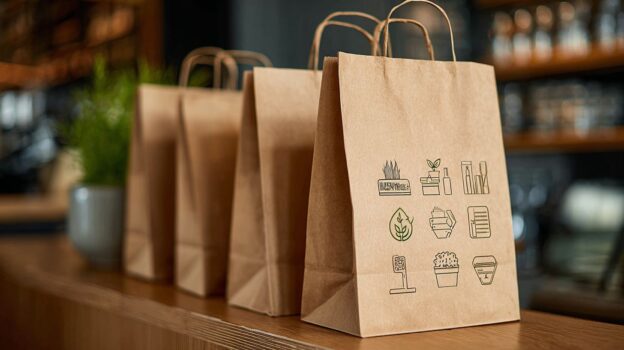
For clothing stores, boutiques and specialty retailers, branded paper bags can create a structured retail presentation.
Plastic bags may be appropriate when flexibility, lightweight handling and durability are important.
-
Plastic vs. Paper for Restaurants
Restaurants should start with the actual food-service application.
Ask:
- Is the product hot?
- Is moisture present?
- Is grease involved?
- Is the package intended for takeaway?
- Does the bag need to carry multiple containers?
- Does the bag need handles?
- Is food contact involved?
Food-contact packaging should be selected based on the specific application and applicable requirements.
Do not assume that a generic shopping bag is automatically appropriate for direct food contact.
-
Sustainability Requires More Than Looking at the Material
This is one of the most important points in the 2026 packaging discussion.
It is tempting to say:
Paper is sustainable and plastic isn’t.
Real-world packaging decisions are more complicated.
Environmental impact can depend on:
- Material quantity
- Manufacturing
- Transportation
- Reuse
- Recycling access
- Product protection
- Package weight
- End-of-life infrastructure
Businesses should therefore avoid making broad unsupported environmental claims.
The FTC advises marketers against broad, unqualified environmental claims and recommends that specific environmental benefits be clearly substantiated. Federal Trade Commission
-
U.S. Regulations Can Affect the Decision
Businesses selling across the United States should also understand that packaging rules may differ by jurisdiction.
Extended producer responsibility is becoming an important packaging issue.
California’s SB 54 establishes an extended producer responsibility program for covered packaging and certain single-use plastic food-service products. Permanent regulations became effective May 1, 2026.
California’s producer responsibility framework also includes future targets related to reducing single-use plastic and increasing recycling and recyclable/compostable packaging. CalRecycle Home Page
That does not mean every U.S. business should immediately replace plastic with paper.
Instead, businesses should evaluate the requirements applicable to their products, customers and selling locations.
-
Which Is More Cost-Effective?

Cost depends heavily on:
- Bag size
- Material
- Thickness
- Printing
- Quantity
- Handles
- Manufacturing specifications
- Shipping
- Order volume
Therefore, it is difficult to say that plastic is always cheaper or paper is always cheaper.
The better approach is to compare total packaging cost per order.
That should include:
Bag + printing + storage + shipping + handling + product protection + disposal/recycling considerations.
-
Which Is Better for Branding?
Both can work.
Custom plastic bags
Best when your priority is:
- Lightweight branding
- Flexibility
- Durability
- High-volume retail use
- Product visibility
Custom paper bags
Best when your priority is:
- Structured retail presentation
- Paper-based branding
- Kraft/natural visual appearance
- Boutique and retail presentation
Your brand identity should influence the decision, but operational requirements should come first.
-
A Simple Decision Framework
Ask these seven questions:
- What product are you packaging?
- How heavy is it?
- Will the package encounter moisture?
- Does the customer need visibility of the product?
- What type of brand presentation do you want?
- Are there state/local packaging requirements?
- What packaging format gives the best total cost and performance?
Once those questions are answered, the decision becomes much easier.
Final Takeaway
The plastic-versus-paper decision isn’t about choosing a universal winner.
It’s about choosing the right packaging for the right application.
APlasticBag.com can help businesses evaluate custom plastic bags, custom paper bags and other packaging formats according to their product, branding and ordering requirements.

 Plastic Bag Thickness Guide: What Mil Should You Choose?
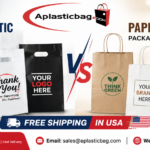 Custom Plastic Shopping Bags vs Paper Packaging: Cost, Branding & Convenience
 Wholesale Plastic Shopping Bags: A Complete Buying Guide for Retail Businesses

Comments