
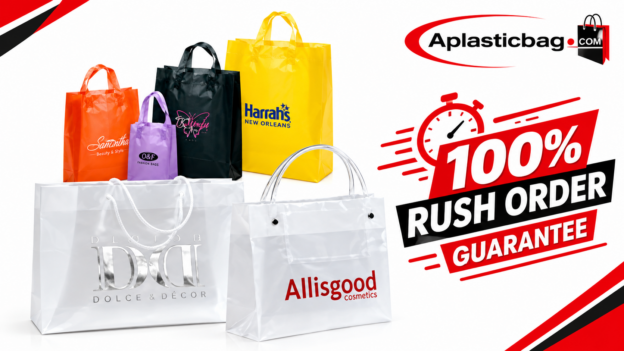
Custom printed plastic bags help retail businesses package purchases while keeping a brand visible beyond the checkout counter. The right bag depends on what you sell, how customers carry it, the appearance you want, and your expected order volume. Rather than choosing a supplier by price alone, compare bag style, material, print options, order requirements, and service details.
Which type of custom plastic bag is right for your store?
Die-cut handle bags have a punched-out handle and a clean, compact look. They can work well for boutiques, events, trade shows, and lightweight retail purchases. For example, APlasticBag.com lists custom die-cut handle bags in different sizes and thicknesses, with print options that can vary by product. Review the product specifications before selecting a bag: Custom Die Cut Handle Bags.
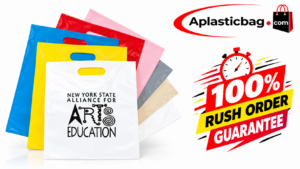
T-shirt bags are commonly used for checkout and carryout because their loop handles and flexible construction suit many everyday retail needs. Retailers looking for a more structured presentation may prefer other handle styles or paper shopping bags. Stores shipping orders to customers should also compare mailers with in-store shopping bags; they serve different purposes.
Start by matching the bag to the product. Consider the item’s dimensions, weight, shape, whether it has sharp corners, and whether it needs protection from moisture or abrasion. If the bag will carry food or contact food, confirm that the exact product is appropriate for the intended use and applicable requirements.
Compare material, thickness, size, and print
Material and thickness affect feel, flexibility, durability, and cost. Do not assume that a thicker bag is automatically the best option: the bag should be specified for the weight and use it must handle. Ask the supplier to confirm the film type and available thicknesses, then request a sample when practical.
Measure the product or typical group of products that will go inside the bag. Allow room for easy loading and removal without making the bag unnecessarily large. If items vary widely, you may need more than one size.
For printing, consider logo size, contrast, number of ink colors, print location, and how the design will look on the chosen bag color. A simple, high-contrast logo can remain legible at a glance. Ask whether the quoted print method has artwork, plate, setup, or coverage limitations. APlasticBag.com’s custom printed bag catalog provides product-specific options; check the relevant listing and request confirmation for your artwork and quantity: Custom Printed Bags.
How to evaluate a supplier
Before ordering, compare suppliers on the same specification. Ask each one to quote the same bag dimensions, material or thickness, quantity, print colors, print sides, and delivery destination. Confirm minimum order quantity, setup charges, proof approval, production time, shipping, reorder terms, and how damaged or incorrect orders are handled.
Check whether the supplier can provide a physical sample or digital proof. Review the proof carefully for logo proportions, spelling, colors, and placement before approving production. If the bags are needed for a launch or seasonal event, build in time for artwork approval, production, and shipping rather than relying only on an advertised rush option.
For a fair comparison, calculate the total delivered cost not just the unit price. A lower per-bag price may come with a higher minimum quantity, extra setup fees, or shipping costs.
A practical ordering checklist
Before requesting a quote, prepare: (1) the bag style; (2) width, height, and gusset if applicable; (3) product weight and intended use; (4) material and thickness requirements; (5) quantity; (6) logo file and preferred colors; (7) print sides and coverage; and (8) required delivery date.
There is no single best supplier for every retailer. The best choice is the one that can meet your specifications, communicate clearly, provide a suitable proof or sample, and deliver within your budget and timeline. Retail businesses can explore APlasticBag.com’s custom printed bag selection and request a quote based on their actual requirements.

 HDPE vs. LDPE vs. Polypropylene Bags: How to Choose the Right Plastic Material
 Choosing the Right Custom Plastic Bags Partner in USA: 9 Key Factors That Impact Quality, Cost & Delivery

Comments