

E-commerce packaging is no longer simply a way to protect a product during shipping. In 2026, businesses are looking at packaging as part of the customer experience, shipping strategy, brand identity, operational efficiency and sustainability strategy.
For U.S. retailers, manufacturers, ecommerce brands and small businesses, choosing the right packaging can affect shipping efficiency, product protection, presentation and customer satisfaction.
The U.S. ecommerce market continues to represent a significant portion of retail. The U.S. Census Bureau reported approximately $340.2 billion in retail ecommerce sales during Q2 2026, with ecommerce accounting for 17.1% of total retail sales on a seasonally adjusted basis.
That growth creates an important question:
What type of packaging should an ecommerce business use in 2026?
The answer depends on the product, shipping method, size, weight, protection requirements, branding goals and customer experience.
What Are the Biggest Ecommerce Packaging Trends in 2026?
The biggest trends include:
- Right-sized packaging
- Custom printed packaging
- Better shipping efficiency
- Sustainable and substantiated packaging claims
- Packaging designed around returns
- Personalized packaging
- QR-enabled packaging
- Simplified packaging systems
- Better product protection
- Packaging designed for both retail and ecommerce
Current industry coverage increasingly describes packaging as a system rather than simply a container. Right-sizing, reverse logistics, material efficiency and branding are becoming connected decisions.
-
Right-Sized Packaging Is Becoming a Business Strategy
One of the most important ecommerce packaging trends is right-sizing.
Right-sized packaging means selecting a package that is appropriately matched to the product rather than using excessive empty space.
Oversized packaging can create several problems:
- More packaging material
- More void space
- Higher dimensional shipping costs in applicable carrier calculations
- More movement inside the package
- Greater packaging waste
- Poorer customer experience
The goal is not necessarily to use the smallest package possible. The goal is to use the right package for the product.
For example, a lightweight apparel item may work well in a poly mailer, while a fragile product may require a rigid box and protective insert.
A simple rule:
Choose packaging based on product dimensions, weight, fragility, shipping environment and return requirements not appearance alone.
Current 2026 packaging coverage identifies right-sizing as a major efficiency opportunity for ecommerce businesses.
-
Custom Packaging Is Becoming a Brand Touchpoint

When customers purchase online, packaging may be one of the first physical interactions they have with a brand.
That makes packaging an opportunity to reinforce:
- Brand colors
- Logo recognition
- Messaging
- Product information
- Promotional campaigns
- Website URLs
- QR codes
- Reorder instructions
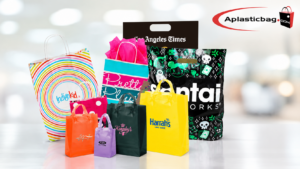
Custom printed plastic bags, poly mailers and paper bags can help businesses turn ordinary packaging into a branded customer touchpoint.
For example, a business could print its logo and website on packaging instead of sending a completely generic package.
The goal isn’t to make packaging complicated.
The goal is to make the packaging recognizable and useful.
-
Sustainability Is Moving Toward More Specific Claims

Sustainability remains a major packaging discussion in 2026, but businesses should be careful with broad claims.
The Federal Trade Commission advises marketers not to make broad, unqualified claims such as “green” or “eco-friendly” because these claims can communicate environmental benefits that are difficult to substantiate.
Instead of saying:
“Our packaging is completely eco-friendly.”
A business should explain a specific attribute it can support.
For example:
- Recycled content percentage
- Material type
- Recyclability information
- Reduction in material compared with a previous package
- Reusable characteristics
- Specific disposal instructions
This creates more credible packaging communication.
-
Packaging Should Be Designed for the Product
There is no single best ecommerce package.
A business should consider:
Clothing
Consider poly mailers or garment bags depending on the product and fulfillment model.
Jewelry
Small protective bags, zip-lock bags or specialized packaging may be appropriate.
Food products
Packaging must be selected according to product characteristics and applicable food-contact requirements.
Retail products
Custom plastic bags, paper bags or poly bags may provide both protection and branding.
Subscription products
Packaging should balance protection, repeat fulfillment and customer experience.
Heavy products
Packaging needs sufficient strength and structural support.
The important point is that packaging selection should start with the product, not with a packaging trend.
-
Packaging and Returns Need to Work Together
Returns are part of ecommerce.
A package that works perfectly for outbound shipping but creates unnecessary difficulty when a customer needs to return a product may create friction.
Businesses should ask:
- Can the package be reopened?
- Can it be resealed?
- Can the product be protected again?
- Can the customer understand how to return it?
- Does the packaging survive reverse shipping?
For certain products, resealable packaging can provide a practical advantage.
This is particularly relevant for apparel, accessories, small products and merchandise that may need to be opened and returned.
-
Packaging Is Becoming More Interactive
Packaging can also connect customers to digital information.
QR codes can be used to connect physical packaging with:
- Product instructions
- Care guides
- Reordering
- Product registration
- Brand websites
- Promotions
- Authenticity information
- Recycling information
- Customer support
Current packaging trend research highlights QR codes and connected packaging as an important part of the move toward digitally enhanced packaging.
However, the QR code should provide genuine value.
A QR code that simply opens a generic homepage may not be particularly useful.
A QR code that opens a product-specific instruction page can be much more valuable.
-
Personalized Packaging Is Growing
Ecommerce brands are also using packaging to create a more personalized experience.
Examples include:
- Seasonal packaging
- Limited-edition designs
- Customer-specific campaigns
- Personalized thank-you messages
- Product launch packaging
- Promotional packaging
- Event-specific packaging
Personalization can be particularly useful for brands competing in crowded product categories.
However, personalization does not always mean printing each individual customer’s name.
It can simply mean creating packaging that is clearly designed around the brand and its audience.
-
Packaging Should Work With Your Fulfillment Process
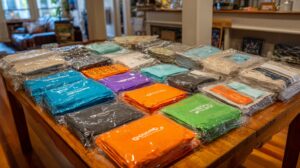
A packaging design that looks excellent but takes too long to pack may become expensive as order volume grows.
Businesses should consider:
- How long does it take to open?
- How quickly can employees pack products?
- Is the package easy to store?
- Does it fit existing equipment?
- Can employees identify sizes quickly?
- Does it require additional tape or materials?
- Can the package be standardized?
Packaging should be evaluated as part of the fulfillment workflow.
How Should a U.S. Ecommerce Business Choose Packaging in 2026?
Use this simple framework:
Step 1: Identify the product
What are its dimensions, weight and fragility?
Step 2: Identify the shipping environment
Will the product be shipped individually, in cases or through another distribution model?
Step 3: Choose the packaging type
Consider mailers, plastic bags, paper bags, poly bags, boxes or specialty packaging.
Step 4: Determine branding requirements
Do you need a logo, website, QR code or promotional message?
Step 5: Evaluate sustainability claims
Use specific, supportable claims rather than vague environmental language.
Step 6: Test the package
Ship actual products before making a large packaging commitment.
Final Takeaway
The best ecommerce packaging strategy in 2026 isn’t about following every trend.
It is about creating a packaging system that is:
Right-sized + protective + efficient + brandable + practical + transparent.
For U.S. businesses, custom plastic bags, poly mailers, paper bags and other packaging formats can play different roles depending on the product and fulfillment model.
Explore APlasticBag custom packaging solutions to find packaging designed around your product, brand and business requirements.

 Custom Bag Minimum Order Quantities: A Complete Buyer’s Guide
  Digital vs. Flexographic Bag Printing: Which Is Right for Your Bags?
  What Businesses Should Know Before Requesting a Custom Bag Quote
Comments