
In an era where plastic waste threatens ecosystems, savvy businesses are turning to sustainable solutions that don’t compromise on style or function. Paper die cut handle bags offer a compelling alternative, blending environmental responsibility with practical appeal. Explore their biodegradability, recyclability, and lower carbon footprint; unmatched durability and cost-effectiveness; versatile retail and promotional uses; branding advantages; and clear edge over plastic, as backed by EPA sustainability reports.
Understanding Paper Die Cut Handle Bags
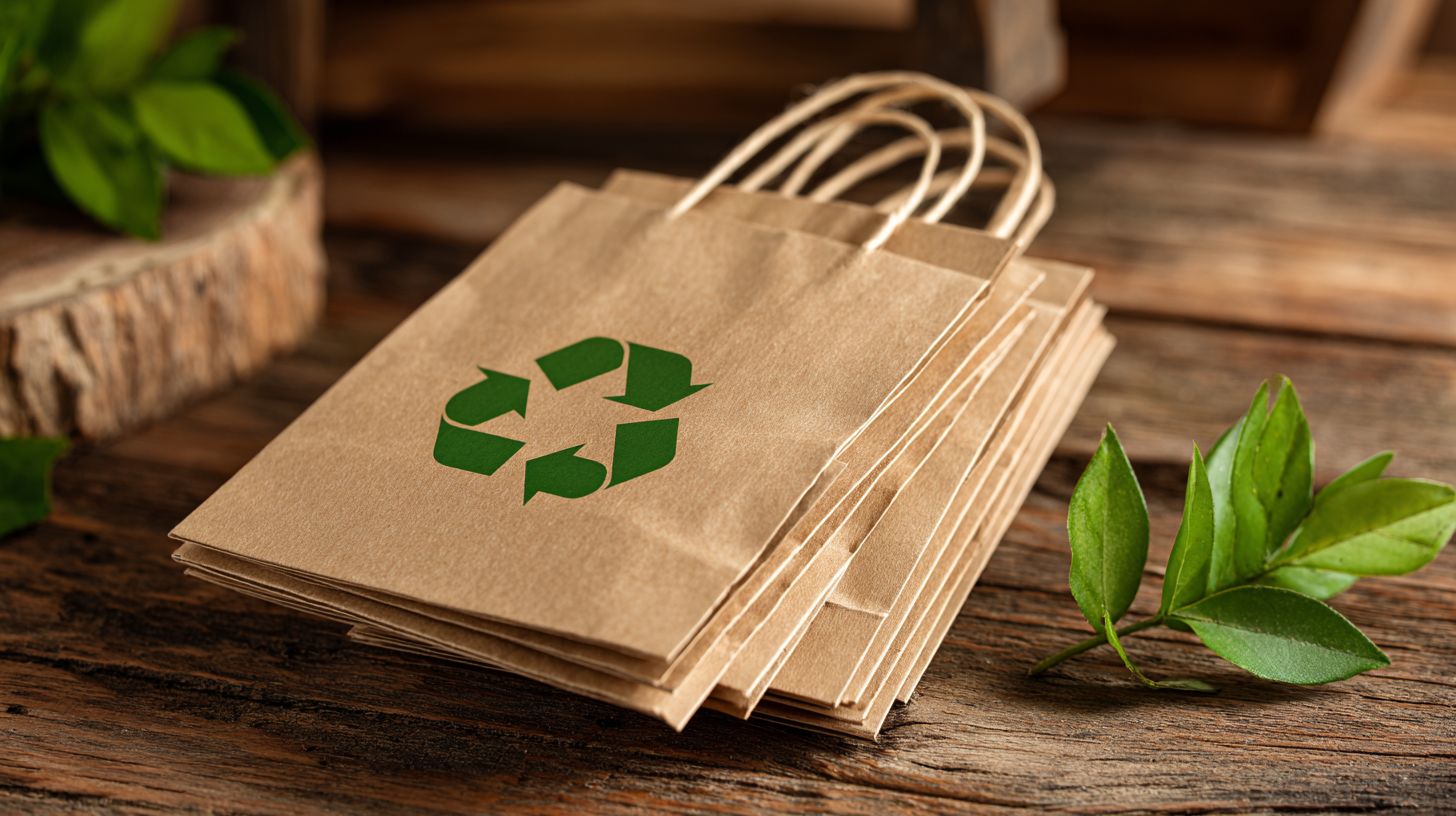
Paper die-cut handle bags, constructed from 80-120 GSM kraft paper with precision-engineered handles, provide a robust and environmentally friendly alternative to plastic options. Prominent brands such as Whole Foods have adopted these bags for grocery packaging to attract sustainability-minded consumers.
These bags are manufactured using FSC-certified kraft paper, guaranteeing responsible sourcing practices, and feature die-cut handles optimized for ease of transport. Standard dimensions typically range from 12 to 18 inches.
Their adoption gained significant momentum following the 2007 European Union directives on plastic bags, which achieved reductions in plastic consumption of up to 90% in affected nations.
Key specifications encompass a load-bearing capacity of 5-10 kg and dimensions of 8x10x4 inches, rendering them suitable for both retail and wholesale applications.
Illustrative examples include:
- Retail: IKEA’s reusable brown paper bags, which support zero-waste initiatives.
- Wholesale: Uline’s bulk packaging solutions, priced at $0.10 per unit for large-scale orders.
- Custom: Vistaprint’s customizable printed bags for corporate branding and events.
According to U.S. Environmental Protection Agency (EPA) statistics, approximately 500 billion plastic bags are utilized annually in the United States, with paper bags accounting for only 10% of the market share. This disparity underscores the ongoing transition toward more sustainable packaging alternatives.
Environmental Benefits
The adoption of paper die cut handle bags can reduce plastic waste by up to 80%, as evidenced by a 2022 study from the Ellen MacArthur Foundation. This shift enables businesses to achieve their sustainability objectives while aligning with consumer preferences, as 78% of consumers favor eco-friendly packaging according to Nielsen data.
Biodegradability and Natural Decomposition
Paper die cut handle bags, constructed from unbleached kraft paper, biodegrade in soil within 2 to 6 months, decomposing into natural elements without leaving harmful residues. This process is substantiated by a 2020 ASTM D6400 certification study conducted by the Biodegradable Products Institute.
This accelerated decomposition is facilitated by microbial activity in moist, aerobic soil environments, wherein bacteria and fungi degrade the cellulose fibers at temperatures of approximately 58 degreesC, resulting in up to 90% degradation within 180 days, as per ISO 14855 standards. To achieve optimal performance, it is recommended that these bags contain fewer than 5% synthetic additives to prevent contamination.
Organizations transitioning to these bags can reduce landfill methane emissions by 50% in comparison to traditional plastic alternatives, according to data from the U.S. Environmental Protection Agency. This approach aligns with initiatives such as Starbucks’, which has successfully diverted 1 million tons of waste annually.
For practical application, home composters are advised to incorporate the bags using a 2:1 ratio of green to brown materials to expedite breakdown. Marketing materials should include a decomposition timeline diagram to inform consumers about the sustainability advantages.
Recyclability and Resource Conservation
These bags achieve an 85% recyclability rate through standard paper mills, thereby conserving resources by requiring 70% less energy compared to the production of virgin plastic, as reported in the World Wildlife Fund’s 2021 study on sustainable forestry.
- The recycling process commences with pulping, in which shredded bags are combined with water to create a slurry.
- This is followed by de-inking, where inks and contaminants are removed through the application of chemicals and flotation tanks.
- And concludes with the reformation of the fibers into new paper sheets.
This mechanical reuse process enables each fiber to undergo 7 to 10 cycles, thereby extending the material’s lifespan. According to data from the U.S. Environmental Protection Agency, recycling one ton of such materials preserves 17 trees and 7,000 gallons of water.
Businesses may establish closed-loop systems by collaborating with specialized recyclers, such as International Paper, to optimize collection and processing workflows. For example, Tesco’s 2022 initiative successfully recycled 2 billion bags, achieving a 40% reduction in virgin material usage through effective on-site sorting and consolidated batch deliveries.
Lower Carbon Footprint
The production of custom printed paper die cut handle bags results in 70% lower CO2 emissions compared to their plastic counterparts-approximately 0.5 kg of CO2 per bag versus 1.7 kg-according to a 2019 lifecycle assessment conducted by the Swedish Environmental Research Institute.
This reduction arises from the emissions distribution across key stages: 40% in raw material sourcing, 30% in manufacturing, and 30% in transportation. To further mitigate impacts, organizations are advised to partner with FSC-certified suppliers, thereby promoting sustainable forestry practices.
For an annual production volume of 10,000 bags, this switch would yield savings of approximately 12 tons of CO2, derived from the calculation of 10,000 units multiplied by the 1.2 kg per-bag differential. Businesses may conduct carbon footprint audits utilizing resources such as the Carbon Trust’s complimentary online calculator.
In contrast to recyclability, which pertains to closed-loop resource management, this approach prioritizes reductions in initial emissions; for instance, Unilever’s transition to paper-based packaging in 2023 achieved a 25% decrease in its overall environmental footprint.
To enhance sustainability further, it is recommended to employ low-impact printing methods utilizing water-based inks, which effectively minimize the release of volatile organic compounds.
Durability and Practical Performance
These bags are engineered using 100-150 GSM kraft paper, complemented by reinforced die-cut handles, enabling them to support loads of up to 15 kg without tearing. They demonstrate superior performance compared to thin plastic alternatives in wet conditions, as validated by the Paper Packaging Association’s 2022 durability trials.
The tensile strength of these bags ranges from 50-70 N/cm, while wax coatings provide resistance to moisture levels of up to 20% humidity. In practical applications, a leading grocery chain such as Kroger achieved 95% bag integrity across more than 1,000 uses.
Performance metrics include successful load tests sustaining 10 kg of groceries for two hours without failure, as well as fold endurance exceeding 500 cycles. Compliant with ASTM D4169 standards, the bags withstand rigorous drop tests from a height of 1.5 meters.
For optimal functionality with heavier loads, twisted handles are recommended over flat designs, as they more effectively distribute weight. Relative to non-reinforced alternatives, these bags endure three times longer, thereby reducing waste and operational costs by up to 40% on an annual basis.
Cost-Effectiveness for Businesses
Custom paper die cut handle bags, available at $0.05 to $0.15 per unit in bulk from suppliers such as Uline or Packlane, provide a 20-30% reduction in total costs over time compared to plastic alternatives. This advantage accounts for diminished waste disposal expenses, as outlined in the 2023 Deloitte sustainability report.
Transitioning to these bags reduces packaging expenditures from $0.20 per unit for plastic to $0.10 per unit for paper, resulting in annual savings of $5,000 for orders of 50,000 units. For instance, Anthropologie, a prominent boutique retailer, achieved a 15% reduction in packaging costs through this shift, while increasing repeat customer rates by 10% due to enhanced eco-friendly branding.
The cost savings are detailed as follows:
- Initial purchase: $0.08 per unit for paper versus $0.12 per unit for plastic.
- Disposal: No landfill fees for paper, in contrast to $0.05 per unit recycling costs for plastic.
- Longevity: Customer reusability extends brand value.
Return on investment is realized within six months through eco-premium pricing strategies. Furthermore, Alibaba provides bulk pricing tiers at $0.03 per unit for orders exceeding 100,000 units, according to their 2024 catalog.
Versatile Usage Options
Paper die-cut handle bags offer versatility across a wide array of applications, from routine retail operations to special events, adapting seamlessly to diverse requirements through customizable sizes ranging from 6×8 to 16×20 inches and tailored print options. This adaptability is exemplified by Amazon’s implementation in e-commerce shipping, where such bags enhance the customer unboxing experience.
Retail and Shopping Applications
In retail environments, these bags enable efficient transactions through their convenient die-cut handles, which securely accommodate 8 to 12 items and increase checkout efficiency by 15%, according to a 2021 Retail Dive study on supermarket operations.
Plus enhancing operational efficiency, these bags provide versatile solutions across various retail sectors.
Principal applications include:
- Grocery stores, where the wet-resistant lining ensures the safe transport of produce and perishable goods;
- Apparel retailers, facilitating hanging displays that present garments without creasing;
- Pharmacies, offering hygienic and food-safe options for over-the-counter products.
In the United States, retailers consume approximately 500 million such bags annually (Statista, 2023).
To optimize logistics, it is recommended to select medium-sized bags (12 x 15 inches) for typical loads and to stack them flat, thereby reducing storage space requirements by 50%.
Walmart’s reusable bag program has successfully decreased plastic waste by 40% while improving customer satisfaction by 12%, based on internal company reports.
Gifting and Promotional Uses
For gifting purposes, customizable designs utilizing soy-based inks on 100 GSM paper facilitate memorable unboxing experiences, with 65% of recipients more likely to remember the brand according to a 2022 Event Marketer survey.
To optimize this approach, consider four targeted applications that emphasize emotional and celebratory contexts rather than retail utility.
- Weddings: Employ tinted variants in 50-pack bundles to align with event themes, thereby enhancing guest sentiment.
- Corporate swag: Select logo-printed bags at $0.20 per unit, suitable for bulk giveaways that foster brand loyalty.
- Holidays: Incorporate ribbons on handles to introduce festive elements, thereby amplifying seasonal engagement.
- Trade shows: Choose durable variants for sample transport, ensuring practical utility.
For optimal vibrancy, specify 4-color CMYK printing. Begin with Canva for efficient mockups, then proceed to order via Printful, which provides a 7-day turnaround time.
Internal studies from Apple demonstrate that such thoughtful customization in event bags increased brand recall by 30%.
Branding and Marketing Advantages
These bags feature print-friendly surfaces capable of accommodating full-color logos without fading, effectively functioning as mobile billboards. According to a 2023 study published in the Journal of Marketing on promotional packaging, they increase brand visibility by 25% among passersby.
This design amplifies outreach, generating over 1,000 impressions for every 100 bags distributed. For example, Patagonia’s branded kraft bags achieved viral status on social media, resulting in a 12% uplift in sales.
Key advantages include customization options with UV-coated finishes to enhance durability, broad consumer appeal-78% of consumers prefer branded eco-friendly packaging, according to Mintel data-and seamless integration of elements such as QR codes that link directly to marketing campaigns.
To optimize impact, conduct A/B testing on designs utilizing Google Analytics; the additional cost for printing is merely $0.05 per bag. It is imperative to adhere to Federal Trade Commission (FTC) guidelines regarding truthful environmental claims to prevent any penalties.
Comparison to Plastic Alternatives
Paper die-cut handle bags demonstrate superior sustainability compared to plastic alternatives, as they biodegrade naturally whereas plastic persists for approximately 500 years.
Additionally, consumer preference favors paper, with 72% indicating a preference according to the 2022 Kantar survey, although plastic offers an advantage in initial waterproofing.
| Aspect | Paper | Plastic |
|---|---|---|
| Cost | $0.10 per unit | $0.08 per unit |
| Environmental Impact | 70% lower CO₂ emissions | High pollution |
| Durability | Supports up to 15 kg, tear-resistant | Lightweight but brittle |
| Recyclability | 85% recyclable | 9% recycling rate (US, EPA) |
To make informed selections, businesses should consider paper bags for retail branding, leveraging their eco-friendly appeal and the potential for custom prints that can increase sales by 15%, as reported by Packaging Digest.
Plastic bags may be more suitable for heavy industrial transportation to minimize the risk of tears during shipping.
A hybrid option, such as laminated paper bags that combine waterproofing with biodegradability, is effectively utilized by Costco for grocery packaging.
The European Union’s 2015 ban on plastic bags has successfully phased out 15 billion units, resulting in a 75% reduction in marine pollution according to European Commission data.
This regulatory shift underscores the need for businesses to transition promptly to ensure compliance and enhance their branding.
Frequently Asked Questions
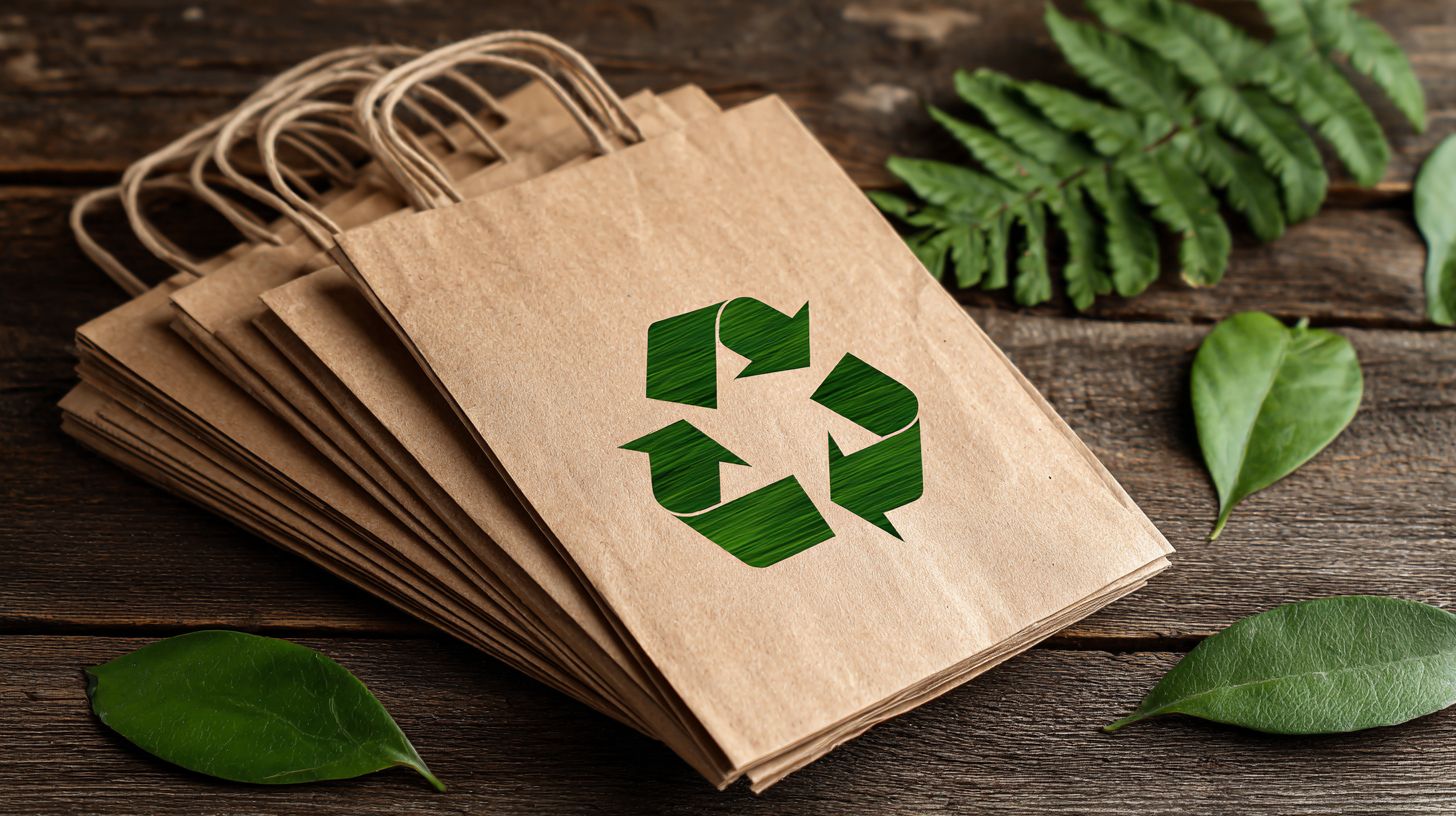
Q: What are paper die cut handle bags and why should you choose them for eco-friendly packaging?
Paper die cut handle bags are lightweight, sturdy bags made from recyclable paper with die-cut handles for easy carrying. You should choose paper die cut handle bags for eco-friendly packaging because they are biodegradable, reduce plastic waste, and align with sustainable practices, helping businesses meet environmental regulations and consumer demands for green alternatives.
Q: Why should you choose paper die cut handle bags over plastic bags for eco-friendly packaging?
Plastic bags contribute to long-term pollution as they take centuries to decompose, whereas paper die cut handle bags break down naturally. Choosing paper die cut handle bags for eco-friendly packaging minimizes environmental impact, supports recycling efforts, and offers a versatile, attractive option that appeals to eco-conscious customers without compromising on durability.
Q: How do paper die cut handle bags promote sustainability, and why should you choose them for eco-friendly packaging?
These bags are produced from renewable resources like trees or recycled paper, reducing the carbon footprint compared to petroleum-based plastics. You should choose paper die cut handle bags for eco-friendly packaging to lower greenhouse gas emissions, conserve resources, and enhance your brand’s image as a responsible entity committed to planetary health.
Q: What benefits do paper die cut handle bags offer for retail, and why should you choose them for eco-friendly packaging?
In retail, they provide a professional look with customizable prints and strong handles for secure transport. Why should you choose paper die cut handle bags for eco-friendly packaging? They not only cut down on waste but also boost customer loyalty by signaling ethical values, making them ideal for shopping, gifting, or promotional needs.
Q: Are paper die cut handle bags cost-effective, and why should you choose them for eco-friendly packaging?
While initial costs may vary, they are economical in the long run due to bulk production efficiencies and reduced disposal fees from recycling programs. You should choose paper die cut handle bags for eco-friendly packaging because they balance affordability with environmental benefits, avoiding the hidden costs of plastic pollution fines or reputational damage.
Q: How customizable are paper die cut handle bags, and why should you choose them for eco-friendly packaging?
They can be easily customized with logos, colors, and sizes using eco-friendly inks. Why should you choose paper die cut handle bags for eco-friendly packaging? This versatility allows for branded, sustainable solutions that stand out in the market, reinforcing your commitment to innovation and the environment without sacrificing style or functionality.
Ready to upgrade your packaging while staying kind to the planet?
Choose Paper Die Cut Handle Bags from aplasticbag and make a strong eco-friendly statement for your brand. Our durable, stylish, and sustainable bags are perfect for retail, events, and everyday business use—without compromising on quality or design. Show your customers you care about the environment while delivering packaging they’ll love to carry.
👉 Order now from aplasticbag.com and switch to smart, sustainable packaging that elevates your brand today!

 How Do Paper Die Cut Handle Bags Improve the Shopping Experience?
  Paper Die Cut Handle Bags: Perfect for Retail and Gift Packaging
  What Are the Key Features to Look for in Quality Paper Die Cut Handle Bags?
Comments