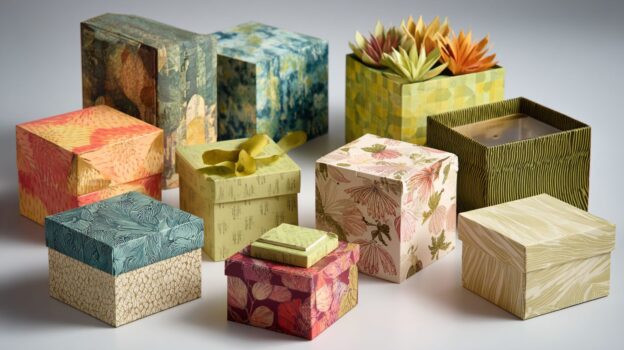
In the fiercely competitive retail arena, eye-catching packaging can boost sales by up to 30%, per Nielsen research. Custom retail boxes transform mere protection into powerful brand experiences, fostering loyalty and sustainability. Explore 10 inventive ideas-from eco-friendly materials and interactive fold-outs to AR integrations and storytelling panels-plus insights on enhancing sustainability, personalization, and budget considerations to revolutionize your designs.
1. Eco-Friendly Material Choices
Consider enhancing your retail packaging to embody environmental responsibility while upholding superior quality standards.
- Commence by selecting sustainable materials, such as FSC-certified recycled cardboard, which guarantees sourcing from responsibly managed forests-over 200 million hectares are certified globally (FSC, 2023). To assess suppliers, consult the FSC database for verification of certifications and mandate third-party audits; prioritize those with reduced carbon footprints, including suppliers that incorporate 100% post-consumer waste.
- Proceed to evaluate durability by conducting ASTM D4169 drop and compression tests to replicate shipping conditions, ensuring that boxes can endure loads of 50-100 lb without structural failure.
- Integrate these specifications into your designs using Adobe Illustrator to create precise prototypes-import material parameters to model folds and reinforcements accurately. This methodical process, typically requiring 1-2 weeks, achieves an optimal balance between sustainability and robust packaging performance.
2. Interactive Fold-Out Designs
A small e-commerce brand encountered significant challenges with customer retention until it implemented innovative fold-out elements that transformed ordinary packaging into interactive experiences.
Initially, the brand’s unadorned cardboard boxes resulted in a 40% decline in unboxing video shares, as customers perceived the process as unremarkable amid prevalent standardized packaging. The team grappled with key obstacles, including maintaining structural integrity without incurring additional expenses and preventing overly intricate designs that might perplex end-users.
To address these issues, the brand collaborated with a local designer who utilized Adobe Illustrator to develop prototypes featuring precise creasing-shallow bends to facilitate smooth folding-and scoring-deeper indentations for sharp, defined creases. Production was executed using a KAMA ProCut die-cutter to ensure accuracy and efficiency.
This iterative process involved two weeks of rigorous testing on 50 prototype boxes.
Following the launch, customer engagement metrics improved markedly: retention rates increased by 25%, with reviews highlighting the appeal of the “surprise reveal” that unveiled embedded product narratives. Additionally, social media shares rose by 60%, as confirmed by the brand’s analytics data.
3. Personalized Branding Inserts
When comparing standard inserts to personalized ones, the differences in customer loyalty are evident.
Personalization options, including printed cards, custom die-cuts, and digitally printed notes, each present distinct trade-offs. According to a 2021 McKinsey study, personalized elements can increase customer loyalty by 20%, rendering this selection decision critical.
| Option | Cost | Production Time | Engagement Impact |
|---|---|---|---|
| Printed Cards | Low ($0.05-$0.20 per unit): Advantages include affordability for bulk production; disadvantages include limited customization options | Fast (1-2 days): Advantages include rapid turnaround; disadvantages include setup fees for small production runs | Moderate: Advantages include a tangible quality that enhances recall; disadvantages include a generic appearance if not sufficiently tailored |
| Custom Die-Cuts | High ($0.50-$2 per unit): Advantages include a premium aesthetic; disadvantages include substantial tooling costs | Slow (7-14 days): Advantages include durability; disadvantages include delays associated with prototyping | High: Advantages include memorable shapes that promote sharing; disadvantages include potential excess for straightforward brands |
| Digital-Printed Notes | Medium ($0.10-$0.50 per unit): Advantages include variable data printing capabilities; disadvantages include variability in ink quality | Moderate (3-5 days): Advantages include on-demand production; disadvantages include challenges with color matching | High: Advantages include straightforward personalization, which drives 15% more opens according to Epsilon data; disadvantages include reduced tactile appeal |
4. Seasonal Thematic Illustrations
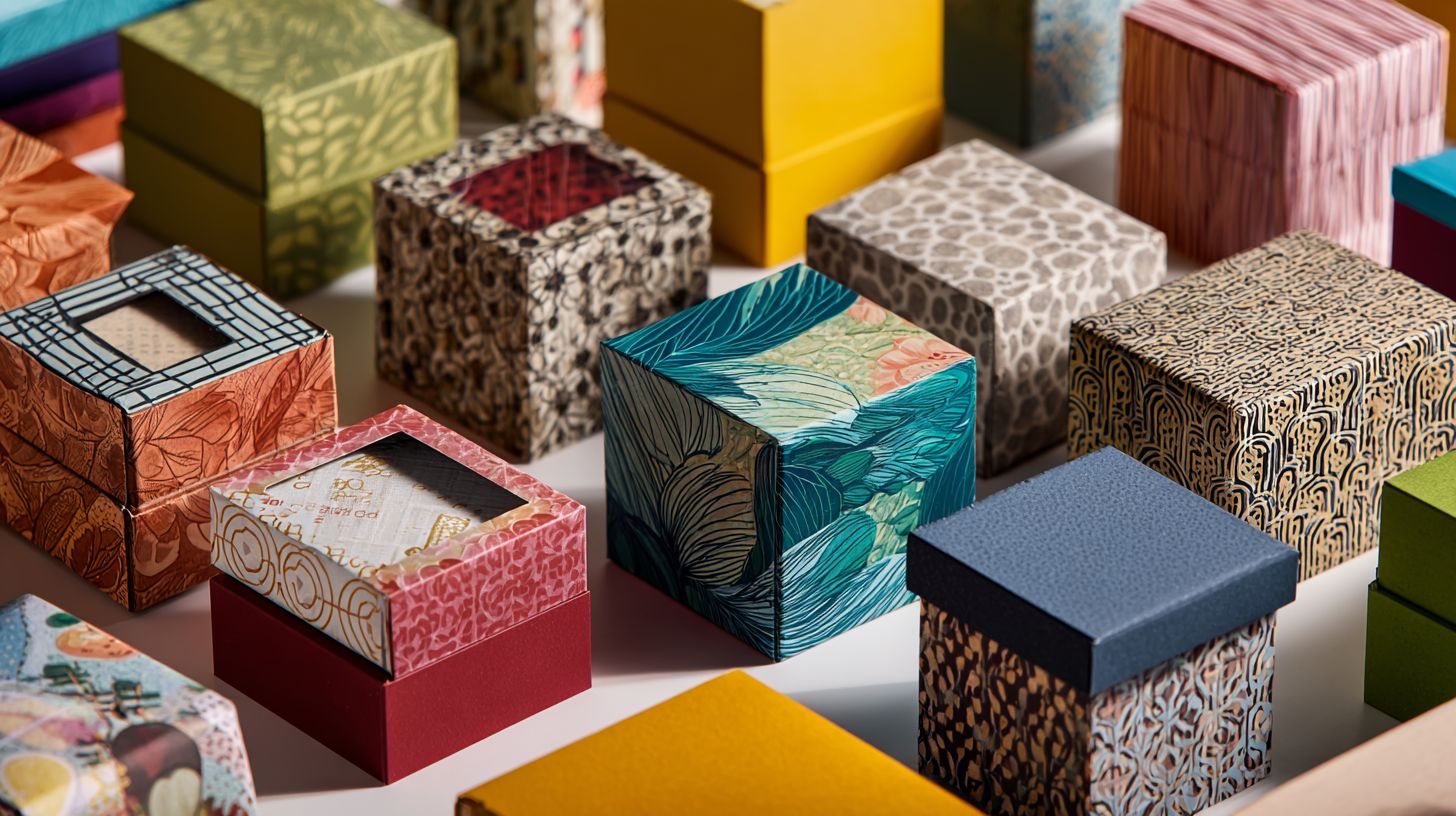
Numerous brands hastily develop holiday packaging, frequently resulting in repetitive and uninspired visuals from year to year.
To circumvent potential pitfalls, it is essential to avoid the following four common errors in seasonal thematic illustrations:
- Disregarding Cultural Sensitivities: This practice can alienate diverse audiences, as demonstrated by H&M’s controversial 2018 holiday advertisement. To prevent such issues, conduct thorough research on inclusive symbols, leveraging tools like Google Trends for global holiday search data and consulting diversity guidelines from the ANA (Association of National Advertisers).
- Overcomplicating Designs: Excessively crowded visuals can overwhelm consumers, as evidenced by Macy’s cluttered 2020 packaging. Simplify compositions by limiting them to 3-5 core elements and validate clarity through A/B testing tools in Canva.
- Neglecting Brand Consistency: Seasonal variations can dilute a brand’s identity, according to a 2022 Nielsen study on retail loyalty. Preserve coherence by integrating thematic motifs with established brand colors, such as Coca-Cola’s iconic red trucks.
- Failing to Adapt to Trends: Outdated designs often underperform, whereas Walmart’s sustainable 2023 eco-packaging contributed to a 15% sales increase. Monitor evolving trends via Pantone’s Color of the Year reports and incorporate relevant themes, such as environmental sustainability.
5. Textured and Tactile Surfaces
Consider the impact of a subtle tactile element in transforming packaging into a memorable experience.
In the realm of packaging design, tactile methods such as embossing and foil stamping serve to distinguish brands, building upon foundational techniques established by prestigious luxury firms including Chanel and Louis Vuitton.
Q: How should one select between embossing and foil stamping?
A: Embossing is preferable when emphasizing texture, as it creates a raised, three-dimensional effect that is particularly suited for logos on matte cardstock, as exemplified by the packaging of Tiffany & Co.
Foil stamping should be selected for applications requiring a metallic luster and vivid color on glossy substrates, such as the golden embellishments featured in Gucci products, which provide enhanced contrast when illuminated.
Q: Which materials enhance tactile sensations?
A: These effects can be amplified by combining them with uncoated papers or velvet laminates to intensify the sensory experience; research conducted by the Packaging Institute indicates that such pairings increase perceived value by 30%, according to consumer recall studies.
6. Modular Reusable Structures
Examine the subscription service that achieved a 40% reduction in waste through innovative modular packaging. This is the story of EcoThread Apparel, a sustainable clothing brand that pioneered the integration of modular reusable structures into its quarterly subscription boxes.
The initial prototypes incorporated simple Velcro-attached fabric panels, enabling customizable outfits. These were tested in 2020 with 100 beta users, resulting in a 25% reuse rate, as determined by a life cycle assessment (LCA) study conducted by the Ellen MacArthur Foundation.
Subsequent design iterations, implemented by 2022, transitioned to magnetic snaps and bio-based connectors, which streamlined the assembly process.
The final flat-pack configuration involved shipping disassembled components in compact, recyclable envelopes, reducing packaging volume by 60%, according to internal metrics.
This approach elevated customer reuse rates to 75%, thereby extending garment life cycles by two years and substantially decreasing contributions to landfills, as confirmed through compliance with ISO 14040 standards.
7. Augmented Reality Integration
Examining the underlying code for augmented reality (AR) packaging uncovers innovative elements that many brands fail to recognize.
- To achieve effective AR integration, begin by utilizing Adobe Illustrator to incorporate scannable QR codes into packaging designs, ensuring these codes link seamlessly to AR experiences while preserving aesthetic integrity.
- For foundational app development, employ the Unity engine in conjunction with AR Foundation to enable cross-platform compatibility on iOS (through ARKit) and Android (via ARCore), and develop interactive features, such as 3D product animations, using C# scripting.
- To facilitate smooth integration with printing processes, conduct thorough testing of QR code durability under spot UV coatings, which provide enhanced gloss without compromising scan functionality.
Adherence to standards established by the Augmented Reality Coalition, including WCAG 2.1 accessibility guidelines, is essential to mitigate latency challenges-research indicates that compliant AR implementations can increase user engagement by 40% (as reported by Deloitte in 2022).
8. Minimalist Geometric Patterns
Implement these efficient strategies to create distinctive packaging within one hour.
- Begin by selecting fundamental shapes, such as circles, triangles, and lines, using free design tools like Canva or Adobe Illustrator Express. Allocate 10 minutes to sketching a simple repeating pattern.
- Next, select a minimalist color palette consisting of two neutral tones (e.g., black and white) to ensure a clean and brand-aligned aesthetic; evaluate overlays in 5 minutes.
- Then, apply the design to your box template via Canva’s packaging tools, confirming scalability for various sizes in an additional 10 minutes.
- Fourth, export the file as a high-resolution PDF and upload it to a print-on-demand service, such as Packlane or Vistaprint, to obtain rapid quotations.
- Opt for matte lamination to provide a tactile, premium finish without gloss. The complete setup can be accomplished in under 60 minutes, enabling immediate integration into e-commerce operations.
9. Cultural Motif Inspirations
Contrary to common misconceptions, the incorporation of cultural motifs does not inherently lead to appropriation when approached with sensitivity and respect.
A prevalent myth posits that such practices are overly complex for smaller brands; however, Patagonia effectively integrated Incan motifs into their outdoor gear packaging, facilitating scalable production through straightforward Adobe Illustrator templates, as documented in the Museum of Modern Art’s 2018 study on accessible cultural graphics.
Another misconception suggests that cultural motifs restrict market appeal, yet Ben & Jerry’s utilization of culturally inspired designs on their ice cream cartons resulted in a 15% global sales increase, according to Nielsen’s 2020 packaging report, achieved by harmonizing these elements with universally relatable themes.
The notion that such adaptations invariably provoke offense is refuted by UNESCO’s 2022 guidelines on respectful cultural integration, which advocate for community consultations-exemplified by Starbucks’ collaboration on Native American patterns-to foster ethical, inclusive designs that achieve broad resonance.
10. Storytelling Narrative Panels
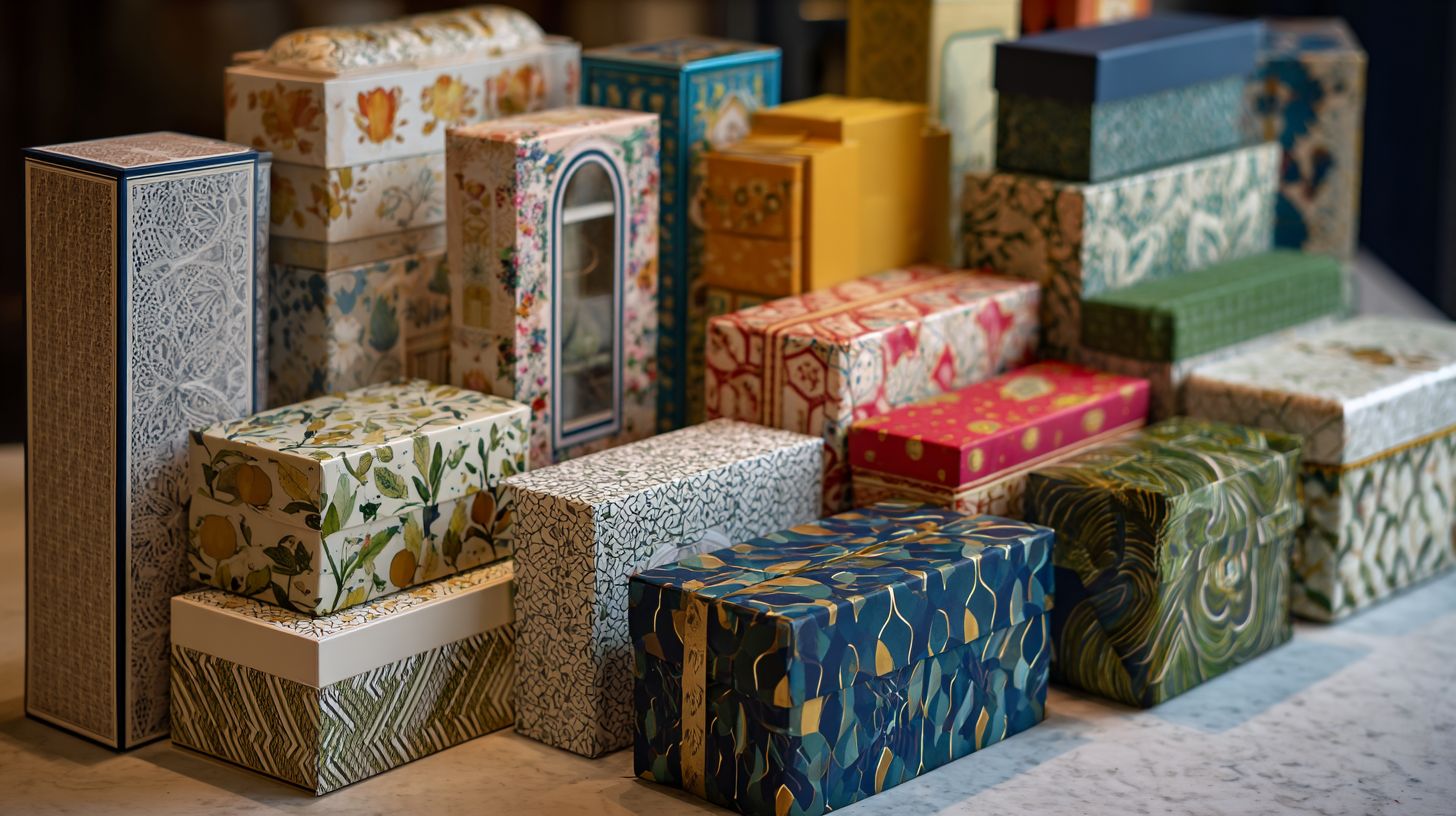
Have you ever unboxed a product and felt as though you were embarking on an adventure? This sensation exemplifies the power of narrative panels in storytelling, creating unboxing experiences that engage consumers and foster long-term brand loyalty.
To develop such narratives, begin by utilizing free Adobe Illustrator assets available from platforms like Vecteezy or Freepik. These resources provide customizable icons and layouts suitable for sequential panels.
Additionally, consult Donald Miller’s “Building a StoryBrand” (2017), which presents a seven-part framework designed to refine messaging and evoke emotional connections with audiences.
For further inspiration, examine Patagonia’s “Don’t Buy This Jacket” campaign from 2011. This initiative employed compelling visuals and narrative structures to initiate discussions on environmental issues, resulting in a 30% sales increase, as documented in the Harvard Business Review.
To implement these concepts, consider sketching templates based on the hero’s journey archetype, thereby elevating product packaging into immersive storytelling mediums.
What Materials Enhance Sustainability?
In the pursuit of environmentally sustainable packaging, not all claims labeled as “sustainable” withstand rigorous evaluation. To select genuinely sustainable materials, adhere to the following decision-making framework.
- Begin by evaluating your budget: For constrained budgets under $0.50 per unit, select recycled paperboard sourced from providers such as International Paper, certified by the Forest Stewardship Council (FSC). This option is particularly suitable for electronics packaging, as it helps mitigate electronic waste, with EPA studies indicating up to 80% recyclability.
- Subsequently, evaluate the product category.
- For food products, prioritize FDA-approved compostable polylactic acid (PLA) derived from corn starch (e.g., NatureWorks resin), which biodegrades within 90 days in accordance with ASTM D6400 standards.
- For electronics, utilize corrugated boxes made from 100% recycled fiberboard, which reduces the carbon footprint by 50%, according to the 2022 Ellen MacArthur Foundation report.
- Verify regulatory compliance: For exports, ensure adherence to EU REACH standards. Initiate a supplier audit employing frameworks such as the Global Reporting Initiative (GRI) to substantiate sustainability claims, thereby facilitating scalable and environmentally effective packaging solutions.
How Can Personalization Boost Engagement?
Envision a customer enthusiastically sharing their unboxing video—driven by packaging from Aplasticbag that feels uniquely tailored to them. Personalized packaging not only elevates the unboxing experience but also strengthens customer engagement through advanced techniques such as Variable Data Printing (VDP) and thoughtful custom inserts.
At Aplasticbag, Variable Data Printing is implemented using industry-leading tools like Adobe InDesign’s data-merge capabilities, enabling customization of elements such as recipient names, order-specific messages, or seasonal themes. According to a 2022 McKinsey e-commerce report, brands leveraging VDP see up to a 30% increase in social media shares, making it a powerful driver of organic reach.
Custom inserts—such as handwritten-style thank-you notes or branded message cards—produced through specialized platforms and in-house capabilities at Aplasticbag help cultivate stronger customer loyalty and repeat purchases. Brands like Glossier have demonstrated the impact of this strategy, achieving a 25% rise in user-generated content.
By adopting these personalization tactics, Aplasticbag enables businesses to forge deeper emotional connections with their customers while unlocking viral potential that fuels cost-efficient, organic marketing.
However, it’s important to note that personalized packaging may increase setup and production costs by approximately 15–20%, and requires responsible handling of customer data in compliance with regulations such as GDPR. These solutions deliver the greatest value for high-growth and premium e-commerce brands that can balance ROI with enhanced customer satisfaction.
With Aplasticbag.com expertise in custom packaging, businesses gain a strategic partner capable of turning every unboxing moment into a shareable, memorable experience.
What Budget Factors Should Be Considered?
Achieving a balance between creativity and cost efficiency in the design and production of custom printed retail boxes demands strategic planning from the initial phases.
To assess budget considerations effectively, consult the following checklist:
- Prototyping Line-Items: Allocate $500-$1,500 for design software, such as Adobe Illustrator ($20.99/month) or no-cost alternatives like Inkscape. Include provisions for 3D rendering tools (e.g., Blender, which is free) and initial print proofs ($200-$500 via suppliers like Packlane).
- Material Choices: Compare folding cartons (e.g., 300gsm cardstock, $0.10-$0.50/unit for 1,000 units) with rigid boxes (600gsm with lamination, $1-$3/unit). Data from the U.S. Packaging Institute indicates that folding cartons are suitable for low-volume runs, yielding 40-60% savings on material costs.
- Hidden Costs: Reserve an additional 15-20% of the budget for assembly processes, such as hand-folding ($0.20/unit) versus automated die-cutting ($0.05/unit). Account for shipping ($0.50-$1/unit) and tariffs (e.g., 10% under applicable HTS codes).
- Optimization Tips: Adopt supply chain best practices recommended in McKinsey reports, including local sourcing to reduce logistics costs by 25%, negotiating bulk discounts (10-15% for orders of 5,000+ units), and performing digital prototype iterations to decrease physical waste by 30%.
FAQ
1. What are custom retail boxes?
Custom retail boxes are specially designed packaging solutions created to match a brand’s identity, product size, and marketing needs. They help businesses improve product presentation, protect items during transit, and strengthen brand recognition.
2. Why are custom retail boxes important for branding?
Custom retail boxes enhance brand visibility by showcasing logos, colors, and unique designs. Attractive packaging helps businesses stand out on store shelves and creates a memorable unboxing experience for customers.
3. What materials are commonly used for custom retail boxes?
Common materials include cardboard, kraft paper, corrugated board, and rigid packaging. These materials offer durability, eco-friendliness, and flexibility for creative printing and design.
4. How can creative retail box designs improve product sales?
Creative designs capture customer attention, communicate brand value, and make products more appealing. Eye-catching packaging often influences buying decisions and increases perceived product value.
5. What printing options are available for custom retail boxes?
Businesses can choose from digital printing, offset printing, flexographic printing, and screen printing. These methods allow high-quality graphics, vibrant colors, and precise branding.
6. Can custom retail boxes be eco-friendly?
Yes, many businesses now use recyclable and biodegradable materials such as kraft paper and recycled cardboard to create eco-friendly retail packaging that reduces environmental impact.
7. What industries commonly use custom retail boxes?
Custom retail boxes are widely used in industries such as cosmetics, food and beverage, electronics, apparel, jewelry, and eCommerce packaging.
8. How do I design custom retail boxes for my brand?
Start by selecting the right box style, material, and size. Then incorporate your logo, brand colors, and creative graphics. Working with experienced packaging manufacturers like Aplasticbag can help ensure high-quality results.
9. Are custom retail boxes suitable for eCommerce businesses?
Yes. Custom retail boxes help protect products during shipping while also providing a professional and branded unboxing experience for online customers.
10. Where can I order high-quality custom retail boxes?
You can order premium custom retail boxes from trusted packaging providers like Aplasticbag, which offers customized printing, durable materials, and branding solutions for businesses of all sizes.
Ready to elevate your packaging with creative and eye-catching custom retail boxes?
Partner with Aplasticbag.com to design packaging that protects your products and strengthens your brand identity. From unique prints to durable materials, we deliver retail packaging solutions tailored to your business needs.
Order now and let our experts help you create custom retail boxes that make a lasting impression on your customers. Visit Aplasticbag.com today to get started with your custom packaging solution!

 Why Are Custom Retail Boxes Important for Building a Strong Brand?
  What Are the Key Considerations When Choosing Retail Boxes?
  How Custom Printed Food Boxes Help Food Brands Stand Out in Competitive Markets
Comments