
As plastic bag bans proliferate worldwide, businesses face a pivotal choice: pivot to paper and risk inflated expenses, or cling to outdated options? This debate hinges on more than eco-friendliness-it shapes retail profitability and consumer habits. We’ll dissect production costs, raw material sourcing, regulatory hurdles, distribution pricing, and lifecycle economics, drawing on industry data from sources like the EPA and Pack Expo analyses. The verdict? It may upend common assumptions.
Production Costs Overview
The average production cost for paper bags ranges from $0.06 to $0.12 per unit, compared to $0.02 to $0.05 for plastic bags. These costs are influenced by the necessary machinery, including flexographic printers (requiring an investment of approximately $50,000) and extrusion lines (exceeding $100,000), as reported by IBISWorld industry analyses.
Paper Bag Manufacturing Process
The production process for paper bags commences with pulp refining, utilizing equipment such as the Voith Paper Line, which requires an initial investment of $2 million. This stage consumes 4,000 liters of water per ton of pulp and 1,500 kWh of energy, yielding an average production cost of $0.08 per bag, according to a 2022 study published in the Forest Products Journal.
Following pulp refining, the manufacturing process proceeds through the subsequent structured steps:
- Procure sustainable pulp at a cost of $200 per ton from certified suppliers, such as International Paper, and subject it to additional refining to achieve uniformity.
- Form the pulp into sheets using Fourdrinier machines, representing a $1.5 million capital investment, by distributing the pulp into thin layers at a speed of 500 meters per minute.
- Employ die-cutters, priced at $30,000, to cut and fold the sheets into bag shapes at a rate of 200 units per minute.
- Apply branding designs through offset lithography printing, incurring an additional cost of $0.01 per bag.
- Perform comprehensive quality inspections to identify defects, followed by packaging.
The entire production cycle requires 10 to 15 minutes to yield 1,000 bags; however, inconsistencies in pulp quality may result in 5 to 10 percent waste. According to data from the Environmental Protection Agency (EPA), emissions average 2.5 kilograms of CO2 per bag, underscoring the importance of eco-friendly sourcing to mitigate environmental impact.
Plastic Bag Manufacturing Process
Plastic bags are manufactured through the extrusion of polyethylene resin utilizing blown film extrusion machines, such as those produced by Reifenhuser (approximately $150,000). Energy consumption for this process is 800 kWh per ton, with an overall production cost of $0.03 per bag, as documented in reports from the Plastics Industry Association.
The production process comprises five essential stages:
- Melting the resin in extruders (cost: $1,200 per ton of HDPE), wherein polyethylene pellets are heated to 200-250 degreesC to ensure uniform flow.
- Blowing the film to a thickness of 20-50 microns via a die head, creating a bubble through regulated air pressure.
- Cooling and slitting the film using inline cutters to attain precise widths.
- Heat sealing and perforation (cost: $0.005 per bag) with automated jaws to form handles and edges.
- Automated stacking and packaging of the completed bags.
The entire process requires 5-8 minutes to produce 1,000 bags. It is critical to mitigate errors, such as uneven thickness, which can lead to a 2% rejection rate.
According to 2021 data from Polymerupdate.com, fluctuations in oil prices resulted in a 15% escalation of production costs.
Raw Material Expenses
Raw materials constitute 50-60% of the total costs associated with bag production. The price of paper pulp ranges from $600 to $800 per ton, compared to plastic polyethylene at $1,000 to $1,200 per ton.
However, the greater volume requirements for paper result in expenses that are approximately twice as high, based on pricing data from the USDA Forest Service.
Sourcing Paper Materials
Sourcing paper materials requires procuring wood pulp from established suppliers such as International Paper, where virgin kraft pulp is priced at $650 per ton and recycled pulp at $450 per ton. Sustainable FSC-certified sources incur an additional $100 per ton, according to 2023 RISI market intelligence.
To optimize costs in this process, it is advisable to evaluate four principal factors.
- First, supplier selection: Opt for regional providers, such as Domtar in North America, which incurs only an additional $50 in shipping costs.
- Second, certification expenses: FSC certification increases costs by 5-10% but guarantees adherence to sustainability standards.
- Third, volume-based discounts: Negotiate a 10% reduction for orders exceeding 50 tons.
- Fourth, regional price variations: Costs fluctuate significantly, ranging from $500 per ton in Asia to $750 per ton in the European Union.
For example, a Midwest-based grocer achieved a 15% cost reduction by transitioning to recycled pulp.
As outlined in the World Wildlife Fund’s 2022 report, pressures from deforestation in high-risk regions can elevate virgin pulp prices by as much as 20%.
Sourcing Plastic Materials
Plastic sourcing primarily depends on petrochemical suppliers such as ExxonMobil, where high-density polyethylene (HDPE) resin is priced at $1,100 per ton amid oil price volatility that increased by 20% in 2022. Alternatively, recycled polyethylene terephthalate (PET) is available at $900 per ton, according to ICIS pricing analytics.
Selecting the appropriate resin type is essential; for instance, low-density polyethylene (LDPE) at $1,050 per ton is ideal for flexible packaging applications, offering an optimal balance of cost and durability. To mitigate global supply chain risks, including disruptions in the Middle East that result in an 8% tariff, it is advisable to diversify suppliers through platforms like Alibaba or by establishing direct contracts.
For bulk orders exceeding 100 tons, negotiations can yield savings of up to 20%, typically achieved through long-term agreements with suppliers such as ExxonMobil. Incorporating sustainability measures enhances value but may involve premiums; recycled options, for example, incur an additional $50 per ton, yet they ensure compliance with European Union regulations.
The European ban on single-use plastics has increased U.S. imports by 30%, as reported in an OECD study on raw material volatility, underscoring the need for hedged procurement strategies to manage ongoing uncertainties.
Environmental and Regulatory Factors
Regulatory changes, such as California’s plastic bag ban implemented since 2016, impose compliance fees of $0.10 to $0.25 per paper bag. Similarly, carbon taxes in the European Union have driven a 15% increase in plastic production costs, as outlined in the 2023 Deloitte Sustainability Report.
Additional challenges encompass Ireland’s 22-cent levy on plastic bags, which has reduced usage by 90% since 2002, and U.S. Environmental Protection Agency (EPA) emission regulations, which carry fines of up to $50,000 per violation. Obtaining certifications such as ISO 14001 incurs annual costs of approximately $10,000, while waste disposal fees contribute an additional $0.02 per bag.
To address these issues, organizations should implement circular economy principles, including redesigning products for enhanced recyclability, collaborating with suppliers to establish closed-loop systems, and investing in biodegradable alternatives. For instance, the United Kingdom’s 5p charge on plastic bags, introduced in 2015, has resulted in a threefold increase in reusable bag sales, according to data from the British Retail Consortium.
Ongoing discussions by the United Nations Environment Programme (UNEP) regarding a global plastics treaty underscore the importance of establishing waste reduction targets to achieve sustainable compliance.
Distribution and Retail Pricing
Distribution contributes an additional 10-20% to the overall cost of bags. For instance, the trucking cost for paper bags is $0.15 per mile, compared to $0.10 per mile for lighter plastic bags, resulting in retail prices ranging from $0.05 to $0.15 for paper bags and $0.02 to $0.08 for plastic bags, according to surveys conducted by Logistics Management.
This cost disparity can be attributed to several key factors.
- Transportation: The 20% higher weight of paper bags increases fuel consumption by 25%, adding $0.02 to $0.03 per bag on long-haul routes.
- Warehousing: With a monthly cost of $0.01 per bag, the denser nature of plastic bags reduces storage space requirements by 15%, as indicated by NRF retail pricing trends.
- Wholesale Markups: These typically range from 30% to 50%, which amplifies the base costs of paper bags to $0.03 to $0.06 at the wholesale level.
- Retail Strategies: In response to bans, fee structures such as California’s $0.10 charge help offset price increases; additionally, Walmart’s bulk sourcing initiatives have reduced distribution costs by 12%.
A 5% price increase generally delivers a positive return on investment, enabling the recovery of eco-related fees within six months while aligning with broader sustainability objectives.
Lifecycle and Long-Term Costs
A comprehensive lifecycle analysis from cradle to grave indicates that paper bags incur total costs of $0.12 to $0.20, including decomposition within 0.5 years, compared to $0.08 to $0.15 for plastic bags, which persist in landfills for over 100 years, according to a 2021 lifecycle assessment study conducted by Franklin Associates for the U.S. Environmental Protection Agency.
The full lifecycle environmental impact of paper bags is approximately 1.5 to 2 times that of printed plastic bags, primarily due to the elevated energy requirements associated with production and recycling processes. For example, a major grocery chain that transitioned to paper bags experienced an additional $50,000 annually in disposal costs, offset partially by $20,000 in savings from enhanced eco-branding appeal.
To assess the implications of such a transition for your operations, consider a detailed cost breakdown as follows:
- Production (accounting for 40% of total costs, such as pulp processing, which demands 2 to 3 times the energy of plastic resin manufacturing),
- Use (representing 10% of costs, with minimal differences in wear and tear),
- and Disposal (comprising 50% of costs, where paper biodegrades more rapidly but necessitates more extensive collection and logistics infrastructure).
For achieving a genuine return on investment in sustainability, reusable alternatives such as cotton totes can recover their initial costs after just 10 uses, as detailed in the Ellen MacArthur Foundation’s 2019 report on the circular economy. This approach fosters long-term reductions in waste and contributes to improved profitability.
Comparative Analysis and Data
According to data from a 2022 Nielsen study, paper bags incur an initial cost that is 2.5 times higher ($0.07 compared to $0.03 for plastic) but provide a 30% improvement in brand perception, with overall return on investment favoring hybrid options in 60% of retail scenarios.
To evaluate the options, consider the key aspects outlined in the following table:
| Aspect | Paper | Plastic | Winner |
|---|---|---|---|
| Cost per unit | $0.07 | $0.03 | Plastic |
| Durability | holds 20lbs | holds 25lbs | Plastic |
| Eco-impact | biodegradable in 6mo | 500yrs | Paper |
| Total lifecycle | $0.18 | $0.12 | Plastic |
printed Paper bags are recommended for premium branding initiatives to enhance customer loyalty, while plastic bags are suitable for high-volume sales to minimize costs. Hybrid alternatives, such as biodegradable plastic at $0.05 per unit, offer an effective balance between environmental sustainability and economic efficiency.
A World Bank study indicates that hybrids can reduce retail waste by 40% while preserving economic viability in emerging markets.
Frequently Asked Questions
Q: Are Paper Bags More Expensive Than Plastic Alternatives?
Yes, paper bags are generally more expensive than plastic alternatives. The production of paper bags requires more raw materials like wood pulp and higher energy consumption for manufacturing, which drives up costs compared to the petroleum-based plastic bags that are cheaper and faster to produce in large quantities.
Q: Why Are Paper Bags More Expensive Than Plastic Alternatives in Retail Settings?
In retail environments, paper bags are more expensive than plastic alternatives because they are thicker and more durable, requiring more material per bag. Retailers often charge customers 5-10 cents per paper bag to offset these costs and promote reusability, while single-use plastic bags were historically given away for free due to their low production expenses.
Q: How Do Manufacturing Costs Make Paper Bags More Expensive Than Plastic Alternatives?
Manufacturing costs make paper bags more expensive than plastic alternatives primarily due to the labor-intensive pulping and drying processes involved in paper production, which contrast with the simpler extrusion method for plastics. This results in paper bags costing about 2-3 times more per unit to produce on an industrial scale.
Q: Are Paper Bags More Expensive Than Plastic Alternatives When Considering Environmental Impact?
When factoring in environmental impact, paper bags can appear even more expensive than plastic alternatives because their production emits higher levels of greenhouse gases and consumes more water and trees. Lifecycle analyses often show that the true cost of paper bags, including disposal and recycling, exceeds that of plastics, which are lighter and take up less space in landfills.
Q: What Factors Contribute to Paper Bags Being More Expensive Than Plastic Alternatives Globally?
Globally, factors like fluctuating timber prices, deforestation regulations, and transportation logistics contribute to paper bags being more expensive than plastic alternatives. In regions with strict plastic bans, the shift to paper has led to supply shortages, further inflating paper bag prices compared to the stable, low-cost supply chain for plastics.
Q: Can Paper Bags Become Less Expensive Than Plastic Alternatives in the Future?
Paper bags might become less expensive than plastic alternatives in the future if advancements in sustainable forestry, recycling technologies, and economies of scale reduce production costs. However, current trends suggest that without significant innovations, paper bags will remain more expensive due to ongoing material and energy demands.
Why Choose Aplasticbag.com for Your Packaging Needs?
- High-quality paper and plastic packaging solutions for every business
- Competitive wholesale pricing across the USA
- Custom printing options to boost your brand visibility
- Durable, eco-conscious, and business-friendly packaging materials
- Fast production and reliable nationwide shipping
- Trusted by businesses for premium packaging performance
Order Now & Elevate Your Brand
- Stand out with custom packaging designed for modern businesses
- Get affordable bulk pricing without compromising quality
- Perfect for retail, food service, events, and eCommerce packaging
- Dedicated support to help you choose the right packaging solution
Ready to Upgrade Your Packaging?
Order now from Aplasticbag.com and give your business packaging that combines quality, affordability, and professional branding across the USA!

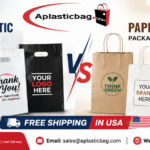 Custom Plastic Shopping Bags vs Paper Packaging: Cost, Branding & Convenience
  Paper Bags: The Go-To Choice for Eco-Friendly Packaging
  How Wholesale Paper Bags Help Businesses Save More and Sell Better
Comments