
Digital vs. flexographic bag printing comes down to order quantity, artwork complexity, color requirements, budget, and turnaround time. Digital printing is well suited to short runs and detailed full-color designs, while flexographic printing is generally more economical for larger quantities and simpler spot-color branding.
Digital vs. Flexographic Bag Printing at a Glance
| Specification | Digital Printing | Flexographic Printing |
|---|---|---|
| Best for | Short runs, detailed graphics, full-color designs | Medium to large production runs |
| Typical MOQ | From about 100–250 bags on qualifying products | Often 1,000–5,000+ bags depending on product |
| Printing style | Direct digital inkjet printing | Flexible relief plates |
| Color capability | Full-color/4-color process | Spot colors and CMYK process options |
| Artwork detail | Excellent for photographs and complex graphics | Excellent for logos and bold graphics |
| Plate required | No traditional printing plate | Usually requires printing plates |
| Setup cost | Lower for short runs | Plate/setup charges may apply |
| Cost per bag | Usually higher on large quantities | Generally lower at higher quantities |
| Customization | Highly flexible | Excellent for repeatable production |
| Production time | Often faster for short runs | Commonly longer, depending on quantity and product |
| Ideal buyer | Small businesses, samples, launches, seasonal campaigns | Restaurants, retailers, manufacturers, high-volume buyers |
MOQ and production times vary by bag style, size, material, artwork, and quantity. Confirm the exact production schedule when requesting a quote.
What Is Digital Bag Printing?
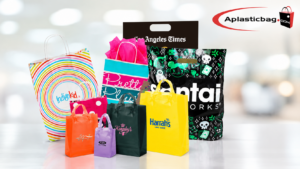
Digital printing uses inkjet technology to print artwork directly onto the bag or applicable bag material. Because it does not require a traditional flexographic plate, it can be particularly useful when a business needs a smaller quantity or highly detailed artwork.
APlasticBag states that its digital printing can produce full-color images at quality comparable to 900 dpi, with approximately three times the resolution of standard flexographic printing.
This makes digital printing a strong option for photographs, gradients, detailed illustrations, multiple colors, and designs where visual detail matters.
For example, APlasticBag’s digital poly mailers are offered in quantities beginning at 100 bags, with 250, 500, and 1,000-unit options also listed. The company also indicates that flexo printing is available at 5,000 bags or more for those mailers.
When Should You Choose Digital Printing?
Digital printing can make sense when:
- Your order quantity is relatively small.
- You need detailed full-color artwork.
- Your design includes photographs or gradients.
- You are testing a new product or packaging design.
- You have several versions of the same bag.
- You want to avoid traditional plate setup for a short production run.
For businesses ordering a few hundred bags for an event, product launch, boutique campaign, or seasonal promotion, digital printing can reduce the commitment associated with traditional high-volume production.
What Is Flexographic Bag Printing?
Flexographic printing, commonly called flexo printing, uses flexible relief plates to transfer ink onto materials such as plastic, paper, metallic films, and cellophane. APlasticBag describes flexographic ink printing as its most cost-effective printing method for applicable products.
Flexo is especially useful when the same logo, message, or branding needs to be reproduced across a large quantity of bags. Once the setup is complete, the printing process can become highly economical as order volume increases.
For example, APlasticBag’s imprinted SOS bags use flexographic printing and list a production time of approximately 7 business days, with a 1–5 day rush option.
Some custom plastic bag products have longer production schedules. Custom restaurant bags, for example, may require 2–6 weeks, depending on artwork approval, credit approval, and product specifications.
Digital vs. Flexographic Printing: Cost Differences
The biggest cost difference usually appears when comparing short runs with high-volume orders.
Digital printing does not require the same traditional plate setup used by flexographic printing, making it attractive for smaller quantities. However, the per-unit cost can be higher when ordering thousands of bags.
Flexographic printing may involve a plate or setup charge. APlasticBag lists examples such as $75 per location per color for certain SOS bags and $125+ per color for some custom HDPE bags. Reorders may qualify for reduced setup costs depending on the product and timeframe.
As a result, a 250- or 500-bag digital order can be practical for a smaller campaign, while a 5,000-, 10,000-, or 25,000-bag flexographic order can offer stronger unit economics.
MOQ and Lead-Time Considerations
There is no single MOQ or turnaround time that applies to every custom bag. The correct figure depends on the product, material, printing method, bag size, artwork, and whether the bag is manufactured domestically or requires a specialized production process.
APlasticBag’s current product information provides useful real-world examples:
- Digital poly mailers: quantities starting at 100 bags on listed sizes.
- Certain reusable printed bags: 250-bag minimum with approximately 7 days production for some pre-made options.
- Certain custom reusable plastic bags: 5,000-bag minimum with approximately 15 days production.
- Economy custom printed HDPE bags: 5,000-bag minimum and approximately 15–20 business days production.
- Some custom restaurant bags: approximately 2–6 weeks after required approvals.
These figures demonstrate why buyers should compare the printing method together with the specific bag construction rather than assuming one universal turnaround.
Which Printing Method Works Better for Custom Printed Bags?
The right choice depends on your project.
If you need a smaller quantity with highly detailed artwork, digital printing can provide flexibility without committing to a large production run. It is particularly attractive for businesses experimenting with packaging, limited-edition campaigns, promotional launches, and highly visual designs.
If your company needs thousands of bags featuring a consistent logo or message, flexographic printing can become more economical. It is widely used for retail packaging, restaurant bags, grocery bags, and other high-volume applications.
Businesses searching for custom printed bags should therefore evaluate four factors first: quantity, artwork, desired colors, and deadline.
Restaurant Packaging: Digital or Flexo?
Restaurants often need large quantities of bags with recognizable branding. For straightforward logos and one- or several-color artwork, flexographic printing can be a practical choice.
APlasticBag’s restaurant bag options demonstrate this approach. Certain soft-loop restaurant bags support up to six imprint colors and list a minimum order of 5,000 bags, while production can range from approximately 2–6 weeks depending on the order and approvals.
For businesses searching for Custom Printed Restaurant Bags, the better printing method will depend on whether the priority is economical high-volume production or highly detailed artwork in a smaller run.
Drawstring Bags and Reusable Bags
Printing requirements also change with bag construction.
For Custom Printed Drawstring Bags, buyers should consider the available imprint area, material, number of colors, and whether the artwork needs tight registration. A complex design may benefit from digital or process printing where available, while a repeat logo can work efficiently with a conventional production method.
Reusable bags can offer even more variation. APlasticBag lists reusable options ranging from 250-bag minimums for certain pre-made digitally printable products to 5,000-bag minimums for custom plastic constructions.
If your campaign requires Custom Printed Reusable Bags, choosing the printing method should be part of the initial product specification rather than an afterthought.
What Does APlasticBag Recommend About Artwork?
APlasticBag’s published printing information emphasizes that artwork preparation matters. The company recommends vector artwork, with multi-color designs prepared using appropriate PMS spot colors or CMYK process files where applicable.
Its printing guidance also explains that digital printing uses advanced inkjet technology for detailed full-color reproduction, while flexographic printing uses flexible plates and can support both spot-color and four-color process printing.
Expert perspective: APlasticBag’s production guidance makes one point particularly clear: the printing process should be selected around the artwork and product, not simply the lowest advertised price. Detailed artwork, quantity, material, and imprint requirements all affect the appropriate production method.
Digital vs. Flexographic: The Simple Decision
Choose digital printing when your priority is:
Small quantities + detailed full-color artwork + flexible customization.
Choose flexographic printing when your priority is:
Higher quantities + consistent branding + economical per-unit pricing.
For example, a small retailer ordering 250 branded mailers may find digital printing more practical, while a restaurant ordering 10,000 branded carryout bags may benefit from flexographic production.
The best choice can also change as your order volume increases. A printing method that makes financial sense for 500 bags may not be the most economical choice for 25,000 bags.
Get a Free Custom Quote
Ready to compare digital and flexographic printing for your next bag order?
Get a Free Custom Quote from APlasticBag and provide your bag size, material, quantity, artwork, printing colors, and desired delivery date. The production team can help determine the appropriate printing process and provide pricing based on your actual specifications.
Call 1-877-992-2247 or request your custom quote today. APlasticBag states that it manufactures bags to customer specifications and supports custom packaging requirements with its design and production resources.
Whether you need a short digital run or a high-volume flexographic order, selecting the right printing process can help balance quality, quantity, cost, and delivery time.

 Ecommerce Packaging Trends 2026: What U.S. Businesses Need to Know
  Custom Bag Minimum Order Quantities: A Complete Buyer’s Guide
  What Businesses Should Know Before Requesting a Custom Bag Quote
Comments