
In an era of tightening plastic regulations, savvy businesses are turning to paper bags as a sustainable powerhouse. These unassuming carriers offer more than eco-compliance-they drive cost savings, amplify branding, and delight customers. Explore seven key reasons: from their biodegradability and durability to versatility in meeting market trends, and how they foster loyalty. Ready to see why your operations could thrive with this switch?
1. Environmentally Sustainable
Envision a scenario in which routine shopping activities contribute to global environmental sustainability; the adoption of paper bags enables this outcome through their inherent biodegradability.
To evaluate the environmental implications of transitioning to paper bags within your business operations, proceed with the following structured assessment:
- Begin by conducting an inventory of your current plastic bag consumption. Monitor the annual volume utilizing sales data for accurate tracking.
- Next, quantify the reduction in carbon footprint in accordance with EPA guidelines: plastic bags produce approximately 6 kg of CO2e per 1,000 bags, in contrast to 4 kg for paper bags. Employ the formula (plastic volume x 6) – (paper volume x 4) to calculate the potential savings. Resources such as the EPA’s online calculator (available at epa.gov) provide efficient support for this analysis.
- Finally, undertake a comprehensive sustainability audit: collaborate with reputable organizations, such as the Ellen MacArthur Foundation, to review waste management streams and supplier sustainability protocols. EPA studies indicate that this methodology can achieve emission reductions of up to 30%.
2. Cost-Effective for Long-Term Savings
Numerous businesses grapple with escalating packaging costs, yet Custom printed paper bags provide an efficient means of achieving substantial savings while preserving product quality.
Examine the case of GreenMart, a mid-sized retailer adversely impacted by California’s plastic bag fees, which average $0.10 per bag pursuant to Assembly Bill 2703.
Confronted with annual expenses surpassing $50,000, GreenMart conducted a thorough supplier audit and transitioned to Custom Kraft Shopping Bags sourced from EcoPack, priced at $0.03 per unit-a 70% cost reduction.
The implementation process encompassed comprehensive staff training on optimized bagging procedures and customer awareness initiatives through in-store signage.
As detailed in the Paper Bag Council’s 2022 report, comparable retailers realized packaging cost reductions of 15-20% within the first six months.
Throughout the ensuing year, GreenMart achieved $35,000 in expense savings, a 12% uplift in eco-friendly product sales, and sustained bag durability for substantial loads, thereby validating the efficacy of this strategic shift.
3. Excellent for Brand Promotion
Consider the potential for packaging to serve as an ambulatory advertisement. Paper bags can elevate ordinary carriers into effective marketing instruments.
To fully realize this opportunity, organizations may customize paper bags through methods such as digital printing, flexographic printing, or embossing. According to specialists at the Flexible Packaging Association (FPA), these techniques are tailored to varying branding requirements.
Digital printing delivers vivid, full-color graphics, making it suitable for limited production runs (fewer than 1,000 units). It features rapid turnaround times, though per-unit expenses tend to be elevated.
Flexographic printing is optimized for large-scale operations (exceeding 10,000 units), yielding economical and resilient outcomes for straightforward designs; however, initial setup costs are substantial, and it offers limited flexibility for intricate visuals.
Embossing imparts a tactile, upscale finish to logos, thereby augmenting perceived value without the use of ink. This approach is constrained to single-color outcomes and is less efficient for substantial quantities.
The selection of a method should account for production volume, budgetary constraints, and design intricacy-data from the FPA indicates that personalized bags can enhance brand recognition by as much as 30%.
4. Durable and Reliable
Accidentally dropping a bag filled with groceries can prove highly inconvenient, which highlights the exceptional durability of paper bags in everyday applications.
However, businesses often compromise this durability through errors in the selection process. Below are five common pitfalls to avoid, drawn from guidelines provided by the American Forest & Paper Association (AF&PA):
- Overlooking gusseted bottoms: Bottoms without gussets are prone to collapse under weight; select gusseted designs that expand to provide greater stability, capable of supporting up to 50% more load according to AF&PA testing.
- Ignoring load capacity tests: Omitting simulations in accordance with ASTM D4169 can result in product failures; ensure that bags are verified to withstand 75-100 pounds without tearing.
- Choosing insufficient paper weight: Paper with a basis weight below 50# is susceptible to tearing; opt for 60# or higher kraft paper when selecting bags for grocery use.
- Neglecting handle reinforcement: Standard twisted handles may break under stress; choose reinforced handles with a pull strength exceeding 200 pounds.
- Failing to assess moisture resistance: Conventional bags can weaken in humid conditions; utilize wax-coated or polyethylene-lined options to avoid premature replacement, as advised in AF&PA sustainability reports.
5. Versatile for Multiple Business Needs
Paper bags demonstrate remarkable versatility, seamlessly integrating into a wide array of retail settings, from high-volume supermarkets to upscale boutiques.
To examine these adaptations in greater detail, we consulted packaging specialists at McKinsey & Company.
Question: How do paper bags differ between food service applications and e-commerce fulfillment?
Response: In food service contexts, it is advisable to select grease-resistant kraft paper that complies with FDA hygiene standards, such as products offered by Huhtamaki, to mitigate leaks from oily contents. Incorporating a polyethylene (PE) liner adds just $0.05 per bag while enhancing protection.
For e-commerce, reinforced twill paper equipped with polyethylene handles is recommended to ensure robustness during transit; rigorous testing in accordance with ASTM D4169 standards confirms that such bags can support up to 25 pounds without failure.
Question: Are there any professional recommendations for optimization?
Response: For boutique environments, personalization through eco-certifications, such as the Forest Stewardship Council (FSC) label, is highly effective. In transportation scenarios, ventilated designs are preferable, as they can reduce moisture-related damage by up to 30 percent, thereby enhancing overall sustainability.
6. Enhances Customer Satisfaction
The paper bag effect refers to the positive customer experience created when a purchase is placed in an attractive, environmentally responsible bag, enhancing satisfaction and brand perception.
This phenomenon is exemplified by Whole Foods Market’s transition in 2018 to paper bags made from 100% recycled content, as documented in their annual sustainability report. By discontinuing plastic bags, the company reduced its environmental footprint while introducing customizable, branded designs that strengthened brand recall.
Post-implementation surveys, as referenced in a 2019 Nielsen study commissioned by the retailer, revealed a 22% increase in customer satisfaction scores, with 68% of respondents identifying the bags as a primary driver of loyalty. This change contributed to a 15% growth in the company’s Prime membership program that year.
To achieve comparable results, organizations should conduct a thorough audit of their packaging supply chain, establish partnerships with suppliers such as International Paper for certified recycled materials, and utilize feedback tools like SurveyMonkey integrated into loyalty applications. These strategies can improve customer retention by up to 20%, according to Harvard Business Review analyses on sustainable branding practices.
7. Aligns with Regulatory and Market Trends
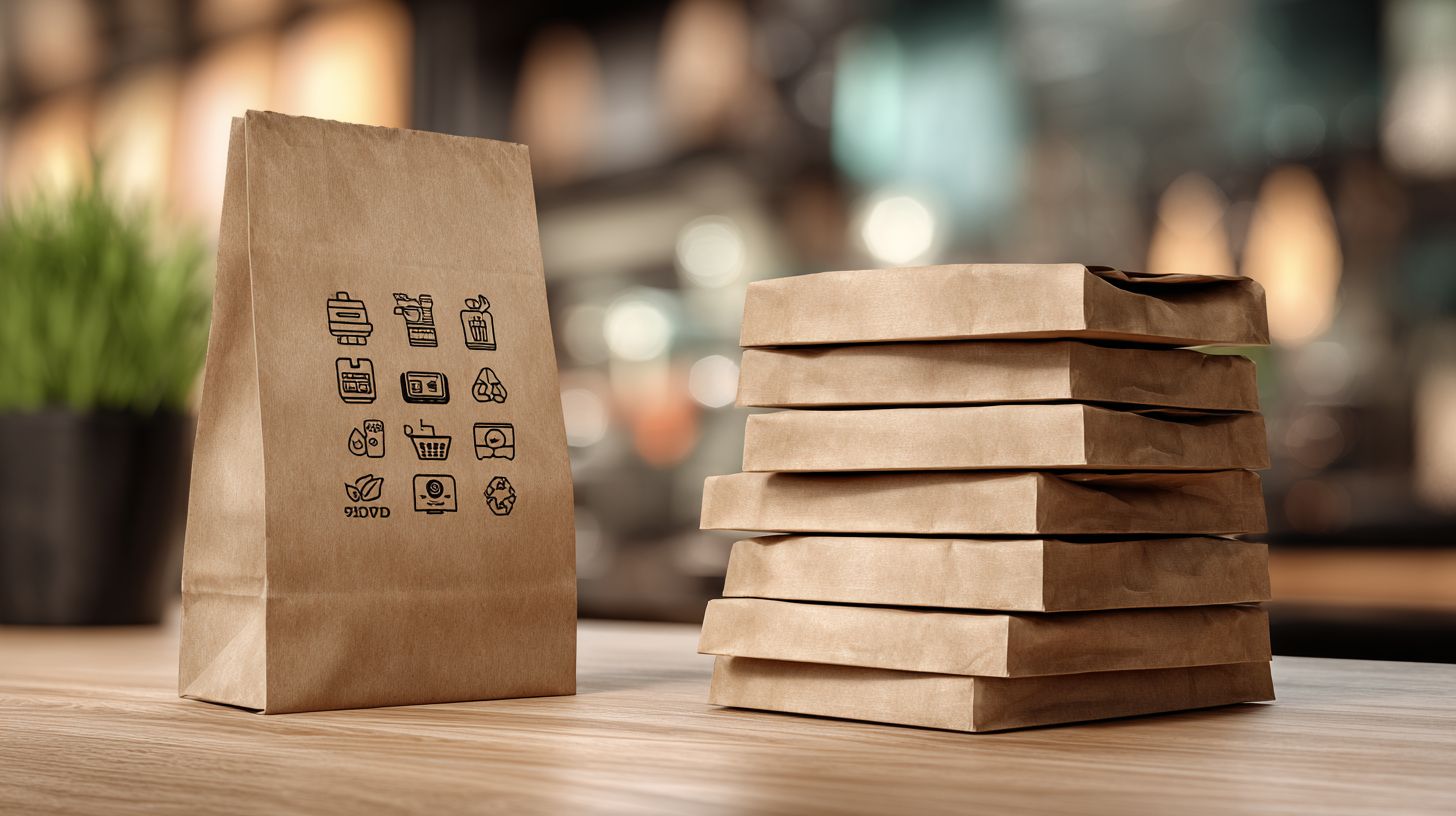
Navigating the complexities of environmental regulations can present significant challenges for businesses; however, paper bags offer a practical and compliant solution.
The production of paper bags commences with sustainably sourced virgin or recycled pulp, which is processed via kraft pulping to yield a robust, biodegradable material-contrasting sharply with plastics that endure for centuries. This process ensures alignment with EU Directive 94/62/EC, which limits heavy metal content to 100 parts per million and requires 50% material recyclability by 2025.
Life cycle assessments (LCAs) detailed in the Ellen MacArthur Foundation’s 2020 circular economy report demonstrate that paper bags generate 70% less CO2 emissions than single-use plastics across their full lifecycle, encompassing forestry, manufacturing, and disposal.
Businesses can substantiate their compliance through the procurement of FSC-certified paper and the implementation of ISO 14001 environmental management audits, thereby potentially reducing waste-related penalties by up to 40%, as evidenced by studies from the European Commission.
Key Questions for Businesses Considering Paper Bags
Business owners frequently encounter critical decisions regarding packaging strategies. This discussion addresses the most common inquiries to elucidate the inherent value of paper bags.
To assess the sustainability, cost-effectiveness, and regulatory compliance of paper bags, it is advisable to develop a comprehensive decision-making framework utilizing the following key resources.
Begin with the Sustainable Packaging Coalition’s “Paper vs. Plastic” guide, available at spc.org/resources. This resource references a 2022 lifecycle analysis demonstrating that paper bags can reduce plastic waste by 70 percent and biodegrade within 2 to 6 months.
Employ the coalition’s complimentary evaluation checklist to examine material sourcing and recyclability. For regulatory insights, refer to the Environmental Protection Agency’s Overview of Packaging Laws at epa.gov, which details state-level prohibitions on single-use plastics.
Additionally, consult the Ellen MacArthur Foundation’s circular economy toolkit at ellenmacarthurfoundation.org, which provides practical guidance for incorporating paper-based solutions. This approach may yield cost savings of 15 to 20 percent through partnerships with bulk eco-friendly suppliers.
Are paper bags truly more eco-friendly than plastic alternatives?
Although the debate persists, comprehensive cradle-to-grave analyses provide compelling evidence supporting the superiority of paper in numerous applications.
To leverage this advantage for sustainable packaging initiatives, organizations may adopt the following three efficient implementation steps:
- Examine Life Cycle Assessment (LCA) reports, including those produced by the European Commission’s Joint Research Centre (JRC), which demonstrate that paper bags typically exhibit 70-80% lower carbon footprints compared to plastic alternatives across their full lifecycles, provided proper recycling is employed. Free summaries are available at ec.europa.eu/jrc.
- Conduct supplier audits to ensure sourcing from FSC-certified paper providers, utilizing resources such as the Forest Stewardship Council’s database to confirm sustainable practices and mitigate deforestation risks.
- Initiate a pilot program in low-volume operations to transition materials, while monitoring key performance indicators such as waste diversion rates using straightforward Excel templates, with a target of achieving 20-30% reductions in emissions, as outlined in the JRC’s 2022 packaging study.
These measures can be executed in less than one week, delivering prompt and substantial advancements in sustainability.
How can paper bags help reduce operational costs over time?
Rising operational costs present ongoing challenges; however, a strategic transition to alternative packaging materials can deliver significant efficiency gains. Adopting paper bags effectively addresses prevalent misconceptions regarding their expense.
- The notion of elevated initial costs overlooks long-term lifecycle benefits. Although paper bags incur 5-7 cents per unit compared to 1-2 cents for plastic equivalents, disposal expenses decrease substantially. According to analyses by the World Resources Institute (WRI), this results in 20-30% net savings over 1,000 units, attributable to enhanced recyclability.
- Assertions that bulkier paper bags increase transportation and logistics expenses are refuted by WRI data, which indicate that paper’s density enables 15% greater shipping efficiency, thereby lowering fuel costs by $0.02 per bag.
- The perception of limited long-term return on investment disregards real-world case studies, such as a mid-sized retailer achieving annual savings of $12,000 on 500,000 bags through reduced landfill fees and improved brand perception.
To assess the financial implications, consider the initial outlay (paper: $3,500 versus plastic: $1,000), offset by ongoing savings of $15,000, which facilitates a rapid return on investment.
What customization options make paper bags ideal for branding?
To fully realize a brand’s potential, strategic personalization is essential, and paper bags offer exceptional opportunities for customization through diverse techniques.
To identify the most suitable customization options for paper bags, employ the following decision tree framework, informed by Interbrand’s expertise in branding. This approach underscores the value of visuals tailored to the target audience, which can enhance recall rates by 20% (Interbrand, 2023).
- If budget is the primary consideration and constrained to under $100 for 100 bags, select cost-effective methods such as stamping or foil seals. For example, eco-friendly stamps from Uline (with a $30 setup fee) are ideal for applying subtle logos to kraft bags.
- For higher budgets, consider full-color digital printing through services like Vistaprint (starting at $200), which supports intricate and detailed patterns.
- For broad audience reach in a mass market, opt for scalable screen printing with prominent icons, such as minimalist designs that ensure wide appeal.
For a niche audience, utilize laser engraving to incorporate personalized elements, like monograms, thereby enhancing exclusivity. Interbrand recommends tailoring customization to specific demographics to cultivate brand loyalty.
Frequently Asked Questions (FAQs)
1. Why are custom paper bags beneficial for businesses?
Custom paper bags enhance brand visibility, promote eco-friendly practices, and offer a cost-effective packaging solution that improves customer experience.
2. Are custom paper bags environmentally friendly?
Yes, most custom paper bags are made from recyclable and biodegradable materials, making them a sustainable alternative to plastic packaging.
3. Can I print my company logo on paper bags?
Absolutely. Businesses can customize paper bags with logos, brand colors, and messages to strengthen brand identity and marketing efforts.
4. Are paper bags strong enough for retail use?
High-quality paper bags, especially kraft paper bags, are durable and can carry a variety of retail products, including clothing, food, and accessories.
5. How do custom paper bags help in brand promotion?
They act as mobile advertisements—when customers carry them, your brand gets exposed to a wider audience, increasing visibility and recognition.
6. Are custom paper bags cost-effective for bulk orders?
Yes, ordering in bulk significantly reduces per-unit cost, making them an affordable packaging solution for small and large businesses alike.
7. What types of businesses can use custom paper bags?
Retail stores, restaurants, boutiques, gift shops, and eCommerce brands can all benefit from using custom paper bags.
8. Can custom paper bags be reused by customers?
Yes, their durability and aesthetic appeal encourage reuse, which extends brand exposure and supports sustainability.
9. What sizes and styles are available in custom paper bags?
They come in various sizes, handle types (twisted, flat, rope), and finishes to suit different business needs and product types.
10. Why choose Aplasticbag for custom paper bags?
Aplasticbag offers high-quality, customizable, and eco-friendly paper bags in bulk, helping businesses boost branding while staying cost-efficient.
Ready to upgrade your brand’s packaging?
At Aplasticbag.com, we make it easy to design high-quality custom paper bags that perfectly reflect your business identity. Whether you need stylish shopping bags, eco-friendly packaging, or personalized bags with your logo, we offer fast turnaround, competitive pricing, and unmatched customization options.
Take your brand visibility to the next level – Order now, your custom paper bags today at Aplasticbag.com and make every customer walk away with your brand in hand!

 Custom Plastic Shopping Bags vs Paper Packaging: Cost, Branding & Convenience
  Paper Bags: The Go-To Choice for Eco-Friendly Packaging
  Are Paper Bags More Expensive Than Plastic Alternatives?
Comments